
13 February 2026
By Mandla Mpangase
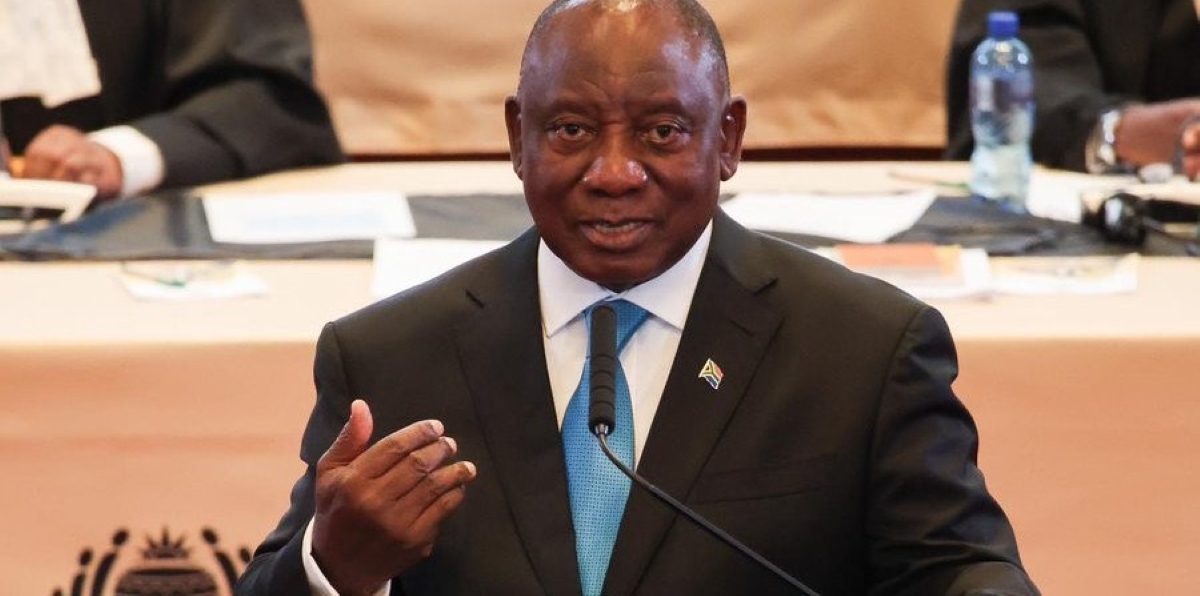
President Cyril Ramaphosa used his 2026 State of the Nation Address (SONA) to place industrialisation, manufacturing and green growth at the centre of South Africa’s economic recovery agenda, outlining a sweeping strategy that positions the automotive sector – and hubs such as the Tshwane Automotive Special Economic Zone (TASEZ) – as catalysts for investment, jobs and technological transition.
Speaking to a joint sitting of Parliament in Cape Town on 12 February 2026, President Ramaphosa said South Africa was entering a decisive phase in which it must pivot from exporting raw materials to producing high-value manufactured goods for global markets.
“The biggest opportunity of all lies in green growth. We are pivoting our economy to be a leading supplier of the products which the world will rely on in decades to come,” he said.
Manufacturing and green industrialisation
The president confirmed expanded support for manufacturing, particularly export-oriented green industries such as fertiliser, jet fuel, chemicals and steel.
For the automotive sector, the most significant announcement was the introduction of a 150% tax deduction for investment in new energy vehicles (NEVs) from March 2026, alongside government support for local battery production.
This policy could accelerate investment in South Africa’s electric and hybrid vehicle value chain, with special economic zones such as TASEZ well-positioned to anchor new assembly lines, component manufacturing and battery-related industries.
President Ramaphosa also highlighted R250-billion in international pledges to the Just Energy Transition Investment Plan, which will finance manufacturing, infrastructure and skills development – pillars for industrial hubs such as TASEZ that aim to integrate clean energy, logistics and advanced manufacturing.
Critical minerals, beneficiation and the automotive value chain
The president also underscored South Africa’s mineral endowment, with ore reserves valued at more than R40-trillion, and reiterated the government’s commitment to local beneficiation of critical minerals.
This beneficiation push is expected to underpin domestic production of battery materials, catalytic converters, lightweight metals and other automotive components, strengthening localisation in zones like TASEZ.
The Industrial Development Corporation’s R300-million investment in the Frontier Rare Earths Project was highlighted as a step towards building supply chains for lithium batteries and electronics – technologies increasingly integral to next-generation vehicles.
Investment pipeline and industrial infrastructure
President Ramaphosa said South Africa had secured R1.5-trillion in investment commitments through its first five investment conferences, with R600-billion already flowing into projects, including new factories and mines.
Government is targeting R2-trillion in new investments over the next five years, with the next investment conference scheduled for 31 March 2026.
Public infrastructure investment of more than R1-trillion over three years will underpin industrial growth, with energy, water, transport and digital infrastructure prioritised. Improved logistics, ports and rail corridors were flagged as critical to exporting manufactured goods from industrial zones such as TASEZ to global markets.
Jobs, SMEs and inclusive industrialisation
Job creation was framed as the ultimate goal of industrialisation. The president said if every small and medium enterprise (SME) employed one additional person, three million jobs could be created.
Government will provide R2.5-billion in funding to 180 000 SMEs, extend R1-billion in guarantees, and prioritise women- and youth-led businesses. This is expected to support supplier development and localisation programmes linked to manufacturers operating in TASEZ and other SEZs.
Public employment programmes will be expanded and better coordinated to provide skills development pathways into long-term industrial employment, particularly for young people and women.
Skills development for a future automotive workforce
Ramaphosa stressed that industrialisation depends on human capital, noting that a strong economy relies on a well-educated, capable and skilled population.
The Youth Employment Service and South Africa Youth platform will be strengthened, while regulatory changes will make it easier for businesses to offer work experience opportunities. This could bolster talent pipelines for advanced manufacturing, engineering, robotics and electric mobility technologies in zones such as TASEZ.
Protecting and transforming the automotive sector
The president reaffirmed the government’s commitment to safeguarding and modernising the automotive industry, which employs hundreds of thousands of South Africans in high-quality jobs.
Government is working with industry and labour to close tariff loopholes, protect domestic manufacturing and prepare the sector for the global shift to electric vehicles.
TASEZ is well-positioned to play a central role in this transition by clustering OEMs, component manufacturers, logistics providers and research institutions.
A strategic window for TASEZ and South Africa
President Ramaphosa acknowledged persistent challenges, including unemployment and service delivery failures, but said energy reforms, rising investor confidence and infrastructure investment had created a critical opportunity for economic transformation.
“We have a unique window of opportunity to translate these gains into sustained growth,” he said.
For South Africa’s automotive sector and industrial platforms such as TASEZ, the 2026 SONA signals a renewed policy push towards localisation, electric mobility and high-value manufacturing, positioning the country to compete in global automotive value chains while driving jobs and inclusive growth at home.