
9 March 2026
By Mandla Mpangase
The importance of artisans and vocational excellence takes centre stage this week as the WorldSkills South Africa National Competition, Conference and Career Festival 2026 takes place at the Inkosi Albert Luthuli International Convention Centre in Durban.
The event, on 9 and 10 March 2026, brings together various delegates, from industry leaders and policymakers to educators and young competitors, to explore how artisan and vocational skills can help build a more competitive and inclusive South African economy.
Over 200 students from TVET (technical and vocational education and training) colleges, universities of technology and training providers are competing across 27 technical and vocational skill categories, with the top performers set to represent South Africa at the global WorldSkills competition in Shanghai later this year.
Skills as a driver of economic growth
The conference theme “Building a skilled and competitive workforce for the future” speaks directly to South Africa’s pressing challenge of unemployment and the shortage of skilled artisans across multiple sectors.
Artisan training has become a strategic priority for the country, particularly in fields such as welding, electrical work, robotics, aircraft maintenance and manufacturing technologies.
Programmes linked to the WorldSkills movement aim to strengthen vocational education and encourage young people to consider careers in the skilled trades, areas widely regarded as essential to economic expansion.
Government has repeatedly highlighted that strengthening the artisan pipeline is key to achieving the ambitions of the National Development Plan 2030, which calls for a significant increase in the number of trained artisans to support industrialisation, infrastructure development and job creation.
South Africa has set a target of producing around 30 000 qualified artisans annually by 2030, a goal closely aligned with initiatives such as WorldSkills that promote technical excellence and industry-ready training.
Bridging education and industry
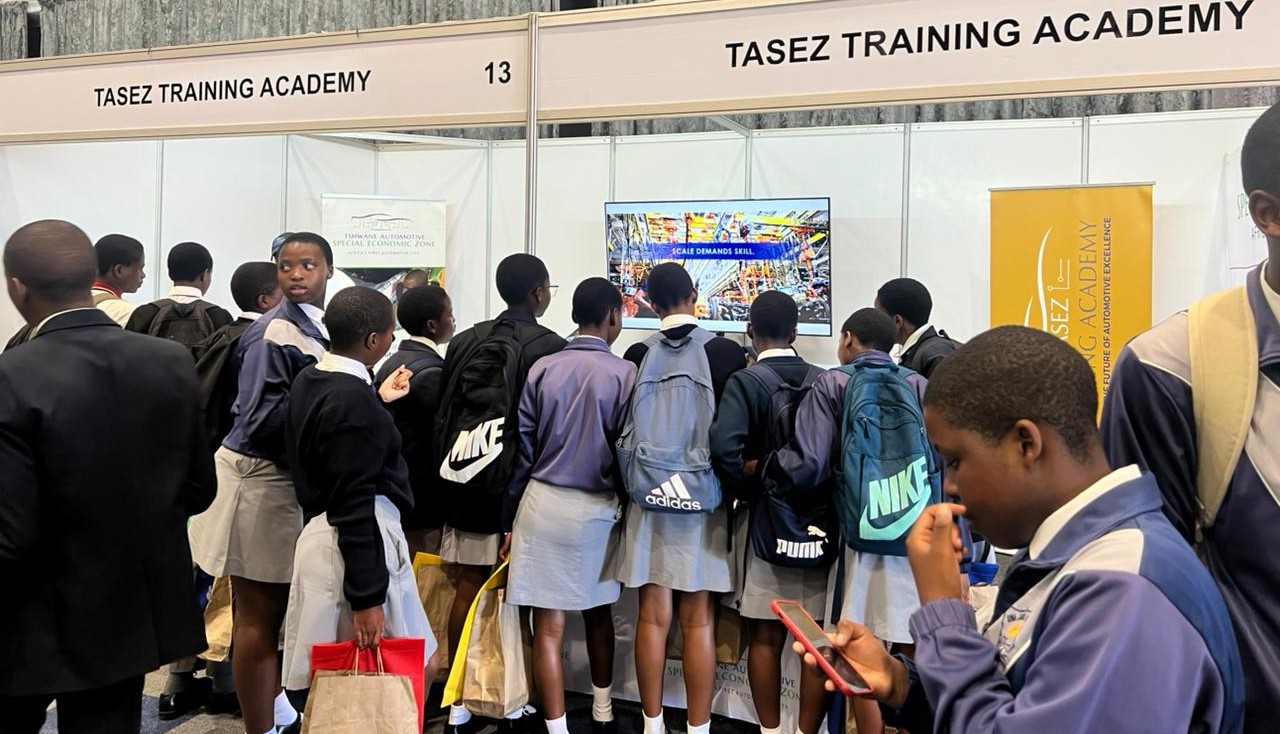
Beyond the competition, the Durban event also features a conference programme and career festival designed to connect learners with employers and training institutions. High school learners and unemployed youth are being exposed to potential career pathways through apprenticeships, workplace learning and vocational training opportunities.
The event is intended to help reshape perceptions about technical careers, positioning artisan professions as high-value contributors to the modern economy rather than fallback options.
TASEZ Training Academy joins the conversation
Among the organisations participating in the conference is the TASEZ Training Academy, representing the skills development arm of the Tshwane Automotive Special Economic Zone (TASEZ).
The academy’s presence highlights the critical relationship between industrial development and vocational training.
As an automotive manufacturing hub anchored by the Ford Motor Company assembly plant in Silverton, Pretoria, TASEZ depends heavily on a steady supply of skilled artisans in fields such as mechatronics, toolmaking, robotics and advanced manufacturing.
Delegates from the academy are attending the conference to:
- Engage with national skills policymakers and training institutions.
- Explore best practices in vocational training and artisan development.
- Strengthen partnerships that can expand opportunities for youth entering the manufacturing sector.
“By aligning training programmes with industry demand, our academy aims to ensure graduates are not only qualified but work-ready for the rapidly evolving automotive manufacturing environment,” says TASEZ Training Academy head, Meriam Malebo.
Building the workforce of the future
The WorldSkills conference arrives at a time when South Africa is seeking to accelerate economic growth through localisation, manufacturing expansion and infrastructure investment – sectors that rely heavily on skilled artisans.
Events like this reinforce the idea that economic transformation is inseparable from skills development.
By connecting training institutions, government and industry, the initiative aims to cultivate a generation of technicians, artisans and innovators capable of driving the country’s industrial future.