
18 March 2026
By Mandla Mpangase
As Gauteng gears up for the highly anticipated Gauteng Investment Conference (GIC) on 9 April 2026, government and industry are intensifying efforts to position the province as a leading investment destination, with infrastructure, manufacturing and the automotive sector at the centre of that strategy.
A key step in this journey is an upcoming high-level Logistics Roundtable, convened by the Automotive Industry Development Centre (AIDC) and the Tshwane Automotive Special Economic Zone (TASEZ).
The engagement will bring together senior representatives from government, state-owned entities, logistics operators, manufacturers and investors to address one of the most critical enablers of economic growth: an efficient, modern logistics ecosystem.
The roundtable is not a standalone event, but a precursor to the GIC, designed to ensure that the province’s investment propositions are cemented in practical, bankable solutions. By tackling structural bottlenecks and identifying opportunities for reform, the session will help shape the infrastructure and logistics priorities that will be presented to investors in April.
At the heart of discussions will be the urgent need to strengthen freight and corridor efficiency, a longstanding constraint on South Africa’s industrial competitiveness.
Stakeholders will explore ways to improve the integration of road and rail networks, reduce congestion, and unlock the full potential of Gauteng as a logistics hub for both domestic and regional trade.
Equally important is the focus on infrastructure investment.
With growing demand for reliable transport networks, energy systems, and industrial facilities, the roundtable will seek to identify projects that are not only viable but also capable of attracting meaningful private-sector participation.
These projects are expected to form part of a broader investment pipeline to be showcased at the conference.
The manufacturing sector, particularly automotive production, will feature prominently in the discussions.
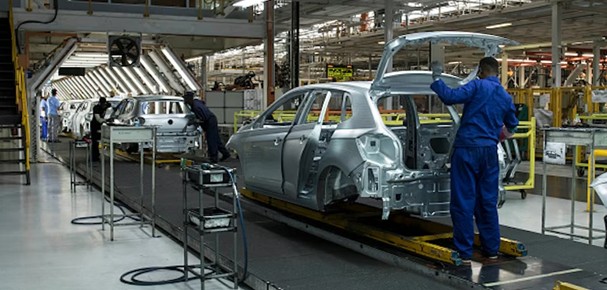
As one of Gauteng’s key economic drivers, the automotive industry holds significant potential for job creation, industrial expansion and export growth. The roundtable will examine how improved logistics and infrastructure can enhance the competitiveness of manufacturers operating within the province, including those in strategic hubs such as TASEZ.
A highlight of the programme will be a panel discussion on component localisation, a key issue for the sustainability of South Africa’s automotive value chain. Panellists will assess how increasing the local production of automotive components can strengthen domestic supply chains, reduce import dependency, and create new opportunities for local manufacturers.
However, the discussion will also address the practical challenges of localisation, particularly logistics inefficiencies and infrastructure limitations.
Addressing these constraints will be key to ensuring that localisation efforts translate into tangible economic gains.
Ultimately, insights from the Logistics Roundtable will feed directly into the Gauteng Investment Conference, helping to align industrial development priorities with the province’s broader investment strategy.
By ensuring that policy, infrastructure and industry needs are closely coordinated, Gauteng aims to present a compelling, investor-ready narrative.
As the countdown to 9 April continues, the message to potential investors is clear: building a competitive economy requires more than ambition; it demands coordinated action, strategic investment, and a logistics system capable of supporting growth at scale.