
1 April 2026
By Mandla Mpangase
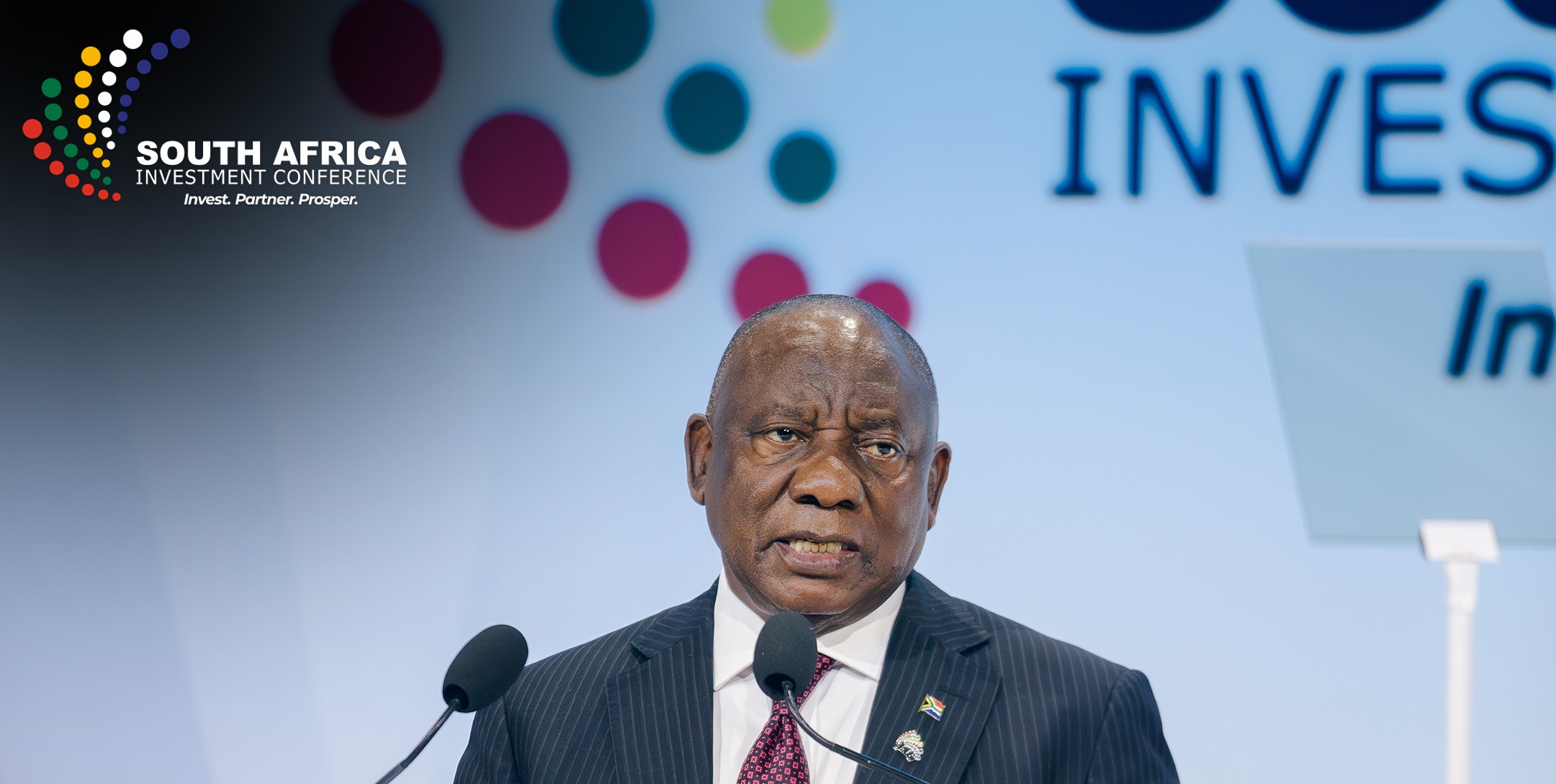
President Cyril Ramaphosa has declared that South Africa is entering a “new phase of growth”, following record-breaking investment commitments announced at the 2026 South Africa Investment Conference (SAIC) held at the Sandton Convention Centre in Johannesburg.
Delivering his closing remarks to delegates, investors, and business leaders, Ramaphosa said the scale and scope of pledges made at this year’s conference provide compelling evidence that confidence in the country’s economy is strengthening.
The conference marked the launch of a second investment mobilisation drive, targeting R2-trillion in new investments between 2026 and 2030. This builds on the success of the first drive, which exceeded its R1-trillion target.
A total of R889.8-billion was pledged during the day-long conference on 31 March 2026.
“The cumulative value of the pledges made at this conference is the highest we have achieved since the first South Africa Investment Conference,” he said, noting that the number of projects announced had also reached a new peak.
A notable feature of this year’s commitments is the strong showing from domestic investors, which Ramaphosa said reflects growing confidence within South Africa’s own business community. At the same time, foreign direct investment has “increased phenomenally”, supported by participation from international firms and development finance institutions.
The investments span all nine provinces and cut across key sectors including energy, mining, manufacturing, infrastructure and global business services.
Among the headline commitments, Toyota will invest R10.4-billion in KwaZulu-Natal to support the automotive sector’s transition to cleaner energy. Sasol has pledged R60-billion for plant upgrades and new technologies in Mpumalanga and the Free State. At the same time, Valterra Platinum will expand mining operations in Limpopo to supply critical minerals for future-facing industries.
Infrastructure and energy also feature prominently. South32 is investing R3.9-billion in rail upgrades linked to manganese mining in the Northern Cape and KwaZulu-Natal, while black-owned manufacturer Actom will inject R250-million into equipment to support electricity grid expansion.
In the services sector, Teleperformance will invest R145-million in the Eastern and Western Cape, creating 2,600 jobs, while renewable energy company Mulilo has committed R14.8-billion to projects across multiple provinces.
Ramaphosa emphasised that these commitments align with the government’s broader push to scale up infrastructure spending, describing it as the “largest infrastructure investment intervention” in South Africa’s history.
Despite the positive momentum, the President acknowledged that significant work remains. Fixed investment currently stands at around 15% of GDP, and the country must double this level over time to achieve sustained economic growth.
“There is a gap between improved sentiment on one hand, and greater capital deployment that translates to strong growth and jobs on the other,” he said.
Central to closing that gap is the government’s structural reform agenda, which Ramaphosa described as “irreversible”. The reforms, coupled with a robust regulatory framework and adherence to the rule of law, are aimed at providing certainty and predictability for investors.
He also highlighted the importance of South Africa’s constitutional democracy, noting that the rule of law underpins economic development, protects rights, and ensures accountable governance.
Ramaphosa credited the private sector as a key partner in the country’s economic recovery, pointing to longstanding collaboration between business and government since 2019. Initiatives such as the Youth Employment Service have created more than 200 000 work opportunities, while joint efforts during the Covid-19 pandemic and the Economic Reconstruction and Recovery Plan helped stabilise the economy.
The evolving Government Business Partnership, now in its third phase, is focused on improving logistics, securing energy supply, and tackling crime and corruption – issues that remain critical to investor confidence.
On this front, Ramaphosa outlined a series of interventions to strengthen the criminal justice system, including the establishment of a new reform initiative targeting organised crime, corruption, the illicit economy, and illegal firearms. He also confirmed that new regulations under the Public Procurement Act will be finalised soon to combat corruption in state procurement.
Reflecting on the past decade, Ramaphosa said South Africa has made significant progress since the era of state capture and economic stagnation.
“Today, the green shoots of renewal are emerging. We have turned a corner, and confidence in our economic trajectory is rising,” he said.
He urged delegates to convert pledges into tangible projects and long-term partnerships that drive inclusive growth and job creation.
“You are not merely investing in an economy,” he said. “You are investing in a nation determined to grow, transform, and succeed.”