
AIH bets on the work behind the electric vehicle shift
28 October 2026
By Mandla Mpangase
The consulting and industrial services group is pursuing overseas business as changes in vehicle technology open new markets for South African expertise.
AIH Group sees a business opportunity in the automotive industry’s uncertainty: manufacturers need help adapting to new vehicle technologies, regardless of which gains ground.
The South African consulting and industrial services group is targeting work in manufacturing, aftermarket services and the infrastructure needed to support electric vehicles, says group director Dr Paulo Fernandes.
“We follow the industry trends and we try to support those where we see them developing,” he says.
Established in 2006 as an automotive consultancy, AIH Group has expanded into the broader industrial sector, adding contract assembly, vehicle modification and logistics to its advisory services.
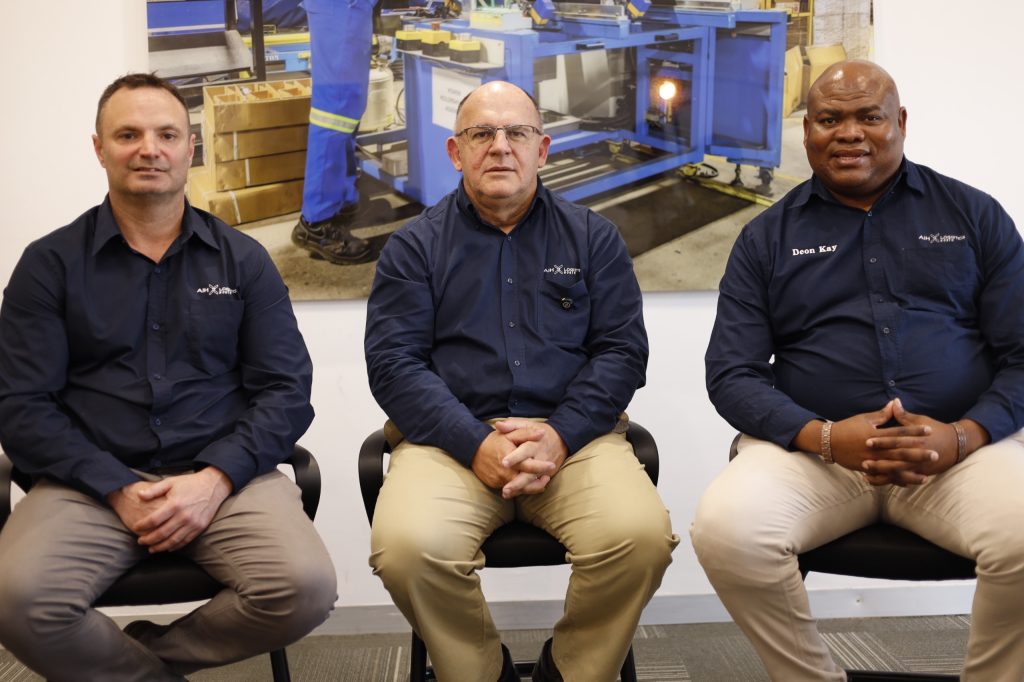
| South Africa remains central to AIH Group’s plans, with the group intending to continue investing locally as it expands abroad. L to R: Cornell Erasmus (Logistics North Manager); Dr Paulo Fernandes (Group Director) and Deon Kay (Plant Manager) |
Automotive work accounts for about 50%-60% of its business, Fernandes says. The balance comes from the broader industrial sector.
Following clients abroad
Pretoria-headquartered AIH Group is 51% black-owned and has a level 2 BEE rating. It has an assembly facility in Durban and offices in East London, Gqeberha and Cape Town.
Abroad, it has followed existing clients and pursued contracts it believes it can service competitively from South Africa.
The group has offices in Europe, the UK, the US and Thailand, alongside a small, developing presence in Australia.
Fernandes argues that South African technical skills and an ability to adapt to clients’ needs give AIH an opening in competitive overseas markets.
“There’s a price advantage, but typically it’s about the flexibility,” he says.
The cost of change
The transition to electric vehicles could broaden demand for those services. The costs extend beyond manufacturing to vehicle service, charging infrastructure and financing — all areas in which clients face decisions about how to adapt.
AIH Group is keeping its options open on battery electric vehicles, hydrogen and internal combustion engines. Its strategy is to support clients as their plans develop.
Fernandes says South Africa is making progress in electric vehicle adoption, though it trails more developed markets.
He cautions against treating Europe as a blueprint. South Africa’s demographics, market conditions and driving patterns differ, shaping how quickly, and how far, the shift can go.
He points to electric vehicle sales, off a low base, and more charging stations as signs of progress, but offers no forecast for the eventual size of the market.
Staying invested
South Africa remains central to AIH Group’s plans, Fernandes says, with the group intending to continue investing locally as it expands abroad.
The opportunity is to help clients manage the transition. The test for AIH Group is how much of that demand becomes contracted work.