
25 February 2026
By Mandla Mpangase
South Africa’s 2026 national budget has positioned infrastructure investment, structural reform and private-sector participation as the central levers to accelerate economic growth, attract investment and create jobs – priorities that align closely with the country’s industrialisation agenda and the expansion of Special Economic Zones (SEZs) such as the Tshwane Automotive Special Economic Zone (TASEZ).
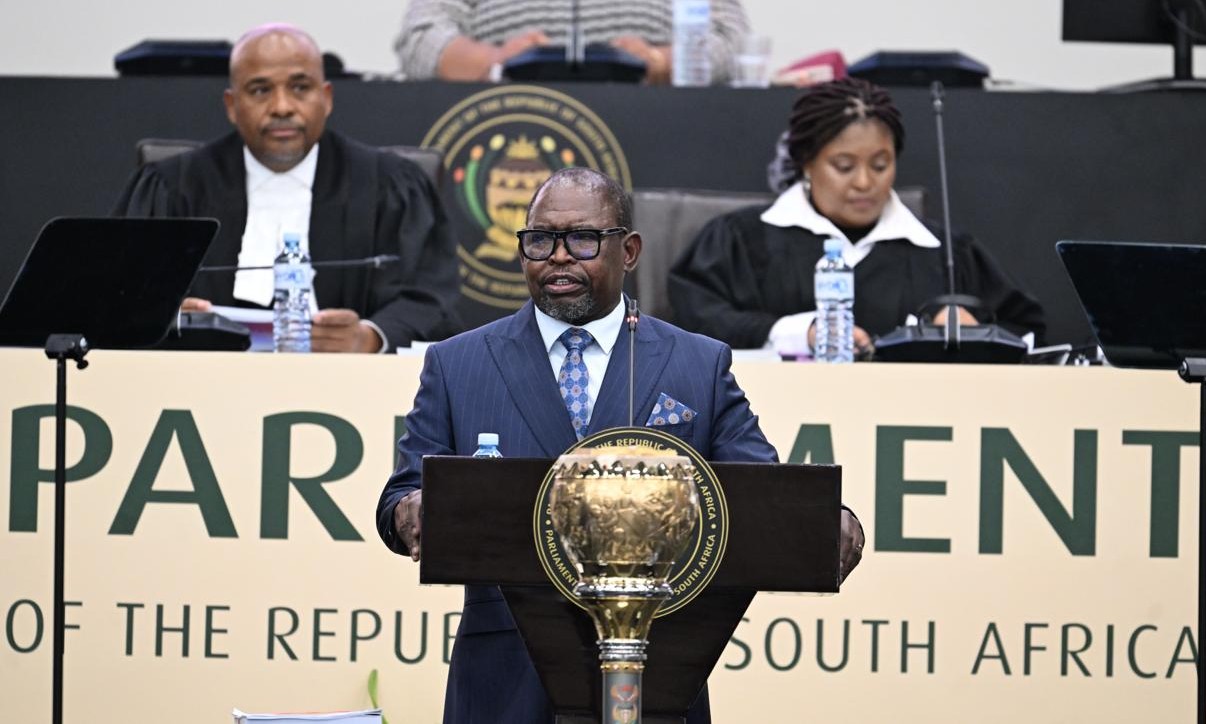
Delivering the budget in Parliament on 25 February 2026, Finance Minister Enoch Godongwana said the country had reached “an important turning point” in public finance management, with debt stabilising for the first time in 17 years and fiscal credibility improving following South Africa’s removal from the Financial Action Task Force (FATF) grey list and its first credit-rating upgrade in 16 years.
“These are signals of restored credibility. Of renewed resilience. And of a nation regaining its footing.”
These improvements, he argued, create the foundation for investment-led growth.
“The lesson is a simple but powerful one: steady structural reform and responsible public finances are the bedrock of a prosperous and more inclusive South Africa,” he told Parliament.
Infrastructure at the centre of growth strategy
For industrial zones and manufacturing hubs, the most significant announcement is the government’s commitment to spend more than R1-trillion on public-sector infrastructure over the medium term.
Transport and logistics will receive the largest share, including:
- Major rail and port reforms to reduce export bottlenecks
- Road maintenance and network upgrades through the South African National Road Agency (SANRAL)
- Passenger rail modernisation through the Passenger Rail Agency of South Africa (PRASA)
- Bulk water infrastructure and energy transmission investment
These investments are critical for SEZ competitiveness, where efficient logistics, reliable utilities and modern transport connections are key determinants of investor decisions.
Government is also advancing a credit guarantee vehicle (CGV) with development partners to unlock large-scale investment in electricity transmission, an intervention expected to improve energy security for industrial users.
Structural reforms to unlock investment
The budget reinforced ongoing reforms under Operation Vulindlela, focusing on energy market liberalisation, logistics reform and improved local government performance – all longstanding constraints on industrial expansion.
Reforms to municipal utilities, including a R27.7-billion performance-linked programme for electricity, water and sanitation services in metros such as Johannesburg, are particularly relevant for industrial zones dependent on reliable municipal infrastructure.
National Treasury warned that poor municipal reinvestment practices have created massive infrastructure backlogs, including a R64-billion water backlog in Johannesburg alone.
For industrial investors, improved municipal governance could reduce operational risk and improve investment attractiveness in urban economic nodes.
Public-private partnerships and industrial opportunity
Government signalled a renewed push for public-private partnerships (PPPs), with 63 projects currently in development and new municipal public-private partnership regulations expected by June 2026.
Among the most advanced projects are border post upgrades aimed at improving regional trade flows – a priority for export-oriented manufacturing located in SEZs.
The Budget Facility for Infrastructure (BFI) has already approved R21.9-billion for strategic projects, including Transnet rail corridor upgrades that will restore freight capacity for bulk commodities – an important signal for industrial supply chains.
Industrialisation, data infrastructure and new-economy investment
The budget also highlighted data centres and artificial intelligence infrastructure as emerging strategic investment areas, with the government exploring incentives to expand South Africa’s role as a regional technology hub.
For zones like TASEZ, which are seeking to attract advanced manufacturing and technology-enabled production, this focus could open opportunities for new categories of investors beyond traditional automotive manufacturing.
Trade reforms linked to the African Continental Free Trade Area (AfCFTA) were also emphasised, with National Treasury easing cross-border investment rules to position South Africa as a continental financial hub.
Skills reform and workforce development
A major policy shift announced in the budget is the planned restructuring of the national skills system, including the introduction of a dual-training model combining theoretical learning with workplace training.
This approach mirrors international vocational systems and could directly support industrial employers seeking artisans, technicians and production workers – a key workforce requirement for SEZ-based manufacturers.
The government acknowledged that existing SETA (Sector Education and Training Authority) and National Skills Fund outcomes have fallen short and pledged reforms to improve labour-market readiness.
Support for small businesses and suppliers
Measures to support small enterprises include:
- Increasing the VAT registration threshold from R1-million to R2.3-million
- Raising capital gains tax exemptions for small business disposals
- Expanding tax-free investment limits to encourage domestic savings
For industrial zones, these policies could strengthen supplier development ecosystems by improving the sustainability of small manufacturers and service providers integrated into SEZ value chains.
Growth outlook and job creation challenge
Despite reform progress, economic growth remains modest, projected at 1.6% in 2026 and averaging 1.8% over the medium term, rising to 2% by 2028.
“These developments are unfolding within an unprecedented global trade environment characterised by persistent geopolitical tensions and shifting trade policies which are reshaping supply chains,” the Minister said.
“In response, we need to diversify our trading portfolios, secure new markets, reduce vulnerability to external shocks and position ourselves to benefit from emerging global growth centres.”
While the government has acknowledged that logistics inefficiencies, infrastructure weaknesses and agricultural disruptions continue to constrain growth, infrastructure-led investment remains the most credible pathway to sustainable job creation.
“Our efforts to promote faster economic growth continue to revolve around the four pillars:
- Maintain macroeconomic stability,
- Implement structural reforms,
- Invest in growth-enhancing infrastructure, and
- Build state capacity
These pillars are the foundation upon which inclusivity is built, and how we ensure that growth is faster.”
Implications for TASEZ and SEZs
The budget sends several positive signals for Special Economic Zones:
- Infrastructure prioritisation: essential for investor confidence and industrial competitiveness.
- Energy and logistics reforms: reducing operational constraints for manufacturers.
- Skills system overhaul: supporting workforce pipelines for industrial expansion.
- Public-private partnership acceleration: creating opportunities for private investment in industrial infrastructure.
- Trade and AfCFTA integration: strengthening export potential for SEZ-based firms.
While SEZs were not explicitly mentioned in the Budget, the policy direction reinforces their role as catalytic platforms for industrialisation, localisation and job creation.
Fiscal stability as an investment signal
Debt is expected to stabilise at 78.9% of GDP in 2025/26, then decline gradually, while the budget deficit narrows to 3.1% by 2027/28.
For investors, these indicators are significant.
Improved fiscal credibility lowers borrowing costs, reduces macroeconomic risk and strengthens confidence in long-term investment decisions, particularly for capital-intensive manufacturing projects typically located in SEZs.
A cautious but investment-focused trajectory
Although the 2026 budget does not promise rapid economic expansion, it does signal a more stable policy environment and a stronger commitment to infrastructure-led growth.
For industrial development initiatives like TASEZ, the combination of infrastructure spending, structural reform and skills investment provides a supportive policy framework.
As Minister Godongwana concluded, inclusive growth and fiscal sustainability must move together if South Africa is to reduce unemployment and build a more competitive economy.