
20 March 2026
By Mandla Mpangase
Government and industry leaders have called for a fundamental shift in how South Africa’s Special Economic Zones (SEZs) deliver value, arguing that stronger integration with spatial planning and industrial policy is key to unlocking growth.
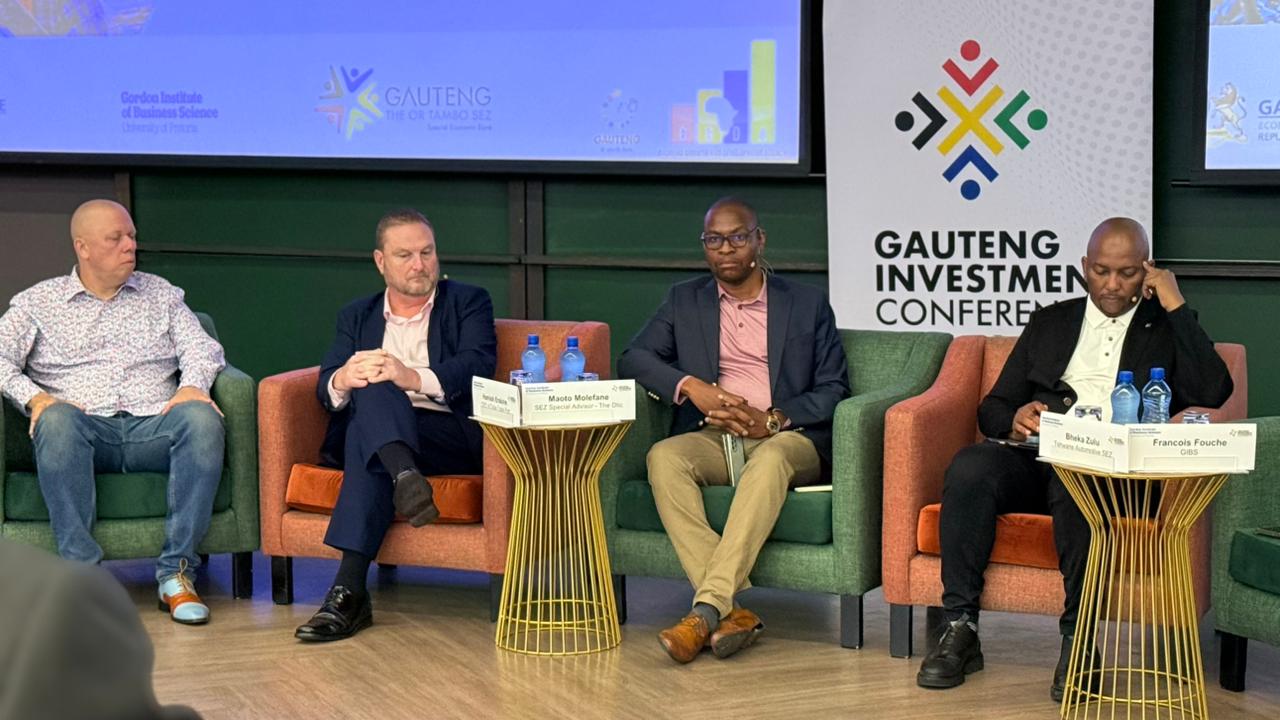
This emerged at a breakfast session hosted at the Gordon Institute of Business Science (GIBS) in Illovo, Johannesburg, on Friday, 20 March 2026, forming part of the roadshow to the 2026 Gauteng Investment Conference.
Opening the session, Gauteng Growth and Development Agency (GGDA) acting CEO Sithembiso Dlamini outlined the province’s strategy to position SEZs as anchors of development corridors, driving infrastructure investment and manufacturing-led growth. She highlighted recent progress in Gauteng’s SEZ programme, stressing its role in catalysing regional economic activity.
A central theme of the discussion was how to close the “value-for-money” gap in SEZ investments.
Trade expert Donald MacKay presented findings from a comparative study of global and local SEZ performance, noting that while South Africa has made progress, structural and policy shortcomings continue to limit impact. He pointed to the need for targeted reforms to improve efficiency, attract investment, and boost export competitiveness.
From a policy perspective, Maoto Molefane, the special advisor to the Minister of Trade, Industry, and Competition and chairperson of the Tshwane Automotive Special Economic Zone (TASEZ), outlined the government’s new Spatial Industrial Development Strategy. He acknowledged limitations in the current SEZ model, including fragmentation and uneven returns, and said the new approach aims to better align industrial spending with national development goals.
“The focus is on ensuring that every rand invested delivers measurable industrial outcomes,” Molefane said.
Insights from operational SEZs reinforced the importance of execution and partnerships.
Dube TradePort CEO Hamish Erskine reflected on the evolution of the KwaZulu-Natal-based SEZ, highlighting the role of logistics integration, infrastructure planning, and strong governance in its success. He said the model demonstrates how SEZs can drive broader regional development, including job creation and small business growth.
Meanwhile, TASEZ CEO Dr Bheka Zulu emphasised the importance of sector-focused development, noting that strategic partnerships – particularly with major investors such as Ford – have been central to its rapid growth.
Zulu also pointed to the need for SEZs to adapt to global shifts, including the rise of new energy vehicles, as part of their future positioning.
The session concluded with consensus that South Africa’s SEZ programme must evolve beyond isolated zones into fully integrated industrial ecosystems, capable of delivering sustained economic impact, increased exports and long-term investment attraction.
The discussion forms part of ongoing engagements ahead of the Gauteng Investment Conference scheduled for 9 April 2026, where infrastructure, manufacturing and industrial policy are expected to take centre stage.