Tasez

News

Tshwane SEZ shows the way on how to successfully attract investment and create employment

The Tshwane Automotive Special Economic Zone (TASEZ) has set the benchmark for the development of South Africa’s new special economic zones. Special economic zones (SEZs) are key to making South Africa an attractive option for foreign direct investments. SEZs are important instruments in advancing the country’s strategic objectives of industrialisation, regional development, the promotion of exports and job creation. Africa’s first automotive city, based in the City of Tshwane, was an exemplary case in how to develop and set up an SEZ to hit the road running. From being gazette in January 2020 to seeing the first cars come off the production line in November 2022, TASEZ achieved all of this in just two short years – and during the Covid 19 pandemic. The TASEZ case study was central to discussions that took place in a workshop held in Pretoria on Thursday, 11 April 2024, that looked at how SEZs can be implemented speedily. Piloting a new method “We are conscious of the responsibility we have been given in piloting this new model for the development of SEZs,” says TASEZ CEO Dr Bheka Zulu. “It could not have been done without the strong strategic partnerships between our investors and all three tiers of government.” The TASEZ model has now set the benchmark for the establishment of new SEZs. Representatives from the country’s new SEZs joined the teams from the Department of Trade, Industry and Competition (the dtic) responsible for SEZ development, the Industrial Development Corporation’s (IDC’s) SEZ unit, and TASEZ. TASEZ chair and executive director of the Industrial Zones Programme at the IDC, Lionel October, said: “We are here today to begin to standardise and formulate SEZ set up procedures.” The dtic’s Shaun Moses set the scene for the discussion, outlining the policy and strategies driving the development of SEZs. He highlighted the underlying economic challenges South Africa had to tackle: This led to the government identifying a number of objectives to change the economic landscape: combining growth with transformation; boosting local production; growing exports and expanding trade within Africa; increasing investment; establishing a reliable and low-cost energy system while greening the economy; and growing employment. This, Moses pointed out, would be achieved through promoting jobs and higher incomes via industrialisation; building an inclusive economy; and making sure public policies make an impact. Factors for success It was against this background that TASEZ became the pilot project for a new approach to setting up SEZs. There were a number of critical factors that ensured the project’s success: “The scale of the TASEZ project demanded a well-coordinated, systematic and objective approach in responding to the socio-economic performance targets, job creation and SMME opportunities.” Crucially, it was the agile project management approach that ensured TASEZ’s success. Key factors to this success were: One of the proposals to speed up the development of new SEZs, put forward by the technical advisor of the Industrial Zones Programme at the IDC, Dr Siyabonga Simayi, was the creation of multi-sites, or the extension of the boundaries of existing SEZs, to incorporate the development of new SEZs. This would see the development of a zone with more than one site, or the development on land that did not share a border with the existing SEZ. The licence of an existing Industrial Development Zone could be used to facilitate the creation of new SEZs, cutting down on read tape and allowing for a speedier and more agile process, Dr Simayi told the workshop. This would see a single licensee, operator and entity, with one management team and board; single operating systems and processes, and a single budget with one audit process. The workshop concluded by agreeing that there was a need to develop clear guidelines and operating procedures to implement successful SEZs within two years. As Stieneke Jensma, the chief operations officer of the Industrial Zones Programme at the IDC, noted in summing up the day: “TASEZ has done it – we know it’s doable.”

TASEZ supports training in manufacturing

The Tshwane Automotive Special Economic Zone’s (TASEZ) commitment to seeing young South Africans gain skills can be seen in the hub’s partnership in the Auvergne Skills Development Centre – a new training centre for young people in the furniture manufacturing sector. TASEZ and Auvergne Designs have signed a memorandum of understanding (MoU) to establish a strategic partnership, particularly in regard to skills training. “Young people hold the country’s economic future in their hands,” said TASEZ CEO, Dr Bheka Zulu. Skilled workers are critical to every sector within South Africa’s economy; being the primary drivers for industrialisation and economic growth. The MoU includes a number of areas where the partnership will be invaluable, including: All these elements will promote transformation within the automotive manufacturing sector, as expressed in the South African Automotive Masterplan (SAAM), which lists a number of objectives and goals the industry needs to see happen by 2035. Key goals in the SAAM are the localisation of labour and materials; encouraging access to the sector for previously disadvantaged businesses and communities; the embracing of new technologies; and the development of local and regional markets. The skills development centre was officially opened on 24 March 2024 by the MEC for Economic Development Tasneem Motara, who noted that the initiative “fosters employment opportunities within the furniture manufacturing sector”. Skills training can boost economic growth and change lives, Motara added. The curriculum of the training centre, based in Rosettenville, Johannesburg, covers a diverse range of skills ranging from upholstery to carpentry, from furniture design and making to building new ventures. The launch of the Auvergne Skills Development Centre also saw the first cohort of trainees begin their year-long course in upholstery. Along with the furniture refurbishment training, the group will also undergo training in new venture creation – a critical skill required for anyone wanting to start their own businesses, including SMMEs. As a partner, TASEZ stands ready to support youth development, unlocking access to workplace opportunities, providing mentorship, and encouraging local communities to develop their own businesses.

South Africa’s SEZs driven by renewable energy

The Tshwane Automotive Special Economic Zone (TASEZ) has a mixed-energy response – including gas to power and solar photovoltaic (PV) cells with battery storage – to ensure operations based in the manufacturing hub are not brought to a halt by power outages and to comply with government imperatives for onboarding green energy solutions. A key challenge to business operations within South Africa is ensuring energy supply remains constant, despite regular nationwide loadshedding. “This has led us to find innovative solutions,” TASEZ CEO Dr Bheka Zulu explained during a fireside chat at the Sustainable Infrastructure Development Symposium of South Africa (SIDSSA) in Cape Town on Tuesday 19 March 2024. “We are currently underway with a gas to power plant project, which will make 20MVA available, along with a solar PV and battery storage solution that will add another 10MVA.” However, as Africa’s first automotive city – based in Silverton – continues to grow, it needs to find more energy, Dr Zulu added. SIDSSA, an annual event, brought together stakeholders from South Africa and across the continent to discuss ways to drive infrastructure development, which has been identified as the key driver in growing the economy.  SIDSSA provided a platform for discussions and partnerships in the infrastructure investment landscape, with a focus on accelerating economic activity through strategic infrastructure plans. SEZs are ideally placed to accelerate industrialisation in the country; according to the Chief Operations Officer of the Industrial Zones Programme at the Industrial Development Corporation, Stieneke Jensma. “We started a programme focusing on energy security, specifically regarding SEZs. The idea is to collaborate and to ensure that what we are delivering solutions that promote industrialisation.”  Strategic partnerships are key in implementing green energy projects, according to TASEZ’s CEO. TASEZ’s approach to energy takes cognisance of the United Nations’ Sustainable Development Goals – particularly Goal 7, which is linked to the provision of clean energy; Goal 9, which aims to build resilient infrastructure using innovative technology; and Goal 13, which is about taking action to combat the impact of climate change.

TASEZ, a case study in successful partnerships

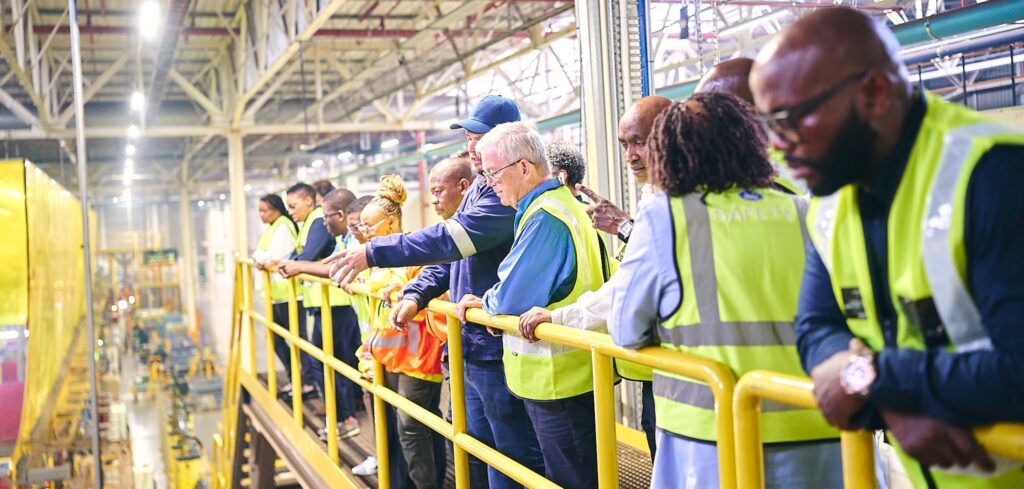
Integrated strategic partnerships are crucial in creating an enabling environment for potential investors; and the Tshwane Automotive Special Economic Zone (TASEZ) is a great example of this process. In a high-level exploratory meeting held at TASEZ on 14 March 2024, representatives from TASEZ, the United Nations Alliance for Sustainable Development Goals (UnASDG) Intergovernmental Organisation, South Africa’s National Planning Commission, and international businesses discussed the possibility of developing strategic partnerships, with the focus being on utilising TASEZ for this purpose. Central to the introductory discussions was how TASEZ had managed to establish Africa’s first automotive city in record time, all through the strong partnerships between the original equipment manufacturer (OEM) – Ford Motor Company of Southern Africa – and the three tiers of government. TASEZ chairperson Lionel October explained to the visitors how the special economic zone (SEZ) had completed the first phase of development in a mere 18 months – and during Covid-19; utilising a R24-billion investment in setting up an automotive manufacturing zone that has 12 fully operational facilities and employs 3 500 people. “This was a pilot project of a new integrated strategic partnership to be used by SEZs in South Africa,” October explained. It is a three-tier partnership between national government that focuses on the high-level structure, provincial government that provides funding for the infrastructure within the zone, and local government that provides infrastructure such as roads and electricity into the zone. Globally, successful SEZs, in China, Japan, and South Korea, for example, focused on modern, new industries and were based on entire cities, October noted. “South Africa, however, took a different approach, focusing on reindustrialisation in under-developed areas.” Under the leadership of CEO Dr Bheka Zulu, TASEZ unlocked the potential available in strategic relationships, opening an investor-friendly hub for OEMS and the manufacturers of automotive components. In addition, it laid the framework to engage with local communities, creating job opportunities for local small, micro and medium enterprises (SMMEs) and workers. Phase 1, for example, saw R1.7-billion spent on SMME procurement. This was done with TASEZ playing a significant role in answering the United Nation’s call to implement the Sustainable Development Goals (SDGs). TASEZ’s operations answer a number of the SDGs, particularly Goal 1 to end poverty, Goal 8 to provide decent work and economic growth, Goal 9 to build resilient infrastructure using innovative technology, and Goal 12 to ensure sustainable production patterns. During phase 1 TASEZ ensured that local community members were provided with economic opportunities; construction embraced green sustainable building materials and methods; and innovative technologies, including high-speed internet and green energy solutions, were made available to potential investors. TASEZ is now preparing to roll out phase 2 of the project – a mixed-use development, which will include incubator programmes to create opportunities for new, emerging suppliers for the automotive component manufacturing sector. Responding to the information shared by TASEZ, UnASDG ambassador Deacon Mathe described how the alliance was focused on making sure the UN’s SDGs became a reality in South Africa. The alliance focuses on monitoring, providing an analysis, funding, and support to members from all the countries represented in the UN. After the discussions, the group toured the facilities in TASEZ’s phase 1.   

Green TASEZ ready for investors

Investors are crucial for the strengthening of South Africa’s economy, and the Tshwane Automotive Special Economic Zone (TASEZ) is ensuring it provides the best possible business environment for international automotive manufacturers and component producers. The manufacturing sector is one of the key drivers of the country’s gross domestic product, with the automotive industry providing direct links to the global market and local entrepreneurs. The special economic zone’s (SEZ’s) focus on attracting investment is in keeping with the South Africa Investment Strategy which aims to position South Africa as a preferred African investment destination, and in so doing, attempt to meet the National Development Plan target of 30% of gross fixed capital formation to GDP by 2030. The South African Investment Strategy aims to attract and facilitate quality foreign direct investment and domestic direct investment and ensuring the provision of such investment is well-coordinated and anchored by quality institutions and robust economic infrastructure networks. The national strategy plans to achieve this through: TASEZ is ideally positioned to answer the call of the investment strategy: it operates in a high priority sector – manufacturing; it offers green solutions to its clients; and is forward thinking in ensuring it embraces the latest technology available to ensure its premises are energy resilient and technologically advances. Known as Africa’s first automotive city, TASEZ is strategically located in the economic heart of the county and is able to offer unparalleled access to markets across Africa and beyond. With its base close to existing OEMs and an existing automotive value chain, access to a highly skilled workforce, and proximity to leading academic, research and development institutions, investors in TASEZ can tap into a wealth of human capital and knowledge. This advantage allows for the seamless integration of cutting-edge technologies and innovative manufacturing. As TASEZ CEO Dr Bheka Zulu notes: “With increasing urbanisation and economic growth across the continent, investing in TASEZ offers an opportunity not only to serve the domestic market but also to expand and tap into the burgeoning markets across Africa.” Currently products manufactured in the SEZ are exported to more than 150 destinations world-wide. In keeping with their determination to provide the best facilities possible for investors, representatives from TASEZ are taking part in the Africa Energy Indaba, on in Cape Town between 5 – 7 March 2024, where they are investigating the latest trends in the energy sector, including renewable energy. A primary element that makes TASEZ an attractive destination for investors is its commitment to green manufacturing. “By embracing renewable energy solutions and reducing its carbon footprint, the SEZ is taking significant strides toward creating an environmentally conscious and responsible manufacturing ecosystem,” Dr Zulu notes. In line with global trends, TASEZ is also promoting the development of electric vehicles. “By encouraging the development of New Energy Vehicles (NEV) and their components, our SEZ is driving a revolution that is expected to reshape the entire automotive landscape.” As the global automotive industry undergoes a profound technological evolution, TASEZ is geared up to take advantage of the opportunities such change brings.

State of the Province notes Gauteng is ready to create new opportunities

If potential investors were listening to Gauteng’s State of the Province speech on Monday evening, 19 February 2024, they would have much to encourage them to look closer at being based in the province. Premier Panyaza Lesufi noted that if Gauteng was a country, it would have the third largest economy after Egypt and Nigeria, having introduced processes to transform, modernise and reindustrialise the economic sectors. The premier described the five major economy corridors that are now ready to grow.  “We took a conscious decision that each corridor must have a powerful economic centre.” For example, one of the key economic sectors in the Tshwane region is that of the automotive industry, where the Tshwane Automotive Special Economic Zone plays a critical role. Moving away from being dependent on mining, the economic development of Gauteng has focused on four key aspects: the financial sector; telecommunications; pharmaceuticals; and ICT. All the banks and insurance companies, as well as the telecommunication giants have their headquarters in Gauteng. “Companies like Google and Huawei chose our province to have their head offices,” the premier noted. The premier went on to highlight the development of the various Gauteng regions and their specific economic focus. As pointed out, the motor vehicle industry is a key driver of the Tshwane economy. Premier Lesufi noted that Phase 1 of TASEZ’s development had been completed. TASEZ “operations are in full swing, with the completion of Phase 1 of its development seeing the production of the first next-generation Ford Ranger and the VW Amarok getting into gear in November 2022.” Lesufi explained that this was the result of a capital investment of R15.8-billion by the Ford Motor Company of South Africa, with the company looking to increase its capacity to produce 200 000 vehicles annually and export vehicles to more than 100 global markets. In addition to the investment from Ford, Ford suppliers invested R5.6-billion into TASEZ, along with an initial government investment of R3.9-billion. With the need to streamline the export of vehicles, the premier announced that “we are developing a new railway line between Tshwane and East London, led by the Minister of Public Enterprises, so that we can ship these cars from the East London port to the world”. “We are indeed excited that these developments are pointing to one direction and one direction only, our economy is back on its feet.”

Tasneem Motara, Gauteng MEC for economic development, addresses the media

TASEZ gets accolades from media

During a roundtable discussion on Gauteng’s economic development with MEC for economy, Tasneem Motara, and members of the media on Thursday, 15 February 2024, it was a journalist who noted that the Tshwane Automotive Special Economic Zone could be considered “a resounding success”. A manufacturing development project that could have taken a decade, came to fruition in a mere 36 months. TASEZ – Africa’s first automotive city – was officially launched in November 2019, and the first cars rolled off its Ford production line in November 2022. The automotive hub’s achievement was even acknowledged when it won a Built Environment Recognition Award as a “state-owned entity that implemented infrastructure projects timeously” at the end of 2023. As a special economic zone focused on growing investment and innovation within the automotive sector, TASEZ is a vital cog in the country’s economic development. Based in the automotive hub of the City of Tshwane, TASEZ sees itself as “shaping the future of automotive excellence” as it helps the South African automotive industry on its path to transform the sector by attracting investments and becoming more inclusive and more sustainable. Motara briefed the media on the economic landscape of the province, highlighting a number of achievements and speaking plainly about the challenges. Key to the development of the Gauteng economy is transformation and the building of the township economy. Motara explained how the province has provided financial aid and legislative support to emerging entrepreneurs and small, medium and micro enterprises (SMMEs). Among the programmes run by the Gauteng provincial government are the acquiring of products and services from township SMMEs; support for upgrading township businesses in the key sectors of manufacturing, retail, ITC, the taxi industry and backyard real estate. Public private partnerships involving the Gauteng provincial government include: Bizniz in a Box hawker stalls in partnership with Coca-Cola Beverages South Africa; the Last Mile delivery initiative providing market access to motorbike riders, in partnership with UberSA, iBoltSA and Takalot; and the refurbishment of five township bakeries, with family tree, Heinkeken and Coca-Cola Beverages South Africa providing equipment. Although not part of the roundtable discussion, TASEZ too plays its part in empowering local township economies. It has a Memorandum of Understanding with the local communities through the Community Project Committee (CPC) which represents Eersterust, Mamelodi and Nelmapius.

EEC group visits TASEZ

Investigating possible collaboration around developing industrial parks, the Tshwane Automotive Special Economic Zone hosted a high-level delegation from the Eurasian Economic Commission (EEC) on 22 January 2024. The commission members spent time with the TASEZ leadership team, sharing ideas and exploring ways to collaborate in setting up industrial parks. TASEZ is seen as an important special economic zone to visit, given that it managed to grow from a vacant lot into a well-established manufacturing hub in three short years, winning a Built Environment Recognition Award as a “state-owned entity that implemented infrastructure projects timeously” in 2023. From the sod-turning ceremony overseen by President Cyril Ramaphosa in November 2019 to the start of production on Ford’s Next-Generation Rangers on 15 November 2022, TASEZ has been a case study for infrastructure development in South Africa. In addition, TASEZ and their EEC guests, including Nikolay Kushnarev, director of the industrial policy department of the EEC, and Armen Harutyunyan, director of the EEC agricultural policy department, discussed opportunities for foreign investment and the possibilities of attracting investors from the Eurasian Economic Union countries into South Africa’s SEZs. The commission, which was established in 2012, has five members at present: Armenia, Belarus, Kazakhstan, the Kyrgyz Republic and Russia. “The experience of successful implementation of the Tshwane SEZ clearly demonstrates the existing industrial and technological capabilities and advantages that can contribute to integration with the Eurasian Economic Union industrial sector, [as well as the] increase in value-added production and regional economic development,” Kushnarev noted. TASEZ CEO Dr Bheka Zulu concurred, adding: “We are confident this visit will serve as a platform for meaningful collaboration between TASEZ and the EEC, opening new avenues for possible collaboration.” Based in the automotive hub of the City of Tshwane, TASEZ, Africa’s first automotive city, aims to attract automotive manufacturers and suppliers, providing a world-class hub with bespoke facilities and services. The zone sees itself as “shaping the future of automotive excellence” as it helps the South African automotive industry on its path to transform the sector by attracting investments and becoming more inclusive and more sustainable.

Fraudulent job advert!

Dear job seekers, The Tshwane Automotive Special Economic Zone (TASEZ) has become aware of a scam job advertcirculating in its name. Some unscrupulous individual has posted (on various social media platforms) a fraudulent jobadvert with the intent of deceiving and taking advantage of unsuspecting job seekers. TASEZ only advertises job opportunities through its official channels, including this website. Any job advert claiming to be from TASEZ that does not originate from our official channelsshould be ignored.

TASEZ recognised at the Transport Evolution Africa Awards

2023 – a successful year for TASEZ

From the launch of an initiative supporting women development to signing a partnership agreement with local communities to hosting interested investors from BRICS countries, the Tshwane Automotive Special Economic Zone is helping change South Africa’s economic landscape. TASEZ has a vision to be the benchmark for special economic zones (SEZs) in the country, contributing to the growth of the automotive sector by being a major creator of new businesses and contributing to employment, transformation, and socio-economic development. It is a big ask for any organisation, particularly one that is three years old. Celebrating women leadership This year has been a particularly busy one for the SEZ. One significant event was the launch in September of the Women of the SEZs, an initiative to empower women, champion diversity, foster inclusivity and celebrate achievements of women in all spheres of the SEZ space. As TASEZ board member Susan Mangole noted, the event aimed to “inspire and build women”, serving as a testament to the unyielding determination of women who continue to steer the course of progress, innovation, and collaboration within the SEZs and beyond. Encouraging investment TASEZ also held its own on the international stage, hosting delegates to the 15th annual BRICS Summit held in Johannesburg in August. BRICS, made up of Brazil, Russia, India, China and South Africa, incorporates more than 40% of the global population and accounts for over 25% of the world’s economy. A number of investors from Brazil, Russia, India and China toured the TASEZ Silverton facilities to find out for themselves what Africa’s First Automotive City has to offer. The SEZ provides world-class production facilities, steers investors towards tax incentives and helps source well-trained workers. At the end of the tour the deputy chair of the BRICS Manufacturing Working Group, Lesetja Mogaba said TASEZ had showed the delegates just how to link industrial development to local community needs. “This is a class act,” he added. International and local relations Egyptian Prime Minister Mostafa Kamal Madbouly visited the Ford Frame plant at TASEZ in August 2023. In addition, TASEZ played host to several other African partners from Uganda and Zimbabwe, who wanted to learn firsthand how TASEZ had managed to grow from a vacant lot into a well-established manufacturing hub in two short years. Questions were asked on how TASEZ is run, what incentives are provided to investors, and what lessons were learnt in the process. Equally critical to the success of TASEZ is its partnerships with the local communities, and to this end the organisation signed a memorandum of understanding with the Community Project Committee (CPC) in February 2023. The document outlined the formal ties between TASEZ and the surrounding communities of Mamelodi, Eesterust and Nellmapius. TASEZ and the CPC are committed to working together to create job opportunities while at the same time building an inclusive automotive industry. Good governance Good governance sits at the heart of all TASEZ’s business efforts, and August saw the company receive a clean audit from the Office of the Auditor-General. This was the third year in a row that the company received such a result. Board chair Lionel October noted TASEZ’s “unwavering commitment to transparency, accountability, and excellence”. The clean audit reaffirmed TASEZ’s commitment to prudent financial management, effective controls, and ethical practices, he added. management, effective controls, and ethical practices, he added. Awards for industry excellence September saw TASEZ CEO Dr Bheka Zulu recognised at the Transport Evolution Africa Awards for his “inclusive leadership”. The awards, which acknowledge “the achievements of transport trailblazers in making an impact locally, nationally and continentally”, formed part of a three-day gathering of decision-makers, businesses and organisations involved in the transport sector. In addition, TASEZ sponsored a special lounge at Transport Evolution Africa to showcase the offerings of South Africa’s SEZs and encourage investors to talk business with the SEZs represented. The year ended on an exciting note, with TASEZ receiving another award: this time the Council for the Built Environment and the Construction Education Training Authority honoured the SEZ as a state-owned entity that implemented infrastructure projects timeously at their inaugural Built Environment Recognition Awards held on 7 December 2023 under the theme “Road to Professional Registration”. The award recognised the efforts TASEZ made to establish and develop Phase 1 of the SEZ in the midst of the Covid-19 pandemic. A new year is just around the corner and will bring a new phase of development to TASEZ, as it begins work on Phase 2.