Tasez

Tasez

Tshwane councillors encouraged by TASEZ progress after oversight visit

Tshwane councillors have expressed confidence in the progress made at the Tshwane Automotive Special Economic Zone (TASEZ), saying the project is emerging as one of the City’s most important industrial development platform, writes Mandla Mpangase. Members of the City of Tshwane’s Section 79 Oversight Committee on Integrated Development Planning, visited TASEZ on 12 May 2026 for an oversight inspection and engagement with management. The visit included a presentation by the TASEZ leadership team and a walkabout of two facilities within the Special Economic Zone (SEZ). The engagement focused on job creation, small, medium and micro enterprise (SMME) development, infrastructure delivery and the zone’s next phase of expansion, which is expected to deepen Tshwane’s position as one of South Africa’s automotive manufacturing hubs. TASEZ CEO Dr Bheka Zulu briefed councillors on the SEZ’s development, performance and strategic positioning as one of Gauteng’s most significant industrial projects, anchored by Ford’s Silverton operations and positioned in the wider Tshwane automotive corridor. Zulu said Tshwane produced about 40% of South Africa’s passenger vehicles and was home to five original equipment manufacturers – Ford, BMW, Nissan, Iveco and UD Trucks – with Chery also expected to enter the market. The region also hosts more than 100 component suppliers and supports more than 40 000 direct jobs in the automotive sector. Since its establishment, TASEZ in its first phase of development has attracted R4.12-billion in government investment and R5.9-billion in private-sector investment. It has created 5 500 construction jobs and 3 422 permanent jobs, while more than R1.7-billion has been spent on SMME procurement. The first phase of the project was largely built around supplier facilities linked to Ford’s R16-billion investment in its Silverton production plan in South Africa between 2020 and 2023, followed by a further R5.2-billion investment cycle from 2024 to 2026. Zulu said the zone’s supply-chain impact extended to about 10 000 jobs and made a significant contribution to GDP. He also highlighted TASEZ’s transformation and enterprise-development work. TASEZ reported that 229 SMMEs had benefited from Phase 1 and Phase 1A, while 265 SMME packages had been awarded and 370 SMMEs trained. TASEZ infrastructure executive Andile Sangweni briefed councillors on the SEZ’s expansion plans, saying the master plan included the 81ha Phase 1, a 10.5ha Phase 1A, an 81ha for Phase 2, and future land parcels. Phase 2 includes an industrial node, the TASEZ Centre of Excellence campus, truck staging and mixed-use elements aligned with market demand. Sangweni said Phase 2 was already being implemented, with work under way on the La Montagne reservoir, bulk water reticulation, bulk electrical infrastructure, roads, stormwater systems and internal engineering services. TASEZ expects Phase 2 to unlock further economic activity, with government investment of R1.95-billion in top structures and bulk services, and private-sector investment of R3.5-billion in machinery, equipment and technology. The phase is expected to create 2 000 construction jobs and 2 500 permanent jobs. The zone is also looking increased SMME procurement, with a minimum 30% of spending earmarked for SMME participation. The visit came as TASEZ advances plans to diversify its energy infrastructure. Sangweni said the zone’s energy plans include a solar independent power producer project by Heshun, which is expected to install rooftop solar photovoltaic and battery storage systems across selected factories in Phase 1 and Phase 1A. The project is expected to provide 20MW of photovoltaic capacity with battery storage, carry an estimated investment value of R600-million and be completed by May 2027. The solar project forms part of TASEZ’s broader green energy initiatives and extends its energy mix programme, which also includes a 20MVA gas-to-power solution. Zulu said the visit was more than a routine site inspection. “For Tshwane, the visit was more than a routine site inspection. TASEZ is an implementation partner of the City, has been in operation for five years and is linked to a memorandum of understanding with the municipality,” he said. “The engagement gave councillors an opportunity to see first-hand the progress being made, the economic impact already delivered, and the next phase of work required to deepen Tshwane’s role in South Africa’s automotive economy.”

TASEZ, partners donate 700 pairs of school shoes to learners

By Mandla Mpangase The Tshwane Automotive Special Economic Zone (TASEZ) and the Community Project Committee have donated more than 700 pairs of school shoes to learners in Mamelodi, Nellmapius and Eersterust as part of the efforts to strengthen school participation in communities surrounding the industrial hub.   The handover took place at J Kekana Secondary School in Ward 6 on Tuesday, 5 May 2026. TASEZ said the initiative formed part of its social compact and broader community development programmes linked to the growth of SA’s automotive manufacturing sector.   The shoes were sponsored by TASEZ partners, including Thai Summit, Eltek Solethu JV and MES Major Projects. TASEZ CEO Dr Bheka Zulu said education remained one of the most critical drivers of long-term economic inclusion, particularly in communities under persistent socio-economic pressures. “Shoes don’t define you. You define where your shoes will go,” said Zulu, encouraging learners to remain focused on education despite difficult circumstances. The donation comes as large industrial developments face growing expectations to show measurable benefits beyond investment, infrastructure and job creation, particularly in communities located near strategic economic projects. TASEZ is positioning itself as Africa’s first automotive city, with plans aimed at deepening SA’s automotive value chain and supporting industrialisation in South Africa. But the scale of the project has also increased expectations that surrounding communities should share more directly in its development gains. Research by the United Nations Children’s Fund (UNICEF) and other development agencies has consistently linked access to basic school necessities, including uniforms and footwear, to improved attendance, learner retention and academic performance, especially in under-resourced communities. Statistics South Africa data continues to show that poverty and household income pressures remain major contributors to unequal educational outcomes across the country. Against this backdrop, TASEZ framed the intervention as part of a longer-term commitment to restoring dignity and supporting educational participation, rather than a once-off charitable exercise. Located in one of Tshwane’s largest townships, J. Kekana Secondary School serves a community where many households continue to face economic hardship. The initiative also reflects a broader shift within South Africa’s automotive manufacturing ecosystem, where environmental, social and governance (ESG) considerations are increasingly shaping corporate investment priorities and stakeholder expectations. For TASEZ, the message was clear: industrial expansion must translate into visible benefits for surrounding communities if economic development is to be sustainable and inclusive.

RFP019/2025: For the maintenance of firefighting, suppression, and fire detection systems

The Tshwane Automotive Special Economic Zone is looking to appoint a service provider for the maintenance ofThe Tshwane Automotive Special Economic Zone is looking to appoint a service provider for the maintenance of firefighting, suppression and fire detection systems for a period of 36 months. Compulsory briefing: 8 May 2026 at 11h00Venue: TASEZ Central Hub, in Manitoba, The Willows 340-Jr, Pretoria Closing date: 22 May 2026 at 12h00 Download RFP019/2025 here Download Addendum 1 here

Awarded tenders 2025/2026

The Tshwane Automotive Special Economic Zone (TASEZ) has announced the awarding of a number of tenders for 2025/2026.  You can view them below. View the awarded tenders for 2025/2026 here

RFP011/2025: For the supply, installation and configuration of the network infrastructure and internet connectivity

The Tshwane Automotive Special Economic Zone (TASEZ) has issued a request for proposals for the supply, installation and configuration of the network infrastructure and internet connectivity for a period of three years. Closing date: 11 May 2026 by 12h00 Compulsory briefing: 23 April 2026Time: 12h00 – 14h00Venue: TASEZ Central Hub Manitoba, The Willows 340-Jr, Pretoria, 0081   Download RFP011/2025 here Download Addendum 1 here Download Floor Plans here Download Addendum 2 here

RFP024/2025: For the supply, delivery, and maintenance of printers

The Tshwane Automotive Special Economic Zone (TASEZ) has issued a request for proposals for the appointment of a service provider for the supply, delivery, and maintenance of three printers for a period of three years. Closing date: 8 May 2026 at 12h00. Compulsory briefing: 23 April 2026Time: 10h00 – 12h00Venue: TASEZ Central Hub Manitoba, The Willows 340-Jr, Pretoria, 0081 Download RFP024/2025 here Download Addendum 1 here

RFP026/2025 for the provision of tactical armed response security services

The Tshwane Automotive Special Economic Zone (TASEZ) has issued a Request for Proposals for the provision of tactical armed response security services to render a 24-hour, seven-day-a-week (including holidays) service to TASEZ for a period of 36 months. Compulsory briefing date: 24 April 2026Time: 10:00 – 12:00Venue: TASEZ Central Hub Manitoba, The Willows 340-Jr, Pretoria, 0081 Closing date: 8 May 2026 at noon. Download RFP026/2025 here

Mashatile: Gauteng key to turning R1.5tn investment pledges into jobs and industrial growth

By Mandla Mpangase South African Deputy President Paul Mashatile has positioned Gauteng as the critical engine for converting South Africa’s record investment pledges into tangible economic outcomes, urging faster implementation, stronger partnerships, and a renewed focus on industrialisation. Addressing the 2026 Gauteng Investment Conference on Thursday, 9 April 2026, Mashatile said the province would play a central role in delivering on the commitments secured at the recent South African Investment Conference 2026, where approximately R890-billion in pledges were announced in a single day. The latest commitments push total investment pledges since 2018 to well over R1.5-trillion, prompting the government to set a new national target of R3-trillion in the years ahead. From pledges to implementation Mashatile stressed that the credibility of South Africa’s investment drive would depend not on headline figures, but on execution. “The true value lies in delivery – translating commitments into factories, infrastructure, energy capacity, and above all, jobs,” he said. In this context, Gauteng, South Africa’s largest contributor to GDP and a gateway to regional and global markets, has been identified as the primary platform where many of these projects will be implemented and scaled. The Gauteng Investment Conference, he noted, serves to “localise investment, accelerate execution, and remove obstacles at project level”, effectively bridging the gap between national ambition and on-the-ground delivery. Aligning national priorities with provincial strengths Mashatile said many of the investments announced at the South African Investment Conference align directly with Gauteng’s economic strengths, including advanced manufacturing, energy, logistics, digital services, and infrastructure development. The province’s industrial base, financial system, skilled workforce, and connectivity position it as a natural hub for large-scale project rollout. “This conference moves us from national pledges to provincial pipelines, from policy certainty to site readiness, and from investor intent to operational delivery,” he said. A new model of industrialisation Framed under the theme Re-industrialising Africa’s Gateway, Mashatile outlined a modern approach to industrialisation built on four pillars: Investment lifecycle approach Mashatile said the Gauteng Investment Conference is evolving into a full investment lifecycle platform, covering project origination, preparation, financing, implementation, and delivery. Government’s role, he said, is to de-risk investment through policy certainty and regulatory efficiency, crowd in private capital, and ensure accountability through project tracking and coordination across all spheres. “Credibility is built not on what we announce, but on what we deliver,” he said. Call for public-private partnership The deputy president called for deeper collaboration between government, business, and development finance institutions to unlock large-scale investment. He urged businesses to invest in skills development, support localisation and integrate small enterprises into value chains, while positioning themselves as “co-architects” of South Africa’s industrial future. Investors, meanwhile, were encouraged to view South Africa, and Africa more broadly, not as a risk, but as a long-term growth opportunity. “Africa is not a risk story; it is a growth and return story,” Mashatile said. Gauteng as a gateway to Africa Reaffirming Gauteng’s strategic importance, Mashatile said the province offers a combination of returns and resilience, underpinned by a skilled workforce, established infrastructure, and a commitment to enterprise development. He concluded with a call to action for all stakeholders to move decisively from commitments to implementation. “Let this conference mark a turning point, from commitments to implementation, towards integrated growth that is inclusive, sustainable, and transformative,” he said.

Gauteng targets R200bn in new investment as MEC Maile positions province as Africa’s deal-making hub

By Mandla Mpangase Lebogang Maile, former Gauteng MEC for Finance and Economic Development and now MEC for Education, has set an ambitious target of mobilising at least R200-billion in new investment commitments at the 2026 Gauteng Investment Conference, positioning the province as a leading subnational platform for deal-making on the continent. Speaking at the opening of the conference, Maile said Gauteng is shifting from “mobilisation to institutionalisation” of investment, as the province seeks to convert pledges into tangible economic activity. The conference, now in its second year, has evolved from a traditional investment showcase into what Maile described as a “central instrument” for driving growth, coordinating stakeholders, and translating policy into implementation. From pledges to projects The inaugural 2025 conference attracted more than 1 800 participants and secured R312.5-billion in investment pledges, signalling renewed investor confidence in South Africa’s economic hub. However, Maile stressed that success is no longer measured by headline figures alone. “Investment conferences are not judged by what is announced, but by what is delivered,” he said. According to Maile, a “meaningful portion” of those commitments has already moved into implementation, unlocking tens of billions of rand into infrastructure, industrial capacity, energy systems, and job creation. This progress, he argued, reflects a deliberate shift to a lifecycle-based investment model – one that spans project origination, preparation, packaging, investor engagement, facilitation, delivery, and aftercare. A multiplier for growth Maile described the Gauteng Investment Conference as a “force multiplier” that integrates project preparation, intergovernmental coordination and capital mobilisation into a single system aligned with the Gauteng Economic Plan. The province, which contributes roughly a third of South Africa’s GDP, remains the country’s primary economic engine and a key gateway into African markets. Yet it faces structural constraints, including low national investment levels, infrastructure backlogs, and energy instability. At the same time, intensifying global competition for capital and shifting supply chains are reshaping investor expectations. “Investors are no longer responding to ambition alone,” Maile said. “They are responding to credibility, governance, execution capability, and the ability to convert opportunity into outcomes.” Focus on high-growth sectors The 2026 conference is structured around transactions rather than presentations, with curated deal rooms and sector-focused engagements aimed at accelerating project closure. Priority sectors include: Maile said the province is strengthening coordination across national, provincial, and municipal pipelines to present “one government” to investors, reducing fragmentation and improving project visibility. Continental ambitions A key feature of this year’s conference is the Gauteng Pan-African Economic Partnership Mobilisation initiative, which seeks to align with the African Continental Free Trade Area and the African Union’s Agenda 2063. The aim is to build cross-border value chains and position Gauteng as a gateway to Africa’s industrialisation. Maile argued that if successful, Gauteng’s model could serve as a blueprint for other African regions seeking to compete globally through integrated, investment-ready ecosystems. Aftercare and execution in focus A major emphasis for the 2026 Gauteng Investment Conference is post-conference implementation. Maile highlighted the importance of “aftercare” in ensuring that projects progress efficiently through regulatory approvals, financing, and construction. He called on municipalities to accelerate approvals and align project pipelines, while urging development finance institutions and banks to expand blended finance solutions that can de-risk large-scale infrastructure investments. The private sector, he added, should view itself not merely as participants but as co-investors in the province’s growth trajectory. From promise to performance Framing the conference under the theme Re-Industrialising Africa’s Gateway: Investment, Innovation and Integrated Growth, Maile said Gauteng is building a system for continuous capital formation rather than relying on one-off events. “We are not presenting a wish list,” he told delegates. “We are presenting structured opportunity – bankable projects, aligned policy frameworks, coordinated institutions, and an administration committed to delivery.” With project pipelines prepared and partnerships taking shape, Maile concluded that the province is ready to move “from promise to performance” as it seeks to entrench investment-led growth in South Africa’s economic heartland.

Ramaphosa hails record investment pledges as South Africa ‘turns a corner’

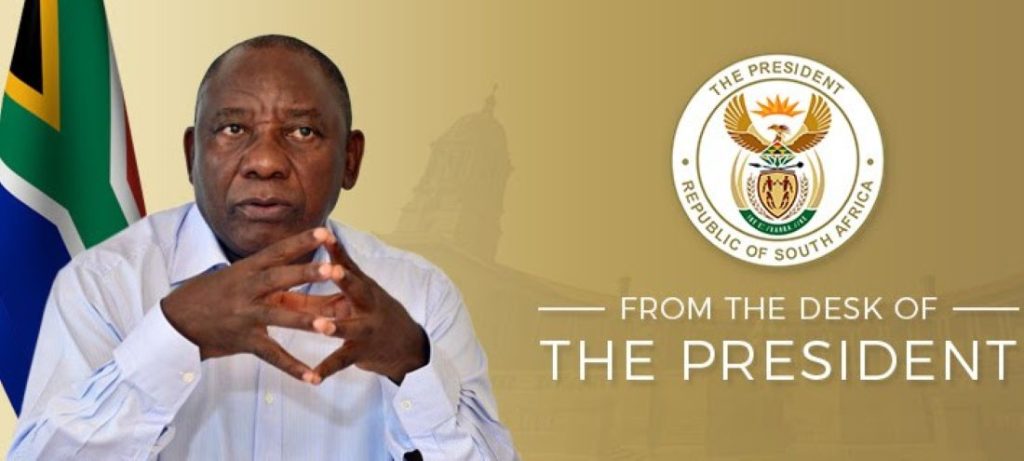
By Mandla Mpangase President Cyril Ramaphosa has declared that South Africa is entering a “new phase of growth”, following record-breaking investment commitments announced at the 2026 South Africa Investment Conference (SAIC) held at the Sandton Convention Centre in Johannesburg. Delivering his closing remarks to delegates, investors, and business leaders, Ramaphosa said the scale and scope of pledges made at this year’s conference provide compelling evidence that confidence in the country’s economy is strengthening. The conference marked the launch of a second investment mobilisation drive, targeting R2-trillion in new investments between 2026 and 2030. This builds on the success of the first drive, which exceeded its R1-trillion target. A total of R889.8-billion was pledged during the day-long conference on 31 March 2026. “The cumulative value of the pledges made at this conference is the highest we have achieved since the first South Africa Investment Conference,” he said, noting that the number of projects announced had also reached a new peak. A notable feature of this year’s commitments is the strong showing from domestic investors, which Ramaphosa said reflects growing confidence within South Africa’s own business community. At the same time, foreign direct investment has “increased phenomenally”, supported by participation from international firms and development finance institutions. The investments span all nine provinces and cut across key sectors including energy, mining, manufacturing, infrastructure and global business services. Among the headline commitments, Toyota will invest R10.4-billion in KwaZulu-Natal to support the automotive sector’s transition to cleaner energy. Sasol has pledged R60-billion for plant upgrades and new technologies in Mpumalanga and the Free State. At the same time, Valterra Platinum will expand mining operations in Limpopo to supply critical minerals for future-facing industries. Infrastructure and energy also feature prominently. South32 is investing R3.9-billion in rail upgrades linked to manganese mining in the Northern Cape and KwaZulu-Natal, while black-owned manufacturer Actom will inject R250-million into equipment to support electricity grid expansion. In the services sector, Teleperformance will invest R145-million in the Eastern and Western Cape, creating 2,600 jobs, while renewable energy company Mulilo has committed R14.8-billion to projects across multiple provinces. Ramaphosa emphasised that these commitments align with the government’s broader push to scale up infrastructure spending, describing it as the “largest infrastructure investment intervention” in South Africa’s history. Despite the positive momentum, the President acknowledged that significant work remains. Fixed investment currently stands at around 15% of GDP, and the country must double this level over time to achieve sustained economic growth. “There is a gap between improved sentiment on one hand, and greater capital deployment that translates to strong growth and jobs on the other,” he said. Central to closing that gap is the government’s structural reform agenda, which Ramaphosa described as “irreversible”. The reforms, coupled with a robust regulatory framework and adherence to the rule of law, are aimed at providing certainty and predictability for investors. He also highlighted the importance of South Africa’s constitutional democracy, noting that the rule of law underpins economic development, protects rights, and ensures accountable governance. Ramaphosa credited the private sector as a key partner in the country’s economic recovery, pointing to longstanding collaboration between business and government since 2019. Initiatives such as the Youth Employment Service have created more than 200 000 work opportunities, while joint efforts during the Covid-19 pandemic and the Economic Reconstruction and Recovery Plan helped stabilise the economy. The evolving Government Business Partnership, now in its third phase, is focused on improving logistics, securing energy supply, and tackling crime and corruption – issues that remain critical to investor confidence. On this front, Ramaphosa outlined a series of interventions to strengthen the criminal justice system, including the establishment of a new reform initiative targeting organised crime, corruption, the illicit economy, and illegal firearms. He also confirmed that new regulations under the Public Procurement Act will be finalised soon to combat corruption in state procurement. Reflecting on the past decade, Ramaphosa said South Africa has made significant progress since the era of state capture and economic stagnation. “Today, the green shoots of renewal are emerging. We have turned a corner, and confidence in our economic trajectory is rising,” he said. He urged delegates to convert pledges into tangible projects and long-term partnerships that drive inclusive growth and job creation. “You are not merely investing in an economy,” he said. “You are investing in a nation determined to grow, transform, and succeed.”