
12 March 2026
By Mandla Mpangase
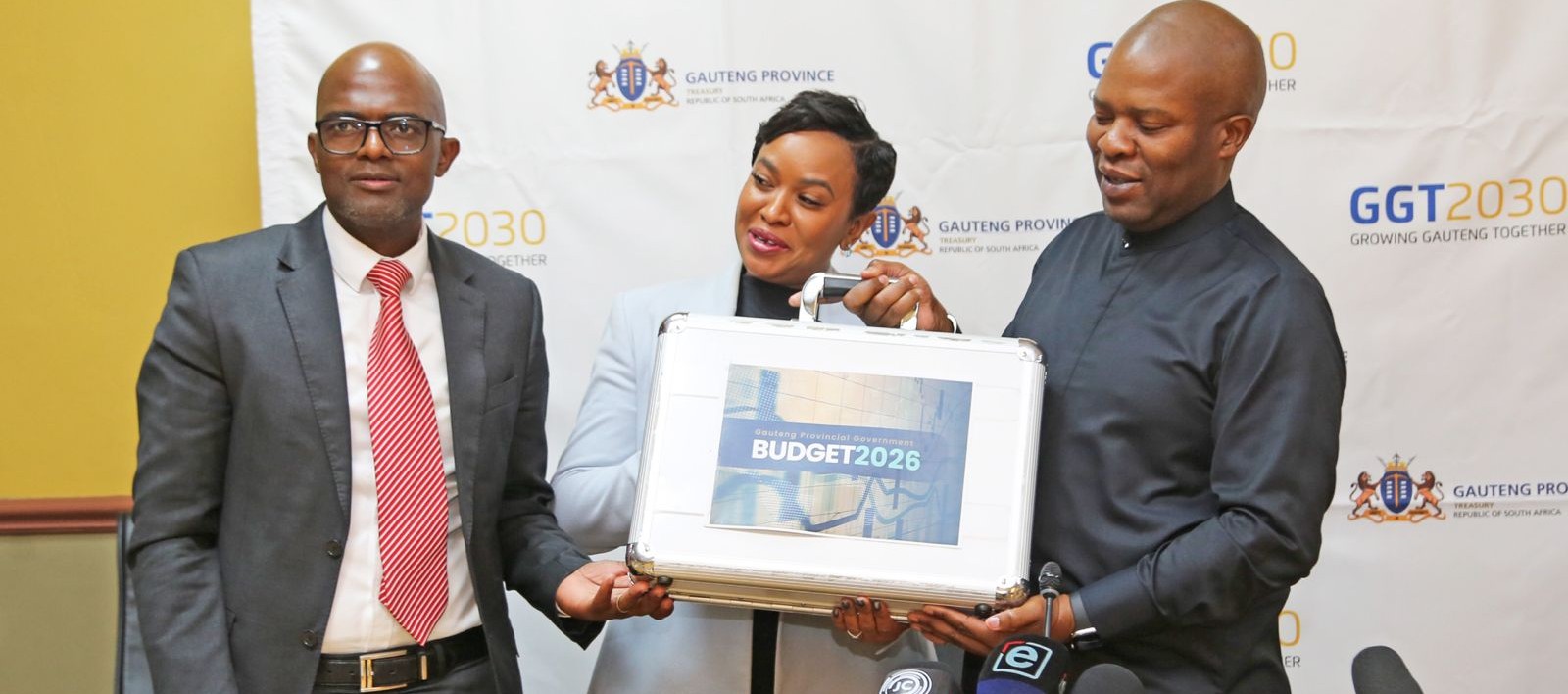
The Gauteng Provincial Government has tabled a R549.3-billion medium-term budget aimed at accelerating infrastructure development, attracting investment and strengthening manufacturing to stimulate economic growth and job creation across the province.
Presenting the 2026/27 budget in the Gauteng Legislature, MEC for Economic Development and Finance, Lebogang Maile, said the province is prioritising infrastructure expansion, industrial development and investment facilitation as key drivers of inclusive growth.
The budget theme, “The audacity of hope: A collective commitment to building a resilient Gauteng,” reflects the province’s strategy to rebuild economic momentum while addressing unemployment, infrastructure backlogs and service delivery challenges.
Infrastructure spending to unlock growth
Infrastructure investment forms a cornerstone of the provincial strategy, with R36.4-billion allocated to infrastructure programmes over the Medium-Term Expenditure Framework (MTEF).
Of this amount, R22.7-billion will fund the expansion of infrastructure capacity to meet rising demand, while R13.8-billion will be directed towards maintaining and rehabilitating existing assets.
Maile said infrastructure investment is critical to improving service delivery while also acting as a catalyst for economic growth and employment.
“Infrastructure is the bridge between hope and visible delivery,” he said. “It supports long-term growth, improves service delivery and creates jobs.”
Major allocations will focus on healthcare facilities, schools, human settlements and transport infrastructure, as well as bulk infrastructure to support economic development projects and Special Economic Zones.
The province is also prioritising energy-related infrastructure projects to support municipalities and improve energy security.
Special economic zones and industrial development
The budget reinforces Gauteng’s re-industrialisation agenda, with funding directed towards Special Economic Zones, township industrial hubs and revitalised industrial parks.
The Gauteng Growth and Development Agency and the Gauteng Enterprise Propeller will play a key role in implementing investment and industrial programmes.
Funding will support:
- Development of Special Economic Zones
- Bulk infrastructure for Phase Two of the Tshwane Automotive Special Economic Zone
- Revitalisation of industrial parks
- Development of township automotive hubs
- Planning for the Vaal Special Economic Zone
These initiatives are aimed at strengthening manufacturing capacity, boosting exports and integrating local firms into regional value chains under the African Continental Free Trade Area.
Investment pipeline gaining momentum
Investment attraction remains a central focus of the provincial growth strategy.
Maile highlighted the success of the inaugural Gauteng Investment Conference 2025, which secured R312.5-billion in investment pledges from domestic and international investors.
According to the MEC, implementation of these commitments is already underway.
“Eighteen out of 60 projects are now in rollout stage, representing over R80 billion in investments entering the real economy,” Maile said.
These projects include infrastructure construction, energy developments and industrial expansions expected to generate significant employment opportunities.
The province aims to secure R800-billion in investment commitments by the end of the current administration, with the next Gauteng Investment Conference expected to announce additional projects.
Public-private partnerships to expand infrastructure
With fiscal pressures limiting government spending capacity, the province plans to expand the use of public-private partnerships (PPPs) to fund large-scale infrastructure projects.
Maile cited the Gautrain as a successful example of a PPP model.
The province is currently preparing to appoint a new concessionaire for the Gautrain system as the current concession agreement approaches its conclusion in March 2026. By that time, the system will become a fully paid-up state asset valued at approximately R45-billion.
Beyond rail transport, PPP opportunities are being explored across sectors including water, tourism, digital infrastructure, energy and environmental services.
Projects under consideration include the Gauteng Provincial Network, a provincial data centre and scholar transport infrastructure.
Transport infrastructure and logistics
Transport infrastructure remains another key economic priority.
The Gauteng Department of Roads and Transport will receive R10.2-billion in 2026/27 to fund road upgrades, maintenance and public transport improvements.
The programme includes strategic road upgrades linked to Special Economic Zones, expansion of intermodal transport hubs and the development of a single electronic ticketing system to integrate public transport across the province.
Economic outlook and job creation
Gauteng remains the largest contributor to the South African economy, generating more than R2.4-trillion in regional GDP, roughly one-third of the national economy.
The province created over 250 000 jobs in 2025, with trade and construction among the leading sectors.
Economic growth in Gauteng is projected to reach 2.1% in 2026, outperforming the national growth forecast.
Maile said the province’s economic strategy is focused on converting investment commitments into real projects that generate employment.
“Our focus is moving from plans to projects,” he said. “We are building an investment pipeline that translates strategy into bankable opportunities and tangible jobs.”
Fiscal discipline amid constrained resources
Despite its economic strength, Gauteng faces fiscal constraints due to rising service demands and obligations such as the province’s share of Gauteng e‑Toll System debt.
The province has already paid R9.3 billion towards the R20 billion principal debt and must make further repayments over the medium term.
Maile emphasised that fiscal discipline would remain central to the province’s approach.
“We must be intentional in funding what works,” he said. “Hope must be funded, and commitment must be measured.”
Building a resilient provincial economy
Ultimately, the budget aims to align infrastructure investment, industrial development and investment attraction to strengthen Gauteng’s position as the economic engine of South Africa.
Maile said the province’s long-term vision is to build an inclusive economy that creates jobs while improving living conditions for residents.
“Our task is to restore public finances, sustain investment in infrastructure and unlock economic opportunities,” he said.
“This is how we build a resilient Gauteng.”