
4 June 2026
By Mandla Mpangase
The Parliamentary Select Committee on Economic Development and Trade has heard how the Tshwane Automotive Special Economic Zone (TASEZ) is helping to drive industrialisation, attract investment and create jobs, while also serving as a model for the future development of Special Economic Zones (SEZs) across South Africa.
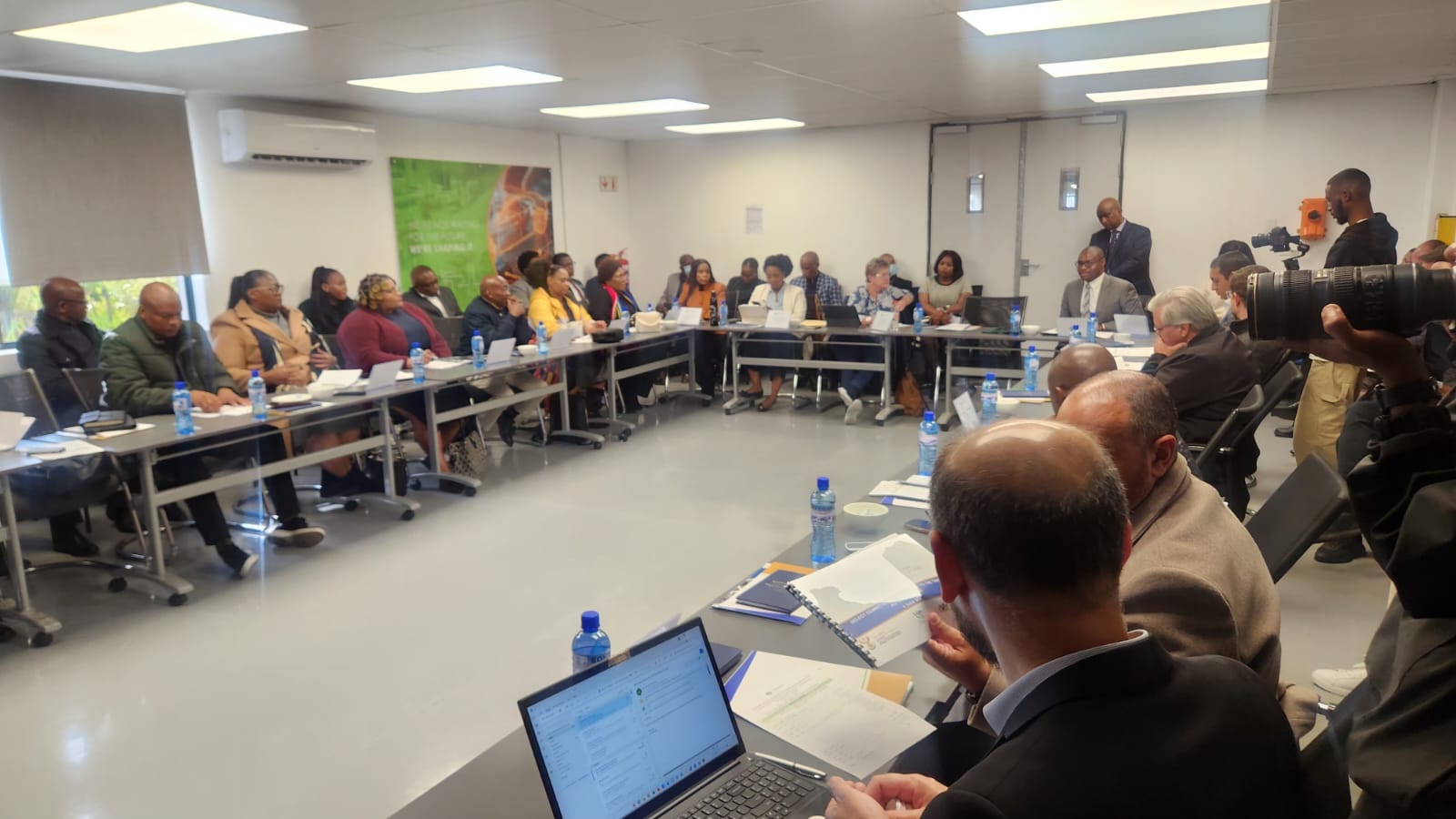
The committee conducted an oversight visit to TASEZ on Thursday, 4 June 2026, to assess the impact of government investments aimed at stimulating economic growth, manufacturing competitiveness and employment creation.
Addressing the committee, Gauteng MEC for Economic Development Vuyiswa Ramokgopa described TASEZ as one of the most significant industrial development projects undertaken in democratic South Africa.
“TASEZ is not simply another industrial park. It is one of the most important industrial development projects undertaken in democratic South Africa and a practical demonstration of how industrial policy can be translated into real economic opportunity,” she said.
Ramokgopa said the success of the zone demonstrates the power of cooperative governance, with national, provincial and local government working together to create an industrial ecosystem capable of attracting investment, supporting manufacturing and creating jobs.
Ramokgopa noted that the Tshwane region produces approximately 40% of the country’s passenger vehicles and has become the anchor of what is increasingly recognised as Africa’s first automotive city.
The automotive sector remains one of South Africa’s most strategic industries, contributing approximately 5.2% to national GDP and generating exports worth R268.8-billion in 2024 to 148 global markets.
Since its inception, TASEZ has attracted approximately R5.9-billion in private-sector investment, contributed an estimated R2- billion to the economy, created 5 500 construction jobs and more than 3 400 permanent jobs, while supporting around 10 000 jobs across the broader automotive value chain.
The benefits of the project have extended to young people, women, township enterprises and surrounding communities through targeted skills development, enterprise support programmes and a social compact model that is increasingly being replicated elsewhere in Gauteng.
The committee also received a broader overview of the national SEZ programme from TASEZ board chair Maoto Molefane, who outlined the strategic role of the country’s industrial zones in advancing economic growth and regional development.
South Africa currently has 12 designated SEZs spread across seven provinces, with nine operational and three still under development. Since 2016, the SEZ programme has generated more than 30 000 jobs and recorded total expenditure of R24.2-billion.
Molefane highlighted the role of SEZs in attracting investment into priority sectors, promoting localisation and strengthening South Africa’s participation in global value chains.
He said the zones are strategically located to leverage access to ports, airports, rail infrastructure and major transport corridors, while supporting balanced regional development and stronger integration with Southern African Development Community (SADC) markets and the broader African continent.
Within this national context, TASEZ has emerged as one of the programme’s strongest performers. The zone currently hosts 12 operational investments valued at approximately R5.76-billion.
The committee heard that Phase One of TASEZ is fully operational and that bulk infrastructure development for Phase Two is already underway. Construction has also begun on Ford’s new R300-million facility within the zone, further strengthening Tshwane’s position as South Africa’s automotive manufacturing hub.
Both Ramokgopa and Molefane emphasised the importance of preparing South Africa’s manufacturing sector for future industrial opportunities, including the transition to new-energy vehicle production, advanced manufacturing and green industrialisation.
Molefane outlined the government’s Spatial Industrial Development Strategy, which seeks to build globally and regionally competitive industrial clusters, promote beneficiation and value addition, support black industrialists, deepen local supply chains and integrate township and rural economies into industrial value chains.
The strategy also prioritises youth and women-focused skills development programmes, learnerships and partnerships between industry, universities and TVET (Technical and Vocational Education and Training) colleges to strengthen the country’s industrial capabilities.
While highlighting the achievements of the SEZ programme, Molefane also acknowledged ongoing challenges, including infrastructure constraints, unreliable electricity supply, logistics bottlenecks at ports and rail facilities, skills shortages in underdeveloped regions and delays in municipal service delivery.
He said key lessons learned from the implementation of SEZs include the importance of strong political support, national government involvement, reliable infrastructure, effective stakeholder management, long-term planning, sound governance and active private-sector participation.
The committee also received updates on major investments taking place across South Africa’s SEZ network, including a R110-billion green hydrogen project at the Coega SEZ, a R16-billion titanium dioxide plant in Richards Bay, a R1.3-billion automotive components facility at Dube TradePort, and major manufacturing, logistics and digital infrastructure investments in East London, OR Tambo and Nkomazi.
TASEZ CEO Dr Bheka Zulu noted that TASEZ’s continued growth demonstrates what can be achieved when government, industry and communities work together to build productive industrial capacity.
“Projects like TASEZ can inspire similar initiatives across our country that will deliver inclusive growth, re-industrialisation and economic renewal,” he added. The TASEZ model shows that economic development can be both globally competitive and locally inclusive.
Echoing his message, the City of Tshwane’s MMC for economic development and spatial planning, Sarah Mabotsa, said: “The impact of TASEZ extends far beyond the boundaries of the SEZ itself.”
TASEZ represents jobs, investment, economic growth, and opportunity for the City of Tshwane’s residents to put food on their tables, the MMC added.
The City of Tshwane is committed to supporting the expansion of the automotive and manufacturing sectors and in April 2025, the council adopted an Economic Revitalisation Strategy to increase economic growth to at least 3,9%.
The City has also approved the lease of a property in Nellmapius to support TASEZ’s skills development and training programme.
The oversight visit formed part of the committee’s efforts to evaluate the effectiveness of strategic economic development initiatives and their contribution to South Africa’s industrialisation agenda, job creation objectives and long-term economic growth.
Responding to the information received, the committee members pointed out that it would be greatly beneficial for the country’s SEZs to work closely with each other, sharing knowledge and lessons learnt.