
24 February 2026
By Mandla Mpangase
Gauteng Premier Panyaza Lesufi has placed job creation at the heart of the province’s economic agenda, announcing a pipeline of investments and infrastructure programmes expected to support hundreds of thousands of employment opportunities across sectors.
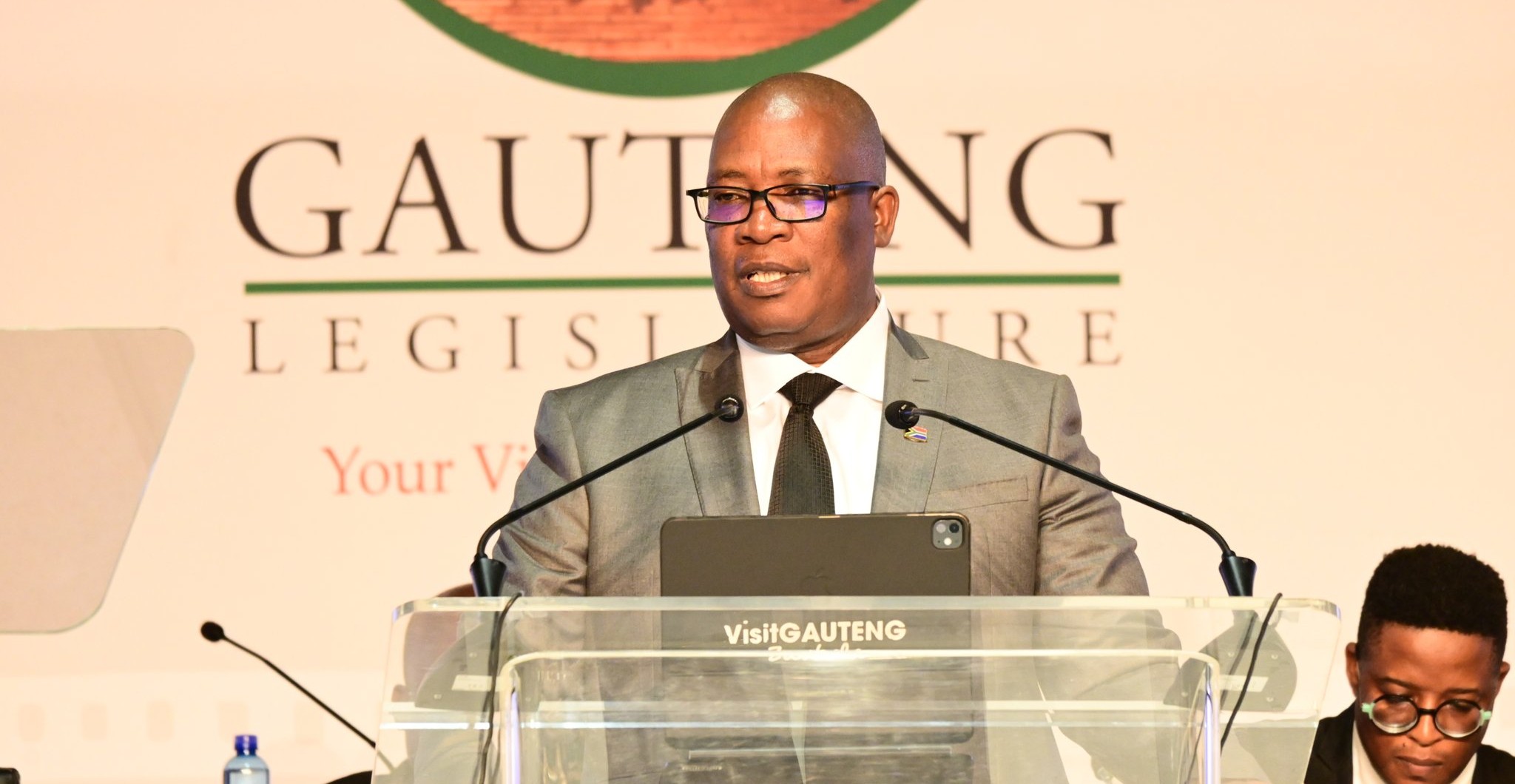
Delivering the 2026 State of the Province Address at the Nasrec Expo Centre, Lesufi adopted a more urgent and delivery-focused tone, stressing that Gauteng’s success will ultimately be measured by how effectively growth translates into jobs, particularly for young people.
“The economic heartland of South Africa must never stop beating,” he said, linking infrastructure reliability, investor confidence and industrial expansion directly to employment creation.
Investment into employment
The Premier revealed that Gauteng has secured R27-billion in foreign direct investment over the past year, while R73-billion of projects announced at the inaugural Gauteng Investment Conference have already moved into implementation. These projects alone are expected to create about 114 000 jobs across manufacturing, logistics, energy and services.
In total, confirmed investments across sectors could support roughly 250 000 employment opportunities, Lesufi said, describing the pipeline as one of the largest provincial job-creation drives in recent years.
Major projects with significant employment potential include:
- The Gauteng Dry Port, a R50-billion logistics development expected to create about 50 000 permanent jobs once operational.
- The Tambo Springs Special Economic Zone, projected to support about 50 000 construction jobs and enable more than 1 000 small businesses.
- A R7 billion waste-to-energy initiative in Johannesburg.
- Automotive investments, including new manufacturing capacity by Chery to protect existing jobs and create new ones.
- A R2.5-billion steel plant by Chung Fung Metal employing more than 1 000 workers.
- A R1.9-billion Heineken investment supporting both industrial and agricultural jobs.
- Technology sector expansion, including a R5.4-billion data-centre investment by Microsoft.
Lesufi emphasised that these investments are not isolated announcements but part of a deliberate reindustrialisation strategy aimed at expanding Gauteng’s productive economy.
TASEZ and industrial zones as job engines
Special Economic Zones remain central to this strategy, with the Tshwane Automotive Special Economic Zone (TASEZ) – the venue for the 2025 State of the Province Address – highlighted as a flagship project for industrial job creation.
The Premier confirmed that TASEZ has secured R1.61-billion in new investment and remains on track to deliver 4 000 construction jobs during its Phase 2 expansion. The automotive hub is also expected to generate long-term manufacturing employment through localisation and supplier development, reinforcing Gauteng’s position in global automotive value chains.
Other SEZ initiatives, including the proposed Vaal SEZ and Tambo Springs logistics hub, are expected to further expand industrial employment and support small business participation in supply chains.
Infrastructure unlocking employment
Lesufi repeatedly linked infrastructure investment to job creation, arguing that reliable services are essential for both attracting investors and enabling economic participation.
Following January’s water crisis, Gauteng has launched a R760-million upgrade programme in Johannesburg, alongside new reservoirs and storage projects across municipalities. Beyond improving services, these projects create construction employment and support industrial activity.
The province will also establish a Bulk Infrastructure Agency to coordinate delivery across municipalities, a move intended to accelerate development projects and unlock additional private-sector investment.
Transport infrastructure is another employment lever. Gauteng has already paid more than R9-billion toward e-toll debt to enable road maintenance and upgrades, while expansion plans for the Gautrain network and a proposed Gauteng-Limpopo high-speed rail link could generate thousands of construction and operational jobs.
“These investments are about economic mobility – connecting people to opportunities and opportunities to markets,” Lesufi said.
Community-level job programmes
Beyond large infrastructure projects, the province is expanding direct employment programmes targeting unemployed youth.
The Nasi iSpani initiative, supported by a R1.5-billion national Labour Activation Programme investment, is expected to unlock more than 30 000 training and workplace opportunities. Gauteng will also employ 2 500 young people to repair public infrastructure, including plumbing, paving and maintenance in communities.
Refurbishment of 18 government buildings in Johannesburg, valued at R8-billion, will create more than 2 500 construction jobs over the next 30 months.
Tourism, logistics and new sectors
Tourism recovery is also contributing to employment growth. International arrivals increased to 3.8-million, generating R41-billion in revenue and supporting jobs across hospitality, transport and entertainment.
Meanwhile, sector-focused “action labs” covering industries such as manufacturing, green economy and logistics will be relaunched in March to accelerate investment into high-growth sectors and convert plans into bankable projects that create jobs.
Jobs as the measure of success
Lesufi acknowledged ongoing risks, including infrastructure crime, illegal mining and municipal instability, but said declining crime statistics and coordinated law-enforcement interventions are improving the investment climate.
He stressed that economic growth must translate into tangible improvements in people’s lives through employment, housing, healthcare and education.
The Premier’s message was clear: Gauteng’s development strategy is now firmly centred on job creation, driven by infrastructure expansion, industrial zones such as TASEZ and partnerships with the private sector.
“Our responsibility,” Lesufi said, “is to ensure that investment becomes jobs – and jobs become dignity.”