
30 March 2026
By Mandla Mpangase
South Africa’s investment agenda is entering a new phase, with infrastructure development emerging as central to converting pledges into visible economic growth, as the country prepares to host the sixth South Africa Investment Conference under the theme “Investment that delivers”.
The conference, on 31 March 2026 at the Sandton Convention Centre in Johannesburg, is designed to move beyond policy commitments toward “bankable, deployable opportunities” that translate into measurable outcomes.
This shift reflects a broader evolution in the country’s investment strategy – from attracting commitments to ensuring implementation – with infrastructure positioned as the backbone of that transition.
Infrastructure at the centre of investment strategy
Government and industry leaders have increasingly aligned around a common understanding: without modern, reliable infrastructure, investment cannot scale.
Recent policy signals reinforce this priority. In the Presidency Budget vote for 2025/2026, South Africa committed more than R1-trillion to public-sector infrastructure over three years, with a strong focus on transport, logistics, and energy systems – all critical enablers of industrial expansion.
At the same time, the South Africa Investment Conference is structured to showcase projects that are not only investment-ready but also already placed within broader infrastructure ecosystems. These include logistics corridors, industrial parks, and sector-focused development zones designed to unlock productivity and competitiveness.
Minister of Trade, Industry, and Competition Parks Tau underscored this approach in the build-up to the conference, noting that South Africa is making its investment case “not with promises alone, but with proof”, as billions in previous pledges are already being funneled into operational projects.
More than R600-billion from earlier investment commitments has already flowed into new factories, mines and productive infrastructure, signaling a growing emphasis on execution.
Speaking in the run-up to the conference, Minister Tau emphasised that South Africa’s national strategic landscape, underpinned by the Growth and Inclusion Strategy and the country’s ongoing reform agenda, provides a coherent, compelling framework for investors who are serious about long-term returns in a high-potential emerging market.
TASEZ: A model of infrastructure-led industrialisation
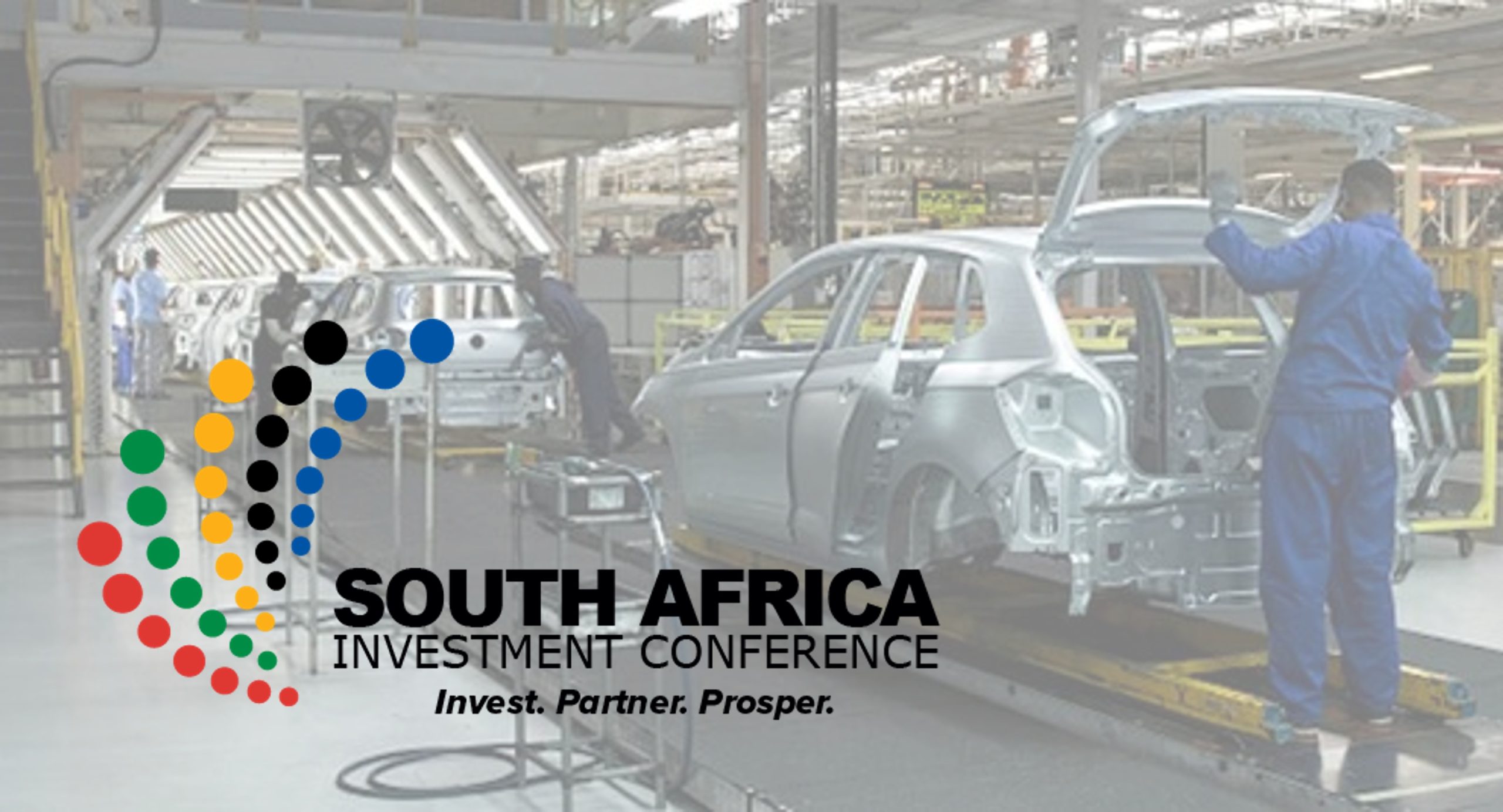
Within this national framework, the Tshwane Automotive Special Economic Zone (TASEZ) has emerged as a leading example of how targeted infrastructure investment can catalyse industrial growth.
Strategically located within Gauteng’s automotive corridor, TASEZ integrates world-class manufacturing facilities with purpose-built logistics infrastructure, enabling seamless movement of goods between production sites, suppliers and export channels.
Its development has been closely tied to anchor investments in the automotive sector, demonstrating how infrastructure, when aligned with industry needs, can rapidly unlock value chains and attract further investment.
Crucially, TASEZ illustrates a shift in how special economic zones are being positioned in South Africa. Rather than operating as isolated industrial parks, SEZs are increasingly viewed as integrated ecosystems, combining:
- Advanced manufacturing infrastructure
- Efficient transport and logistics networks
- Supplier development and localisation platforms
- Public-private partnerships that de-risk investment
This integrated approach is central to improving competitiveness, particularly in sectors such as automotive manufacturing, where logistics efficiency and supply chain reliability are decisive factors.
Linking infrastructure to localisation and jobs
Infrastructure investment is also directly tied to South Africa’s localisation and job creation agenda.
Discussions feeding into the South Africa Investment Conference have highlighted how infrastructure gaps continue to constrain local manufacturing, particularly in component production and supply chain integration.
By addressing these bottlenecks, projects like TASEZ are helping to:
- Increase local content in manufacturing
- Reduce reliance on imports
- Strengthen domestic supplier networks
- Create employment across the value chain
This aligns with broader industrial policy objectives, with infrastructure viewed as a strategic tool for economic transformation.
From investment platform to delivery engine
The evolution of the South Africa Investment Conference reflects a maturing investment ecosystem that prioritises delivery, accountability and measurable impact.
With infrastructure at its core, the conference is positioning South Africa as a destination where capital is not only welcomed, but effectively deployed.
In this context, TASEZ stands out as a tangible demonstration of what “investment that delivers” looks like in practice: a project where infrastructure, policy alignment and private-sector participation converge to create a functioning industrial hub.
As the country seeks to deepen its investment pipeline and accelerate growth, infrastructure is the foundation upon which South Africa’s next phase of industrialisation will be built.