
17 July 2026
By Mandla Mpangase
South Africa’s Special Economic Zones (SEZs) have already proved their value in attracting major investments, but faster decision-making, world-class infrastructure and globally competitive incentives will determine whether the country secures the next wave of industrial investment.
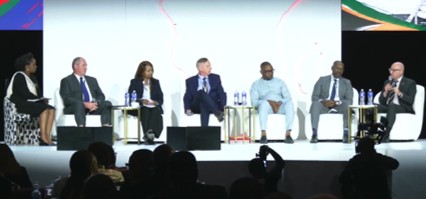
That was the central message from a high-powered panel discussion, moderated by Gauteng MEC for Agriculture and Rural Development, Environment and Nature Conservation Vuyiswa Ramokgopa, during the second day of the 2nd International Special Economic Zones Infrastructure and Investment Conference in Durban.
Bringing together leaders from Ford Motor Company South Africa, DP World, Aspen Pharmacare, AIH Group, Nyanza Light Metals and Afreximbank, the discussion explored why investors continue to see South Africa’s SEZs as strategic destinations despite intensifying global competition.
Ford South Africa President Neale Hill said the Tshwane Automotive Special Economic Zone had demonstrated how SEZs strengthen global competitiveness by shortening supply chains, improving quality control and supporting just-in-time manufacturing. He noted that South Africa competes not with local manufacturers but with Ford plants around the world for future investment, making efficiency and cost competitiveness essential.
Nyanza Light Metals President and CEO Donovan Chimhandamba described South Africa as one of Africa’s most compelling industrial destinations, highlighting its engineering expertise, sophisticated financial markets and mineral wealth. He said the company’s US$870 million titanium beneficiation investment in the Richards Bay Industrial Development Zone reflects growing confidence in South Africa’s ability to move beyond exporting raw minerals towards high-value manufacturing.
Aspen Pharmacare’s Dr Stavros Nicolaou argued that South Africa remains the continent’s strongest long-term investment proposition, particularly as Africa’s population and healthcare demand continue to grow. He said SEZs help level the playing field against heavily subsidised international competitors while creating opportunities to build pharmaceutical manufacturing capacity closer to African markets.
The discussion also highlighted the critical role of finance in accelerating industrialisation. Afreximbank’s Andrew Masuwe outlined the bank’s recently announced US$14 billion country programme for South Africa, including dedicated support for industrial development and project preparation, following South Africa’s accession as a member state.
Looking ahead, panellists agreed that South Africa’s SEZs must evolve further by reducing regulatory delays, improving logistics, expanding utility infrastructure and attracting complete industrial value chains rather than isolated factories. They also called for stronger coordination across government and greater use of public procurement to build the scale needed for globally competitive manufacturing.
Closing the session, MEC Ramokgopa said South Africa’s SEZs should become catalysts for broader industrial ecosystems that create inclusive local economic growth, rather than remaining isolated centres of excellence. The challenge now, she said, is to ensure the country’s investment offering remains globally competitive while delivering lasting benefits to communities and the wider economy.