Tasez

Davos

Why TASEZ, and SA’s other SEZs, should care about the 2026 World Economic Forum

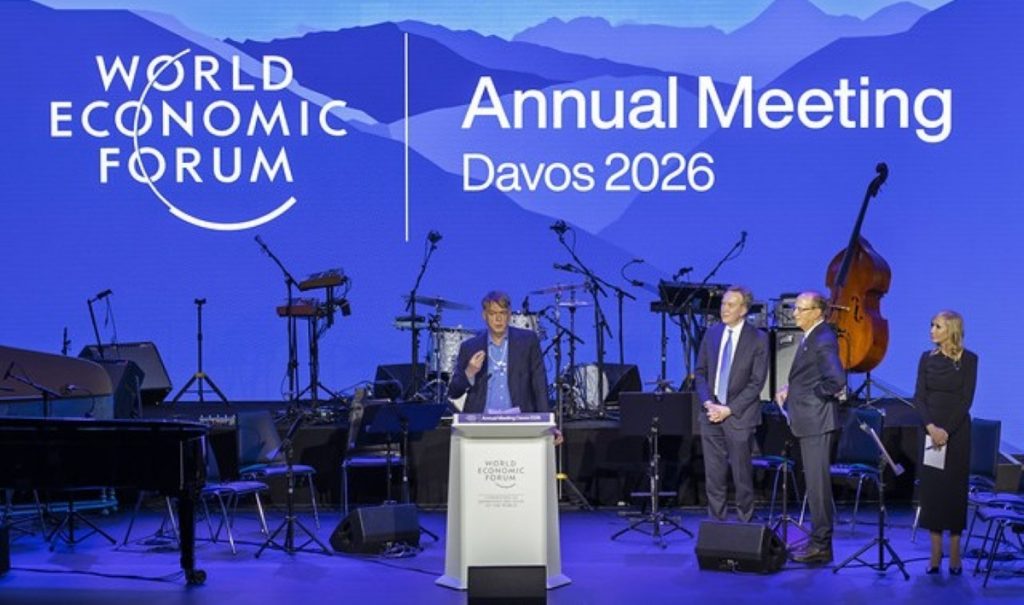
As the 2026 World Economic Forum (WEF) annual meeting unfolds in Davos, Switzerland, it presents an opportunity for the Tshwane Automotive Special Economic Zone (TASEZ) to gain strategic insights into global business trends, writes TASEZ CEO Dr Bheka Zulu. While some may view Davos as an elite gathering far removed from local development practices, the reality is that the decisions, discourses and partnerships fashioned at this global crossroads directly shape the economic terrain in which TASEZ operates. At its heart, the WEF’s theme this year, “A Spirit of Dialogue”, reflects a global recognition that in an increasingly contested and fragmented world, renewed cooperation across sectors is essential to unlocking growth, managing technological disruption, and building resilient societies. The 56th global gathering – a diverse mix of governments, industries and sectors – takes place from 19 – 23 January 2026. South Africa, which will be sending a delegation to the WEF, is taking the key message that the country is ripe for investment and ready to do business. Davos is where global growth blueprints are crafted One of the key pillars of discussion in 2026 is unlocking new sources of growth, an agenda TASEZ must align with as it seeks to attract investment, scale industrial capacity and foster innovation. At a time when global growth is projected to slow and trade dynamics are shifting, constructive dialogue on growth strategies becomes vital. TASEZ should care because the forum shapes narratives about where capital flows next – whether it is into manufacturing hubs in Africa, decarbonising industries, or smart-technology value chains. Strategic awareness and engagement with the WEF ecosystem enable TASEZ to position itself within these narratives rather than being shaped by them. Technology and the future of work are not just global issues; they are local necessities. At the heart of WEF’s agenda is the rapid reshaping of work and skills due to artificial intelligence and other frontier technologies. These trends are not abstract discussions. Nearly one in five jobs worldwide could change significantly in the next five years, and reskilling labour forces is central to global competitiveness. For TASEZ, this has direct implications for workforce development, educational partnerships, and industry-ready training programmes. Being plugged into these global conversations helps ensure that TASEZ’s talent pipeline matches investor expectations and technological realities, especially in automotive manufacturing, digital services, and green tech sectors. Public-private collaboration is no longer optional The WEF thrives on multistakeholder cooperation, bringing together governments, businesses, civil society and experts precisely because global challenges today do not have single-actor solutions. TASEZ’s success depends on forging alliances that transcend borders: with multinationals scouting for regional entry points, with development finance institutions seeking credible partners in Africa, and with governments looking to catalyse industrial nodes. What happens in Davos is not simply a talk shop; it is where ideas are mooted, and alliances are formed – and it provides for participation far beyond Davos through an open digital media experience, including live-streamed sessions and community engagement. Take, for example, how subnational delegations use the forum to showcase investment roadmaps and attract concrete commitments. Recent state delegations to Davos have used the platform to situate long-term visions in front of global investors. A changing geopolitical and economic order matters to local zones too. This year’s Davos opens against the backdrop of a shifting geopolitical order where trade tensions, fragmented cooperation, and contested norms are no longer fringe concerns. For South Africa and TASEZ, geopolitical shifts translate into supply chain volatility, changing tariff regimes, and new expectations for economic zones to support resilient, diversified manufacturing. Simply put, ignoring these macrotrends undercuts the zone’s ability to anticipate risk and opportunity. Finally, Davos offers lessons in governance and accountability, relevant for an institution like TASEZ striving to model excellence in public-private economic management. Even global institutions like the WEF have had to grapple publicly with leadership transitions and internal scrutiny, a reminder that credibility and ethical leadership matter deeply in today’s interconnected world. TASEZ’s interest in the 2026 World Economic Forum is neither cursory nor ceremonial. This global meeting encapsulates the forces shaping 21st-century economies – from innovation ecosystems to skills futures, from cooperative governance to investment flows. Ensuring that the engagement extends beyond Davos is crucial, particularly for South Africa’s economic growth trajectory. South Africa, and by extension its special economic zones, should be not only anchored in the global economic currents, but able to influence them in ways that benefit the country and the broader continent.

WEF report highlights urgent need for new skills

By Mandla Mpangase Every year the who’s who of the global political, research and business worlds gather together in Switzerland to discuss issues and shape industrial, environmental and social programmes. The annual meeting of the minds, held under the auspices of the World Economic Forum (WEF), took place from 20 to 24 January 2025 in Davos-Klosters. WEF has published a research document called The Future of Jobs Report 2025, ahead of the gathering, highlighting the “technological change, geoeconomic fragmentation, economic uncertainty, demographic shifts and the green transition” that are expected to shape and transform the global labour market by 2030. The report reveals that some 22% of jobs globally will face disruption by 2030. The figures show that 170-million (14% of today’s total employment) new jobs are likely to be created, while 92-million jobs (8% of today’s total employment) will no longer exist within the next five years. The findings are of particular interest to the Tshwane Automotive Special Economic Zone (TASEZ) as one of South Africa’s key investment instruments as a special economic zone (SEZ). Known as Africa’s first automotive city, TASEZ focuses on supporting global, regional and local investors in the automotive manufacturing industry. As such, the SEZ is ever aware of ongoing and rapid developments on the automotive manufacturing industry, including the development of new energy vehicles (NEVs) and the associated research and development required for that. TASEZ itself is also impacted by ever-evolving technological changes, the importance of embracing the green transition and the need to address economic transformation within South Africa. The WEF report brings together “the perspective of over 1 000 leading global employers – collectively representing more than 14 million workers across 22 industry clusters and 55 economies from around the world – to examine how these macrotrends impact jobs and skills, and the workforce transformation strategies employers plan to embark on in response, across the 2025 to 2030 timeframe”. A major area of focus is the broadening the digital access which is expected to transform the way business is conducted and includes the use of advanced technologies such as AI and information processing; robotics and automation; and energy generation, storage and distribution. “These trends are expected to have a divergent effect on jobs, driving both the fastest-growing and fastest-declining roles, and fuelling demand for technology-related skills,” the report notes. One of the top trends identified is related to economic conditions; the report notes that businesses expect to see an increase in the demand for creative thinking and resilience, flexibility, and agility skills. Both these elements are important to TASEZ, which has set up a training academy to answer the future demands of the industry as well as to make a significant contribution to changing the economic face of South Africa by making the industry a more inclusive, localised one. “We believe that SEZs can become engines of skills development, as well as training. By focusing on skills development within SEZs, the government, in partnership with international and local businesses, can empower community members and others, create diverse job opportunities, and drive sustainable development,” says TASEZ CEO Dr Bheka Zulu. The Future of Jobs Report 2025 also notes that climate-change mitigation is the third-most transformative trend overall – “climate change adaptation ranks sixth with 47% and 41% of employers, respectively” It is not surprising that the report identifies these trends as “driving the demand for roles such as renewable energy engineers, environmental engineers and electric and autonomous vehicle specialists”. All three roles are in the top five fastest-growing jobs. The skills gap is considered the largest barrier to business transformation, with the need to upskill and reskill the workforce requiring urgent attention. Nearly 60% of the global workforce will require reskilling or upskilling by 2030, according to the report. “If the world’s workforce was made up of 100 people, 59 would need training by 2030. Of these, employers foresee that 29 could be upskilled in their current roles and 19 could be upskilled and redeployed elsewhere within their organisation. However, 11 would be unlikely to receive the reskilling or upskilling needed, leaving their employment prospects increasingly at risk,” the report suggested. The TASEZ Training Academy was set up with a set of clearly defined aims: to understand and respond to industry trends and community needs; to provide easy access to a range of much-needed development programmes; to build strong partnerships within government, the Sector Education Training Authorities (SETAs), higher education institutions, research bodies, and industry; and to be the go-to academy for South Africa’s automotive sector. “We want to play a significant role in shaping the future of automotive excellence in South Africa,” Dr Zulu concludes. Image: Media briefing on the Future of jobs report (World Economic Forum 2025)