Tasez

Deputy President Paul Mashatile

Mashatile: Gauteng key to turning R1.5tn investment pledges into jobs and industrial growth

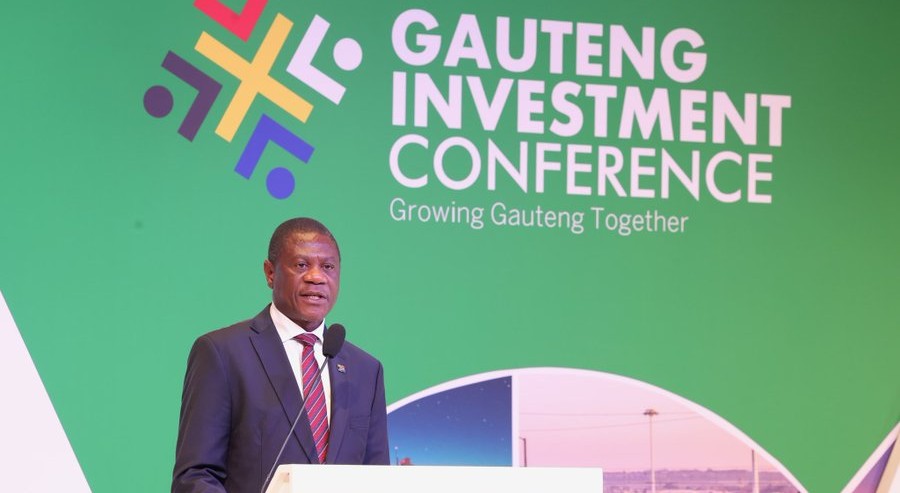
By Mandla Mpangase South African Deputy President Paul Mashatile has positioned Gauteng as the critical engine for converting South Africa’s record investment pledges into tangible economic outcomes, urging faster implementation, stronger partnerships, and a renewed focus on industrialisation. Addressing the 2026 Gauteng Investment Conference on Thursday, 9 April 2026, Mashatile said the province would play a central role in delivering on the commitments secured at the recent South African Investment Conference 2026, where approximately R890-billion in pledges were announced in a single day. The latest commitments push total investment pledges since 2018 to well over R1.5-trillion, prompting the government to set a new national target of R3-trillion in the years ahead. From pledges to implementation Mashatile stressed that the credibility of South Africa’s investment drive would depend not on headline figures, but on execution. “The true value lies in delivery – translating commitments into factories, infrastructure, energy capacity, and above all, jobs,” he said. In this context, Gauteng, South Africa’s largest contributor to GDP and a gateway to regional and global markets, has been identified as the primary platform where many of these projects will be implemented and scaled. The Gauteng Investment Conference, he noted, serves to “localise investment, accelerate execution, and remove obstacles at project level”, effectively bridging the gap between national ambition and on-the-ground delivery. Aligning national priorities with provincial strengths Mashatile said many of the investments announced at the South African Investment Conference align directly with Gauteng’s economic strengths, including advanced manufacturing, energy, logistics, digital services, and infrastructure development. The province’s industrial base, financial system, skilled workforce, and connectivity position it as a natural hub for large-scale project rollout. “This conference moves us from national pledges to provincial pipelines, from policy certainty to site readiness, and from investor intent to operational delivery,” he said. A new model of industrialisation Framed under the theme Re-industrialising Africa’s Gateway, Mashatile outlined a modern approach to industrialisation built on four pillars: Investment lifecycle approach Mashatile said the Gauteng Investment Conference is evolving into a full investment lifecycle platform, covering project origination, preparation, financing, implementation, and delivery. Government’s role, he said, is to de-risk investment through policy certainty and regulatory efficiency, crowd in private capital, and ensure accountability through project tracking and coordination across all spheres. “Credibility is built not on what we announce, but on what we deliver,” he said. Call for public-private partnership The deputy president called for deeper collaboration between government, business, and development finance institutions to unlock large-scale investment. He urged businesses to invest in skills development, support localisation and integrate small enterprises into value chains, while positioning themselves as “co-architects” of South Africa’s industrial future. Investors, meanwhile, were encouraged to view South Africa, and Africa more broadly, not as a risk, but as a long-term growth opportunity. “Africa is not a risk story; it is a growth and return story,” Mashatile said. Gauteng as a gateway to Africa Reaffirming Gauteng’s strategic importance, Mashatile said the province offers a combination of returns and resilience, underpinned by a skilled workforce, established infrastructure, and a commitment to enterprise development. He concluded with a call to action for all stakeholders to move decisively from commitments to implementation. “Let this conference mark a turning point, from commitments to implementation, towards integrated growth that is inclusive, sustainable, and transformative,” he said.
SA’s auto industry is the backbone of the country’s economic growth

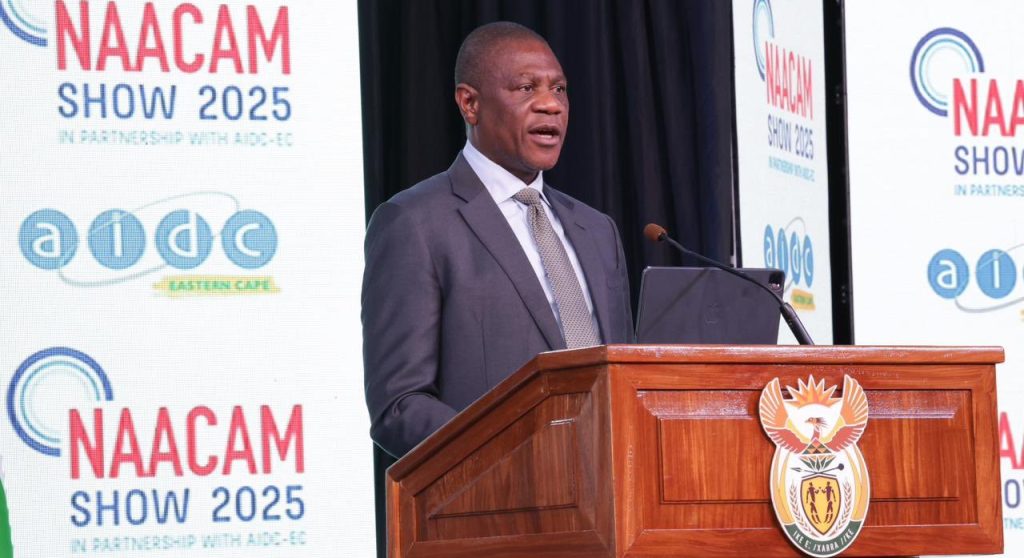
By Mandla Mpangase The automotive industry holds significant potential for shared prosperity through targeted industrial development, according to South Africa’s Deputy President Paul Mashatile. He was delivering the keynote address on 14 August 2025 at this year’s Naacam Show, currently taking place in Gqeberha, in the Eastern Cape. The automotive sector is one of South Africa’s most strategically important and internationally linked industries, accounting for 22.6% of manufacturing output and 5.2% of the country’s gross domestic product. Although the sector is a success story of industrial policy, it is important to increase employment in the sector. Currently, 115 000 people are employed in the sector, with more than 80 000 of those working in component manufacturing. The deputy president noted that the industry is export-oriented, globally competitive, and plays a vital role in regional and national industrial development. In 2024, the component sector exported R62.5 billion of components. “We must never allow the loss of these gains because of external and internal pressures. I say this with concern because the employment levels in the sector have been under strain due to ongoing economic pressures and reduced production volumes.” Naacam, the National Association of Automotive Component and Allied Manufacturers, recorded 12 company closures over the past two years, affecting the livelihoods of 4 000 individuals. “What is of more concern are the recently released figures by Statistics South Africa showing that the country’s unemployment rate has climbed to 33.2% in the second quarter of 2025, an increase from 32.9% in the previous quarter,” Mashatile said. “This latest figure is a clear indication that the nation’s unemployment crisis remains an urgent concern.” More effort is needed to combat unemployment, including improving education and skills to match labour market demands, promoting entrepreneurship and small enterprises, and investing in public employment programmes to generate jobs. TASEZ is currently attending Naacam to share knowledge and monitor the latest developments and trends in the sector. The deputy president noted that the government supports the automotive industry through a combination of investment incentives, improved policy frameworks, and infrastructure development, including: Guiding the sector is the South African Automotive Master Plan 2035 (SAAM), which aims to build a globally competitive and transformed industry. SAAM goals include growing vehicle production to 1% of global output (1.4 million vehicles), increasing local content to 60%, doubling employment to 224,000 employees, and deepening transformation and value addition, with 25% Black-owned involvement at the Tier 2 and Tier 3 component manufacturer level. The Automotive Production Development Programme Phase 2 is the policy programme intended to support and enable the realisation of the objectives of SAAM. “We recognise the industry’s significant role and see it as the backbone of our economic growth, promoting industrial development and encouraging innovation,” Mashatile said. “I am of the view that by increasing investment in research and development, we can use the power of technology to improve efficiency and sustainability, ensuring that our products and services stay competitive in the global market.” New opportunities for growth could be unlocked through nurturing a culture of collaboration and partnership among manufacturers, suppliers, and stakeholders, he added. Support for the African Continental Free Trade Area “This sector, not just in South Africa but in Africa as a whole, has emerged as a critical area of investment, providing substantial prospects for growth and development.” In this context, it was important to acknowledge the significance of the African Continental Free Trade Area (AfCFTA) agreement on economic integration and industrialisation, which is projected to draw additional international investment into the African automotive industry. “The agreement has the potential to significantly boost the automotive industry across the continent by reducing trade barriers, fostering regional value chains, and harmonising regulations. This could lead to increased production, lower costs for consumers, and a more competitive market.” The implementation of the agreement has the potential to lessen the dependency of African countries on developing countries for automotive components and completed vehicles by promoting regional value chains and increasing local production. “Creating a single continental market for goods and services could potentially lead to increased trade, investment, and job creation within Africa.” However, Mashatile added that this does not suggest that South Africa does not need other nations as trading partners. “We believe in diversifying our investments and engaging in trade with several partners.”  Mashatile explained that the Cabinet has adopted a new trade proposal to the United States that aims not just to settle the 30% tariff but also has ramifications for over 130 other trading partners who may reroute products into the South African market. “I must highlight that there will be repercussions felt throughout the entire value chain if we do not reach an amicable trade agreement with the White House. “It is probable that South African suppliers who provide support to domestic original equipment manufacturers that export automobiles or integrated systems to the United States would experience volume cutbacks. This will put pressure on production planning, employment decisions, and investment choices.” The tariffs threaten to disrupt well-established trade flows and weaken the global competitiveness of South Africa’s automotive manufacturing ecosystem. “However, South Africa remains resilient and steadfast in its efforts to grow and protect our economy. We will continue engaging with the USA to identify practical solutions.” Attracting significant investment and driving innovation could strengthen South Africa’s manufacturing capabilities and global competitiveness. Proactive transformation of the sector “We can increase localisation with existing and potential new original equipment manufacturer entrants to market, achieving a 5% growth in South Africa’s localisation rate, potentially resulting in R30-billion in new local procurement.” In addition, research has indicated that South Africa is well positioned to localise high-value new energy vehicle components, including fuel cells, thermal management systems, e-axle and high-voltage battery mineral beneficiation and assembly. “At the heart of our vision for the automotive industry is a commitment to shared prosperity. We believe that sustainable development must benefit all members of society, empowering individuals and communities to thrive and succeed.”