Tasez

green energy

President doubles down on industrialisation, manufacturing and green growth in SONA 2026

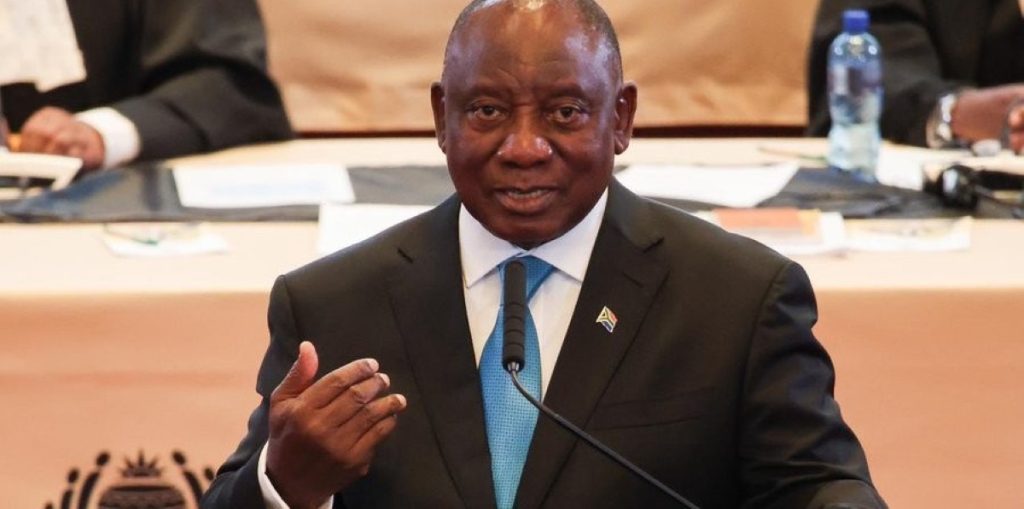
By Mandla Mpangase President Cyril Ramaphosa used his 2026 State of the Nation Address (SONA) to place industrialisation, manufacturing and green growth at the centre of South Africa’s economic recovery agenda, outlining a sweeping strategy that positions the automotive sector – and hubs such as the Tshwane Automotive Special Economic Zone (TASEZ) – as catalysts for investment, jobs and technological transition. Speaking to a joint sitting of Parliament in Cape Town on 12 February 2026, President Ramaphosa said South Africa was entering a decisive phase in which it must pivot from exporting raw materials to producing high-value manufactured goods for global markets. “The biggest opportunity of all lies in green growth. We are pivoting our economy to be a leading supplier of the products which the world will rely on in decades to come,” he said. Manufacturing and green industrialisation The president confirmed expanded support for manufacturing, particularly export-oriented green industries such as fertiliser, jet fuel, chemicals and steel. For the automotive sector, the most significant announcement was the introduction of a 150% tax deduction for investment in new energy vehicles (NEVs) from March 2026, alongside government support for local battery production. This policy could accelerate investment in South Africa’s electric and hybrid vehicle value chain, with special economic zones such as TASEZ well-positioned to anchor new assembly lines, component manufacturing and battery-related industries. President Ramaphosa also highlighted R250-billion in international pledges to the Just Energy Transition Investment Plan, which will finance manufacturing, infrastructure and skills development – pillars for industrial hubs such as TASEZ that aim to integrate clean energy, logistics and advanced manufacturing. Critical minerals, beneficiation and the automotive value chain The president also underscored South Africa’s mineral endowment, with ore reserves valued at more than R40-trillion, and reiterated the government’s commitment to local beneficiation of critical minerals. This beneficiation push is expected to underpin domestic production of battery materials, catalytic converters, lightweight metals and other automotive components, strengthening localisation in zones like TASEZ. The Industrial Development Corporation’s R300-million investment in the Frontier Rare Earths Project was highlighted as a step towards building supply chains for lithium batteries and electronics – technologies increasingly integral to next-generation vehicles. Investment pipeline and industrial infrastructure President Ramaphosa said South Africa had secured R1.5-trillion in investment commitments through its first five investment conferences, with R600-billion already flowing into projects, including new factories and mines. Government is targeting R2-trillion in new investments over the next five years, with the next investment conference scheduled for 31 March 2026. Public infrastructure investment of more than R1-trillion over three years will underpin industrial growth, with energy, water, transport and digital infrastructure prioritised. Improved logistics, ports and rail corridors were flagged as critical to exporting manufactured goods from industrial zones such as TASEZ to global markets. Jobs, SMEs and inclusive industrialisation Job creation was framed as the ultimate goal of industrialisation. The president said if every small and medium enterprise (SME) employed one additional person, three million jobs could be created. Government will provide R2.5-billion in funding to 180 000 SMEs, extend R1-billion in guarantees, and prioritise women- and youth-led businesses. This is expected to support supplier development and localisation programmes linked to manufacturers operating in TASEZ and other SEZs. Public employment programmes will be expanded and better coordinated to provide skills development pathways into long-term industrial employment, particularly for young people and women. Skills development for a future automotive workforce Ramaphosa stressed that industrialisation depends on human capital, noting that a strong economy relies on a well-educated, capable and skilled population. The Youth Employment Service and South Africa Youth platform will be strengthened, while regulatory changes will make it easier for businesses to offer work experience opportunities. This could bolster talent pipelines for advanced manufacturing, engineering, robotics and electric mobility technologies in zones such as TASEZ. Protecting and transforming the automotive sector The president reaffirmed the government’s commitment to safeguarding and modernising the automotive industry, which employs hundreds of thousands of South Africans in high-quality jobs. Government is working with industry and labour to close tariff loopholes, protect domestic manufacturing and prepare the sector for the global shift to electric vehicles. TASEZ is well-positioned to play a central role in this transition by clustering OEMs, component manufacturers, logistics providers and research institutions. A strategic window for TASEZ and South Africa President Ramaphosa acknowledged persistent challenges, including unemployment and service delivery failures, but said energy reforms, rising investor confidence and infrastructure investment had created a critical opportunity for economic transformation. “We have a unique window of opportunity to translate these gains into sustained growth,” he said. For South Africa’s automotive sector and industrial platforms such as TASEZ, the 2026 SONA signals a renewed policy push towards localisation, electric mobility and high-value manufacturing, positioning the country to compete in global automotive value chains while driving jobs and inclusive growth at home.

Gauteng takes the wheel: Driving Africa’s NEV future

South Africa’s shift to green mobility is no longer a distant idea, it is now a commercial necessity, and the economic heartland of the country must take the lead in embracing New Energy Vehicles as a core economic sector for the country – and the rest of Africa, writes Lebogang Maile, Gauteng MEC for Finance and Economic Development. Gauteng is stepping up to lead South Africa and Africa into the new-energy vehicle (NEV) era. The province, already the country’s economic and industrial centre, is positioning itself as the continent’s NEV hub. The province hosted its inaugural NEV Summit on 22–23 October 2025, during the country’s Transport Month, under the auspices of the Gauteng Growth and Development Agency, along with the Automotive Industry Development Centre (AIDC) and the Tshwane Automotive Special Economic Zone (TASEZ). South Africa’s shift to green mobility is no longer a distant idea, it is now a commercial necessity. Gauteng is determined to lead South Africa’s transition to electric and low-carbon mobility. The South African automotive industry is facing a tough operating environment, heightened by the imposition of a unilateral 30% reciprocal trade tariff by the government of the United States, which has consistently been South Africa’s second-largest trading partner and key export destination for South African-manufactured vehicles. The sector is particularly vulnerable to the 25% sectoral tariff imposed under Section 232 of the United States Trade Expansion Act of 1962, which specifically targets automotive exports. In addition, global markets, particularly the European Union, are tightening carbon regulations. For South Africa to keep exporting vehicles and stay competitive, it must move fast to build an industry that produces low- and zero-emission cars. Laying the foundation The transition is backed by strong policy frameworks. The South African Automotive Master Plan 2035 (SAAM 2035) sets clear goals for increasing local content, boosting exports, and creating inclusive growth. The government’s White Paper on electric vehicles, approved at the end of 2023, provides a roadmap for building the NEV ecosystem from production and charging infrastructure to skills development and consumer incentives. Although the paper references electric vehicles, South Africa must take into account other green initiatives, such as hydrogen and battery. The policy direction is clear – our job is to make sure Gauteng becomes the first mover. The NEV transition is about jobs, skills, and industrialisation, not just greener cars. We are ready to lead Africa in this journey. Why Gauteng? South Africa’s economic hub has all the right ingredients: skilled workers, advanced manufacturing infrastructure, financial and logistics networks, and a strong automotive heritage. Ford, based in the City of Tshwane, has been in South Africa for over a century. Gauteng’s existing automotive value chain makes it the natural home for Africa’s NEV future. The province already hosts major original equipment manufacturers like BMW, Ford, and Nissan, and supplier networks that can pivot to battery, electronics, and component manufacturing. We already have the backbone, from vehicle assemblers to tiered suppliers. What we are doing now is aligning that value chain with new technologies, from battery assembly to software integration. The transition is not just about attracting investment; it’s about future-proofing Gauteng’s manufacturing economy. Turning policy into factories Gauteng is now focused on turning national policy into tangible projects. The Automotive Investment Scheme (AIS) and EV production incentives announced by the Department of Trade, Industry and Competition (the dtic), including a 150% investment allowance for qualifying projects, are key tools to make that happen. We are working closely with the dtic and industry stakeholders to streamline approvals and remove red tape. Investors do not want promises; they want certainty. Gauteng is offering that – a clear pathway from policy to plant. But we are also well aware of the challenges we face, from electricity reliability and logistics to the high costs of new technologies. One of the key projects we have put in place to overcome these is the creation of a dedicated automotive hub in the City of Tshwane, with stable power, fast-tracked permitting, and shared testing and recycling facilities to lower entry barriers for manufacturers. Building demand and inclusion A vibrant NEV industry also needs a domestic market, and Gauteng is exploring ways to stimulate demand through public fleet electrification, taxi modernisation programmes, and municipal procurement. Demand creation will be critical to attracting more investors. OEMs and suppliers want to see that South Africa is serious about NEVs – that there is a real market for these vehicles. If we in government lead by example through fleet conversion, others will follow. Gauteng has the opportunity to set that example for the rest of the continent. Beyond manufacturing, Gauteng’s NEV strategy emphasises skills development and inclusion. The transition is being designed to create opportunities for black-owned medium, small, and micro enterprises, youth, and women entrepreneurs in new parts of the value chain, from charging infrastructure to digital mobility services. A turning point for the economy The upcoming NEV Summit is expected to produce a clear action plan: identifying priority sites, announcing anchor investors, setting timelines for disbursing incentives, and mapping out power and logistics upgrades. This summit was not just about speeches; it was about signatures. We want commitments, timelines, and projects that will create jobs and secure Gauteng’s place at the centre of Africa’s new energy future. If Gauteng can convert its strategic intent into action, the province will not only revitalise South Africa’s automotive manufacturing base but also anchor the continent’s NEV revolution. The race to lead Africa’s green mobility future has begun, and Gauteng plans to be first across the line.

From policy to action: Now is the time for South Africa to embrace new energy vehicles

South Africa must move from policy to action as a matter of urgency, aligning incentives, infrastructure, skills, and industrial coordination around new energy vehicles, writes the CEO of Tshwane Automotive Special Economic Zone, Dr Bheka Zulu. South Africa’s automotive industry stands at a turning point. The global race toward low- and zero-emission mobility is accelerating, and for a country whose automotive exports hinge on access to the European market, embracing new energy vehicles (NEVs) is no longer optional, it has become an industrial necessity. The Electric Vehicle (EV) White Paper and the South African Automotive Master Plan 2035 (SAAM) together lay a strong policy and strategic foundation. The challenge now is moving from intent to implementation. The country has a clear opportunity to build an inclusive, competitive, and sustainable automotive industry powered by innovation, ready for a net-zero world. Transformation is a must The global automotive landscape is undergoing a profound transformation, driven by the urgency to reduce carbon emissions and achieve net-zero goals. The European Union’s carbon neutrality policies are among the most influential in this shift, setting strict timelines for phasing out internal combustion engine (ICE) vehicles and promoting zero- and low emission alternatives. The EU aims to be climate-neutral by 2050. The objective is to ensure an economy with net-zero greenhouse emissions. For South Africa, this presents both a challenge and an opportunity. The EU remains South Africa’s largest export market for vehicles, accounting for the bulk of automotive exports. A significant 68,7% of light vehicle production was exported in 2024, with three out of every four cars headed to Europe. This means that the EU’s green regulations will directly determine South Africa’s ability to continue trading competitively in this critical sector. Vehicles built in Gauteng and other parts of the country will increasingly need to meet low- or zero-emission standards to remain eligible for export. Transitioning now is not optional, it is essential. Early investment in NEV production, local battery manufacturing, and supporting infrastructure such as charging networks will safeguard South Africa’s market access, maintain its global competitiveness, and create a foundation for long-term industrial sustainability. Policy meets opportunity The EV White Paper charts a managed transition from internal combustion engines to cleaner technologies, ensuring decarbonisation does not lead to deindustrialisation. It sets out steps to localise EV production, develop charging infrastructure, and build skills for the future. The White Paper allows for a managed transition, setting out a number of processes: It has identified 10 actions required to build an EV production ecosystem, including the beneficiation of critical minerals, battery reuse and refurbishment, regulatory alignment, and incentives for localisation. Complementing it, the South African Automotive Master Plan (SAAM 2035) envisions South Africa increasing local content in vehicle manufacturing, expanding exports, and doubling employment by 2035. SAAM 2035 sets out six focus areas: optimising the local market, developing the regional market, localisation, infrastructure development, industry transformation, and technology a skills development. Targets include: Together, the EV White Paper and SAAM 2035 frame a just, inclusive transition that can preserve and grow the country’s industrial base. Driving implementation Turning these policies into tangible outcomes depends on strong institutions. In Gauteng, the Gauteng Growth and Development Agency (GGDA), its subsidiary the Automotive Industry Development Centre (AIDC), and the Tshwane Automotive Special Economic Zone (TASEZ) are taking the lead. TASEZ, Africa’s first automotive city, is positioning itself as a hub for future-focused investment, where manufacturers and suppliers can plug into purpose-built infrastructure, training, and incentives. The AIDC, through its learning centres and supplier parks, is aligning skills and enterprise development with EV technologies. Together, these institutions are turning national ambition into provincial action. South Africa must act quickly to overcome power constraints, develop a local battery value chain, and align incentives to attract NEV and component investment. Global markets are already shifting and delays could cost South Africa export access, investor confidence, and thousands of jobs. A call to lead Africa’s NEV revolution The upcoming 2025 NEV Summit, hosted by GGDA, AIDC, and TASEZ on 22-23 October 2025 at the Gallagher Convention Centre, represents the next phase: uniting government, industry, and investors to accelerate implementation. From policy to action, South Africa’s NEV future depends on decisive execution.

Future of auto industry at centre of national discourse – MEC Maile

By Mandla Mpangase The discussion on the importance of new energy vehicles is taking place at a critical time in South Africa, where the future of the automotive industry is at the centre of national discourse, Gauteng MEC for Economic Development and Finance Lebogang Maile told the New Energy Vehicles Summit in Midrand today. The summit comes at a time when Gauteng is positioning itself as the automotive industrial hub for Africa, leveraging its existing automotive base, advanced logistics, and skills ecosystem. Critical to this positioning is the need to embrace the revolution that is the new energy vehicles (NEVs). Gauteng is determined to lead South Africa’s transition to electric and low-carbon mobility in line with global decarbonisation imperatives and the South African Automotive Masterplan 2035. “The South African automotive industry is facing a tough operating environment, heightened by the imposition of a unilateral 30% reciprocal trade tariff by the government of the United States, which has consistently been South Africa’s second-largest trading partner and key export destination for South African-manufactured vehicles,” Maile said, adding that on the manufacturing side, Original Equipment Manufacturers (OEMs) also face mounting challenges. South Africa’s automotive sector is particularly vulnerable to the 25% sectoral tariff imposed under Section 232 of the United States Trade Expansion Act of 1962, which specifically targets automotive exports. Key sector “The South African automotive industry is a cornerstone of the economy and contributes 22.6% to total domestic manufacturing output. It also directly supports over 110 000 formal sector jobs – a significant number in an economy that is battling with the creation of sustainable employment.” The MEC noted that a few months ago, naamsa (the Automotive Business Council) noted that the tariffs, and the broader uncertainty in our trade relations with the United States strike at the heart of South Africa’s industrialisation agenda and threaten future investment in high-value manufacturing. Mercedes Benz in East London, for example, exports at least 90% of its vehicles to the United States, making evident the impact of such an uncertain economic climate on the East London Special Economic Zone. “Tariffs have had a severe impact on South Africa’s automotive industry, leading to a sharp drop in exports to the United States, job losses, company closures, and reduced GDP contribution of the automotive sector.” Vehicle exports to the United States have fallen drastically, with one report noting an 82% drop in the first half of 2025 compared to the previous year. Challenges “The industry has also experienced layoffs and job losses, with thousands of positions under threat due to companies losing contracts and reducing production,” the MEC said, adding that at least 12 company closures have been linked to these pressures, impacting the component manufacturing sector and its over 80 000 employees. Communities like those in East London, and the broader Eastern Cape, which are heavily dependent on the automotive sector, are at risk of economic destabilisation. Beyond job losses, the National Union of Metal Workers of South Africa (NUMSA) has also highlighted the risk of short-time that has been introduced at 26 companies in the Eastern Cape – many based in Gqeberha. “Various economists have identified three structural challenges that are currently confronting the automotive industry, specifically, navigating South Africa’s exposure to tariff barriers in the United States, as outlined, the danger of dumping, and adapting to the global shift towards new energy vehicles,” said Maile. However, he noted, while these are real challenges with far-reaching implications, critical interventions can transform them into opportunities – particularly in relation to new energy vehicles. “New energy vehicles are crucial for South Africa’s future as they offer significant economic and environmental benefits, including reducing greenhouse gas emissions and lowering fuel costs, while supporting industrial growth and job creation through local manufacturing and infrastructure development.” New energy vehicles produce significantly fewer greenhouse gases and pollutants compared to internal combustion engine vehicles, which can help in combating urban air pollution and climate change. The place of new energy vehicles is also clear, with their lower operating costs and potential for industrial growth, the MEC said: “Electricity is cheaper than petrol and diesel, and energy vehicles have fewer moving parts, reducing overall maintenance costs.” Additionally, as South Africa’s automotive industry contributes over 4% to GDP and 12.5% to exports, transitioning to new energy vehicles can safeguard this sector’s global competitiveness, especially with European Union bans on internal combustion engine  vehicles by 2035. New energy vehicles are also key to a Just Energy Transition, reducing reliance on fossil fuels, which can help reduce reliance on imported fossil fuels that are increasingly subject to price volatility. Recognising potential NEVs could position South Africa to become a hub for regional battery production and new energy vehicle technology. Recognising this potential, the national government has developed policies covering for NEV production, infrastructure, and skills development. “As a result of this intervention, a 150% tax rebate for new energy vehicle production starts in March 2026, with over R1-billion having recently been allocated to support local new energy vehicle and battery manufacturing.” The MEC said that such investments in local battery production address the salient challenge that new energy vehicles pose – mainly that they are significantly more expensive than internal combustion energy vehicles due to import duties and more importantly, a lack of local battery production. A strategy is currently being finalised to secure supply chains for critical minerals like cobalt, lithium, and nickel, which are essential for battery production. “This is part of a larger plan to beneficiate these materials locally instead of exporting raw forms.” This is in alignment with the Gauteng’s mineral beneficiation strategy that focuses on adding value to raw materials by transforming them into higher-value products, with a key role in refining precious and base metals. Developing local battery manufacturing capacity for NEVs, and mineral beneficiation broadly, will address economic diversification, ensuring that the province moves beyond raw material extraction to creating a more value-added mineral economy and to retain more wealth within the province and the country broadly.

Gauteng gears up for green revolution as New Energy Vehicle Summit kicks off

By Mandla Mpangase The inaugural New Energy Vehicle Summit is taking place this week in Gauteng, drawing attention to the importance and urgency of moving to green mobility within South Africa’s automotive industry. The landmark event, hosted by the Gauteng Growth and Development Agency (GGDA), the Automotive Industry Development Centre (AIDC), and the Tshwane Automotive Special Economic Zone (TASEZ), will assess the progress of the transition to new energy vehicles (NEVs), investigate possible partnerships, and plan practical strategies to accelerate the creation of a competitive local NEV ecosystem. Speaking ahead of the summit on Channel Africa’s Africa Update with Lulu Gaboo, the CEO of TASEZ, Dr Bheka Zulu, said the gathering marks more than just summit. “It’s a statement that Gauteng, as the heart of South Africa’s automotive sector, is ready to lead Africa’s technological shift,” said Dr Zulu. “With more than 60% of the country’s vehicles produced in this province, we are asserting South Africa’s leadership in the continent’s new energy vehicle transition.” Zulu said South Africa is no longer a “passenger” in the global race toward electric mobility. Since the release of the EV White Paper in 2023, the focus has been on positioning the country for global competitiveness through research, innovation, and partnerships. “We’re gearing up for the race on the global EV track,” he noted. “Our goal is to attract international investors, harmonise trade standards across African markets, and promote regional value chains that make South Africa the hub for sub-assemblies and NEV components.” Dr Zulu emphasised that the NEV Summit, taking place at the Gallagher Convention Centre on 22-23 October, will focus on building consensus between industry, labour, and government to develop a balanced roadmap for transformation, one that prioritises both ambition and pragmatism. Policy alignment Asked about policy readiness, Dr Zulu said South Africa already has the right frameworks in place, but faster implementation and targeted incentives are needed. “The road is paved; now we need the green light to move faster,” he said. “We must streamline tax incentives and develop charging infrastructure that supports local manufacturing and adoption.” The NEV shift represents a major opportunity for deepening local supply chains, creating high-value jobs, and transforming South Africa into the main exporter of NEV components across the continent. The South African Automotive Masterplan 2035 (SAAM 2035) is a key enabler of the transition, with its goals to increase local content from 40% to 60% and to double employment in the sector. It is supported by the Electric Vehicles White Paper, that was published at the end of 2023. “This is not just about swapping the engine for a battery,” he said. “It’s about creating new high-value jobs and ensuring that no one is left behind, including workers, black industrialists, and small suppliers.” At the heart of the TASEZ strategy is inclusivity, with initiatives to upskill the existing workforce, mentor small component manufacturers, and facilitate partnerships between local suppliers and global OEMs. Collaboration is vital Dr Zulu stressed that while Original Equipment Manufacturers (OEMs) like Ford play a critical role, the NEV opportunity is open to new entrants and innovators. “The NEV space is for everyone,” he said. “We want to see new black industrialists and emerging OEMs entering the field. This is the transformation we’ve been driving.” Although reliable energy and charging infrastructure remain a challenge, partnerships are being developed to roll out a national charging network and invest in renewable solutions. “We are identifying key sites and collaborating with private partners to ensure charging infrastructure keeps pace with NEV adoption,” he said. With the European Union’s zero-emission and carbon border adjustment policies set to take effect by 2035, dr Zulu said South Africa must align its timelines and environmental standards with international expectations. “We’re adapting our manufacturing processes to reduce coal-based energy use and increase solar, gas, and hydrogen integration,” he said. “Our ambition is to match the EU’s climate neutrality goals and maintain export competitiveness.” Looking ahead to 2035, Dr Zulu concluded: “We want NEVs to form a significant part of local production, deepen component manufacturing, and make South Africa the hub of NEV exports to Africa and beyond,” he said. “Most importantly, we want this transition to create jobs, skills, and shared prosperity.”

Gauteng positions itself as Africa’s green automotive hub

By Mandla Mpangase As the global automotive industry accelerates toward electrification, Gauteng is steering to the front of Africa’s green mobility transition. Speaking on Radio 702’s Drive with John Perlman, Automotive Industry Development Centre (AIDC) deputy board chairperson Tshegofatso Ditshwane said the province is ready to anchor South Africa’s New Energy Vehicle (NEV) revolution through strategic industrial planning and policy alignment. His remarks come ahead of the NEV Summit 2025, to be held on 22–23 October at Gallagher Convention Centre, hosted by the Gauteng Growth and Development Agency (GGDA), AIDC, and the Tshwane Automotive Special Economic Zone (TASEZ) under the theme “Driving Gauteng Towards a Green Automotive Economy”. “The NEV Summit plays a central role in realising our vision of becoming Africa’s green industrial hub,” Ditshwane said. “Gauteng already leads in automotive manufacturing through the Northern Corridor, which includes the Tshwane Automotive SEZ, anchored by Ford, and by the Automotive Supplier Park. NEV manufacturing is the next frontier.” With most South African vehicle exports destined for the European Union, which is phasing out internal combustion engines (ICEs), Ditshwane said the transition to NEVs is not optional but essential for market access. “We must align with global policy shifts,” he said. “The summit will showcase Gauteng’s potential and build the ecosystem for battery manufacturing, charging infrastructure and local supply chains.” Policy direction and industrial readiness South Africa’s Automotive Master Plan 2035 and 2023 Electric Vehicle White Paper form the backbone of the national transition. Ditshwane said these frameworks give the sector clarity and investor confidence. “South Africa has a mature manufacturing base, skilled workforce and rich mineral resources,” he said. “To maintain momentum, we must invest in battery production, energy security and supplier development. Localisation will be key to industrial resilience.” Ditshwane emphasised that the NEV shift can be an engine for inclusive growth rather than job losses. “There’s a perception that NEVs mean fewer jobs, but Gauteng’s skilled workforce gives us an advantage,” Ditshwane noted. “The transition will create new opportunities in manufacturing, technology, and maintenance.” The NEV Summit 2025 is expected to unite policymakers, manufacturers, and investors to advance South Africa’s green industrial agenda. “Gauteng is not just showcasing potential,” Ditshwane concluded. “We’re actively building the ecosystem that will define Africa’s automotive future.”

Gauteng charges ahead with Africa’s green mobility future

Gauteng is looking to secure its place on Africa’s map in terms of the production of New Energy Vehicles (NEVs), setting an agenda that will see a green transport revolution across the continent. Under the leadership of Gauteng Department of Economic Development, via the Gauteng Growth and Development Agency (GGDA), the province is translating big ideas into reality; from policy to production and from vision to economic reality. In September 2025, Gauteng MEC for Economic Development and Finance Lebogang Maile laid the foundation in an address at a dialogue with the automotive industry. There, he outlined the province’s ambition to turn Gauteng into the hub of Africa’s automotive industry – and NEVs have to play an important role in this. Gauteng already accounts for a third of the country’s automotive manufacturing output. In 2024, the automotive industry contributed 5.2% towards South Africa’s GDP, with 110 000 direct jobs – 33 154 in the original equipment manufacturers and 81 860 people employed by component manufacturers. It is also home to three original equipment manufacturers (OEMs), BMW, Ford and Nissan – all based in the City of Tshwane – as well as automotive development hubs such as the Automotive Industry Development Centre (AIDC) and the Tshwane Automotive Special Economic Zone (TASEZ). Together, Gauteng’s OEMs produced 1.8 million vehicles between 2014 and 2023, accounting for 32.8% of South Africa’s vehicle production, and, according to the naamsa (the Automotive Business Council), Gauteng’s automotive sector is expected to gain momentum, especially with the establishment of the Tshwane Automotive City. Making sure the vision becomes concrete, the GGDA, along with the AIDC and TASEZ, is hosting the 2025 NEV Summit to drive Gauteng towards a green automotive economy, providing insights into trends and innovations across the NEV sector. A strong manufacturing sector For decades, South Africa has powered Africa’s automotive industry. Yet the global automotive landscape is shifting rapidly. The European Union’s carbon neutrality commitments are reshaping trade and market access, making low- or zero-emission vehicles essential for competitiveness. NEVs are no longer optional, they are essential to South Africa’s continued participation in global markets and will play a significant role in meeting the target set in the South African Automotive Master Plan (SAAM 2025) to manufacture 1% of the global automotive output. Against this backdrop, the NEV Summit will unite manufacturers, investors, policymakers and innovators to accelerate South Africa’s NEV transition. It is where strategies from the SAAM 2035 and Electric Vehicle White Paper move from the drawing board to the production line. As South Africa’s industrial heartland, Gauteng – which produces a vehicle every three minutes – offers a complete ecosystem with world-class logistics, skilled labour, top universities, and a strong innovation network that is capable of driving the green mobility revolution forward. Through its focus on localisation, battery manufacturing, and value chain integration, Gauteng offers Original Equipment Manufacturers (OEMs) and investors a ready-made base for the NEV industry. Gauteng’s proactive approach positions South Africa as both compliant with international climate goals and competitive within the global market. Sustainability is no longer a nice-to-have; it is now a core driver of industrial success. Building skills for the future The shift to NEVs also demands new skills – from battery technology to software development and recycling innovation. Gauteng’s education and training institutions, supported by the GGDA, AIDC and TASEZ, are already preparing the workforce for this next-generation economy. The province is not only building factories, it is building people, ensuring that the transition is inclusive and sustainable. Gauteng’s ambition extends beyond South Africa’s borders. With Africa’s rich reserves of lithium, cobalt, and manganese – critical for battery production – the province aims to localise value-add and establish itself as the gateway for Africa’s NEV value chain. This also fits neatly in the target set in the SAAM 2025 to raise localisation to 60% by the middle of the next decade. By creating a connected network of automotive and energy hubs across the continent, Gauteng is laying the groundwork for Africa to lead the continent’s green transition. The NEV Summit 2025 will showcase how Gauteng is driving this transition, demonstrating that green growth and industrial expansion are not opposites, they are on the same route.

TASEZ takes steps towards a zero-carbon footprint

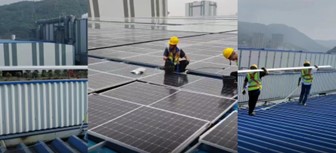
By Mandla Mpangase Setting up a sturdy, resilient and green energy mix for the Tshwane Automotive Special Zone (TASEZ) is a must-do on so many levels. Electricity is essential for driving manufacturing: automotive Original Equipment Manufacturers (OEMs) require a constant and consistent supply, and globally, countries are demanding clean energy products. A key aspect of the TASEZ business plan is to mitigate any risk in the energy supply chain and offer various alternatives, from solar to gas to power. “It is imperative that TASEZ, through its advancements in the formulation of a green energy mix solution, shares lessons and benchmarks with other industrial development zones and special economic zones (SEZs) that are underway with development of their green energy solutions,” says TASEZ head of infrastructure development, Andile Sangweni. “In this way, TASEZ becomes a catalyst in advancing green energy considerations.” TASEZ has positioned itself as a benchmark for green industrialisation through a 25-year solar photovoltaic rooftop and battery storage project across the 12 factories in its hub, reducing reliance on Eskom and enhancing energy resilience. In developing its green energy strategy, TASEZ has undertaken various initiatives in gaining a better understanding of the solar independent power producer model and its benefits. One such initiative was a due diligence mission to China that validated the technical, financial, and socio-economic viability of the solar initiative. In addition, there has also been a focus on the integration of local small, medium and micro enterprises (SMMEs) and labour from the City of Tshwane’s townships into the solar value chain. This also aligns with the Gauteng Provincial Government’s socio-economic development plans. These initiatives are not only mitigating power supply risks but also positioning TASEZ as a green manufacturing hub, particularly attractive to OEMs like the Ford Motor Company, which is TASEZ’s anchor tenant. The right thing to do Beyond being a smart business decision, it is also an ethical choice. The country’s National Development Plan, Vision 2030 envisages a country that has an energy sector that promotes: The United Nations’ Sustainable Development Goal 7 calls for access to affordable, reliable, sustainable and modern energy for all – placing an emphasis on clean energy. In Phase 1 of its development, TASEZ began introducing a mixed energy operation, with the planned installation of solar panels at its zone facilities, currently underway towards implementation. TASEZ, which is strategically based in the heart of Gauteng’s automotive manufacturing hub, has emerged as a trailblazer in renewable energy integration, particularly through its Solar Independent Power Producer (IPP) and green energy initiatives. TASEZ is a key driver in enabling the export of products worldwide and is committed to green manufacturing. It is predicted that beyond 2030, the country will need environmentally-friendly energy sources to retire the current fleet of coal-fired power stations.  Now, with the start of its Phase 2 development, TASEZ is working closely with Chinese energy supplier Heshun Energy, which has its headquarters in Xiamen, in the Fujian Province, on expanding its energy mix. Heshun Energy was the winning bidder to finance, design, supply, install, operate and maintain solar photovoltaic rooftop power panels and battery storage systems in the 12 factories based at TASEZ for a period of 25 years. At the end of that period, the plant will be transferred to TASEZ. Inclusive development As with all TASEZ’s projects, Heshun Energy is required to meet the requirement of setting a minimum target of 30% to subcontract local small, medium and micro enterprises and labour from the local communities, targeting specifically Wards 6, 15, 18, 28, 38, 41, 43, 67 and 86. Heshun Energy is engaged globally in the investment, construction and operation of distributed photovoltaic power stations (using solar energy) and distributed energy storage systems, with a focus on providing safer and more reliable green energy solutions. Some of its solutions have been implemented by Coca-Cola and China International Marine Containers, among others. “We need to harness different energy solutions, not only for our own sustainability, but also for the sustainability of the manufacturing that takes place at the economic hub,” CEO Dr Bheka Zulu noted during a presentation to a delegation of the Southern African Development Community to the zone. The European Union, for example, will not buy any imported vehicles that emit CO₂ from 2035, a short decade away. “We are already preparing to export abroad products that do not have a carbon footprint.” TASEZ’s aim is to attain a carbon-neutral footprint by 2027: “We don’t want to wait until 2035,” the CEO added. “Heshun Energy will be providing TASEZ with some of the energy we need in our SEZ,” Dr Zulu said.

South Africa’s SEZs driven by renewable energy

The Tshwane Automotive Special Economic Zone (TASEZ) has a mixed-energy response – including gas to power and solar photovoltaic (PV) cells with battery storage – to ensure operations based in the manufacturing hub are not brought to a halt by power outages and to comply with government imperatives for onboarding green energy solutions. A key challenge to business operations within South Africa is ensuring energy supply remains constant, despite regular nationwide loadshedding. “This has led us to find innovative solutions,” TASEZ CEO Dr Bheka Zulu explained during a fireside chat at the Sustainable Infrastructure Development Symposium of South Africa (SIDSSA) in Cape Town on Tuesday 19 March 2024. “We are currently underway with a gas to power plant project, which will make 20MVA available, along with a solar PV and battery storage solution that will add another 10MVA.” However, as Africa’s first automotive city – based in Silverton – continues to grow, it needs to find more energy, Dr Zulu added. SIDSSA, an annual event, brought together stakeholders from South Africa and across the continent to discuss ways to drive infrastructure development, which has been identified as the key driver in growing the economy.  SIDSSA provided a platform for discussions and partnerships in the infrastructure investment landscape, with a focus on accelerating economic activity through strategic infrastructure plans. SEZs are ideally placed to accelerate industrialisation in the country; according to the Chief Operations Officer of the Industrial Zones Programme at the Industrial Development Corporation, Stieneke Jensma. “We started a programme focusing on energy security, specifically regarding SEZs. The idea is to collaborate and to ensure that what we are delivering solutions that promote industrialisation.”  Strategic partnerships are key in implementing green energy projects, according to TASEZ’s CEO. TASEZ’s approach to energy takes cognisance of the United Nations’ Sustainable Development Goals – particularly Goal 7, which is linked to the provision of clean energy; Goal 9, which aims to build resilient infrastructure using innovative technology; and Goal 13, which is about taking action to combat the impact of climate change.

Green TASEZ ready for investors

Investors are crucial for the strengthening of South Africa’s economy, and the Tshwane Automotive Special Economic Zone (TASEZ) is ensuring it provides the best possible business environment for international automotive manufacturers and component producers. The manufacturing sector is one of the key drivers of the country’s gross domestic product, with the automotive industry providing direct links to the global market and local entrepreneurs. The special economic zone’s (SEZ’s) focus on attracting investment is in keeping with the South Africa Investment Strategy which aims to position South Africa as a preferred African investment destination, and in so doing, attempt to meet the National Development Plan target of 30% of gross fixed capital formation to GDP by 2030. The South African Investment Strategy aims to attract and facilitate quality foreign direct investment and domestic direct investment and ensuring the provision of such investment is well-coordinated and anchored by quality institutions and robust economic infrastructure networks. The national strategy plans to achieve this through: TASEZ is ideally positioned to answer the call of the investment strategy: it operates in a high priority sector – manufacturing; it offers green solutions to its clients; and is forward thinking in ensuring it embraces the latest technology available to ensure its premises are energy resilient and technologically advances. Known as Africa’s first automotive city, TASEZ is strategically located in the economic heart of the county and is able to offer unparalleled access to markets across Africa and beyond. With its base close to existing OEMs and an existing automotive value chain, access to a highly skilled workforce, and proximity to leading academic, research and development institutions, investors in TASEZ can tap into a wealth of human capital and knowledge. This advantage allows for the seamless integration of cutting-edge technologies and innovative manufacturing. As TASEZ CEO Dr Bheka Zulu notes: “With increasing urbanisation and economic growth across the continent, investing in TASEZ offers an opportunity not only to serve the domestic market but also to expand and tap into the burgeoning markets across Africa.” Currently products manufactured in the SEZ are exported to more than 150 destinations world-wide. In keeping with their determination to provide the best facilities possible for investors, representatives from TASEZ are taking part in the Africa Energy Indaba, on in Cape Town between 5 – 7 March 2024, where they are investigating the latest trends in the energy sector, including renewable energy. A primary element that makes TASEZ an attractive destination for investors is its commitment to green manufacturing. “By embracing renewable energy solutions and reducing its carbon footprint, the SEZ is taking significant strides toward creating an environmentally conscious and responsible manufacturing ecosystem,” Dr Zulu notes. In line with global trends, TASEZ is also promoting the development of electric vehicles. “By encouraging the development of New Energy Vehicles (NEV) and their components, our SEZ is driving a revolution that is expected to reshape the entire automotive landscape.” As the global automotive industry undergoes a profound technological evolution, TASEZ is geared up to take advantage of the opportunities such change brings.