Tasez

industrialisation

Mashatile: Gauteng key to turning R1.5tn investment pledges into jobs and industrial growth

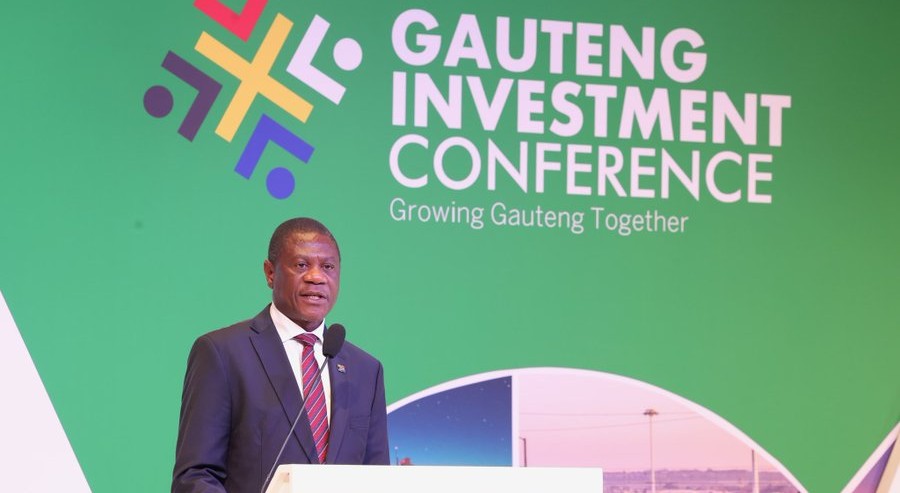
By Mandla Mpangase South African Deputy President Paul Mashatile has positioned Gauteng as the critical engine for converting South Africa’s record investment pledges into tangible economic outcomes, urging faster implementation, stronger partnerships, and a renewed focus on industrialisation. Addressing the 2026 Gauteng Investment Conference on Thursday, 9 April 2026, Mashatile said the province would play a central role in delivering on the commitments secured at the recent South African Investment Conference 2026, where approximately R890-billion in pledges were announced in a single day. The latest commitments push total investment pledges since 2018 to well over R1.5-trillion, prompting the government to set a new national target of R3-trillion in the years ahead. From pledges to implementation Mashatile stressed that the credibility of South Africa’s investment drive would depend not on headline figures, but on execution. “The true value lies in delivery – translating commitments into factories, infrastructure, energy capacity, and above all, jobs,” he said. In this context, Gauteng, South Africa’s largest contributor to GDP and a gateway to regional and global markets, has been identified as the primary platform where many of these projects will be implemented and scaled. The Gauteng Investment Conference, he noted, serves to “localise investment, accelerate execution, and remove obstacles at project level”, effectively bridging the gap between national ambition and on-the-ground delivery. Aligning national priorities with provincial strengths Mashatile said many of the investments announced at the South African Investment Conference align directly with Gauteng’s economic strengths, including advanced manufacturing, energy, logistics, digital services, and infrastructure development. The province’s industrial base, financial system, skilled workforce, and connectivity position it as a natural hub for large-scale project rollout. “This conference moves us from national pledges to provincial pipelines, from policy certainty to site readiness, and from investor intent to operational delivery,” he said. A new model of industrialisation Framed under the theme Re-industrialising Africa’s Gateway, Mashatile outlined a modern approach to industrialisation built on four pillars: Investment lifecycle approach Mashatile said the Gauteng Investment Conference is evolving into a full investment lifecycle platform, covering project origination, preparation, financing, implementation, and delivery. Government’s role, he said, is to de-risk investment through policy certainty and regulatory efficiency, crowd in private capital, and ensure accountability through project tracking and coordination across all spheres. “Credibility is built not on what we announce, but on what we deliver,” he said. Call for public-private partnership The deputy president called for deeper collaboration between government, business, and development finance institutions to unlock large-scale investment. He urged businesses to invest in skills development, support localisation and integrate small enterprises into value chains, while positioning themselves as “co-architects” of South Africa’s industrial future. Investors, meanwhile, were encouraged to view South Africa, and Africa more broadly, not as a risk, but as a long-term growth opportunity. “Africa is not a risk story; it is a growth and return story,” Mashatile said. Gauteng as a gateway to Africa Reaffirming Gauteng’s strategic importance, Mashatile said the province offers a combination of returns and resilience, underpinned by a skilled workforce, established infrastructure, and a commitment to enterprise development. He concluded with a call to action for all stakeholders to move decisively from commitments to implementation. “Let this conference mark a turning point, from commitments to implementation, towards integrated growth that is inclusive, sustainable, and transformative,” he said.
TASEZ begins Phase 2 expansion to bolster automotive capacity  

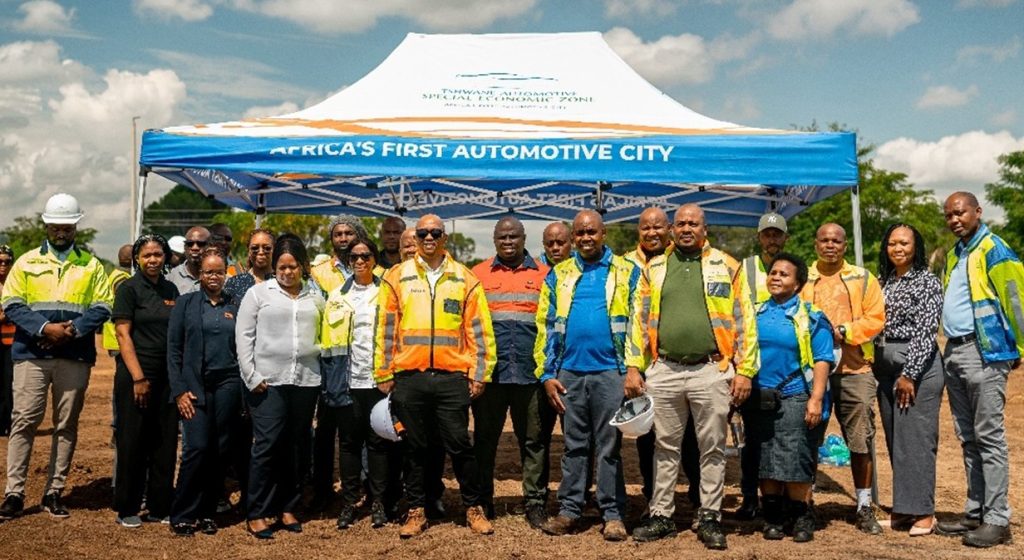
TASEZ has broken ground on Phase 2 of its expansion, with bulk infrastructure works and a 15ML reservoir underway, as the SEZ scales up capacity, attracts new investment, and advances localisation in South Africa’s automotive value chain, writes Mandla Mpangase. The Tshwane Automotive Special Economic Zone (TASEZ) has commenced Phase 2 of its expansion, building on the successful delivery of Phases 1 and 1A as its footprint to strengthen South Africa’s automotive manufacturing capacity. Phase 2 includes enabling bulk infrastructure works and the development of top structures. A key milestone is the construction of a 15‑megalitre reservoir, which began in July 2025 and is being undertaken by MES Major Projects, a black‑owned local contractor. At 13m high, the reservoir is expected to secure a water supply for future industrial activity and support the Tshwane area. External bulk works are underway, while internal bulk construction started on 17 March 2026, marking site establishment and preparation for incoming investors. Top structures will follow, further expanding the special economic zone’s industrial base. “Phase 2 is about integration, readiness, and growth,” said TASEZ infrastructure executive, Andile Sangweni. “The start of internal bulk works signals investor confidence, enabling us to accelerate delivery, unlock investment, and create jobs.” Phase 2 is expected to deepen localisation in the automotive value chain and advance South Africa’s broader industrialisation agenda.

President doubles down on industrialisation, manufacturing and green growth in SONA 2026

By Mandla Mpangase President Cyril Ramaphosa used his 2026 State of the Nation Address (SONA) to place industrialisation, manufacturing and green growth at the centre of South Africa’s economic recovery agenda, outlining a sweeping strategy that positions the automotive sector – and hubs such as the Tshwane Automotive Special Economic Zone (TASEZ) – as catalysts for investment, jobs and technological transition. Speaking to a joint sitting of Parliament in Cape Town on 12 February 2026, President Ramaphosa said South Africa was entering a decisive phase in which it must pivot from exporting raw materials to producing high-value manufactured goods for global markets. “The biggest opportunity of all lies in green growth. We are pivoting our economy to be a leading supplier of the products which the world will rely on in decades to come,” he said. Manufacturing and green industrialisation The president confirmed expanded support for manufacturing, particularly export-oriented green industries such as fertiliser, jet fuel, chemicals and steel. For the automotive sector, the most significant announcement was the introduction of a 150% tax deduction for investment in new energy vehicles (NEVs) from March 2026, alongside government support for local battery production. This policy could accelerate investment in South Africa’s electric and hybrid vehicle value chain, with special economic zones such as TASEZ well-positioned to anchor new assembly lines, component manufacturing and battery-related industries. President Ramaphosa also highlighted R250-billion in international pledges to the Just Energy Transition Investment Plan, which will finance manufacturing, infrastructure and skills development – pillars for industrial hubs such as TASEZ that aim to integrate clean energy, logistics and advanced manufacturing. Critical minerals, beneficiation and the automotive value chain The president also underscored South Africa’s mineral endowment, with ore reserves valued at more than R40-trillion, and reiterated the government’s commitment to local beneficiation of critical minerals. This beneficiation push is expected to underpin domestic production of battery materials, catalytic converters, lightweight metals and other automotive components, strengthening localisation in zones like TASEZ. The Industrial Development Corporation’s R300-million investment in the Frontier Rare Earths Project was highlighted as a step towards building supply chains for lithium batteries and electronics – technologies increasingly integral to next-generation vehicles. Investment pipeline and industrial infrastructure President Ramaphosa said South Africa had secured R1.5-trillion in investment commitments through its first five investment conferences, with R600-billion already flowing into projects, including new factories and mines. Government is targeting R2-trillion in new investments over the next five years, with the next investment conference scheduled for 31 March 2026. Public infrastructure investment of more than R1-trillion over three years will underpin industrial growth, with energy, water, transport and digital infrastructure prioritised. Improved logistics, ports and rail corridors were flagged as critical to exporting manufactured goods from industrial zones such as TASEZ to global markets. Jobs, SMEs and inclusive industrialisation Job creation was framed as the ultimate goal of industrialisation. The president said if every small and medium enterprise (SME) employed one additional person, three million jobs could be created. Government will provide R2.5-billion in funding to 180 000 SMEs, extend R1-billion in guarantees, and prioritise women- and youth-led businesses. This is expected to support supplier development and localisation programmes linked to manufacturers operating in TASEZ and other SEZs. Public employment programmes will be expanded and better coordinated to provide skills development pathways into long-term industrial employment, particularly for young people and women. Skills development for a future automotive workforce Ramaphosa stressed that industrialisation depends on human capital, noting that a strong economy relies on a well-educated, capable and skilled population. The Youth Employment Service and South Africa Youth platform will be strengthened, while regulatory changes will make it easier for businesses to offer work experience opportunities. This could bolster talent pipelines for advanced manufacturing, engineering, robotics and electric mobility technologies in zones such as TASEZ. Protecting and transforming the automotive sector The president reaffirmed the government’s commitment to safeguarding and modernising the automotive industry, which employs hundreds of thousands of South Africans in high-quality jobs. Government is working with industry and labour to close tariff loopholes, protect domestic manufacturing and prepare the sector for the global shift to electric vehicles. TASEZ is well-positioned to play a central role in this transition by clustering OEMs, component manufacturers, logistics providers and research institutions. A strategic window for TASEZ and South Africa President Ramaphosa acknowledged persistent challenges, including unemployment and service delivery failures, but said energy reforms, rising investor confidence and infrastructure investment had created a critical opportunity for economic transformation. “We have a unique window of opportunity to translate these gains into sustained growth,” he said. For South Africa’s automotive sector and industrial platforms such as TASEZ, the 2026 SONA signals a renewed policy push towards localisation, electric mobility and high-value manufacturing, positioning the country to compete in global automotive value chains while driving jobs and inclusive growth at home.

A key lesson from the G20: Industrialisation must power SA’s economic growth

As South Africa concludes its historic G20 Presidency, the first hosted on African soil, a clear message has emerged: the world is ready to recognise Africa as a central engine of shared prosperity, writes the chairperson of the Tshwane Automotive Special Economic Zone, Maoto Molefane. We must make the most of the momentum. Over 22 and 23 November 2025, the G20 global leaders gathered in Johannesburg to endorse commitments that speak directly to the continent’s long-standing aspirations: equitable development, sustainable industrialisation, resilient economies, and fair participation in global trade. For South Africa, and for advanced industrial platforms like the Tshwane Automotive Special Economic Zone (TASEZ), this moment is far more than diplomatic symbolism; it is about accelerating economic growth to combat poverty and inequality, with industrialisation as a key driver of inclusive growth, job creation, and global competitiveness. The G20 2025 mandate President Cyril Ramaphosa’s closing message from the G20 Summit underscored the stakes. South Africa’s development needs – jobs for young people, robust infrastructure, energy security, thriving export industries – require global stability, inclusive growth and a level playing field. The G20 outcomes align directly with South Africa’s industrial ambitions: These are not abstract policy wins. They reshape the environment in which industrial zones like TASEZ operate: they unlock space for growth that is sustainable, technologically advanced and globally aligned. As President Ramaphosa said: “Together, we must accelerate progress towards the 2030 Sustainable Development Goals and the Pact for the Future. We have laid the foundation of solidarity. Now we must build the walls of justice and the roof of prosperity.” Industrialisation as an engine for growth Given that the 2025 G20 provided a strong voice for Africa, it must be noted that the continent has anchored the world’s supply chains for far too long without capturing its share of industrial value. “The greatest opportunity for prosperity in the 21st century lies in Africa,” President Ramaphosa said in his closing remarks. He described the continent as a driving force for future growth, innovation, mineral beneficiation, climate resilience and energy transition.  The 2025 G20 Declaration calls for structural reforms, investment mobilisation, and digital transformation that place industrialisation at the heart of global development priorities. What this means for South Africa is that the country must build, manufacture, innovate, export, and compete. This is the work TASEZ – Africa’s first automotive city – was created to do. Based in the country’s capital city, TASEZ is demonstrating what coordinated industrial policy can achieve: TASEZ is not just an industrial hub; it is a catalyst for economic resilience and can serve as a model for the equitable, future-oriented development highlighted in the G20 Declaration. Beneficiation is a must The global commitment to fair critical mineral development provides South Africa a generational opportunity: to build integrated value chains centred on electric vehicles, battery manufacturing, renewable energy components and advanced materials. As the President noted, minerals must become “a source of prosperity and sustainable development in the countries that produce them”. This aligns perfectly with South Africa’s automotive transition strategy and TASEZ’s expansion into green manufacturing, downstream processing and high-value production clusters. The President called the 2025 summit the People’s G20, characterised by the engagement of business, labour, youth, scientists, mayors and civil society. This spirit of collaboration is the very essence of industrial and special economic zones, which rely on coordinated action between government, investors, communities and workers. South Africa’s G20 success, combined with improving economic indicators and growing confidence in our reform programme, demonstrates that the country is ready for a new industrial chapter based not on extractive development, but on shared value, skills development, innovation, and sustainable manufacturing. Looking ahead As global leaders return home, the world’s attention shifts from diplomacy to delivery. For TASEZ, the task is to translate the political momentum of the G20 into practical industrial capacity. The Johannesburg G20 summit marks a critical turning point for global industrialisation, especially for Africa. The commitments around infrastructure, climate transition, and inclusive development resonate deeply with our vision to build a sustainable, high-tech automotive hub that benefits local communities, talents, and small industrial players. However, for this to be more than rhetoric, the world must translate pledges into concrete investment, local value-chain development, and support for medium, small, and micro enterprises. The timing could not be better, as TASEZ ratchets up its Phase 2 developments. TASEZ will be focused on: The G20 Summit has shown the world what South Africa can achieve when united by purpose. As President Ramaphosa said: “Let us move forward together, demonstrating to the world that we have the capacity to confront and overcome the world’s challenges. Through partnerships across society, and by remembering our common humanity, we can create a more secure, a more just and a more prosperous world. Together, we can ensure that no one is left behind.”  Now, industrialisation must carry that momentum forward. TASEZ stands ready to be part of that charge.

How South Africa’s G20 Presidency can accelerate industrial growth through TASEZ

When South Africa welcomes the world to the G20 Leaders’ Summit this month, our nation will experience one of the most profound moments of global visibility since the country’s dawn of democracy, writes the CEO of the Tshwane Automotive Special Economic Zone (TASEZ), Dr Bheka Zulu. As heads of state, global CEOs, investors, and development partners converge on our shores for the G20 Leaders’ Summit on 22 and 23 November 2025, the world’s gaze will fall not only on our political leadership but on our economic capability, our industrial resilience, and our readiness to take our place in a rapidly shifting global economy. For those of us tasked with building South Africa’s next-generation industrial platforms, this moment is far more than a diplomatic milestone. It is an opportunity to reshape the country’s industrial trajectory for decades to come. And for the Tshwane Automotive Special Economic Zone (TASEZ), it is a chance to demonstrate that South Africa can compete, innovate, and lead in one of the world’s most dynamic sectors: automotive manufacturing. South Africa in the global spotlight The G20 is not just a gathering of 20 world leaders. It is a year-long platform where global investment sentiment is shaped, where development financing agendas are debated, and where emerging markets like South Africa position themselves as credible partners in the global value chain. It has already triggered accelerated investments in infrastructure, logistics, and city improvement projects, particularly in Gauteng. This matters for industrial zones like TASEZ. Better roads, more reliable energy, and upgraded transport networks are the lifeblood of manufacturing competitiveness. But the physical changes are only part of the story. The more significant shift is reputational. A successful G20 presidency can strengthen investor confidence, deepen trust in our economic institutions, and position South Africa as a stable, future-oriented industrial hub. That alone makes this moment essential for TASEZ and the broader automotive sector. Global industrial priorities What excites me is how closely South Africa’s G20 priorities align with TASEZ’s mission. The 2025 agenda focused on: These are not abstract ideas; they cut to the heart of the automotive industry’s transformation. As highlighted by the recent New Energy Summit held in Gauteng in October 2025, global value chains are pivoting to green mobility, clean manufacturing, and Africa’s integration into supply networks. TASEZ is uniquely positioned in this transition. We are already home to one of Africa’s most dynamic automotive production ecosystems, and we are preparing for a future that includes electric mobility, deeper localisation, and expanded supplier development. If South Africa leverages its G20 presidency effectively, we can secure the policy tools, partnerships, and financing mechanisms needed to accelerate this transition. Showcasing South Africa’s successes The world will not judge us by speeches alone. They will judge us by what we build. This is why TASEZ intends to use the G20 window to demonstrate what coordinated public–private investment can achieve. As the fastest-growing automotive special economic zone (SEZ) on the continent, we have a compelling story to tell — one of job creation, skills development, township inclusion, supplier growth, and industrial expansion. We should be bold in inviting foreign delegations, development finance institutions, and global OEMs to see the zone firsthand. Site visits, technical tours, and bilateral industry roundtables can turn interest into investment. The G20 gives us a once-in-a-generation platform to do this at scale. The G20 Leaders’ Summit will bring renewed attention to Africa’s role in the global economy. For TASEZ, this is an opportunity to expand its influence beyond South Africa’s borders. Through stronger relationships with the Southern African Development Community (SADC) and African Union partners, we can position TASEZ as a catalyst for regional automotive value chains, a future where components made in Botswana, Mozambique, Zambia, or Zimbabwe flow seamlessly into assembly lines in Tshwane. More than symbolic South Africa must convert visibility into tangible improvements in industrial competitiveness. We must guard against the tendency to treat major summits as symbolic rather than strategic. Investment is not secured by banners, speeches, or social media clicks. It is secured by credibility, efficiency, transparency, and delivery. For TASEZ, this means: The 2025 G20 Summit is a strategic opportunity for South Africa to reposition itself as the continent’s industrial leader, providing a platform for government, business, and development partners to act with unity. For TASEZ, it is a chance to amplify what we already know: that South Africa can build globally competitive manufacturing hubs; that our people can produce world-class automotive products; and that, with the right partnerships, we can transition into the mobility future with confidence. The world is coming to South Africa. Will we use this moment to shape our industrial destiny? We at TASEZ intend to do just that.

NEV Summit sets clear direction for South Africa’s green mobility future

By Mandla Mpangase Day 1 of the New Energy Vehicles Summit provided much to think about. The opening day of the inaugural New Energy Vehicle (NEV) Summit in Midrand proffered a compelling combination of insights, inspiration and strategic direction, positioning South Africa, and Gauteng in particular, as a frontrunner in Africa’s transition to sustainable mobility. From the science behind hydrogen and battery-powered vehicles to the policies shaping South Africa’s green mobility roadmap, Day 1 covered a broad spectrum of issues. Delegates explored global trends, drew lessons from international case studies, including from China, and examined local readiness across policy, skills, and industry. In his summary remarks on the day, the CEO of the Tshwane Automotive Special Economic Zone (TASEZ), Dr Bheka Zulu, noted that the discussions were “not just about dialogue, but about direction”. Every presentation, he said, “was the emergence of a shared vision; one that sees South Africa transitioning into sustainable mobility and industrial renewal”. Gauteng, as the country’s industrial heartland, was described as playing a strategic role in the future of the automotive ecosystem, leveraging its strong logistics infrastructure and manufacturing base to attract investment and drive innovation. “Today affirmed South Africa’s readiness to lead Africa’s green mobility future,” Dr Zulu added. “The key message was about collaboration – between government, industry, academia, and innovators – to create jobs, empower small, medium and micro enterprises, and localise technology.” Dr Zulu likened this collaboration to a relay race, where each participant contributes their unique strength at different stages: “It’s not about competition, but coordination, knowing when and how to pass the baton to build momentum together.” Throughout the day, recurring themes included industrial transformation, skills development, and ensuring that technology and labour advance together for a just transition. Speakers also emphasised policy clarity and investment confidence, highlighting growing optimism in the local NEV manufacturing sector. The province called for “urban-driven industrialisation” that integrates energy policy, investment frameworks, and urban planning, aligning Gauteng’s innovation and logistics strengths to create a globally competitive green automotive hub. As the day concluded, participants agreed that the NEV revolution “is no longer a possibility, but a present reality”, and that South Africa’s leadership must act boldly and decisively to harmonise policy, infrastructure, and workforce development. “Our NEV transition is not a single-sector effort – it’s a national movement,” Dr Zulu emphasised. “We must plan boldly, invest bravely, and move together to make Gauteng cleaner, smarter, greener, and more connected.”

‘Vision with action can change the world’

It is fitting, in a month where the world remembers former president Nelson Mandela, that the Minister of Trade, Industry and Competition, Parks Tau, opened his budget vote address with a quote from Madiba: “Action without vision is only passing time. Vision without action is merely day-dreaming. But vision with action can change the world.” These words reverberate within the Tshwane Automotive Special Economic Zone’s core, sitting at the heart of the special economic zone’s (SEZ) ethos. Speaking in Parliament on 16 July 2024, Minister Tau noted that the words also echo the country’s aspirations to build a dynamic, industrial and globally competitive South Africa that is transformed, inclusive and equitable. This is “anchored on industrialisation, transformation, job creation and building a capable and developmental state”. The minister emphasised the importance of manufacturing-led growth. “Manufacturing creates jobs in upstream and downstream sectors,” Tau explained, adding that these jobs were typically permanent and paid decent wages, with workers able to access to skills development and career path opportunities. Instruments such as the South African Automotive Masterplan are crucial; with their focus on supporting localisation, increasing investment, and creating and retaining jobs. “We have industrial capabilities as a country,” he added. The Department of Trade, Industry and Competition (the dtic) would, in identified industries, work closely with relevant state-owned entities and industry to support local manufacturing of key products and to create jobs. Growing the export markets Of importance to TASEZ, is the fact that the minister identified the need to expand and improve exports. South Africa’s automotive sector already exports the bulk of the vehicles manufactured here. In May 2024, naamsa noted that “record high vehicle exports ensured that the automotive industry outperformed the rest of the manufacturing sector” last year.  “The export value of vehicles and automotive components increased by R43.5-billion, or 19,1%, from the R227.3-billion in 2022 to a record R270.8-billion in 2023, comprising 14,7% of total South African exports.” Naamsa noted the export performance included “record exports to all major regions, including the European Union, Africa, the Southern African Development Community, and North America”. Minister Tau pointed out that South Africa’s location at the tip of “the second-fastest growing region in the world”. To reduce a dependence on a small domestic market, “the dtic will implement new export measures, coupled with expanding the current measures and improving their effectiveness” and will work towards expanding its export footprint through BRICS+ (Brazil, Russia, India, China,Iran, Egypt, Ethiopia and the United Arab Emirates), the African Continental Free Trade Area (AfCFTA), the African Growth and Opportunity Act (AGOA) partnership with the United States, and the Economic Partnership Agreement with the EU. Turning to SEZs, the minister reminded parliament that the reason the country had set up SEZs was “to expand economic activity to under-developed parts of South Africa. There are many benefits to this including, creating jobs closer to where our people live and thereby reducing the cost burden poor people carry.” There was no logical or economic rationale for forcing people to live far from their families in increasingly crowded living spaces. “Spatial equity is therefore, a non-negotiable.” Referring to the 11 SEZs established so far, the minister noted: “These SEZs have generated investments amounting to R19.6-billion. In addition, these SEZs provide an on-going revenue stream to national government through ongoing corporate, PAYE and VAT payments. These contributions to tax revenue across over 100 firms located in SEZs far outweigh the initial establishment costs.” Like TASEZ, which is located between Eerstrust, Mamelod and Nelmapius, South Africa’s industrial parks are often located in or adjacent to townships. And these industrial parks provide jobs and incomes to people from the neighbouring townships. “We, therefore, encourage private-sector participation in the industrial parks, in order to assist to improve operations and facilities, and encourage private sector investment.”

Tshwane SEZ shows the way on how to successfully attract investment and create employment

The Tshwane Automotive Special Economic Zone (TASEZ) has set the benchmark for the development of South Africa’s new special economic zones. Special economic zones (SEZs) are key to making South Africa an attractive option for foreign direct investments. SEZs are important instruments in advancing the country’s strategic objectives of industrialisation, regional development, the promotion of exports and job creation. Africa’s first automotive city, based in the City of Tshwane, was an exemplary case in how to develop and set up an SEZ to hit the road running. From being gazette in January 2020 to seeing the first cars come off the production line in November 2022, TASEZ achieved all of this in just two short years – and during the Covid 19 pandemic. The TASEZ case study was central to discussions that took place in a workshop held in Pretoria on Thursday, 11 April 2024, that looked at how SEZs can be implemented speedily. Piloting a new method “We are conscious of the responsibility we have been given in piloting this new model for the development of SEZs,” says TASEZ CEO Dr Bheka Zulu. “It could not have been done without the strong strategic partnerships between our investors and all three tiers of government.” The TASEZ model has now set the benchmark for the establishment of new SEZs. Representatives from the country’s new SEZs joined the teams from the Department of Trade, Industry and Competition (the dtic) responsible for SEZ development, the Industrial Development Corporation’s (IDC’s) SEZ unit, and TASEZ. TASEZ chair and executive director of the Industrial Zones Programme at the IDC, Lionel October, said: “We are here today to begin to standardise and formulate SEZ set up procedures.” The dtic’s Shaun Moses set the scene for the discussion, outlining the policy and strategies driving the development of SEZs. He highlighted the underlying economic challenges South Africa had to tackle: This led to the government identifying a number of objectives to change the economic landscape: combining growth with transformation; boosting local production; growing exports and expanding trade within Africa; increasing investment; establishing a reliable and low-cost energy system while greening the economy; and growing employment. This, Moses pointed out, would be achieved through promoting jobs and higher incomes via industrialisation; building an inclusive economy; and making sure public policies make an impact. Factors for success It was against this background that TASEZ became the pilot project for a new approach to setting up SEZs. There were a number of critical factors that ensured the project’s success: “The scale of the TASEZ project demanded a well-coordinated, systematic and objective approach in responding to the socio-economic performance targets, job creation and SMME opportunities.” Crucially, it was the agile project management approach that ensured TASEZ’s success. Key factors to this success were: One of the proposals to speed up the development of new SEZs, put forward by the technical advisor of the Industrial Zones Programme at the IDC, Dr Siyabonga Simayi, was the creation of multi-sites, or the extension of the boundaries of existing SEZs, to incorporate the development of new SEZs. This would see the development of a zone with more than one site, or the development on land that did not share a border with the existing SEZ. The licence of an existing Industrial Development Zone could be used to facilitate the creation of new SEZs, cutting down on read tape and allowing for a speedier and more agile process, Dr Simayi told the workshop. This would see a single licensee, operator and entity, with one management team and board; single operating systems and processes, and a single budget with one audit process. The workshop concluded by agreeing that there was a need to develop clear guidelines and operating procedures to implement successful SEZs within two years. As Stieneke Jensma, the chief operations officer of the Industrial Zones Programme at the IDC, noted in summing up the day: “TASEZ has done it – we know it’s doable.”