Tasez

President Cyril Ramaphosa

Ramaphosa hails record investment pledges as South Africa ‘turns a corner’

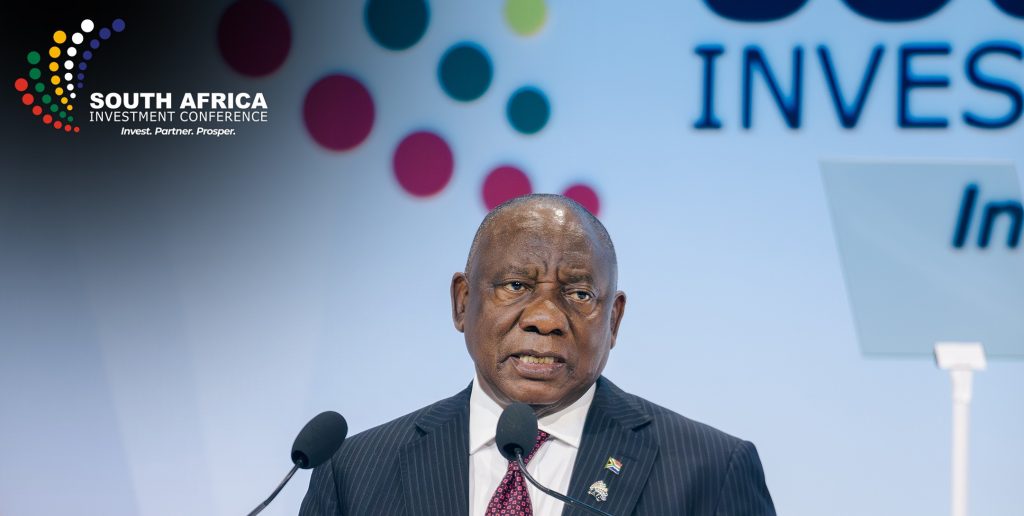
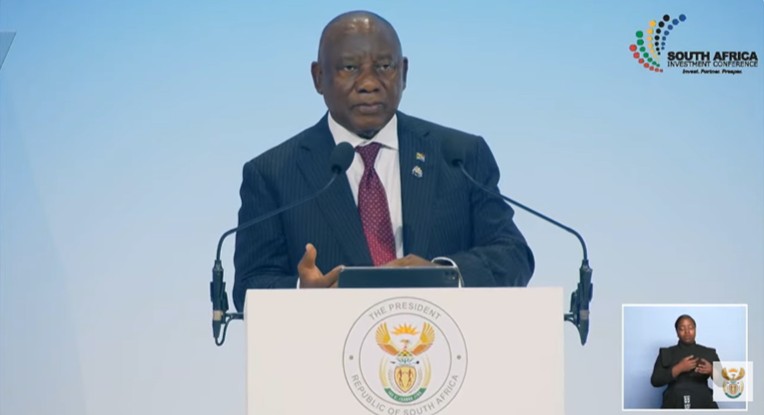
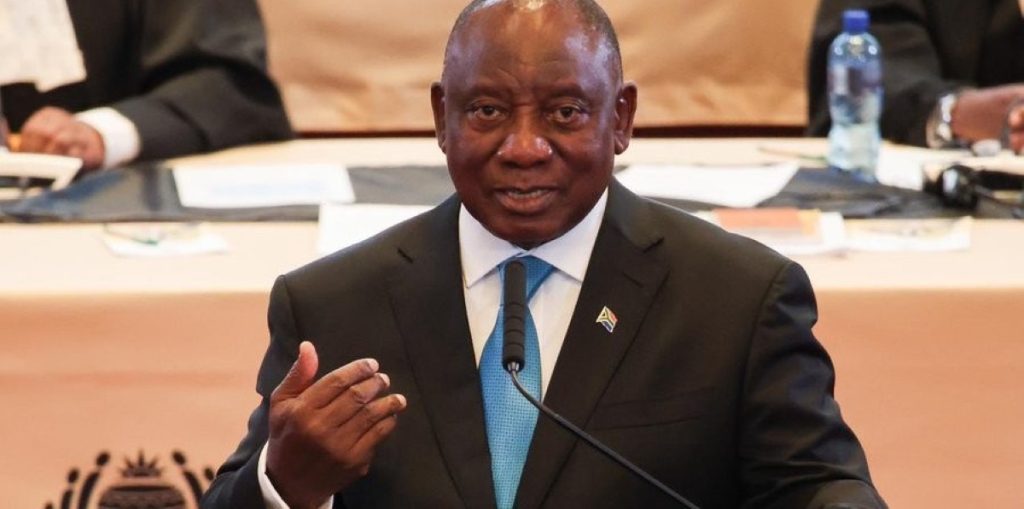
By Mandla Mpangase President Cyril Ramaphosa has declared that South Africa is entering a “new phase of growth”, following record-breaking investment commitments announced at the 2026 South Africa Investment Conference (SAIC) held at the Sandton Convention Centre in Johannesburg. Delivering his closing remarks to delegates, investors, and business leaders, Ramaphosa said the scale and scope of pledges made at this year’s conference provide compelling evidence that confidence in the country’s economy is strengthening. The conference marked the launch of a second investment mobilisation drive, targeting R2-trillion in new investments between 2026 and 2030. This builds on the success of the first drive, which exceeded its R1-trillion target. A total of R889.8-billion was pledged during the day-long conference on 31 March 2026. “The cumulative value of the pledges made at this conference is the highest we have achieved since the first South Africa Investment Conference,” he said, noting that the number of projects announced had also reached a new peak. A notable feature of this year’s commitments is the strong showing from domestic investors, which Ramaphosa said reflects growing confidence within South Africa’s own business community. At the same time, foreign direct investment has “increased phenomenally”, supported by participation from international firms and development finance institutions. The investments span all nine provinces and cut across key sectors including energy, mining, manufacturing, infrastructure and global business services. Among the headline commitments, Toyota will invest R10.4-billion in KwaZulu-Natal to support the automotive sector’s transition to cleaner energy. Sasol has pledged R60-billion for plant upgrades and new technologies in Mpumalanga and the Free State. At the same time, Valterra Platinum will expand mining operations in Limpopo to supply critical minerals for future-facing industries. Infrastructure and energy also feature prominently. South32 is investing R3.9-billion in rail upgrades linked to manganese mining in the Northern Cape and KwaZulu-Natal, while black-owned manufacturer Actom will inject R250-million into equipment to support electricity grid expansion. In the services sector, Teleperformance will invest R145-million in the Eastern and Western Cape, creating 2,600 jobs, while renewable energy company Mulilo has committed R14.8-billion to projects across multiple provinces. Ramaphosa emphasised that these commitments align with the government’s broader push to scale up infrastructure spending, describing it as the “largest infrastructure investment intervention” in South Africa’s history. Despite the positive momentum, the President acknowledged that significant work remains. Fixed investment currently stands at around 15% of GDP, and the country must double this level over time to achieve sustained economic growth. “There is a gap between improved sentiment on one hand, and greater capital deployment that translates to strong growth and jobs on the other,” he said. Central to closing that gap is the government’s structural reform agenda, which Ramaphosa described as “irreversible”. The reforms, coupled with a robust regulatory framework and adherence to the rule of law, are aimed at providing certainty and predictability for investors. He also highlighted the importance of South Africa’s constitutional democracy, noting that the rule of law underpins economic development, protects rights, and ensures accountable governance. Ramaphosa credited the private sector as a key partner in the country’s economic recovery, pointing to longstanding collaboration between business and government since 2019. Initiatives such as the Youth Employment Service have created more than 200 000 work opportunities, while joint efforts during the Covid-19 pandemic and the Economic Reconstruction and Recovery Plan helped stabilise the economy. The evolving Government Business Partnership, now in its third phase, is focused on improving logistics, securing energy supply, and tackling crime and corruption – issues that remain critical to investor confidence. On this front, Ramaphosa outlined a series of interventions to strengthen the criminal justice system, including the establishment of a new reform initiative targeting organised crime, corruption, the illicit economy, and illegal firearms. He also confirmed that new regulations under the Public Procurement Act will be finalised soon to combat corruption in state procurement. Reflecting on the past decade, Ramaphosa said South Africa has made significant progress since the era of state capture and economic stagnation. “Today, the green shoots of renewal are emerging. We have turned a corner, and confidence in our economic trajectory is rising,” he said. He urged delegates to convert pledges into tangible projects and long-term partnerships that drive inclusive growth and job creation. “You are not merely investing in an economy,” he said. “You are investing in a nation determined to grow, transform, and succeed.”

South Africa sets the stage for broad-based, investment-led growth

By Mandla Mpangase South Africa is entering a new phase in its economic trajectory, with President Cyril Ramaphosa positioning the country as a reform-driven, investment-ready destination focused on inclusive and sustainable growth. Addressing more than 1 000 delegates from over 50 countries at the sixth South Africa Investment Conference on 31 March 2026, Ramaphosa made it clear that the government’s priority is not only to attract capital, but to ensure investment translates into tangible, broad-based benefits. “We are creating the conditions for investment-led growth that is broad-based, inclusive, and durable,” he said. “Investment conferences such as this are an opportunity for us to showcase the attractiveness of investment opportunities in our country to domestic and international investors. By connecting investors with local opportunities, we are able to attract foreign direct investment (FDI). They also facilitate strong partnerships by bringing together governments, business, banks, and development finance institutions.” Gauteng, the country’s economic hub, provided a fitting backdrop. As the largest contributor to national GDP, the province remains central to South Africa’s investment proposition. South Africa’s post-1994 journey has been marked by resilience. The country has navigated global and domestic shocks, from the financial crisis to state capture and the COVID-19 pandemic, while maintaining institutional stability. Now, that resilience is being translated into growth. Under the Government of National Unity formed after the 2024 elections, the economy has recorded four consecutive quarters of expansion into early 2026, alongside stabilising inflation and improved investor sentiment. However, Ramaphosa stressed that credibility must be backed by delivery. “We know that investors reward execution, not just commitment,” he said, highlighting a shift toward measurable reform outcomes. Central to this effort is Operation Vulindlela, a joint initiative between the Presidency and National Treasury aimed at removing structural constraints to growth. Its focus is on reducing the cost and complexity of doing business across key sectors, including energy, logistics, water, and visas. Nowhere has reform been more consequential than in the energy sector. Following years of load shedding, the government has restructured the electricity market, unbundled Eskom, and opened the grid to private investment. The result is a rapidly expanding pipeline of renewable energy projects and improved energy security. Through these interventions, Ramaphosa said, “we have brought an end to load shedding and ensured a reliable supply of electricity”, a critical milestone for restoring investor confidence. Energy reform also underpins South Africa’s broader transition to a low-carbon economy. Opportunities in green hydrogen, electric vehicle manufacturing, battery storage, and critical minerals are expected to drive future growth, while aligning with global climate commitments. With its significant reserves of platinum group metals and other resources, the country is well-positioned to play a strategic role in global clean energy value chains. Importantly, the transition is being framed as inclusive. “We have been firm that the energy transition must be just and that it should leave no one behind,” Ramaphosa said. Infrastructure investment is another cornerstone of the growth strategy. Over the next three years, the government has committed more than R1 trillion to infrastructure development across transport, energy, water, and digital systems. “Infrastructure is the flywheel that propels growth,” Ramaphosa said, noting its role in reducing costs, improving productivity, and creating jobs at scale. The approach is designed to crowd in private sector participation. Reforms in logistics are opening rail and port operations to competition, while new public-private partnership frameworks and blended finance instruments aim to de-risk investment and accelerate delivery. In the water sector, a pipeline of projects worth more than R50 billion is being prepared for private investment. Beyond infrastructure, the government is emphasising inclusion. Investment projects are expected to incorporate local content, skills development, and community benefits, ensuring that growth is shared more widely. At the same time, South Africa’s empowerment framework is being refined to balance transformation with investment attraction. Mechanisms such as the Equity Equivalent Investment Programme allow multinational firms to contribute to development without altering ownership structures. “Our overriding objective is to support firms with compliance, and to embrace empowerment as a meaningful investment in South Africa’s long-term economic stability,” Ramaphosa said. The conference also marked the launch of a second investment mobilisation drive, targeting R2-trillion in new investments between 2026 and 2030. This builds on the success of the first drive, which exceeded its R1-trillion target. The new phase begins with a strong pipeline of 81 projects worth nearly R890-billion, expected to create more than 230 000 jobs. “This is not ambition for its own sake,” Ramaphosa said. “It is the arithmetic of what South Africa requires to achieve meaningful unemployment reduction and industrialise at scale.” As global uncertainty reshapes capital flows, South Africa is positioning itself as a stable, reform-oriented destination. While Africa continues to attract a relatively small share of global foreign direct investment, the country remains a leading recipient on the continent. “We are meeting at a time of uncertainty for the global economy. Geopolitical fragmentation, supply chain disruptions from conflicts and wars, and trade tensions are radically impacting global capital flows,” Ramaphosa noted. “In such conditions, South Africa presents a favourable proposition as a resilient, credible and reform-oriented investment destination with strong fundamentals.” Ultimately, the success of this strategy will depend on sustained implementation. “This is only the start of an era of new growth and dynamism for South Africa’s economy,” Ramaphosa said. The task now is to convert investment commitments into real projects and ensure those projects deliver lasting, inclusive growth.

SA’s investment prospects buoyed by economic recovery

In his weekly newsletter on Monday, 30 March 2026, President Cyril Ramaphosa gears up for the sixth South Africa Investment Conference taking place in Sandton, Gauteng. This week, we will be welcoming delegates from more than 50 countries to the sixth South Africa Investment Conference (SAIC) in Sandton, Gauteng. Since its inception in 2018, the SAIC has grown to become a premier global forum for showcasing the attractiveness of investment opportunities in our country to domestic and international investors. Investment conferences play a key role in attracting foreign direct investment (FDI) as high-profile platforms that connect international investors with local opportunities. They also facilitate strong partnerships by bringing together governments, business, banks and development finance institutions. As investors look to destinations that have demonstrated resilience in the face of increasingly volatile global financial conditions, South Africa presents a favourable proposition. We are Africa’s largest economy with a diversified industrial base. Since we began our first R1,2-trillion investment mobilisation drive in 2018, we have secured investment pledges in mining, healthcare, automotive, food and beverage and others, reflecting the sophistication of our economy.  South Africa is also the leading destination for renewable energy investment on the continent, with these investments making up a considerable share of the total pledges made at previous conferences. We have a sound policy and regulatory environment, offering certainty to investors at a time when we are just one of many emerging markets across the globe vying for capital. We are also a gateway for businesses looking to set up or expand their operations in Africa. Through this conference, as well as the five preceding ones, we will be seeking to build even greater confidence in our country as an investment destination, and to demonstrate our commitment to structural reform, policy certainty and policy execution. The green shoots of economic recovery we are experiencing further bolster our position. The macroeconomic outlook has improved. We experienced four consecutive quarters of growth by the end of 2025, national debt has stabilised, and more jobs are being created. Last year, our sovereign rating was upgraded for the first time in 17 years, and we were removed from the Financial Action Task Force grey list. The structural reform agenda being driven through Operation Vulindlela has unlocked progress in electricity, freight logistics, water, telecommunications, and the visa system. We have brought load-shedding to an end and are creating a new, competitive electricity market that will ensure energy security and attract investment. The country’s logistics sector is being rapidly modernised, and we are enabling private investment in port and rail operations. Among the projects for which we have initiated a Private Sector Participation (PSP) process are the Ngqura Manganese Export Corridor in the Eastern Cape and the Richards Bay Dry Bulk Terminal in KwaZulu-Natal. Last year we also signed a 25–year concession for the Durban Container Terminal Pier 2, representing R11-billion in private investment. A system for third-party access to the freight rail network is in place, and 41 freight rail slots have been allocated to private companies. We have implemented reforms to the visa regime to attract new skills and promote tourism. These include operationalising the Remote Work Visa, introducing a Trusted Employer Scheme to support major investors, and piloting an Electronic Travel Authorisation system. By showcasing the progress and durability of the reform agenda, our goal is to grow the pool of inward investment from businesses and countries that will ultimately be a bridge to new markets, technologies and networks for South Africa. This year’s conference has to date attracted more than 1 000 delegates from more than 50 countries. At the end of our first five-year investment mobilisation drive in 2024, we exceeded our target by 26%, securing pledges valued at R1,57-trillion. Over 300 projects were initiated, and to date, 161 of these have been finalised or are under construction. The pledges have not been merely vague commitments and promises, but have materialised as tangible, brick-and-mortar projects that are creating jobs for our people. Last year I opened the Platreef Mine in Mokopane in Limpopo, which is positioned to play a leading role in the production of sought-after critical minerals for the energy transition. This facility that employs more than 2 000 workers from the local community and is partly owned by a community trust emanated from a R2,8-billion investment pledge by Ivanhoe Mines at the South Africa Investment Conference in 2022. Last year, I also visited the BMW plant in Rosslyn in Tshwane, where the automotive giant has invested R4,2-billion for the electrification of its only plant on the continent that will be producing the BMW X3 Plug-in Hybrid electric vehicle. This was also an investment pledged at the SAIC. By showcasing our unique and favourable proposition as an investment destination of choice, we have set ourselves the goal of mobilising R2-trillion in new investments by 2028. As we strive to achieve growth that creates jobs for our people, this next phase will move from pledges towards implementation. This year’s investment conference stands at the crossroads of opportunity and ambition. The clear message we will be delivering is that we remain committed to staying the course on fiscal discipline, to accelerating the momentum of the reform agenda – and to leveraging investment to build an economy that is inclusive, transformed and that benefits all.

President doubles down on industrialisation, manufacturing and green growth in SONA 2026

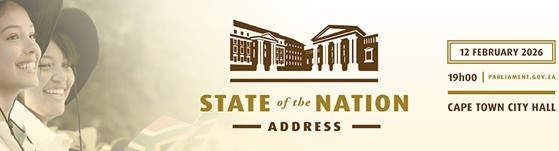
By Mandla Mpangase President Cyril Ramaphosa used his 2026 State of the Nation Address (SONA) to place industrialisation, manufacturing and green growth at the centre of South Africa’s economic recovery agenda, outlining a sweeping strategy that positions the automotive sector – and hubs such as the Tshwane Automotive Special Economic Zone (TASEZ) – as catalysts for investment, jobs and technological transition. Speaking to a joint sitting of Parliament in Cape Town on 12 February 2026, President Ramaphosa said South Africa was entering a decisive phase in which it must pivot from exporting raw materials to producing high-value manufactured goods for global markets. “The biggest opportunity of all lies in green growth. We are pivoting our economy to be a leading supplier of the products which the world will rely on in decades to come,” he said. Manufacturing and green industrialisation The president confirmed expanded support for manufacturing, particularly export-oriented green industries such as fertiliser, jet fuel, chemicals and steel. For the automotive sector, the most significant announcement was the introduction of a 150% tax deduction for investment in new energy vehicles (NEVs) from March 2026, alongside government support for local battery production. This policy could accelerate investment in South Africa’s electric and hybrid vehicle value chain, with special economic zones such as TASEZ well-positioned to anchor new assembly lines, component manufacturing and battery-related industries. President Ramaphosa also highlighted R250-billion in international pledges to the Just Energy Transition Investment Plan, which will finance manufacturing, infrastructure and skills development – pillars for industrial hubs such as TASEZ that aim to integrate clean energy, logistics and advanced manufacturing. Critical minerals, beneficiation and the automotive value chain The president also underscored South Africa’s mineral endowment, with ore reserves valued at more than R40-trillion, and reiterated the government’s commitment to local beneficiation of critical minerals. This beneficiation push is expected to underpin domestic production of battery materials, catalytic converters, lightweight metals and other automotive components, strengthening localisation in zones like TASEZ. The Industrial Development Corporation’s R300-million investment in the Frontier Rare Earths Project was highlighted as a step towards building supply chains for lithium batteries and electronics – technologies increasingly integral to next-generation vehicles. Investment pipeline and industrial infrastructure President Ramaphosa said South Africa had secured R1.5-trillion in investment commitments through its first five investment conferences, with R600-billion already flowing into projects, including new factories and mines. Government is targeting R2-trillion in new investments over the next five years, with the next investment conference scheduled for 31 March 2026. Public infrastructure investment of more than R1-trillion over three years will underpin industrial growth, with energy, water, transport and digital infrastructure prioritised. Improved logistics, ports and rail corridors were flagged as critical to exporting manufactured goods from industrial zones such as TASEZ to global markets. Jobs, SMEs and inclusive industrialisation Job creation was framed as the ultimate goal of industrialisation. The president said if every small and medium enterprise (SME) employed one additional person, three million jobs could be created. Government will provide R2.5-billion in funding to 180 000 SMEs, extend R1-billion in guarantees, and prioritise women- and youth-led businesses. This is expected to support supplier development and localisation programmes linked to manufacturers operating in TASEZ and other SEZs. Public employment programmes will be expanded and better coordinated to provide skills development pathways into long-term industrial employment, particularly for young people and women. Skills development for a future automotive workforce Ramaphosa stressed that industrialisation depends on human capital, noting that a strong economy relies on a well-educated, capable and skilled population. The Youth Employment Service and South Africa Youth platform will be strengthened, while regulatory changes will make it easier for businesses to offer work experience opportunities. This could bolster talent pipelines for advanced manufacturing, engineering, robotics and electric mobility technologies in zones such as TASEZ. Protecting and transforming the automotive sector The president reaffirmed the government’s commitment to safeguarding and modernising the automotive industry, which employs hundreds of thousands of South Africans in high-quality jobs. Government is working with industry and labour to close tariff loopholes, protect domestic manufacturing and prepare the sector for the global shift to electric vehicles. TASEZ is well-positioned to play a central role in this transition by clustering OEMs, component manufacturers, logistics providers and research institutions. A strategic window for TASEZ and South Africa President Ramaphosa acknowledged persistent challenges, including unemployment and service delivery failures, but said energy reforms, rising investor confidence and infrastructure investment had created a critical opportunity for economic transformation. “We have a unique window of opportunity to translate these gains into sustained growth,” he said. For South Africa’s automotive sector and industrial platforms such as TASEZ, the 2026 SONA signals a renewed policy push towards localisation, electric mobility and high-value manufacturing, positioning the country to compete in global automotive value chains while driving jobs and inclusive growth at home.

SONA 2026: A TASEZ wish list for South Africa’s industrial reset

By TASEZ CEO Dr Bheka Zulu As South Africa prepares for the 2026 State of the Nation Address by President Cyril Ramaphosa on 12 February 2026, the Tshwane Automotive Special Economic Zone (TASEZ) – Africa’s first automotive city – is hoping to see an emphasis being placed on putting manufacturing at the centre of the country’s economic strategy. Manufacturing remains one of the few sectors capable of creating large-scale employment, driving exports and anchoring technology transfer. Yet, despite its strategic importance, South Africa’s manufacturing sector continues to underperform relative to its potential, constrained by energy insecurity, logistics inefficiencies and policy uncertainty. Special Economic Zones (SEZs) are among the most effective tools available to reverse this trend. Zones such as TASEZ have demonstrated that targeted infrastructure, incentives and policy alignment can crowd in private investment and build globally competitive industrial clusters. SONA 2026 is an opportunity to scale this model. From a TASEZ perspective, there are several policy signals we would like to hear. First, a credible manufacturing growth pactSouth Africa needs a clear, time-bound commitment to manufacturing expansion, aligned with the Industrial Policy Framework, the Automotive Masterplan and the transition to new energy vehicles (NEVs). This should include measurable localisation and export targets, backed by regulatory certainty. Investors require predictability; industrial policy cannot shift with every political cycle. Second, a competitive SEZ incentive regimeSEZs compete globally. Countries such as Morocco, Vietnam and Egypt have built industrial bases by offering compelling fiscal incentives, streamlined customs processes and reliable infrastructure. South Africa must remain competitive. Enhanced incentives, faster approvals and dedicated industrial energy solutions would materially improve the country’s investment proposition. Third, explicit positioning of SEZs as anchors of the green and automotive transitionThe global automotive sector is undergoing a structural shift towards electrification, batteries and smart mobility. South Africa risks being locked out of future value chains if it does not act decisively. SEZs should be designated as production hubs for NEV (new energy vehicle) assembly, battery manufacturing and hydrogen-related industries, supported by targeted incentives and infrastructure. Fourth, localisation that delivers for MSMEsLocalisation policy must translate into real procurement opportunities for South African firms, particularly black-owned and township-based enterprises. Stronger localisation thresholds in public procurement, integrated with SEZ supplier development programmes, can help domestic firms integrate into global value chains rather than remaining peripheral participants. Fifth, infrastructure as an industrial enablerIndustrial policy without reliable infrastructure is aspirational at best. Manufacturing requires predictable electricity supply, efficient rail and port logistics, and high-quality digital connectivity. Commitments to stabilise industrial energy supply and modernise logistics networks would significantly improve South Africa’s industrial competitiveness. Sixth, blended finance to bring in private capitalIndustrial projects are capital-intensive and long-term. Development finance institutions can play a catalytic role by de-risking SEZ-based projects through blended finance structures. Public capital, concessional funding and private investment must be combined at scale to accelerate industrial development. Finally, a national skills pipeline for advanced manufacturingFuture factories require technicians, engineers and digital specialists. Coordinated partnerships between industry, TVET (Technical and Vocational Education and Training) colleges, universities and SEZs could position South Africa as a manufacturing talent hub on the continent. SONA 2026 comes at a defining moment. Global supply chains are fragmenting, the energy transition is reshaping trade patterns, and the African Continental Free Trade Area offers an unprecedented market for manufactured goods. South Africa has the industrial base, institutional capacity and geographic advantage to benefit – but only if policy ambition is matched by execution. SEZs such as TASEZ are platforms for a new economic narrative: one where South Africa builds, makes and exports at scale. If SONA 2026 delivers a bold and credible manufacturing and SEZ agenda, it could mark the beginning of a long-overdue industrial reset.

We must build on the momentum of our economic recovery

In his weekly newsletter on Monday, 26 January 2026, President Cyril Ramaphosa noted that the country’s economic recovery is on the up, with four consecutive quarters showing growth and unemployment showing a decline. As we enter a new year, the momentum of our economic recovery is gathering pace. In the last months of 2025, we saw a number of indicators that our collective efforts to rebuild our economy are bearing fruit. The economy has posted four consecutive quarters of growth. There has been a steady reduction in unemployment, while recent data released by Statistics South Africa shows that levels of poverty and inequality have declined considerably. Confidence in our economy is rising, the stock exchange has been performing well and the average inflation rate is the lowest in two decades. Late last year, South Africa exited the Financial Action Task Force grey list, which is an important signal of institutional improvement and a boost to investor confidence. We have also seen a sovereign credit ratings upgrade, reflecting strengthened fiscal credibility. While these signs of progress are encouraging, there is no time to rest. The difference between a temporary lift in growth and sustained shift in our economic trajectory lies in expanding investment. With a strengthening currency and rising commodity prices, we have wind in our sails. Now we must steer our ship towards greater prosperity for all South Africans. Last week, at its first meeting of the year, the Presidential Economic Advisory Council (PEAC) made clear proposals on how to achieve this goal. A body of respected local and international economists, academics and practitioners, the council provides strategic and evidence-based advice on policy decisions that promote economic stability, growth and inclusivity. The council said that government should translate recent positive developments into enduring growth by simultaneously boosting public infrastructure spending and lowering the cost of doing business. Increasing infrastructure investment is not simply about spending more. It is about delivering projects that reduce the cost of doing business, unlock growth and create jobs. Council members expressed strong support for the ongoing programme of structural transformation in key sectors such as electricity, logistics and water. These interventions, which have brought an end to load-shedding and improved rail and port performance, aim to enable competition, improve the efficiency of network industries and reduce costs across the economy. Our electricity reforms are critical to this effort. A competitive electricity market is essential to bringing down the cost of electricity. And lower electricity prices are critical for both inclusive growth and social development. Similarly, improving logistics performance in rail, ports and freight corridors remains essential to exports, industrialisation and job creation. In addition to boosting private investment, we need to achieve higher levels of public investment in infrastructure. Over the last few years, we have laid a solid foundation for investment by streamlining the regulations that have held back infrastructure projects, making it easier to pursue public-private partnerships, and establishing strong institutions such as Infrastructure South Africa and the Infrastructure Fund. We have committed more than R1-trillion of public funds for infrastructure projects over the next three years. We need to build on this foundation by strengthening our state-owned enterprises and enabling them to invest at much higher levels. We must do all of this at a time when the international environment is increasingly volatile and uncertain. Global growth is expected to remain subdued over the medium term and many countries are facing heightened trade and geopolitical tensions. This underscores the need for South Africa to sharpen its competitiveness and expand markets, particularly on the African continent. We must capitalise on the positive momentum of recent months by building strong partnerships, strengthening delivery, and closing the gap between policy intent and implementation. Only if our own institutions are strong can we compete and remain responsive in a rapidly changing world. During the course of this year, we need to double down on our efforts to grow investment and create jobs. We must seize the momentum we built and translate this into long-term gains for our economy. In the coming days, Cabinet will hold its annual Lekgotla to outline the actions that will be taken across Government and with social partners to achieve these goals. Through these actions, by working together, we will ensure that the progress we’ve seen in the last year will have an impact on the lives of South Africans this year.

Thank you to the people of South Africa for a historic G20 Presidency

“We have placed Africa’s growth and development at the heart of the G20’s agenda,” writes South Africa’s president Cyril Ramaphosa in his latest weekly newsletter published on 24 November 2025 – the day after the closing of the 2025 G20 Leaders’ Summit. Over the past two days, our country hosted leaders from around the world for the G20 Leaders’ Summit in Johannesburg.  This is the first time that the G20 has been hosted on African soil. Recognising the importance of this milestone, we have placed Africa’s growth and development at the heart of the G20’s agenda.  The G20 matters for South Africa not only to cement our important role in international affairs, but also to support our own growth and create jobs for South Africans. We can only achieve these objectives in an environment of global stability, inclusive growth and a level playing field.  Leading up to the G20 Leaders’ Summit, we hosted tens of thousands of delegates for more than 130 meetings in every part of our country, from Gqeberha to George, Cape Town to eThekwini, Hoedpsruit to Polokwane. We welcomed visitors from around the world to see and enjoy the beauty of our natural landscapes, the warmth of our people’s hospitality and the sophistication of our economy.  Our G20 Presidency has been rooted in the conviction that the world needs more solidarity, equality and sustainability.  While some have sought to create division and polarisation between nations, we have reinforced our shared humanity. We have fostered collaboration and goodwill. Above all, we have affirmed that our shared goals outweigh our differences.  We have prioritised issues that are important for advancing more rapid and inclusive growth in our own country. We reached agreements that will benefit every South African.  We secured a clear commitment from the international community to address the high levels of debt which divert spending by developing economies – including our own – on infrastructure, health and education. We placed this issue firmly on the agenda to increase investment on the continent and seize the unique opportunity that Africa presents.  The G20 leaders agreed on the need for increased global investment for climate action. This will be crucial for South Africa as we undertake a just energy transition to a low-carbon economy in a manner that protects workers, businesses and communities.  As the G20, we have agreed on the need for scaled-up disaster prevention and post-disaster reconstruction to address the rising impact of extreme heat, floods, droughts and wildfires. We raised this issue because a few areas in our country, particularly the Eastern Cape and KwaZulu-Natal, frequently experience disasters.  We have secured international agreement on a new approach to critical minerals so that they become a source of prosperity and sustainable development in the countries that produce them.  This supports our own ambition to use our extensive endowment of minerals to become a leading global player while ensuring that beneficiation takes place in South Africa and creates jobs in mining areas.  This has been the People’s G20. It has given new prominence to engagement groups from across global society, bringing together sectors like business, labour, parliaments, scientists, think tanks, women, young people, start-ups, civil society, mayors and the media. We can be proud of what South Africa has achieved in hosting a successful G20 Presidency and guiding countries towards agreement on complex and important issues. This has been the historic effort to which all South Africans have contributed. We thank the many people who welcomed visitors to our country, and the security services who ensured that the G20 Leaders’ Summit and all G20 events took place without incident. We thank all the members of different social sectors who participated in the engagement groups and in other G20 activities throughout the year. We thank our Premiers and Mayors for having been such welcoming hosts. We thank our Ministers and Deputy Ministers, G20 Sherpas and government officials who guided the deliberations with wisdom and purpose. Above all, we thank each and every South African for contributing to this success, and for showing the world the strength of our values, the generosity of our people and the power of what we can achieve when we work together. Many of the foreign leaders and delegates who came to our country recognised what our Ubuntu spirit is all about. The success of the G20 Leader’s Summit, together with the improving performance of our economy and growing confidence in our reform programme, shows that South Africa is a country on the rise.

A key lesson from the G20: Industrialisation must power SA’s economic growth

As South Africa concludes its historic G20 Presidency, the first hosted on African soil, a clear message has emerged: the world is ready to recognise Africa as a central engine of shared prosperity, writes the chairperson of the Tshwane Automotive Special Economic Zone, Maoto Molefane. We must make the most of the momentum. Over 22 and 23 November 2025, the G20 global leaders gathered in Johannesburg to endorse commitments that speak directly to the continent’s long-standing aspirations: equitable development, sustainable industrialisation, resilient economies, and fair participation in global trade. For South Africa, and for advanced industrial platforms like the Tshwane Automotive Special Economic Zone (TASEZ), this moment is far more than diplomatic symbolism; it is about accelerating economic growth to combat poverty and inequality, with industrialisation as a key driver of inclusive growth, job creation, and global competitiveness. The G20 2025 mandate President Cyril Ramaphosa’s closing message from the G20 Summit underscored the stakes. South Africa’s development needs – jobs for young people, robust infrastructure, energy security, thriving export industries – require global stability, inclusive growth and a level playing field. The G20 outcomes align directly with South Africa’s industrial ambitions: These are not abstract policy wins. They reshape the environment in which industrial zones like TASEZ operate: they unlock space for growth that is sustainable, technologically advanced and globally aligned. As President Ramaphosa said: “Together, we must accelerate progress towards the 2030 Sustainable Development Goals and the Pact for the Future. We have laid the foundation of solidarity. Now we must build the walls of justice and the roof of prosperity.” Industrialisation as an engine for growth Given that the 2025 G20 provided a strong voice for Africa, it must be noted that the continent has anchored the world’s supply chains for far too long without capturing its share of industrial value. “The greatest opportunity for prosperity in the 21st century lies in Africa,” President Ramaphosa said in his closing remarks. He described the continent as a driving force for future growth, innovation, mineral beneficiation, climate resilience and energy transition.  The 2025 G20 Declaration calls for structural reforms, investment mobilisation, and digital transformation that place industrialisation at the heart of global development priorities. What this means for South Africa is that the country must build, manufacture, innovate, export, and compete. This is the work TASEZ – Africa’s first automotive city – was created to do. Based in the country’s capital city, TASEZ is demonstrating what coordinated industrial policy can achieve: TASEZ is not just an industrial hub; it is a catalyst for economic resilience and can serve as a model for the equitable, future-oriented development highlighted in the G20 Declaration. Beneficiation is a must The global commitment to fair critical mineral development provides South Africa a generational opportunity: to build integrated value chains centred on electric vehicles, battery manufacturing, renewable energy components and advanced materials. As the President noted, minerals must become “a source of prosperity and sustainable development in the countries that produce them”. This aligns perfectly with South Africa’s automotive transition strategy and TASEZ’s expansion into green manufacturing, downstream processing and high-value production clusters. The President called the 2025 summit the People’s G20, characterised by the engagement of business, labour, youth, scientists, mayors and civil society. This spirit of collaboration is the very essence of industrial and special economic zones, which rely on coordinated action between government, investors, communities and workers. South Africa’s G20 success, combined with improving economic indicators and growing confidence in our reform programme, demonstrates that the country is ready for a new industrial chapter based not on extractive development, but on shared value, skills development, innovation, and sustainable manufacturing. Looking ahead As global leaders return home, the world’s attention shifts from diplomacy to delivery. For TASEZ, the task is to translate the political momentum of the G20 into practical industrial capacity. The Johannesburg G20 summit marks a critical turning point for global industrialisation, especially for Africa. The commitments around infrastructure, climate transition, and inclusive development resonate deeply with our vision to build a sustainable, high-tech automotive hub that benefits local communities, talents, and small industrial players. However, for this to be more than rhetoric, the world must translate pledges into concrete investment, local value-chain development, and support for medium, small, and micro enterprises. The timing could not be better, as TASEZ ratchets up its Phase 2 developments. TASEZ will be focused on: The G20 Summit has shown the world what South Africa can achieve when united by purpose. As President Ramaphosa said: “Let us move forward together, demonstrating to the world that we have the capacity to confront and overcome the world’s challenges. Through partnerships across society, and by remembering our common humanity, we can create a more secure, a more just and a more prosperous world. Together, we can ensure that no one is left behind.”  Now, industrialisation must carry that momentum forward. TASEZ stands ready to be part of that charge.

The green shoots of an economic recovery

In his weekly newsletter published on 17 November 2025, President Cyril Ramaphosa wrote that in the week of the G20 Leaders’ Summit – the first to be held on African soil – South Africa is able to showcase a country and an economy on the rise. In the week that we prepare to host the first summit of the G20 on African soil, we are able to showcase a country and an economy on the rise. A number of key economic indicators and developments in the past week point to the green shoots of an emerging economic recovery. Unemployment is down. Data from Statistics South Africa show that the official unemployment rate fell to 31.9% between July and September this year, down from 33.2% recorded in the previous quarter. Nearly 250 000 more people were in employment in the third quarter. Of these, around 130 000 were added in the construction sector. The Medium-term Budget Policy Statement delivered last week points to a sustained turnaround in government finances. We are on track to achieve a third consecutive primary budget surplus. This means that, excluding interest payments on our debt, we are collecting more in revenue than we are spending. This is a sign of prudent financial management, giving us space to steadily reduce our debt to sustainable levels. Also last week, our sovereign credit rating was upgraded by S&P. This is the first such upgrade from the agency in nearly two decades. An improved rating generally leads to lower borrowing costs, which allows for more funds to be invested in the economy and in meeting social needs. Among the factors S&P cited for the positive outlook were Eskom’s improved performance, strong tax collection, and the broad structural reform momentum having ‘picked up pace’. When we established Operation Vulindlela in 2020 as a government coordinating mechanism to implement transformative reforms and boost economic growth, the initial focus was on the network sectors as well as immigration reform. We are seeing steady progress in the logistics sector, notably with respect to improved performance at our ports. Measures to allow private sector companies to operate on the national freight rail network are also at an advanced stage. The most noteworthy improvements have been witnessed in the energy sector, with Eskom now on the road to recovery, massive investment in renewable energy generation, and vastly improved electricity supply. In support of South Africa’s ratings upgrade, S&P cited the recently launched Phase II of Operation Vulindlela, which is focusing on changes in local government, digital transformation, visa regimes, spatial inequality and others. Modelling from the University of Stellenbosch’s Bureau of Economic Research (BER) has estimated that the potential impact of the Operation Vulindlela reforms could lift South Africa’s long-term growth rate by as much as 3.5% when fully implemented. In citing this modelling, the analyst JP Landman writes that “the reforms are a journey, but they have started working. Step by step, South Africa is opening its economy, modernising infrastructure and rebuilding credibility”. Despite considerable headwinds that have included a global pandemic, a debilitating energy crisis and more recently, a difficult global trade environment, we have stayed the course on economic recovery and are now seeing this pay off. Following a ruinous period of economic stagnation and capture of the state, we have been able to achieve sustained progress in a relatively short period of time. This is in no small part owing to the strength of the partnerships forged between government, business, labour and civil society. These far-reaching economic changes have a direct and material impact on the lives of every South African, on their ability to lead dignified lives, to access public services, to secure employment, and to provide for their families. We are determined to sustain the momentum of this economic recovery, so that we can drive inclusive growth, create jobs and improve the lives of our citizens.

TASEZ shows how SA can build an economy that works for all

By Mandla Mpangase Every South African knows that when infrastructure fails, life becomes harder. Jobs disappear. Businesses relocate. Communities lose hope. But when infrastructure works, everything else begins to work too. Factories stay open. Investors arrive. That is the import of the speech given today by President Cyril Ramaphosa at the National Construction Summit held in Kempton Park, Ekurhuleni. “We are gathered here not just to talk about building an industry, but to build a nation,” the president said, adding: “We are gathered here to share a dream and determination to build a country that works for all its people. South Africa’s national economic drive has never been only about building structures; it has always been about building a country that gives every person a fair chance – something clearly articulated in the National Development Plan (Vision 2030). And the message has been clearly stated through the years of democracy. “From a social development perspective, infrastructure provides people with what they need to thrive,” President Ramaphosa told the summit participants. “It improves the quality of life and can play a key role in reducing inequality. Through reliable infrastructure, we can boost productivity and reduce the costs of living.” It also provides countries with what they need to grow and develop. “Infrastructure facilitates trade and commerce. When we boost infrastructure through the construction industry, we attract investment.” And few places capture this mission more clearly than the Tshwane Automotive Special Economic Zone (TASEZ). Where infrastructure becomes industrial strength “Infrastructure is the backbone of development because, among many other reasons, it bolsters economic competitiveness and sustainability. Without infrastructure, economic growth slows down, inequality deepens, and the quality-of-life declines,” Ramaphosa said. For years, underinvestment in roads, rail, and logistics has held back the key sectors of mining, agriculture, and manufacturing. But South Africa is now shifting course. As the president pointed out: “Infrastructure is poised to once again become the flywheel of the economy. Infrastructure investment is one of the most effective levers for stimulating economic activity.” This is evident in the employment figures released by Statistics SA earlier this week. The latest Quarterly Labour Force Survey released by Statistics South Africa in November 2025 indicates a decrease in the official unemployment rate from 33.2% in the second quarter of this year to 31.9% in the third quarter. Employment increased by 248 000 in the third quarter, with construction the largest contributor with 130 000 new jobs. This is not an accident. It is the result of a deliberate national effort to turn infrastructure into a growth engine. And TASEZ is one of the clearest examples of what that looks like in practice. The special economic zone (SEZ) is proof that when investment is made in the right infrastructure, such as reliable power, efficient logistics, and modern digital systems, further investment is made, jobs are created, and industrial capability is strengthened. TASEZ is where South Africa’s automotive future is being built, factory by factory, with global manufacturers choosing the Tshwane SEZ because the fundamentals are already in place. A model for inclusive growth The zone is succeeding not only because of its industrial strength but because of its social impact. It is bringing economic activity to communities long left on the periphery. It is creating opportunities for young people entering technical fields. It is giving small businesses a stake in a globally competitive value chain. As TASEZ CEO, Dr Bheka Zulu, notes: “When we talk about spatial redress, this is what it looks like: development that doesn’t speak about communities but works with them.” Towards investment Government has committed R1-trillion in infrastructure spending over the medium term, alongside reforms to unlock greater private investment. Procurement war rooms, new public-private partnership guidelines, and accountability frameworks are designed to ensure that projects do not stall but move quickly from planning to ground-breaking. As the world prepares to join South Africa for the G20 Leaders’ Summit, the country is showing what renewal looks like on the ground. Roads are being rebuilt. Industrial zones like TASEZ are expanding. If this momentum is sustained, TASEZ will not be the exception but the blueprint, demonstrating what is possible when strong infrastructure, a capable state, and committed investors come together.