Tasez

SMME

SMMEs – engines of economic growth and regional trade

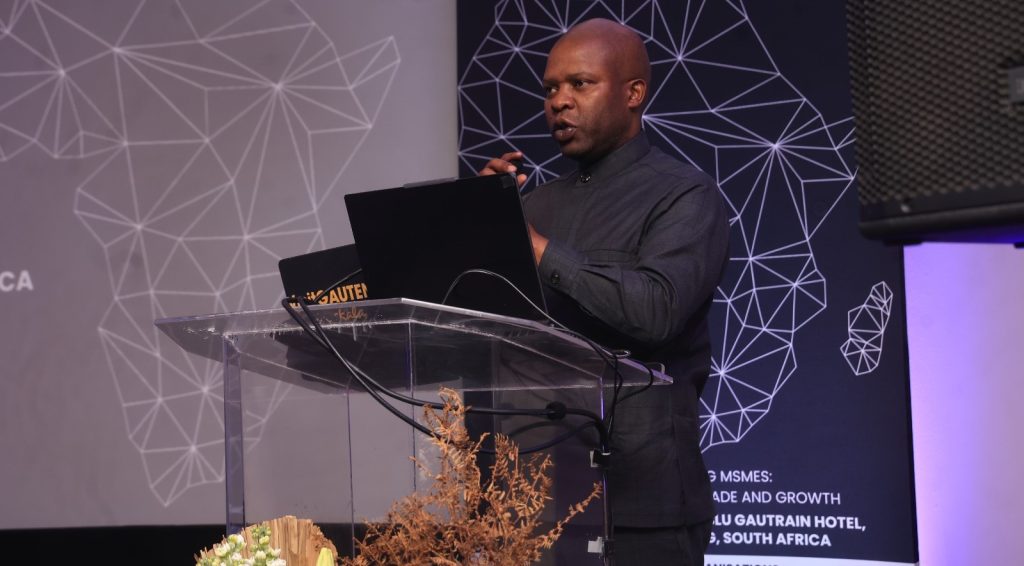
By Mandla Mpangase Small, medium, and micro enterprises stand poised to become powerful catalysts for regional trade and economic growth. This was one of the key messages Gauteng MEC for Finance and Economic Development Lebogang Maile told delegates at the African Continental Free Trade Area (AfCFTA) Conference taking place on 24 July 2025 in Johannesburg. “Micro, small, and medium enterprises (SMMEs) represent the heartbeat of Africa’s economy,” the MEC said. SMMES across Africa create the most employment, drive innovation, and provide much-needed goods and services that sustain communities. In South Africa SMMEs account for 80% of the country’s workforce and create an estimated R5-trillion turnover annually. It is estimated that there are three million SMMEs in South Africa, which employ some 13.4 million people. Of those, 2.5 million are micro-enterprises. Of these micro-enterprises, 72% operate in the informal sector. The SMME sector is vitally important to the Tshwane Automotive Special Economic Zone, which, from its inception, committed to building the local township economies of Eersterus, Mamelodi and Nellmapius. During its Phase 1 development, Africa’s first automotive city ring-fenced R1.7-billion of its procurement spend for SMMES and emerging entrepreneurs. As it expands Phase 2 of its development, TASEZ is planning to increase the numbers of SMMEs it supports through infrastructure projects, the creation of job opportunities, and skills training in both business development and in technical training for the automotive manufacturing industry. SMMEs as catalysts Speaking at the AfCFTA Conference, MEC Maile noted: “In light of the African Continental Free Trade Area – the largest free trade area in the world by the number of participating countries – SMMEs stand poised to become powerful catalysts for regional trade and economic growth.” The responsibility of the Gauteng Provincial Government, and all the stakeholders attending the conference, is not only to explore the pivotal role of SMMEs in shaping Africa’s economic landscape, but to outline their opportunities and challenges under AfCFTA, the MEC added. It was important to identify the strategies needed to harness the full potential of SMMEs for sustainable development. SMMEs in Africa operate across diverse sectors, from agriculture and manufacturing to services and digital innovation. They drive local value addition, foster entrepreneurship, and serve as engines of social mobility, particularly for youth and women. The latest FinScope MSME South Africa 2024 Survey, launched a few months ago, found that in the South African context of high unemployment rates, particularly among the youth, 30% of SMME-owners are 35 years old or younger. “While this may be considered too low, given that 50% of the adult population are youth aged 16-35 years, and that this demographic constitute 60% of the unemployed population, it indicates the important role that the SMME sector can play in turning the tide of youth unemployment in a continent with the world’s youngest population,” MEC Maile said. SMMEs creating jobs SMMEs are vital for job creation, notably absorbing the continent’s rapidly growing workforce. Their size also allows them to adapt quickly to market needs and to experiment with new products and services, facilitating innovation and flexibility. They also play a significant role in poverty reduction on the African continent, the MEC said, adding that by offering livelihoods to millions, they also play a direct role in reducing poverty and enhancing inclusive growth. The AfCFTA promises to reduce tariffs, eliminate barriers to intra-African trade, and stimulate industrialisation and investment. In doing so, it will allow the SMMEs to access a much larger market beyond their national borders and create unprecedented opportunities for growth by tapping into regional value chains, supplying components, services, or finished goods. “This not only promises gross domestic product growth across the African Union but also sets parameters for attracting investment in a depressed and volatile global economy.” A harmonised market environment would make African SMMEs more attractive to investors, both domestic and foreign, like the European Union. “The integration of markets through AfCFTA empowers SMMEs to play a transformative role in regional trade.” They can do this through enhancing of cross border trade, leveraging AfCFTA to expand their reach. “Reduced tariffs and simplified customs procedures lower the cost of doing business across borders, Maile added. This enables SMMEs to diversify their customer base, mitigate risks, and benefit from economies of scale. SMMEs as innovators In addition to this, they can also act as catalysts in driving innovation and competition. “Exposure to a broader market compels SMMEs to innovate and improve their competitiveness. This, in turn, stimulates higher quality standards, greater efficiency, and the adoption of new technologies,” Maile said. The AfCFTA facilitates the creation of regional value chains, where SMMEs can serve as suppliers, assemblers, or distributors. “By collaborating with firms in other African countries, SMMEs can access raw materials, expertise, and markets otherwise beyond their reach.” Such integration boosts industrialisation and intra-African trade, which remains concerningly low. “Intra-African trade still represents a relatively small portion of Africa’s overall global trade. In 2022, a year after the implementation of the AfCFTA, it reached $102-billion but only accounted for 15% of Africa’s total trade. “However, in 2024, intra-African trade reached $208-billion, representing a 7.7% increase compared to the previous year.” This growth could be attributed to the implementation of the AfCFTA and improved trade policies. The final key catalyst of SMMEs in the context of the AfCFTA is the promotion of inclusive economic growth. SMMEs are often owned or led by women and youth. “Their participation in regional trade under AfCFTA ensures that the benefits of integration are broadly shared. This inclusivity promotes equitable development and reduces inequalities within and between countries.” MEC Maile noted the AfCFTA creates a fertile environment in which SMMEs could survive, providing opportunities to access new markets, an improved business environment, technology and knowledge transfer, and finance and investment. However, SMMEs also face hurdles that could hinder their ability to capitalise on AfCFTA, such as a lack of information, inadequate access to finance, poor infrastructure, capacity constraints, and a complex regulatory environment. “To ensure that SMMEs become true catalysts for

TASEZ makes an impact beyond SA’s borders

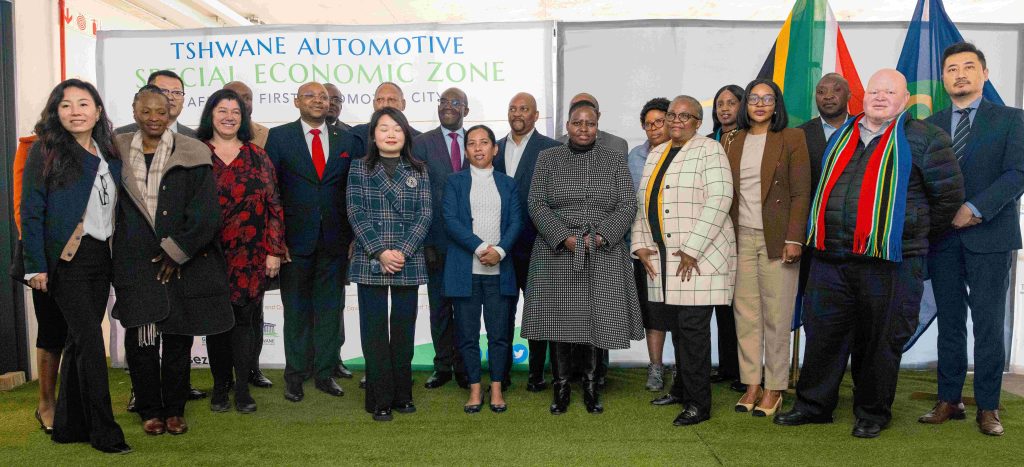
By Mandla Mpangase In a first for a South African special economic zone, the Tshwane Automotive Special Economic Zone (TASEZ) welcomed the heads of mission from the Southern African Development Community (SADC) to share information and talk about unlocking opportunities for economic growth in the region. On Monday, 1 July 2025, the TASEZ team, headed by CEO Dr Bheka Zulu, rolled out the red carpet for the distinguished SADC delegation – ambassadors, high commissioners, and chargés d’affaires – along with representatives from the Department of International Relations and Cooperation and the Department of Trade, Industry and Competition. This gathering was not just a simple meeting – it was a deliberate step toward weaving stronger ties between neighbours, aligning with the goals of SADC, the Southern Africa Customs Union, and the African Continental Free Trade Area. TASEZ gave the delegation a front-row seat to South Africa’s important automotive manufacturing industry and the exciting opportunities for partnerships and investments that could uplift not just South Africa, but the entire SADC region. Welcoming the SADC delegation to Africa’s first automotive city, Dr Zulu provided a telling context for their visit: TASEZ has a footprint beyond South Africa. “We are part of the 244 plus SEZs that exist in the African continent, and we’re part of the 5 000 plus that exist globally.” Driving industrial growth SEZs are seen as economic and infrastructural drivers. TASEZ was set up to support a significant investment by the Ford Motor Company – bringing component manufacturers closer to the Ford factory in Silverton, ensuring a streamlined, just-in-time, just-in-sequence provision of essential parts for the Ford Ranger. Critical to the success of TASEZ was the joint strategic partnership between all three tiers of government via the Department of Trade, Industry and Competition, the Gauteng Department of Economic Development, and the City of Tshwane, along with catalytic partnerships with the private sector. Over the five years TASEZ has been in development, it has seen 8 000 direct jobs and 15 000 indirect jobs created in the value chain. In addition, the SEZ has provided R1.7-billion towards small, medium, and micro enterprise (SMME) projects. “We’ve been a catalyst for about R30-billion investment to date,” Dr Zulu. He noted that none of this would have happened if it were not for the facilitation of the diplomats. Dr Zulu emphasised the lessons learnt by TASEZ during its development, offering to share the hard-earned knowledge with SADC. “We have a test case, a real case that has worked in the short time of five years … TASEZ has been a game-changer in an industry that contributes 5.3% to the country’s gross domestic product (GDP). “The contribution of TASEZ with its partners within Ford, we are looking at having contributed 1% to the GDP,” Dr Zulu noted. Cross-border partnerships However, regional integration was important to the SEZ. “We cannot grow alone as a country; we need to grow with our brothers and sisters within the south and the continent.” Manufacturing development in Africa is viewed as an opportunity to lessen dependence on commodities and engage in economic diversification as a way to boost competitiveness in the region. Despite this, the continent still accounts for a very low share of global manufacturing and global manufacturing exports. Recent research indicates that economic development requires structural change from low to high productivity activities and that the industrial sector is a key engine of growth in the development process, most particularly the growth of manufacturing development. Diplomatic missions play a crucial role in facilitating investment flows and promoting economic cooperation between countries. They serve as an important conduit for information sharing, networking, and advocacy on behalf of their countries. The goals of the joint meeting were: SADC’s Vision 2050 Andrew Maswanganyi, from the Department of International Relations and Cooperation’s Directorate: Economic Integration and Infrastructure, pointed out that regional integration was about “the small things we do”. He noted that SADC’s Vision 2050 was an important strategy looking to create a region where its people have food security, are healthy and educated. SADC’s Vision 2050 aims to create a peaceful, inclusive, and competitive region that is middle-to high-income industrialised, where all citizens enjoy sustainable economic well-being, justice, and freedom. It is built on the three pillars of industrial development and market integration, infrastructure development, and peace, security, and good governance. The meeting at TASEZ was “an opportunity for South Africa and its sister countries to cement strong bonds of friendship”, Maswanganyi said. The chairperson of the SADC group, Zimbabwe’s ambassador David Hamadziripi voiced appreciation of the opportunity witness first-hand what is being done in South Africa in its push for industrialisation. The visit by the delegation “not only deepens our understanding of South Africa’s industrial strategy but also speaks to the spirit of regional cooperation in shared development”, Hamadziripi said. Some of SADC’s member states were grappling with the imperative of industrialisation, job creation and inclusive economic transformation. SEZ’s as catalysts for growth “This special economic zone is a testament to how targeted investment, infrastructure development and strategic collaboration between government, the private sector and local communities can create a dynamic industrial hub with strong linkages to both domestic and global value chains.” TASEZ offers important lessons on how SADC can leverage special economic zones to drive manufacturing innovation and trade competitiveness, while also building infrastructure, promoting SMMEs, building critical skills and creating opportunities for young people. “Special economic zones can serve as a model or as model platforms for collaboration with the potential to align such initiatives with cross-border supply chains, promote investment partnerships and share these practices across our member states.” Hamadziripi added: “We are also cognisant that industrialisation can be driven by a combination of factors, including policy coherence, skills development, innovation and infrastructure investment.” The visit to TASEZ was not just about observing, but also about learning and exploring how SADC can replicate and adapt these lessons to their respective countries. The automotive sector has been identified as one of the key sectors with demonstrable

TASEZ focuses on developing small enterprises for future growth

By Mandla Mpangase The 2025 Tshwane SMME Symposium explored the best ways to prepare small businesses for the industries of the future. It is important to prepare now so that small, medium and micro enterprises (SMMEs) will be in a position to lead both the country and the continent in the green economy, in technology, and in automotive manufacturing. The symposium, held on 6 May 2025 at the Innovation Hub, was hosted by the Tshwane Economic Development Agency along with the South African Electrotechnical Export Council and the Innovation Hub. The Tshwane Automotive Special Economic Zone (TASEZ) featured in a panel discussion on the road map for South African SMMEs to participate in future economies, with a particular focus on the automotive sector, digital technology and the energy sector. TASEZ CEO Dr Bheka Zulu spoke of the importance of understanding the impact SMMEs made in their sector, rather than simply looking at the numbers. “We need to know how we change lives, what are the SMMEs taking home?” He noted that TASEZ had ring-fenced R1.7-billion for SMMEs during the special economic zone’s Phase 1 development. Dr Zulu also addressed the issue of the skills gap within the automotive sector. TASEZ is now working closely with a number of partners to make sure the gap is closed. Technology can be a vital way to help the informal sector to grow. Another aspect was that SMMEs needed to be supported with research and development, Dr Zulu noted. He referred to a Chinese company, BYD, that has only been going for a decade. “They started as a battery manufacturer, but they evolved as the economic environment changed and now build cars. Last year they manufactured five million vehicles.” South Africa’s SMMEs must be strong enough to follow the same trajectory. It is vital to make sure that all role players understand the needs of the SMMEs and that SMMEs understand the requirements of industry. “Partnerships are important so that everyone understands the needs, requirements, constraints and challenges.” Partnering with established companies and organisations also makes access to markets much easier for SMMEs, who then have a champion lobbying on their behalf with the larger role players, Dr Zulu said. A key focus for TASEZ as it rolls out its Phase 2 development, is its support for black industrialists. The SMME symposium involved local SMMEs, representatives from a number of government agencies, potential funders, and industry partners, who all joined forces come up with concrete strategies to integrate township small businesses into mainstream supply chains and future-focused sectors. The Executive Mayor of the City of Tshwane, Dr Nasiphi Moya, summed up the importance of SMMEs to the job creation and innovation: “These enterprises are the lifeblood of our economy, the backbone of local employment, and the heartbeat of township revitalisation.” The symposium focused on how all the economic sector players can support, strengthen, and boost local SMMEs.

Women of the SEZs initiative launched in Mamelodi

Shining a spotlight on the role of women in South Africa’s economy, a significant event took place in Mamelodi on 7 September 2023 with the launch of the Women of the SEZs initiative. The initiative aims to showcase the achievements of women in the special economic zones (SEZs) space, inspire future generations, and create an environment that nurtures their growth and success. Welcoming participants to the event, Tshwane Automotive Special Economic Zone (TASEZ) corporate services executive Vangile Nene said the intention of the initiative is to create a legacy, much like how people look back at the contribution made by the women of 1956, who marched to the Union Buildings protest the pass laws. “We hope that generations will look back on this day,” she added. Among those attending the launch was the chair of the SEZ CEO Forum Kaashifah Beukes; the acting deputy director-general responsible for industrial finance at the department of trade, industry and competition and TASEZ board member, Susan Mangole; Irene Ramafola, the chair of TASEZ’s audit and risk committee; TASEZ’s CFO, Rebecca Hlabatau; and Lebogang Zwane, project manager at the Motheo Construction Group. Also present were community liaison officers from the Community Project Committee, a structure set up between the local communities of Eersterust, Mamelodi and Nellmapius and TASEZ to find ways of working together to create local job opportunities and training programmes; representatives from DSV, Feltex and Automould – factories based within the TASEZ hub; and the women of TASEZ. The Women of the SEZs initiative is a declaration of the sector’s commitment to building a future where women’s voices are not only heard but celebrated, and where their contributions are not only acknowledged but revered. Growing the Women of the SEZs initiative “We want to grow this initiative and involve all the other SEZs across the country, and beyond,” Nene added, while Mangole noted that “today marks an important day, where we find ways to inspire and build women.” Central to the launch was a panel discussion on the role of women in South Africa’s key economic sectors and how the role they can play in bring about transformation. Ramafola, as the panel moderator, pointed out that the women of 1956 had their own challenges, and “we have ours”. “While South Africa has made great strides in building a non-sexist society and progress has been made to promote gender equality, the same cannot be said when it comes to the economy,” she said. “Why is this the case?” she asked the panel. Panellists Mangole, Beukes and Zwane spoke passionately about the challenges women face in the industrial sectors, sharing practical solutions and personal experiences. Ideas raised during the wide-ranging discussion included: The Women of SEZs initiative is a rallying cry, a call to action to champion diversity, foster inclusivity, and empower excellence. It serves as a testament to the unyielding determination of women who continue to steer the course of progress, innovation, and collaboration within the SEZs and beyond.

Growing township automotive sector through investment, regulating, upgrading skills

Government takes the automotive sector very seriously, Premier Panyaza Lesufi said at a workshop on township mechanics held in Johannesburg on Wednesday, 6 September 2023. Addressing a packed hall of industry role players including the Tshwane Automotive Special Economic Zone (TASEZ), the Retail Motor Industry Organisation (RMI), the MerSETA (Manufacturing, Engineering and Related Services), the Automotive Industry Development Centre (AIDC), professional automotive mechanics, apprentices and learners, Lesufi said that key to investing in and growing the sector – particularly in the province’s townships – it was important to make sure that the businesses needed to be regularised and be competitive. In addition, “those who want to invest in the townships must invest on our terms. They must consult with the local players and make sure they empower them”, Lesufi said. The workshop was part of the Growing Gauteng Together initiative run by the Gauteng provincial government and the Gauteng department of economic development. He told the delegates at the workshop that the township economy was critical to developing the country’s economy in general. “This is the only province that has passed a law ensuring that the government will buy services from townships, hostels and informal settlements.” TASEZ is a prime example of ensuring that townships are included in the development of the automotive sector. One of the policies essential to the TASEZ business model is that investors must make provision for the inclusion of local community members in their workforces. Lesufi’s message drew on the data shared by the Deputy Minister of Trade, Industry and Competition, Fikile Majola, who noted that the workshop should provide long-lasting, actionable solutions. SMMEs crucial to economic growth The triple challenges of unemployment, poverty, and inequality impact on the country’s development agenda, and the townships are the epicentre of these challenges. More than a quarter of South Africa’s population live in townships and more than half of those in the townships are unemployed, yet the township economy is critical to the country. He referred to the importance of special economic zones (SEZs) being connected to the township model of economic development. SEZs are geographically designated areas set aside for specifically targeted economic activities to promote national economic growth and exports by using support measures to attract foreign and domestic investments and technology. TASEZ, Africa’s first automotive city, is located in Silverton near the townships of Eersterust, Mamelodi and Nellmapius. Much of the workforce used in the factories based at TASEZ come from the surrounding communities. Majola noted that the South African Automotive Masterplan spoke about doubling production by 2035. “One million cars are manufactured annually on the African continent, with 700 000 of those coming from South Africa, Morocco and Egypt.” The continent had a population of 1.3 billion. He compared this to the production figures from India, which manufactures 4 000 000 cars a year. It has a population of 1.4 billion. “We must be more competitive and ramp up production.” And that can be done through developing small, medium and micro enterprises (SMMEs). “Globally, all economies are driven by SMMEs, but the number of SMMEs in this country is too small for an economy the size of South Africa,” Majola added. “If we are to expand the SMME base in South Africa, we have to think outside the box, but within the law.” Collaborative efforts TASEZ has a team dedicated to helping develop SMMEs and providing skills development programmes. Gauteng MEC for Economic Development Tasneem Motara pointed out just how important the automotive sector is to South Africa. It contributed 4.9% to the gross domestic product (GDP) in 2023. “It is a huge player in the economy with the potential to grow.” However, she added, picking up on the issues of SMMES: “How do we address the challenges small businesses face?” Common challenges include struggling to access to markets; financing; to support; and infrastructure. The automotive sector had added challenges, such as being unable to receive reliable parts; a lack of entrepreneurial skills; and the onerous and expensive accreditation processes. Collaboration was key to growing small businesses. “We need to focus on the informal sector, but also ensure that industry bodies are included.” Skills development was crucial, she added. “We have to find meaningful solutions.”

TASEZ sets standards for SEZs – Ugandan MPs

A visit from a Ugandan parliamentary delegation has highlighted the importance of South Africa’s Special Economic Zones in attracting much-needed foreign investment to growing a country’s economy and creating jobs.