Tasez

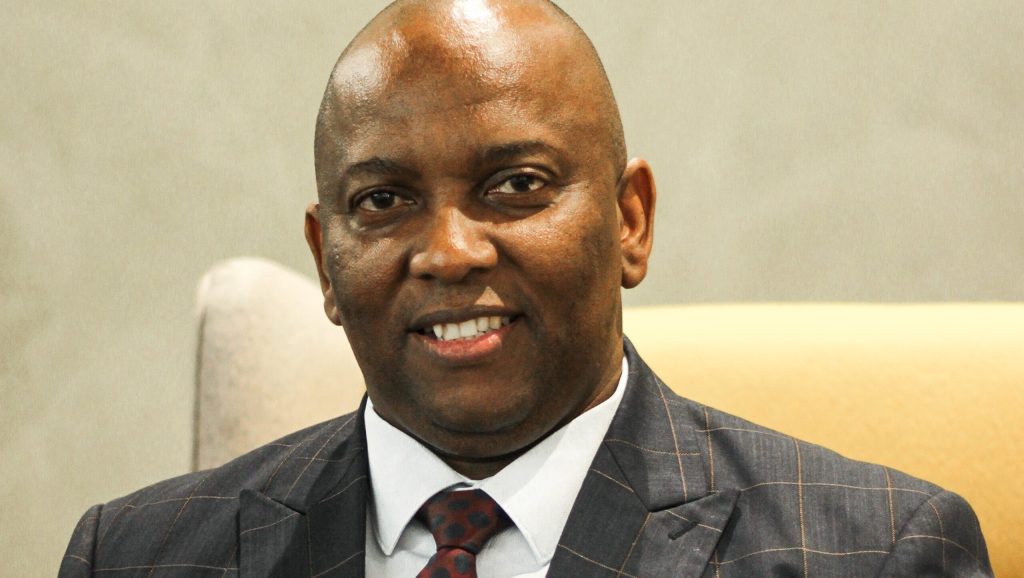
TASEZ CEO Dr Bheka Zulu

How South Africa’s G20 Presidency can accelerate industrial growth through TASEZ

When South Africa welcomes the world to the G20 Leaders’ Summit this month, our nation will experience one of the most profound moments of global visibility since the country’s dawn of democracy, writes the CEO of the Tshwane Automotive Special Economic Zone (TASEZ), Dr Bheka Zulu. As heads of state, global CEOs, investors, and development partners converge on our shores for the G20 Leaders’ Summit on 22 and 23 November 2025, the world’s gaze will fall not only on our political leadership but on our economic capability, our industrial resilience, and our readiness to take our place in a rapidly shifting global economy. For those of us tasked with building South Africa’s next-generation industrial platforms, this moment is far more than a diplomatic milestone. It is an opportunity to reshape the country’s industrial trajectory for decades to come. And for the Tshwane Automotive Special Economic Zone (TASEZ), it is a chance to demonstrate that South Africa can compete, innovate, and lead in one of the world’s most dynamic sectors: automotive manufacturing. South Africa in the global spotlight The G20 is not just a gathering of 20 world leaders. It is a year-long platform where global investment sentiment is shaped, where development financing agendas are debated, and where emerging markets like South Africa position themselves as credible partners in the global value chain. It has already triggered accelerated investments in infrastructure, logistics, and city improvement projects, particularly in Gauteng. This matters for industrial zones like TASEZ. Better roads, more reliable energy, and upgraded transport networks are the lifeblood of manufacturing competitiveness. But the physical changes are only part of the story. The more significant shift is reputational. A successful G20 presidency can strengthen investor confidence, deepen trust in our economic institutions, and position South Africa as a stable, future-oriented industrial hub. That alone makes this moment essential for TASEZ and the broader automotive sector. Global industrial priorities What excites me is how closely South Africa’s G20 priorities align with TASEZ’s mission. The 2025 agenda focused on: These are not abstract ideas; they cut to the heart of the automotive industry’s transformation. As highlighted by the recent New Energy Summit held in Gauteng in October 2025, global value chains are pivoting to green mobility, clean manufacturing, and Africa’s integration into supply networks. TASEZ is uniquely positioned in this transition. We are already home to one of Africa’s most dynamic automotive production ecosystems, and we are preparing for a future that includes electric mobility, deeper localisation, and expanded supplier development. If South Africa leverages its G20 presidency effectively, we can secure the policy tools, partnerships, and financing mechanisms needed to accelerate this transition. Showcasing South Africa’s successes The world will not judge us by speeches alone. They will judge us by what we build. This is why TASEZ intends to use the G20 window to demonstrate what coordinated public–private investment can achieve. As the fastest-growing automotive special economic zone (SEZ) on the continent, we have a compelling story to tell — one of job creation, skills development, township inclusion, supplier growth, and industrial expansion. We should be bold in inviting foreign delegations, development finance institutions, and global OEMs to see the zone firsthand. Site visits, technical tours, and bilateral industry roundtables can turn interest into investment. The G20 gives us a once-in-a-generation platform to do this at scale. The G20 Leaders’ Summit will bring renewed attention to Africa’s role in the global economy. For TASEZ, this is an opportunity to expand its influence beyond South Africa’s borders. Through stronger relationships with the Southern African Development Community (SADC) and African Union partners, we can position TASEZ as a catalyst for regional automotive value chains, a future where components made in Botswana, Mozambique, Zambia, or Zimbabwe flow seamlessly into assembly lines in Tshwane. More than symbolic South Africa must convert visibility into tangible improvements in industrial competitiveness. We must guard against the tendency to treat major summits as symbolic rather than strategic. Investment is not secured by banners, speeches, or social media clicks. It is secured by credibility, efficiency, transparency, and delivery. For TASEZ, this means: The 2025 G20 Summit is a strategic opportunity for South Africa to reposition itself as the continent’s industrial leader, providing a platform for government, business, and development partners to act with unity. For TASEZ, it is a chance to amplify what we already know: that South Africa can build globally competitive manufacturing hubs; that our people can produce world-class automotive products; and that, with the right partnerships, we can transition into the mobility future with confidence. The world is coming to South Africa. Will we use this moment to shape our industrial destiny? We at TASEZ intend to do just that.
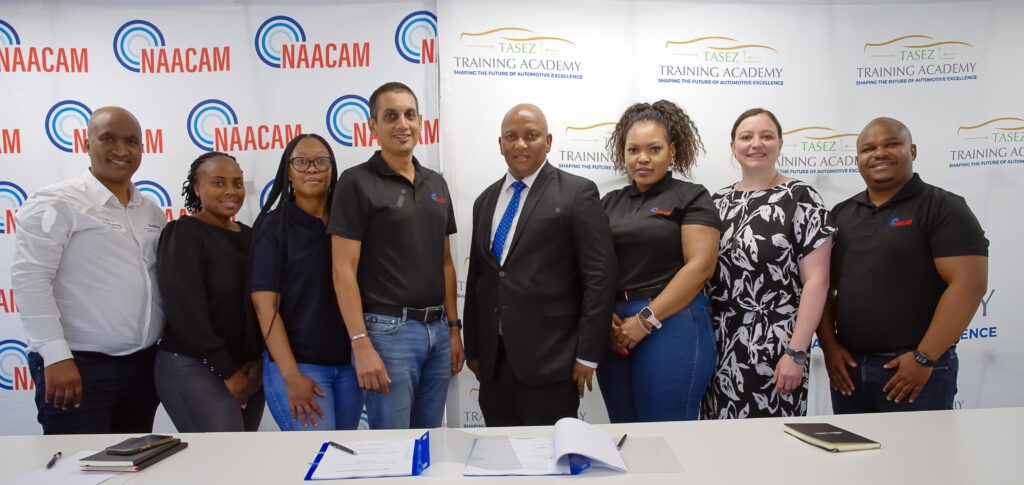
TASEZ and NAACAM sign a Memo of Agreement with a special focus on training

By Mandla Mpangase Forming a significant partnership in the automotive manufacturing sector, the Tshwane Automotive Special Economic Zone (TASEZ) has signed a memorandum of agreement with NAACAM (the National Association of Automotive Component and Allied Manufacturers). The key areas of focus are around skills development and training, supply, small medium and micro enterprise (SMME) support, localisation and innovation. TASEZ CEO Dr Bheka Zulu referred to the signing of the memorandum of agreement as a milestone for Africa’s first automotive city, adding: “This must be a living document.” The two parties have a synergy that will help transform the automotive manufacturing sector in tangible ways. “This partnership is one that we’ve been speaking about for some time, but I think it’s a really concrete and focused one for us,” said NAACAM CEO Renai Moothilal. TASEZ was established to promote employment growth and productivity, contributing to South Africa’s socio-economic development and competitiveness, while NAACAM is recognised as the voice of the South African automotive component industry both domestically and internationally. “NAACAM, as you know, is the mandated voice of auto component,” said the organisation’s CEO Renai Moothilal. NAACAM, as a member-driven organisation, is positioned at the forefront of industry leadership, representation, and stakeholder engagement for automotive component manufacturers. “We also are excited about the opportunity to partner with yourselves on areas around export market development, township economy revitalisation, and, of course, wider industry events and other engagement platforms,” Moothilal said. The TASEZ hub accommodates mainly automotive component manufacturers, but not exclusively so. However, most of the tenants in TASEZ belong to NAACAM. Dr Zulu noted: “This is a great moment because we, as TASEZ, stand for the people; creating jobs, adding economic value, and skills development.” Dr Zulu pointed to the many strategic partnerships TASEZ has. “We stand for economic growth for Tshwane, for the province and for the region. We stand for economic growth for the country and for the continent.” As a special economic zone (SEZ), TASEZ is part of the 240 plus SEZs in Africa. “It means we are a continental player.” TASEZ is also part of the 5 000 plus SEZs across the world. The SEZ is in a position to open avenues and engagements with different stakeholders from an African footprint. “We are about facilitating trade and investment, and you are a partner that produces components that are needed by the industry, by the continent, by the world,” Dr Zulu noted. Africa, he added, is a big market. “If you look at the African continent, with its population sitting at 1.3 billion, that’s an area where you can make an impact, because all your components will fit into the livelihoods of people on a daily basis.” As its Phase 2 rolls out, TASEZ is looking to offer a diversity of appropriate land uses and other economic activities. Of particular importance to TASEZ’s Phase 2 development is supporting black industrialists and small, medium and micro enterprises (SMMEs). In doing so TASEZ is also focused on developing programmes geared to providing skills for both the needs of the industry and those of the communities surrounding the project. It is with this in mind that the SEZ has set up a training academy, part of making sure Phase 2 delivers on becoming a centre of excellence for the industry. “This is our second passion,” Dr Zulu. On 5 March 2025 the two organisations agreed to collaborate in areas of special interest, with a particular focus on transforming the economy. The memorandum of agreement covered a wide-range of issues, including: The concept of localisation is of particular importance to TASEZ and NAACAM. “Not only do we want to see greater traction in reports, but we want to see it unfold with greater component production, especially in a facility such as the one that you manage,” Moothilal said. “That is why we are so passionate about having government policies and programmes and facilities such as TASEZ, which ultimately supports competitiveness of the whole value chain and then grows localisation.” Dr Zulu expressed his delight at having a partner that also focuses on innovation. “Innovation is one of the things we drive. Research and development is a stumbling block for many SMMEs, so we want to come into research and development.” TASEZ was busy setting up a research chair with this in mind and is working with the Tshwane University of Technology and the CSIR (Council for Scientific and Industrial Research) to do so. “We want to see innovation, change and global competitiveness,” Dr Zulu said. “For us, we see our collaboration as something that talks to our long-term impact – the socio-economic impact we are hoping to make here in the city, nationally and internationally,” said Dr Zulu.

TASEZ and parliamentary committee talk localisation and stimulating manufacturing

By Mandla Mpangase The state of the automotive sector took centrestage during a visit by the portfolio committee on trade, industry and competition to the Tshwane Automotive Special Economic Zone (TASEZ) at the end of February 2025. TASEZ welcomed the committee to the special economic zone on 27 February 2025. The Department of Trade, Industry and Competition (dtic) is one of TASEZ’s key shareholders, so the oversight visit was greatly appreciated. “This is an important engagement,” CEO Dr Bheka Zulu noted, where the role of the automotive manufacturing sector and SEZs can be interrogated in depth. South Africa’s automotive sector currently contributes 5.3% to the GDP, however, it is facing challenges and seeing a 3% decline and facing stiff competition from the markets in China. The committee, chaired by Mzwandile Collen Masina, raised the need for a comprehensive industrial policy to transform South Africa’s economy, with a particular focus on localisation and stimulating local manufacturing. The TASEZ executive team, led by chairperson Lionel October and CEO Dr Zulu, provided the committee with insights into the progress of Africa’s first automotive city, including its economic impact both locally and nationally. The committee was told that TASEZ was a newcomer in terms of South Africa’s SEZs, set up in an innovative and unique way: supported by all three tiers of government. Along with the dtic, the Gauteng Province and the City of Tshwane contribute towards the success of TASEZ. TASEZ, in the capital city of Tshwane, sits in the logistics crossroads of the country, reaching east and west, north and south, with access to the neighbouring states as well as globally through rail and port connections to the Durban Port. The SEZ is also supporting the creation of a rail link to Gqeberha, in the Eastern Cape. “What makes us unique and special is that our core focus is in the automotive sector, and that’s where we’ve made an impact,” Dr Zulu said. The automotive industry is an important contributor to the country’s economy, with more than 500 000 employed across its value chain. “TASEZ has been able to design a world class automotive manufacturing hub providing a conducive environment for investors, where they can harness their potential of economic growth,” the CEO said, adding that the contribution to the GDP from within the hub was 1%. TASEZ’s Phase 1 economic impacts: Ford, the anchor tenant of TASEZ, has managed to expand its production by 40 000 units a year, up from 160 000 to 200 000. “What this means is that one car is produced every minute because of the components manufactured in our hub. By the end of today, more than 720 cars will have been manufactured.” Transformation of the economy is crucial to the committee. As portfolio chairperson, Masina, said: “We have to ensure there is real transformation in South Africa.” All involved agreed that there is a need for innovative ideas that could change the course of development in South Africa. A committee member noted: “We have got to invest in building black industrialists.” The committee also discussed the need for a comprehensive industrial policy to transform South Africa’s economy, focusing on localisation and stimulating local manufacturing. The targets set in the South African Automotive Master Plan 2035 featured strongly in the discussions; with the aim of increasing South Africa’s global automotive manufacturing footprint to 1%, increasing the local content in South African manufactured or assembled vehicles to 60%, doubling employment in the automotive value chain, improving the industry’s competitiveness to that of leading international competitors, the transformation of the industry, and deepen the value addition within the automotive value chains. Masina noted that the Black Economic Empowerment scorecard currently in use, does not effectively promote real transformation. The two teams spoke about shifting the focus from Level 1 status to ownership and control. Concerns were also raised about the current tariff regime’s impact on local growth and the need for innovative strategies to support black industrialists. The committee emphasised the importance of aligning incentives and legislation to foster local industry development. “How do we create our own original equipment manufacturers without over-reliance on foreign direct investments? We’ve got to stimulate our economy through direct investment in this country,” a committee member observed. The discussion also highlighted the need for skills development, job creation, and the role of SEZs and SMMEs in driving economic growth within the automotive manufacturing sector. The development of TASEZ’s Phase 2 provides some answers to the questions on skills development, job creation and support for SMMEs. Phase 2 will expand the SEZ and attract an investment of R6.1-billion from private sector investment, and R3.9-billion from government partnerships. This phase will see the creation of 6 150 jobs, and, like Phase 1, SMME procurement spend has been ringfenced to the amount of R1.1-billion. Its particular focus is on including black industrialists into the SEZ. A key feature in Phase 2 is the setting up of a centre of excellence that will answer to the growing need to upskill, reskill and prepare South Africa and its communities, for the advancement of technology. With the move to NEVs, new skills and a new way of doing business will be required.

TASEZ launched Phase 2 ahead of hosting SOPA 2025

By Mandla Mpangase Africa’s first automotive city, the Tshwane Automotive Special Economic Zone (TASEZ) marked a significant milestone with a sod-turning ceremony, unveiling Phase 2 of its development, prior to hosting the 2025 State of the Province Address. This event, held on 23 February 2025, underscored TASEZ’s role in Gauteng’s economic growth and job creation strategy. On a small, cleared patch of land, three yellow earth-moving excavators raised their buckets in salute at the arrival of Gauteng Premier Panyaza Lesufi. The premier joined the shareholders and executives of TASEZ to ceremonially turn the soil to signify the start of development. Lesufi was joined by the TASEZ chairperson Lionel October, and CEO Dr Bheka Zulu. Others in attendance at the event included: TASEZ board members Susan Mangole and Vuyo Zitumane; the CFO Rebecca Hlabatau; the Speaker of the Gauteng Provincial Legislature Morakane Mosupyoe along with the Deputy Speaker Nomvuyo Mhlakaza-Manamela; Gauteng Provincial Legislature Chair of Chairs Rev Dulton Adams; the City of Tshwane’s Deputy Mayor Eugene Modise; President of the Ford Motor Company of Southern Africa Neale Hill; and Ford’s Corporate Transformation Manager for South Africa Esther Buthelezi. The small gathering belied the significance of the moment: the youngest of South Africa’s special economic zones was growing up. Zitumane told the gathering that Phase 2 of TASEZ is set to attract R6.1-billion in private sector investment, a crucial injection into the province’s economy, and will create more than 6 000 jobs in construction and permanent employment. In addition, like in Phase 1, Phase 2 will see an investment by TASEZ into small, medium and micro enterprises of R1.1-billion. Most importantly, Phase 2 also sees the creation of a centre of excellence for the automotive manufacturing sector, with the TASEZ Training Academy providing skills for the future, including for the emergence of new energy vehicles. Lesufi emphasised the transformative impact of these developments: “This is real economic transformation in action, where factories rise, businesses grow, and communities thrive.” TASEZ is solidifying its position as a key driver of Gauteng’s economic vision. The zone’s focus on automotive manufacturing and innovation aligns with the province’s broader strategy to boost economic growth and address unemployment. With Phase 2 underway, TASEZ is poised to further enhance its contributions to the city’s, the province’s and the country’s economy, solidifying its status as a vital economic hub.