
9 May 2026
By Mandla Mpangase
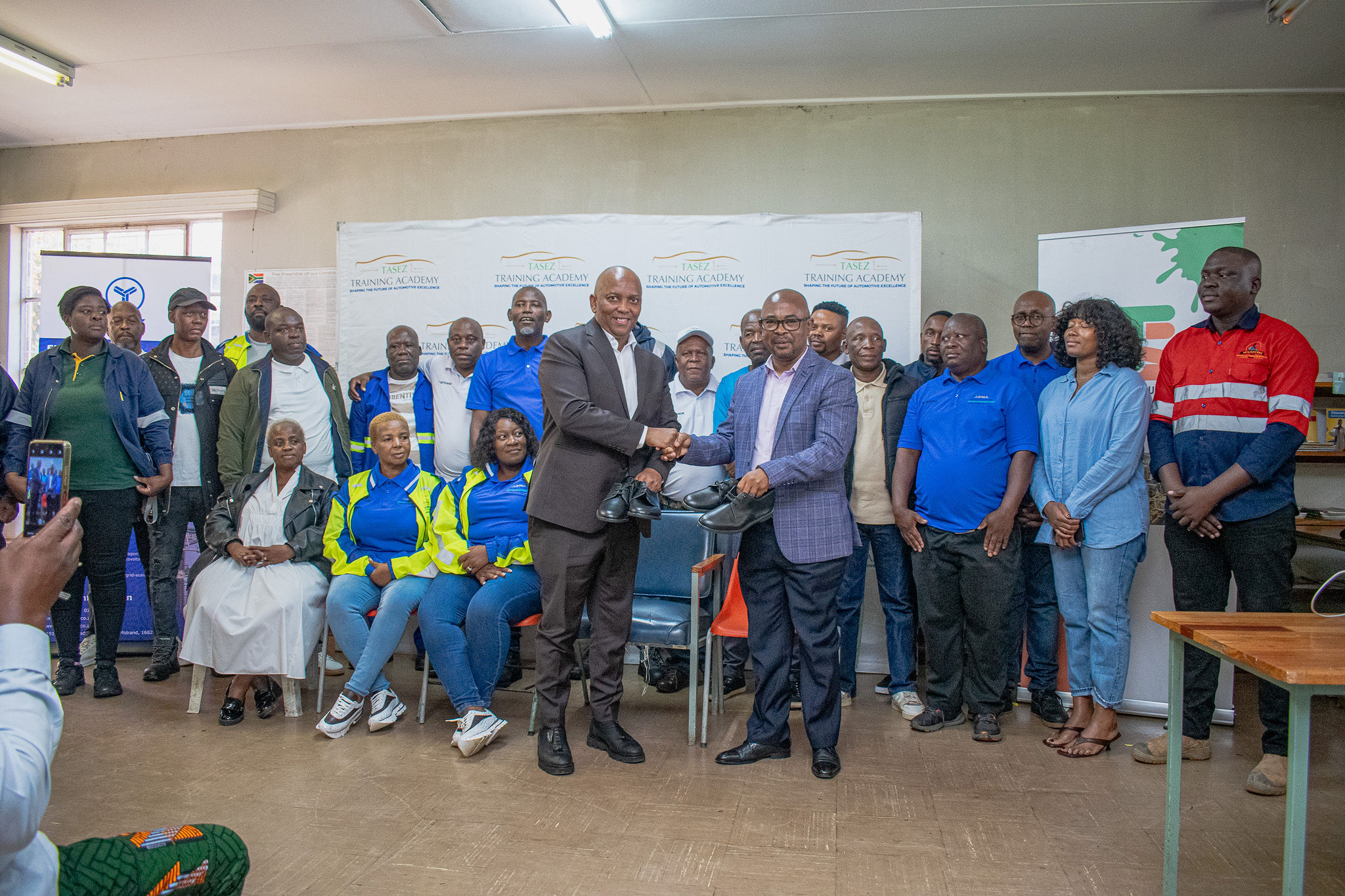
The Tshwane Automotive Special Economic Zone (TASEZ) and the Community Project Committee have donated more than 700 pairs of school shoes to learners in Mamelodi, Nellmapius and Eersterust as part of the efforts to strengthen school participation in communities surrounding the industrial hub.
The handover took place at J Kekana Secondary School in Ward 6 on Tuesday, 5 May 2026. TASEZ said the initiative formed part of its social compact and broader community development programmes linked to the growth of SA’s automotive manufacturing sector.
The shoes were sponsored by TASEZ partners, including Thai Summit, Eltek Solethu JV and MES Major Projects.
TASEZ CEO Dr Bheka Zulu said education remained one of the most critical drivers of long-term economic inclusion, particularly in communities under persistent socio-economic pressures.
“Shoes don’t define you. You define where your shoes will go,” said Zulu, encouraging learners to remain focused on education despite difficult circumstances.
The donation comes as large industrial developments face growing expectations to show measurable benefits beyond investment, infrastructure and job creation, particularly in communities located near strategic economic projects.
TASEZ is positioning itself as Africa’s first automotive city, with plans aimed at deepening SA’s automotive value chain and supporting industrialisation in South Africa. But the scale of the project has also increased expectations that surrounding communities should share more directly in its development gains.
Research by the United Nations Children’s Fund (UNICEF) and other development agencies has consistently linked access to basic school necessities, including uniforms and footwear, to improved attendance, learner retention and academic performance, especially in under-resourced communities.
Statistics South Africa data continues to show that poverty and household income pressures remain major contributors to unequal educational outcomes across the country.
Against this backdrop, TASEZ framed the intervention as part of a longer-term commitment to restoring dignity and supporting educational participation, rather than a once-off charitable exercise.
Located in one of Tshwane’s largest townships, J. Kekana Secondary School serves a community where many households continue to face economic hardship.
The initiative also reflects a broader shift within South Africa’s automotive manufacturing ecosystem, where environmental, social and governance (ESG) considerations are increasingly shaping corporate investment priorities and stakeholder expectations.
For TASEZ, the message was clear: industrial expansion must translate into visible benefits for surrounding communities if economic development is to be sustainable and inclusive.