
7 July 2025
By Mandla Mpangase
Phase 1 of South Africa’s most successful special economic zones – the Tshwane Automotive Special Economic Zones – has scarcely wrapped up, and the dedicated economic hub is already turning to expanding its operations.
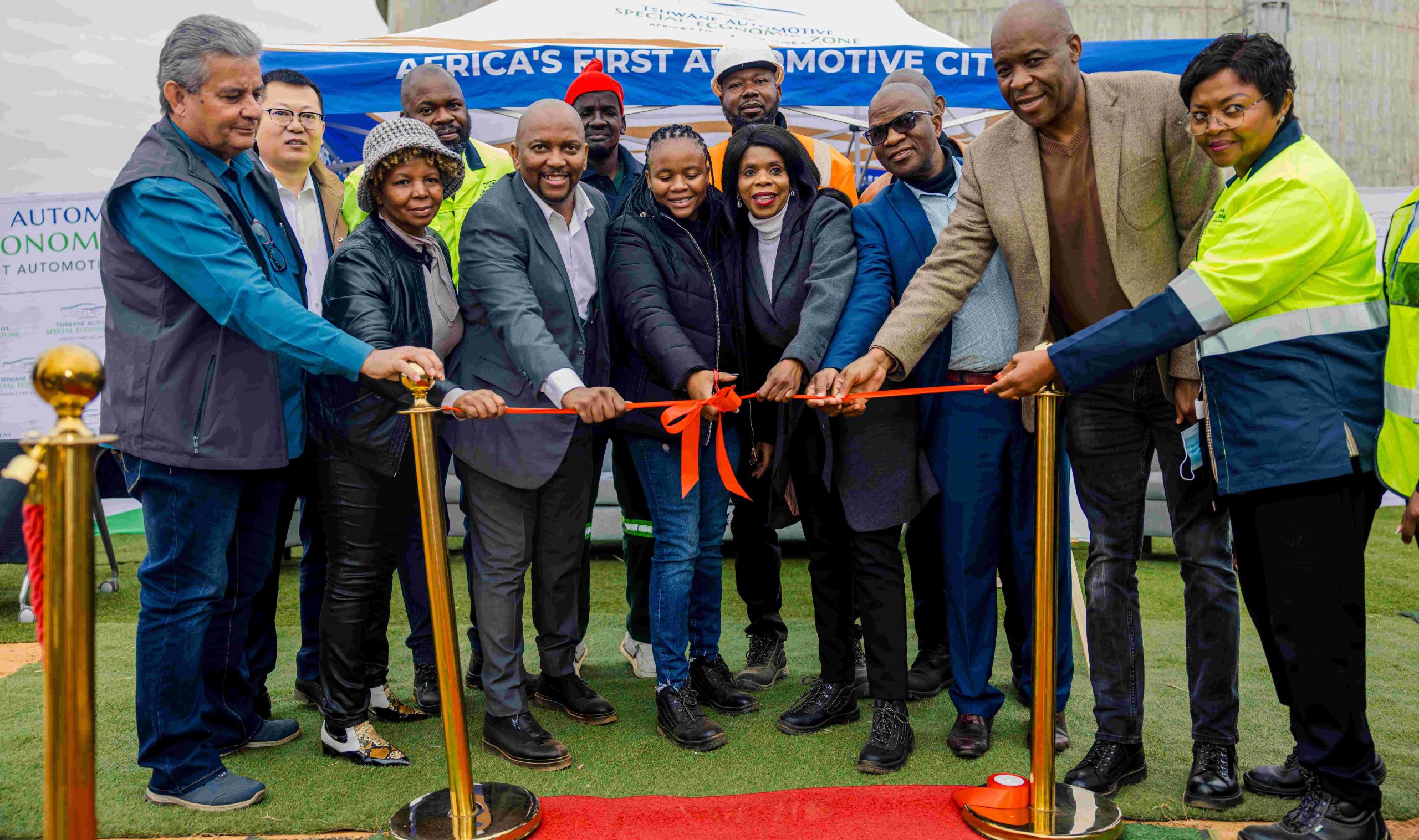
Thursday, 3 July 2025, saw the first sod being turned as a key site was handed over to the contractor, MES Major Projects, a wholly black-owned local company, for the construction of a vital water reservoir for the zone.
The task is to build a 200-ton reinforced concrete 15Ml reservoir standing 12m in height.
Joining TASEZ CEO Dr Bheka Zulu at the event were leaders from the City of Tshwane, including Executive Mayor Dr Nasiphi Moya, Deputy Executive Mayor, Eugene Modise, and several MMCs, a team from the newly appointed contractor lead by managing director Musa Sambo, councillors from the neighbouring townships of Eersterust, Mamelodi and Nellmapius, and members of the local communities.
So important is this development, TASEZ board member for infrastructure development, Vuyo Zithumane, noted: “We are launching one of the critical dependencies for the entire development of others, and especially Phase 2.”
Zithumane, who is also the City of Tshwane’s COO, added that the political principals in the City of Tshwane took the conscious decision to prioritise this development, making a financial allocation within the City’s budget.
TASEZ is a unique project, with shareholders from each of the three tiers of government, along with Ford Motor Company; the Department of Trade, Industry and Competition represents the national government, the Gauteng Department of Economic Development represents the province, and the City of Tshwane represents local government.
Addressing the gathering, Dr Moya spoke about the City of Tshwane’s ambitious revitalisation strategy that is aiming for a 3.9% annual growth by 2029, targeting 80 000 new jobs.
“As the City, we need to not only make a pronouncement saying we are committed to economic growth … but must be seen in action,” Dr Moya said, adding the City was committed to retaining investments and improving infrastructure, such as energy and water security.
“We can’t expect people to come and invest in our city if we do not provide the infrastructure that is required.”
This new development is significant, not only to the City of Tshwane, but to its residents, she added.
The most recent statistics indicate that unemployment in the City of Tshwane has increased to 38.4%.
Noting the sombre statistic, the executive mayor said the efforts of the City of Tshwane, supported by business and investment, were undertaken with the ordinary residents in mind. “A student at college who has studied something to do with automotive must know that there’s a future for them, because the City of Tshwane has an automotive centre here.”
Noting the presence of members of the community, including the TASEZ Community Project Committee, which oversees the social compact between the local communities and the SEZ, Dr Moya also spoke about the importance of community involvement in the success of any development.
“If communities understand the benefit of this project, then communities start to protect the projects that they have.”
The appointed contractor is one of the success stories of TASEZ: during Phase 1 of the development, MES Major Projects was graded CE3 and today is a CE7.
The work is expected to be completed within 12 months.