Tasez

News

Future of auto industry at centre of national discourse – MEC Maile

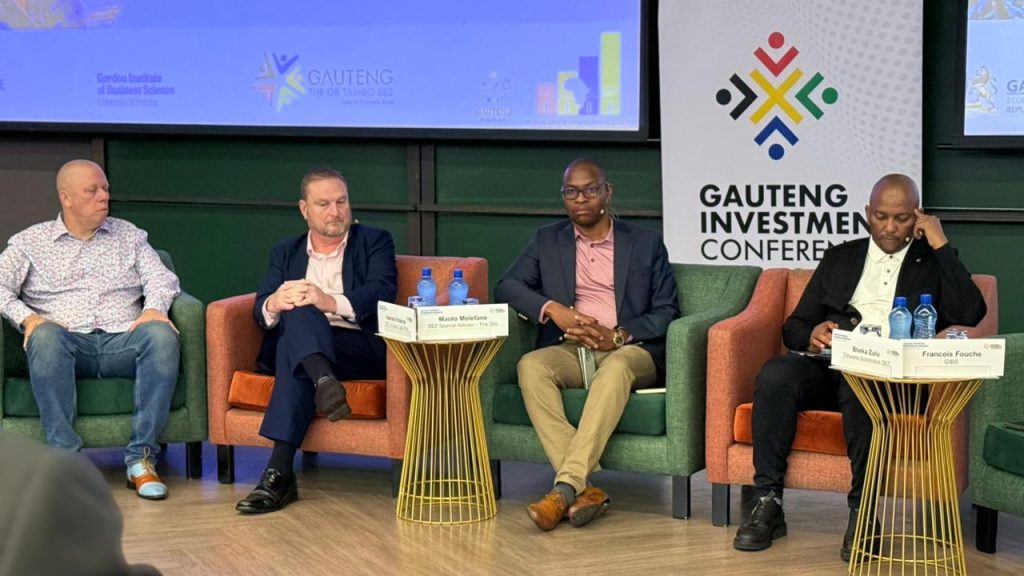
By Mandla Mpangase The discussion on the importance of new energy vehicles is taking place at a critical time in South Africa, where the future of the automotive industry is at the centre of national discourse, Gauteng MEC for Economic Development and Finance Lebogang Maile told the New Energy Vehicles Summit in Midrand today. The summit comes at a time when Gauteng is positioning itself as the automotive industrial hub for Africa, leveraging its existing automotive base, advanced logistics, and skills ecosystem. Critical to this positioning is the need to embrace the revolution that is the new energy vehicles (NEVs). Gauteng is determined to lead South Africa’s transition to electric and low-carbon mobility in line with global decarbonisation imperatives and the South African Automotive Masterplan 2035. “The South African automotive industry is facing a tough operating environment, heightened by the imposition of a unilateral 30% reciprocal trade tariff by the government of the United States, which has consistently been South Africa’s second-largest trading partner and key export destination for South African-manufactured vehicles,” Maile said, adding that on the manufacturing side, Original Equipment Manufacturers (OEMs) also face mounting challenges. South Africa’s automotive sector is particularly vulnerable to the 25% sectoral tariff imposed under Section 232 of the United States Trade Expansion Act of 1962, which specifically targets automotive exports. Key sector “The South African automotive industry is a cornerstone of the economy and contributes 22.6% to total domestic manufacturing output. It also directly supports over 110 000 formal sector jobs – a significant number in an economy that is battling with the creation of sustainable employment.” The MEC noted that a few months ago, naamsa (the Automotive Business Council) noted that the tariffs, and the broader uncertainty in our trade relations with the United States strike at the heart of South Africa’s industrialisation agenda and threaten future investment in high-value manufacturing. Mercedes Benz in East London, for example, exports at least 90% of its vehicles to the United States, making evident the impact of such an uncertain economic climate on the East London Special Economic Zone. “Tariffs have had a severe impact on South Africa’s automotive industry, leading to a sharp drop in exports to the United States, job losses, company closures, and reduced GDP contribution of the automotive sector.” Vehicle exports to the United States have fallen drastically, with one report noting an 82% drop in the first half of 2025 compared to the previous year. Challenges “The industry has also experienced layoffs and job losses, with thousands of positions under threat due to companies losing contracts and reducing production,” the MEC said, adding that at least 12 company closures have been linked to these pressures, impacting the component manufacturing sector and its over 80 000 employees. Communities like those in East London, and the broader Eastern Cape, which are heavily dependent on the automotive sector, are at risk of economic destabilisation. Beyond job losses, the National Union of Metal Workers of South Africa (NUMSA) has also highlighted the risk of short-time that has been introduced at 26 companies in the Eastern Cape – many based in Gqeberha. “Various economists have identified three structural challenges that are currently confronting the automotive industry, specifically, navigating South Africa’s exposure to tariff barriers in the United States, as outlined, the danger of dumping, and adapting to the global shift towards new energy vehicles,” said Maile. However, he noted, while these are real challenges with far-reaching implications, critical interventions can transform them into opportunities – particularly in relation to new energy vehicles. “New energy vehicles are crucial for South Africa’s future as they offer significant economic and environmental benefits, including reducing greenhouse gas emissions and lowering fuel costs, while supporting industrial growth and job creation through local manufacturing and infrastructure development.” New energy vehicles produce significantly fewer greenhouse gases and pollutants compared to internal combustion engine vehicles, which can help in combating urban air pollution and climate change. The place of new energy vehicles is also clear, with their lower operating costs and potential for industrial growth, the MEC said: “Electricity is cheaper than petrol and diesel, and energy vehicles have fewer moving parts, reducing overall maintenance costs.” Additionally, as South Africa’s automotive industry contributes over 4% to GDP and 12.5% to exports, transitioning to new energy vehicles can safeguard this sector’s global competitiveness, especially with European Union bans on internal combustion engine  vehicles by 2035. New energy vehicles are also key to a Just Energy Transition, reducing reliance on fossil fuels, which can help reduce reliance on imported fossil fuels that are increasingly subject to price volatility. Recognising potential NEVs could position South Africa to become a hub for regional battery production and new energy vehicle technology. Recognising this potential, the national government has developed policies covering for NEV production, infrastructure, and skills development. “As a result of this intervention, a 150% tax rebate for new energy vehicle production starts in March 2026, with over R1-billion having recently been allocated to support local new energy vehicle and battery manufacturing.” The MEC said that such investments in local battery production address the salient challenge that new energy vehicles pose – mainly that they are significantly more expensive than internal combustion energy vehicles due to import duties and more importantly, a lack of local battery production. A strategy is currently being finalised to secure supply chains for critical minerals like cobalt, lithium, and nickel, which are essential for battery production. “This is part of a larger plan to beneficiate these materials locally instead of exporting raw forms.” This is in alignment with the Gauteng’s mineral beneficiation strategy that focuses on adding value to raw materials by transforming them into higher-value products, with a key role in refining precious and base metals. Developing local battery manufacturing capacity for NEVs, and mineral beneficiation broadly, will address economic diversification, ensuring that the province moves beyond raw material extraction to creating a more value-added mineral economy and to retain more wealth within the province and the country broadly.

Gauteng gears up for green revolution as New Energy Vehicle Summit kicks off

By Mandla Mpangase The inaugural New Energy Vehicle Summit is taking place this week in Gauteng, drawing attention to the importance and urgency of moving to green mobility within South Africa’s automotive industry. The landmark event, hosted by the Gauteng Growth and Development Agency (GGDA), the Automotive Industry Development Centre (AIDC), and the Tshwane Automotive Special Economic Zone (TASEZ), will assess the progress of the transition to new energy vehicles (NEVs), investigate possible partnerships, and plan practical strategies to accelerate the creation of a competitive local NEV ecosystem. Speaking ahead of the summit on Channel Africa’s Africa Update with Lulu Gaboo, the CEO of TASEZ, Dr Bheka Zulu, said the gathering marks more than just summit. “It’s a statement that Gauteng, as the heart of South Africa’s automotive sector, is ready to lead Africa’s technological shift,” said Dr Zulu. “With more than 60% of the country’s vehicles produced in this province, we are asserting South Africa’s leadership in the continent’s new energy vehicle transition.” Zulu said South Africa is no longer a “passenger” in the global race toward electric mobility. Since the release of the EV White Paper in 2023, the focus has been on positioning the country for global competitiveness through research, innovation, and partnerships. “We’re gearing up for the race on the global EV track,” he noted. “Our goal is to attract international investors, harmonise trade standards across African markets, and promote regional value chains that make South Africa the hub for sub-assemblies and NEV components.” Dr Zulu emphasised that the NEV Summit, taking place at the Gallagher Convention Centre on 22-23 October, will focus on building consensus between industry, labour, and government to develop a balanced roadmap for transformation, one that prioritises both ambition and pragmatism. Policy alignment Asked about policy readiness, Dr Zulu said South Africa already has the right frameworks in place, but faster implementation and targeted incentives are needed. “The road is paved; now we need the green light to move faster,” he said. “We must streamline tax incentives and develop charging infrastructure that supports local manufacturing and adoption.” The NEV shift represents a major opportunity for deepening local supply chains, creating high-value jobs, and transforming South Africa into the main exporter of NEV components across the continent. The South African Automotive Masterplan 2035 (SAAM 2035) is a key enabler of the transition, with its goals to increase local content from 40% to 60% and to double employment in the sector. It is supported by the Electric Vehicles White Paper, that was published at the end of 2023. “This is not just about swapping the engine for a battery,” he said. “It’s about creating new high-value jobs and ensuring that no one is left behind, including workers, black industrialists, and small suppliers.” At the heart of the TASEZ strategy is inclusivity, with initiatives to upskill the existing workforce, mentor small component manufacturers, and facilitate partnerships between local suppliers and global OEMs. Collaboration is vital Dr Zulu stressed that while Original Equipment Manufacturers (OEMs) like Ford play a critical role, the NEV opportunity is open to new entrants and innovators. “The NEV space is for everyone,” he said. “We want to see new black industrialists and emerging OEMs entering the field. This is the transformation we’ve been driving.” Although reliable energy and charging infrastructure remain a challenge, partnerships are being developed to roll out a national charging network and invest in renewable solutions. “We are identifying key sites and collaborating with private partners to ensure charging infrastructure keeps pace with NEV adoption,” he said. With the European Union’s zero-emission and carbon border adjustment policies set to take effect by 2035, dr Zulu said South Africa must align its timelines and environmental standards with international expectations. “We’re adapting our manufacturing processes to reduce coal-based energy use and increase solar, gas, and hydrogen integration,” he said. “Our ambition is to match the EU’s climate neutrality goals and maintain export competitiveness.” Looking ahead to 2035, Dr Zulu concluded: “We want NEVs to form a significant part of local production, deepen component manufacturing, and make South Africa the hub of NEV exports to Africa and beyond,” he said. “Most importantly, we want this transition to create jobs, skills, and shared prosperity.”

Gauteng positions itself as Africa’s green automotive hub

By Mandla Mpangase As the global automotive industry accelerates toward electrification, Gauteng is steering to the front of Africa’s green mobility transition. Speaking on Radio 702’s Drive with John Perlman, Automotive Industry Development Centre (AIDC) deputy board chairperson Tshegofatso Ditshwane said the province is ready to anchor South Africa’s New Energy Vehicle (NEV) revolution through strategic industrial planning and policy alignment. His remarks come ahead of the NEV Summit 2025, to be held on 22–23 October at Gallagher Convention Centre, hosted by the Gauteng Growth and Development Agency (GGDA), AIDC, and the Tshwane Automotive Special Economic Zone (TASEZ) under the theme “Driving Gauteng Towards a Green Automotive Economy”. “The NEV Summit plays a central role in realising our vision of becoming Africa’s green industrial hub,” Ditshwane said. “Gauteng already leads in automotive manufacturing through the Northern Corridor, which includes the Tshwane Automotive SEZ, anchored by Ford, and by the Automotive Supplier Park. NEV manufacturing is the next frontier.” With most South African vehicle exports destined for the European Union, which is phasing out internal combustion engines (ICEs), Ditshwane said the transition to NEVs is not optional but essential for market access. “We must align with global policy shifts,” he said. “The summit will showcase Gauteng’s potential and build the ecosystem for battery manufacturing, charging infrastructure and local supply chains.” Policy direction and industrial readiness South Africa’s Automotive Master Plan 2035 and 2023 Electric Vehicle White Paper form the backbone of the national transition. Ditshwane said these frameworks give the sector clarity and investor confidence. “South Africa has a mature manufacturing base, skilled workforce and rich mineral resources,” he said. “To maintain momentum, we must invest in battery production, energy security and supplier development. Localisation will be key to industrial resilience.” Ditshwane emphasised that the NEV shift can be an engine for inclusive growth rather than job losses. “There’s a perception that NEVs mean fewer jobs, but Gauteng’s skilled workforce gives us an advantage,” Ditshwane noted. “The transition will create new opportunities in manufacturing, technology, and maintenance.” The NEV Summit 2025 is expected to unite policymakers, manufacturers, and investors to advance South Africa’s green industrial agenda. “Gauteng is not just showcasing potential,” Ditshwane concluded. “We’re actively building the ecosystem that will define Africa’s automotive future.”

South Africa must shift towards green mobility

By Mandla Mpangase South Africa’s transition to a green and sustainable automotive industry is not a “nice-to-have” it’s a fundamental social and economic requirement. As the world accelerates toward green mobility, the country’s automotive leaders are racing to ensure that local manufacturing keeps pace with global change while also capturing greater value from Africa’s mineral wealth. This was the message from Andile Africa, CEO of the Automotive Industry Development Centre (AIDC), during an interview on SAfm Radio on Friday, 17 October 2025, with Cathy Mohlahlana on The Talking Point. Africa was speaking ahead of the inaugural New Energy Vehicle (NEV) Summit, set to take place on 22–23 October at Gallagher Convention Centre – an event that signals South Africa’s intent to move from policy to action in the NEV space. “Globally, the move from internal combustion engines towards NEVs, particularly battery electric vehicles, is no longer a debate – it’s a reality,” said Africa. “South Africa must move with the rest of the world or risk losing a significant part of our automotive export markets.” Gauteng at the centre of the shift Gauteng, the country’s economic engine, is at the forefront of this transformation. The province accounts for 37% of all vehicles sold in South Africa and is home to three major original equipment manufacturers (OEMs): BMW, Ford, and Nissan. The Gauteng province, led by the Gauteng Growth and Development Agency, and supported by the AIDC and the Tshwane Automotive Special Economic Zone, is playing a key role in preparing South Africa for the shift to green mobility. But, Africa notes, the transition will not be easy. South Africa’s NEV uptake remains modest at less than 2% of new vehicle sales – largely due to high vehicle prices and limited charging infrastructure. “Electric vehicles are still 40% to 50% more expensive than internal combustion cars,” Africa explained. Something to mull over is how other countries have managed to drive their NEV markets and combat high costs. “Other countries have introduced incentives or subsidies to bridge this gap. We’re not there yet in South Africa, and that’s one of the discussions we’ll be having at the summit.” Export pressures South Africa’s automotive industry, which exports most of its locally produced vehicles – BMW, for example, exports 97% of its vehicles to the UK and Europe, is already under pressure from international regulations. “Europe has made it clear that by 2030, they will no longer register new vehicles that are not zero-emission,” Africa noted. “If we don’t adapt our manufacturing base, we stand to lose access to those markets and the thousands of jobs they sustain.” This makes the South African Automotive Master Plan 2035 (SAAM 2035) and the EV White Paper more urgent than ever. Both frameworks envision a globally competitive, green automotive industry that supports innovation, industrialisation, and export growth. However, the transition cannot succeed without addressing energy security and infrastructure. As South Africans often point out, load-shedding remains a major obstacle. “It’s a fair concern but this is precisely why we need to use this transition to rethink how we generate and distribute energy. The entire value chain must move toward cleaner, more sustainable sources like solar and wind.” Beneficiating Africa’s minerals In a second interview on the same day, Africa told Ashraf Garda on SAfm’s afternoon show The National Pulse that another opportunity – and challenge – for South Africa’s automotive sector— lies beneath Africa’s soil. The continent holds vast reserves of critical minerals such as lithium, cobalt, manganese, and nickel, which are all essential for electric vehicle batteries. Yet much of this wealth leaves African shores unprocessed. “If Africa wants to truly benefit from the green transition, we must not only supply raw materials, we must manufacture and beneficiate them locally,” said Africa. South Africa and the continent can build value chains that produce battery components, not just export ore, and in so doing, secure jobs, industrial growth, and economic independence. The upcoming NEV Summit will bring together government, industry, academia, and investors to explore precisely this: how to build a sustainable ecosystem for NEVs, from mineral beneficiation and battery production to vehicle assembly and charging infrastructure. Although South Africa’s journey toward NEVs is still at an early stage, the momentum is growing. The policy groundwork is in place, global market pressures are mounting, and industrial leaders like Africa are pushing for coordinated action. South Africa has a strong foundation: the raw materials, the manufacturing base, and the industrial know-how. As the NEV Summit convenes in Gauteng next week, one thing is clear: South Africa’s green mobility revolution will not only depend on how it adapts to new technologies, but on how boldly it turns its mineral wealth into sustainable industrial value.

Gauteng charges ahead with Africa’s green mobility future

Gauteng is looking to secure its place on Africa’s map in terms of the production of New Energy Vehicles (NEVs), setting an agenda that will see a green transport revolution across the continent. Under the leadership of Gauteng Department of Economic Development, via the Gauteng Growth and Development Agency (GGDA), the province is translating big ideas into reality; from policy to production and from vision to economic reality. In September 2025, Gauteng MEC for Economic Development and Finance Lebogang Maile laid the foundation in an address at a dialogue with the automotive industry. There, he outlined the province’s ambition to turn Gauteng into the hub of Africa’s automotive industry – and NEVs have to play an important role in this. Gauteng already accounts for a third of the country’s automotive manufacturing output. In 2024, the automotive industry contributed 5.2% towards South Africa’s GDP, with 110 000 direct jobs – 33 154 in the original equipment manufacturers and 81 860 people employed by component manufacturers. It is also home to three original equipment manufacturers (OEMs), BMW, Ford and Nissan – all based in the City of Tshwane – as well as automotive development hubs such as the Automotive Industry Development Centre (AIDC) and the Tshwane Automotive Special Economic Zone (TASEZ). Together, Gauteng’s OEMs produced 1.8 million vehicles between 2014 and 2023, accounting for 32.8% of South Africa’s vehicle production, and, according to the naamsa (the Automotive Business Council), Gauteng’s automotive sector is expected to gain momentum, especially with the establishment of the Tshwane Automotive City. Making sure the vision becomes concrete, the GGDA, along with the AIDC and TASEZ, is hosting the 2025 NEV Summit to drive Gauteng towards a green automotive economy, providing insights into trends and innovations across the NEV sector. A strong manufacturing sector For decades, South Africa has powered Africa’s automotive industry. Yet the global automotive landscape is shifting rapidly. The European Union’s carbon neutrality commitments are reshaping trade and market access, making low- or zero-emission vehicles essential for competitiveness. NEVs are no longer optional, they are essential to South Africa’s continued participation in global markets and will play a significant role in meeting the target set in the South African Automotive Master Plan (SAAM 2025) to manufacture 1% of the global automotive output. Against this backdrop, the NEV Summit will unite manufacturers, investors, policymakers and innovators to accelerate South Africa’s NEV transition. It is where strategies from the SAAM 2035 and Electric Vehicle White Paper move from the drawing board to the production line. As South Africa’s industrial heartland, Gauteng – which produces a vehicle every three minutes – offers a complete ecosystem with world-class logistics, skilled labour, top universities, and a strong innovation network that is capable of driving the green mobility revolution forward. Through its focus on localisation, battery manufacturing, and value chain integration, Gauteng offers Original Equipment Manufacturers (OEMs) and investors a ready-made base for the NEV industry. Gauteng’s proactive approach positions South Africa as both compliant with international climate goals and competitive within the global market. Sustainability is no longer a nice-to-have; it is now a core driver of industrial success. Building skills for the future The shift to NEVs also demands new skills – from battery technology to software development and recycling innovation. Gauteng’s education and training institutions, supported by the GGDA, AIDC and TASEZ, are already preparing the workforce for this next-generation economy. The province is not only building factories, it is building people, ensuring that the transition is inclusive and sustainable. Gauteng’s ambition extends beyond South Africa’s borders. With Africa’s rich reserves of lithium, cobalt, and manganese – critical for battery production – the province aims to localise value-add and establish itself as the gateway for Africa’s NEV value chain. This also fits neatly in the target set in the SAAM 2025 to raise localisation to 60% by the middle of the next decade. By creating a connected network of automotive and energy hubs across the continent, Gauteng is laying the groundwork for Africa to lead the continent’s green transition. The NEV Summit 2025 will showcase how Gauteng is driving this transition, demonstrating that green growth and industrial expansion are not opposites, they are on the same route.

Reimagining the future of SA’s auto industry

By Mandla Mpangase Collaboration, skills development, and a bold push into Africa were the recurring themes during the “Value of reimagining the future, together” panel discussion hosted by naamsa during the South Africa Auto Week 2025 in Gqeberha on Wednesday. Moderated by TransUnion Africa, Lee Naik,Chief Operations Officer at naamsa (The Automotive Business Council), the high-level dialogue on 1 October 2025 brought together leading voices from finance, manufacturing, technology, and industrial development to explore how South Africa can secure its place as the continent’s automotive hub. A shared vision for 2035 CEO of TransUnion Africa, Lee Naik, set the tone by urging stakeholders to think long-term. “South Africa’s biggest challenge is not that we don’t have answers, but that we haven’t created enough spaces for honest, collective dialogue. If we can start aligning around 2035 as a target, we can fill the gaps left by global markets like the US. It begins with conversations like this,” he said. The South African Automotive Master Plan sets out key targets for the country’s automotive sector to reach by 2035, including increasing vehicle production to 1.4 million vehicles a year and raising localisation levels in South African-manufactured vehicles from an average of 40% to 60%. Managing executive of Absa vehicle and asset finance, Charl Potgieter, highlighted the industry’s dual role as a GDP driver and social enabler. “The automotive industry contributes 5.2% to South Africa’s GDP, and it creates hundreds of thousands of jobs. But beyond that, it carries our people to work, to school, to worship, to family. How can we not invest in ensuring more South Africans gain access to mobility?” WesBank’s CEO Robert Gwerengwe, echoed the sentiment. “Mobility is not just about vehicles; it’s about giving people access to the economy. A job, an education, the ability to operate in society – that’s what we finance. If we only focus on market share, we’ve missed the point.” Infrastructure and logistics as catalysts For the CEO of Tshwane Automotive Special Economic Zone (TASEZ), Dr Bheka Zulu, the future hinges on building resilient logistics networks. “If you look at the topic of the panel discussion, we are imagining the future as a collective, and it’s a collective that is sitting with a bit of uncertainty in terms of how the market flows,” Dr Zulu noted. Focusing on the term ‘together’, the TASEZ CEO observed that all in the industry need to find solutions for the country. “The reality is that we are sailing through some stormy the waters … and the shift in the industry fostered by digitisation and the issue of sustainability is what is rocking some of the boats,” he added. “Cargo is king. South Africa has over a century of automotive manufacturing expertise, but unless we create sustainable, cost-effective logistics value chains, we will lose our competitive edge,” Dr Zulu said. “Special Economic Zones must serve as gateways to Africa, linking industrial complexes with continental markets through efficient trade corridors.” Dr Zulu emphasised the need to look to the African Market. “We should be focusing on the market that we have, which is African market. We’ve got a capture market. We’ve got a market that we understand. How are we allowing the east to come and penetrate a market that we better understand.” CEO of Accenture Africa, Kgomotso Lebele, stressed the importance of transformation and localisation. “The industry must not be seen in isolation. It sits at the heart of reforms in renewable energy, mining, technology, and skills. If we get localisation right, we scale employment and create opportunities for entrepreneurs to enter global value chains.” The Automotive Industry Development Centre’s CEO Andile Africa, pointed to the practical progress made through incubation programmes pairing small enterprises with global OEMs. “We have entrepreneurs who started as tier-three suppliers and now serve major manufacturers. Transformation is possible, but it requires patience, scale, and deliberate partnerships.” Data, skills and financial inclusion Naik reminded the audience of the stark exclusion still facing millions. “There are 16 million South Africans with hopes and dreams of mobility, but the financial system says no. Technology and data can change that. Using AI and alternative data sources, we can give millions a chance to access finance, mobility, and opportunity.” The skills gap was another recurring theme. Panelists agreed that without investment in AI, robotics, and digital capabilities, South Africa risks losing its automotive competitiveness. “The future is youthful. Our continent’s young people hold the key – if we equip them with the right skills today,” said Lebele. The discussion concluded with a shared recognition that South Africa’s automotive industry cannot afford fragmented efforts. Policy certainty, infrastructure investment, financial inclusion, and regional integration were all identified as non-negotiables. “Let’s stop duplicating efforts,” urged Gobiyeza. “The industry must stand as SA Inc., put its best foot forward, and show OEMs that South Africa is not only open for business but is the natural gateway to Africa’s automotive future.”

South Africa’s auto industry holds advantage in Africa, Says Minister Tau

By Mandla Mpangase South Africa’s automotive industry continues to anchor the country’s manufacturing capacity and offers a “unique competitive advantage” on the African continent, despite facing significant global and domestic headwinds. This was the message from Minister of Trade, Industry and Competition, Parks Tau, addressing delegates at South Africa Auto Week 2025, hosted by naamsa (The Automotive Business Council) in Gqeberha from 1–3 October. Tau said that while the sector has weathered one of its most challenging periods over the past nine months, it remains one of the cornerstones of South Africa’s economy. “In 2024, the industry contributed 5.2% to GDP and accounted for 22.6% of total manufacturing output. It provides nearly 500 000 formal jobs across assembly, components, retail and services, while supporting around one million livelihoods,” he told delegates. New markets and partnerships Tau highlighted fresh opportunities emerging on the continent and beyond. Following recent engagements in Saudi Arabia and Nigeria, he said South African component manufacturers could partner with counterparts in those countries to expand their footprint. “We’re prepared to allow African investors to partner with our local companies and create manufacturing capacity in those markets. It is an opportunity we must take advantage of,” Tau explained. At the same time, global OEMs operating in South Africa have committed to transitioning from semi-knockdown to complete knockdown production, deepening local manufacturing capacity. “Our duty is to work with these companies to ensure they become part of the local production base, taking advantage of South Africa’s skills and positioning the country as a platform for access to African markets,” Tau added. Transition to new energy vehicles The minister stressed that the industry is at a critical “inflection point” as global markets accelerate their shift away from fossil fuel vehicles towards new energy vehicles (NEVs). With major export destinations such as the European Union and the United Kingdom moving to ban new petrol and diesel vehicles from 2035, South Africa must adapt or risk losing market share. Already, the shift is underway: in 2024, South Africa recorded 15 600 new energy vehicle sales, representing 3% of the local market. The sector also attracted R12-billion in new investment for NEV-related manufacturing. Government has introduced measures to support this transition, including a 50% tax deduction for qualified NEV investments, partnerships with universities and research institutions, and strategies to localise production of critical inputs such as battery materials. “This is not just an industrial project,” Tau said. “It is about positioning South Africa at the heart of the global mobility revolution, not as a taker of technology, but as a maker. If we succeed, we will safeguard exports, create jobs, and place Africa at the forefront of clean mobility solutions.” Africa as an engine of growth Africa has emerged as a key market, with the continent becoming South Africa’s second-largest export destination in 2024. Vehicle exports into Africa grew by 12.4% year-on-year to R48.1-billion. The African Continental Free Trade Area (AfCFTA) is expected to further unlock opportunities, from reducing logistics costs to enabling vehicle assembly across the continent. Beyond vehicles, Tau noted, it could also drive mineral beneficiation, particularly for critical minerals such as cobalt, graphite, and lithium essential for the NEV transition. “Together, Africa can build a battery industry that reduces dependence on imports and positions the continent as a hub for clean mobility,” he said, adding that South Africa is leading the development of an African automotive hub that could align policies and attract investment. In closing, Tau emphasised that South Africa’s auto sector, with its industrial depth and mineral wealth, is uniquely positioned to lead Africa’s role in the global energy transition. “The automotive sector has been at the heart of our industrial story for more than a century. Today, it stands at a defining moment. “Its transition to new energy vehicles will define our relevance in a low-carbon world, while its integration into Africa’s free trade area positions us as leaders on the continent,” he said. “If we seize this opportunity, we will not only secure South Africa’s competitiveness but also place Africa at the forefront of the global mobility revolution.”

Auto manufacturing leaders urge action on investment

By Mandla Mpangase South Africa’s automotive sector, a key industry for the country’s economy, faces losing ground globally unless decisive action is taken to attract and retain new investment. This was the central message of a high-level panel discussion at South African Auto Week 2025 in Gqeberha from 1 October 2025. This year’s South Africa Auto Week, hosted by the Automotive Business Council (naamsa), is being held under the theme “Reimagining the future together – Cultivating inclusive growth and shared prosperity”. The panel, moderated by Financial Mail and Business Day editor-at-large David Furlonger tackled the topic “Salient ingredients to attract new investment for auto manufacturing in South Africa”. Furlonger opened the discussion with a stark reminder: while global markets are making inroads with new energy vehicles, South Africa lags behind. “We are very good at coming up with plans, but not so great at implementing them,” he warned. “Now we need action.” Policy and incentives The director of advanced manufacturing at Invest SA, an agency of the Department of Trade, Industry and Competition, Rashmee Ragaven, outlined a suite of government programmes, including the Automotive Production and Development Programme and the Automotive Investment Scheme, that have been designed to support manufacturers Ragaven stressed the importance of partnerships between government and industry, and the role of free trade agreements, skills development, and special economic zones such as the Tshwane Automotive Special Economic Zone based in Gauteng, and the Eastern Cape’s industrial development zone of Coega in anchoring investment. But Ragaven acknowledged speed is critical to bringing about any change. “The partnerships are there, but the speed of action is even more critical now than ever before.” The Eastern Cape scenario CEO of the Eastern Cape Development Corporation, Ayanda Wakaba, highlighted the vulnerability of the province’s automotive industry, long a hub for OEMs such as Mercedes-Benz and VW. “The market dynamics have shifted so much that establishing an industrial plant today is very different from before. “We must benchmark ourselves against what other countries are doing,” he said. While defending the sector remains essential, Wakaba stressed the need to diversify into new industries and leverage digital infrastructure investments in rural areas to broaden economic opportunities. A call for action For Andreas Brand, CEO of Mercedes-Benz SA, the formula is simple: action. He pointed to Mercedes-Benz’s investments in solar energy and skills development through its learning academy as proof that collaboration with the government can deliver results. “Without acting, theory never hits reality,” he said. “We need robust, constructive engagement and specific actions that all parties adhere to. That is what delivers change.” Mickey Mama, head of department at the Eastern Cape’s Department of Economic Development, Environmental Affairs and Tourism, drew comparisons with Morocco and Eastern Europe, both of which have surged ahead of South Africa in attracting investment. “Our municipalities take too long to approve applications. Morocco has a turnaround time that outpaces us completely,” Mama said, warning that red tape and a lack of policy clarity on NEVs risked pushing investment elsewhere. Chinese brands on the lookout for opportunities South Africa is also facing a wave of interest from Chinese automotive brands, but obstacles remain. Conrad Groenewald, COO of Great Wall Motors, noted that while Chinese firms are eager to invest outside of China, South Africa’s current policies make it hard to justify the return on investment. “We compete globally. South Africa is already at a disadvantage, being at the tip of Africa. We need policies that allow reasonable returns for investors,” he said. Groenewald also cautioned that rising import duties and the potential removal of import credit benefits would hurt consumers and deter new entrants. “Vehicle pricing has already outpaced earnings. If policies change further, it will make it even harder to do business here,” he warned. Need to strengthen component supplier base Bronwyn Kilpatrick, CFO of Toyota, stressed the urgent need to strengthen South Africa’s tier two and tier three supplier base. “In South Africa, our manufacturing pyramid is inverted. Only 20% of value-add comes from local tier two and three suppliers. In Thailand, it’s the opposite, and it’s driven by targeted incentives,” she explained. Developing smaller suppliers, however, requires long-term commitment, mentorship, and patient capital, she added. The time to act is now Across the panel, one complex theme emerged: the need for clear policy, faster implementation, and real partnerships to support both OEMs and suppliers. As Ragaven concluded: “There is a shift in mindset in government, but speed is critical. We cannot afford to wait any longer.” South Africa’s automotive sector, which contributes nearly 5% to GDP and supports hundreds of thousands of jobs, now faces a defining moment. Competing nations like Morocco, Thailand, and Eastern Europe have shown what decisive policy and execution can achieve. South Africa must act – and it must act now – to translate its world-class skills and its hard-earned manufacturing expertise into a future-ready industry.

One-Stop Shop for investors launched in Tshwane

A new InvestSA One-Stop Shop has opened in the City of Tshwane to assist investors to speed up their new businesses or projects and cut bureaucratic red tape. The centre, based at the Tshwane Economic Development Agency (TEDA) offices in Centurion, is part of the government’s drive to become investor-friendly by improving the business environment by lowering the cost of doing business and making the process easier. The official opening, on 23 September 2025, highlighted the last drive by the City of Tshwane in attracting investors to support its infrastructure development and local economic growth, and is in keeping with its #TshwaneRising campaign. The one-stop shop, which aims to improve the ease of doing business, attract and retain investment, thereby creating jobs and supporting the City’s economic revitalisation, is the result of a strategic partnership between the Department of Trade, Industry and Competition, the Gauteng Growth and Development Agency, and TEDA. It is also an important development for the Tshwane Automotive Special Economic Zone, providing another platform to showcase the TASEZ business case for investors. The City of Tshwane’s executive mayor, Dr Nasiphi Moya, noted that the launch of the centre came just weeks after the City’s investment summit. The one-stop shop is an important facility in helping the investors who made pledges to the tune of more than R16-billion at the summit. Dr Moya reiterated the City’s ambitious plans encapsulated in the Tshwane Economic Revitalisation Strategy, which has plotted the roadmap of empowering the City through creating more than 80 000 jobs, attracting up to R26-billion in new investment, and achieving a growth rate of 4% within the next five years. The latest Statistics South Africa data confirms that the City of Tshwane is making significant progress. It has shown a 4.5% decrease in unemployment, driven by the city creating more jobs than any other metro. “This shows that Tshwane is rising,” the MMC for Economic Development and Spatial Planning, Sarah Mabotsa, said. The City of Tshwane has identified 11 key economic sectors, with the automotive manufacturing sector sitting at the top of that list. TASEZ, which is based in the east of the City of Tshwane, is a prime example of what investment can do in boosting the local and provincial economy, providing jobs for township businesses and individuals, transforming both the sector and the economy, and promoting skills development and innovation. With the launch of Phase 2 and the development of logistics infrastructure, TASEZ now provides new avenues for investors to explore, further enhancing Tshwane’s role as a hub of innovation, manufacturing, and trade. These initiatives are not only creating jobs today but also laying the foundation for long-term prosperity. “We need to agree on the vision that we have for the future of this city and its people,” said Moya.

Gauteng assesses its readiness for a transformed automotive sector

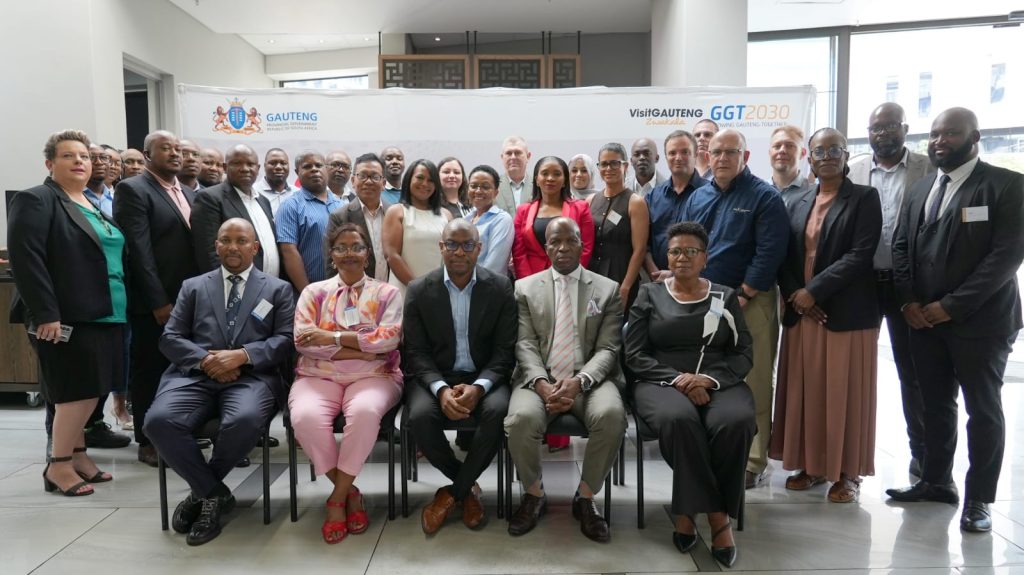
Gauteng has ambitious plans to turn the province into the automotive hub of Africa. So serious is the intention that the leading role players in the South African automotive sector gathered in Johannesburg to share insights into what is needed to make that happen. This comes amidst a rapidly evolving global automotive sector, the looming carbon-neutral targets for vehicle imports into the European Union by 2035, and the current turmoil surrounding increased tariffs being imposed on goods entering the United States. Addressing the participants at the Automotive Sector Policy Dialogue, Gauteng’s MEC for finance and economic development, Lebogang Maile, emphasised the significance of the sector to the country’s economy. In 2024, the automotive industry contributed 5.2% towards the GDP of the country, with 110 000 direct jobs – 33 154 in the original equipment manufacturers and 81 860 people employed by component manufacturers. Gauteng is home to three original equipment manufacturers, Nissan, Ford, and BMW – all based in the City of Tshwane, along with the Tshwane Automotive Special Economic Zone and the Automotive Industry Development Centre. Together, the three OEMs produced 1.8 million vehicles between 2014 and 2023, accounting for 32.8% of South Africa’s vehicle production. “According to the National Association of Automobile Manufacturers of South Africa (Naamsa), Gauteng’s automotive sector is expected to gain momentum, especially with the establishment of the Tshwane Automotive City (TAC), which will serve as an integrated logistics framework focusing on inland ports and manufacturing hubs linked to rail corridors linking Tshwane with strategic ports in South Africa and SADC (the Southern African Development Community),” MEC Maile noted. A different-looking automotive sector Speaking on the shift from internal combustion engines towards new energy vehicles (NEVs), Maile spoke of the urgency required by the automotive sector to adjust its production value chains and technologies to transition towards NEVs to retain and grow its existing market share. He also identified the challenges the automotive sector faces, including: What this all means, Maile told the participants, is that a different approach was needed to support and develop the sector. “There is a need for an inclusive approach towards transforming the sector.” While the province had made progress in terms of establishing the AIDC supplier park and the development of TASEZ, much more needed to be done to make the sector competitive, MEC Maile said. The dialogue was held to assess the province’s readiness for the NEV transition; to identify the infrastructure investment requirements for the transition; gather information into the support requirements for Tier 1, Tier 2, and Tier 3 component manufacturers; highlight skills requirements, funding collaborations and partnerships to support the transition; and understand the implication of US tariffs and potential new markets for South African OEMs. In line with the discussion on NEVs, the province will host the inaugural NEV Summit in October, where industry players will share further knowledge on the sector. For further information on the NEV Summit visit the AIDC website.  visit www.aidc.co.za.