Tasez

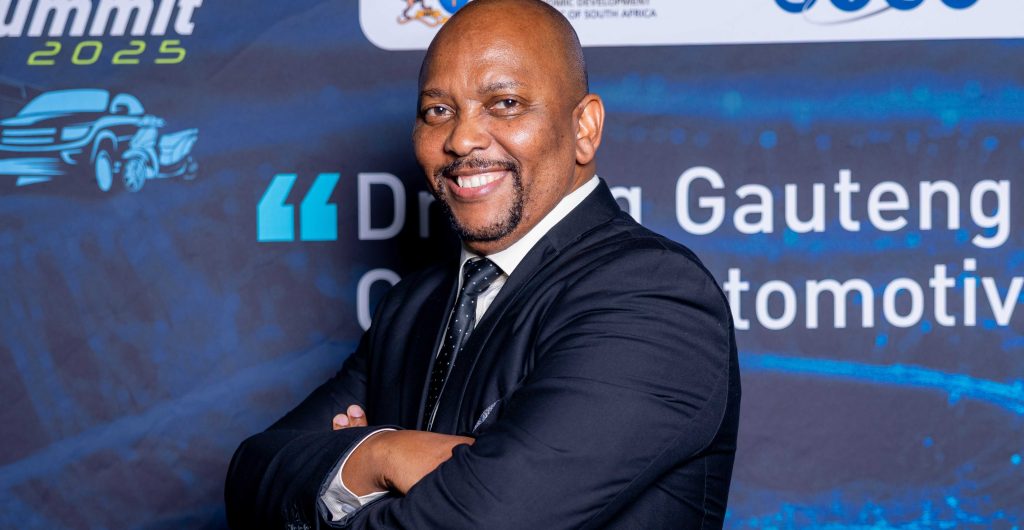
Dr Bheka Zulu

NEV Summit sets clear direction for South Africa’s green mobility future

By Mandla Mpangase Day 1 of the New Energy Vehicles Summit provided much to think about. The opening day of the inaugural New Energy Vehicle (NEV) Summit in Midrand proffered a compelling combination of insights, inspiration and strategic direction, positioning South Africa, and Gauteng in particular, as a frontrunner in Africa’s transition to sustainable mobility. From the science behind hydrogen and battery-powered vehicles to the policies shaping South Africa’s green mobility roadmap, Day 1 covered a broad spectrum of issues. Delegates explored global trends, drew lessons from international case studies, including from China, and examined local readiness across policy, skills, and industry. In his summary remarks on the day, the CEO of the Tshwane Automotive Special Economic Zone (TASEZ), Dr Bheka Zulu, noted that the discussions were “not just about dialogue, but about direction”. Every presentation, he said, “was the emergence of a shared vision; one that sees South Africa transitioning into sustainable mobility and industrial renewal”. Gauteng, as the country’s industrial heartland, was described as playing a strategic role in the future of the automotive ecosystem, leveraging its strong logistics infrastructure and manufacturing base to attract investment and drive innovation. “Today affirmed South Africa’s readiness to lead Africa’s green mobility future,” Dr Zulu added. “The key message was about collaboration – between government, industry, academia, and innovators – to create jobs, empower small, medium and micro enterprises, and localise technology.” Dr Zulu likened this collaboration to a relay race, where each participant contributes their unique strength at different stages: “It’s not about competition, but coordination, knowing when and how to pass the baton to build momentum together.” Throughout the day, recurring themes included industrial transformation, skills development, and ensuring that technology and labour advance together for a just transition. Speakers also emphasised policy clarity and investment confidence, highlighting growing optimism in the local NEV manufacturing sector. The province called for “urban-driven industrialisation” that integrates energy policy, investment frameworks, and urban planning, aligning Gauteng’s innovation and logistics strengths to create a globally competitive green automotive hub. As the day concluded, participants agreed that the NEV revolution “is no longer a possibility, but a present reality”, and that South Africa’s leadership must act boldly and decisively to harmonise policy, infrastructure, and workforce development. “Our NEV transition is not a single-sector effort – it’s a national movement,” Dr Zulu emphasised. “We must plan boldly, invest bravely, and move together to make Gauteng cleaner, smarter, greener, and more connected.”

From policy to action: Now is the time for South Africa to embrace new energy vehicles

South Africa must move from policy to action as a matter of urgency, aligning incentives, infrastructure, skills, and industrial coordination around new energy vehicles, writes the CEO of Tshwane Automotive Special Economic Zone, Dr Bheka Zulu. South Africa’s automotive industry stands at a turning point. The global race toward low- and zero-emission mobility is accelerating, and for a country whose automotive exports hinge on access to the European market, embracing new energy vehicles (NEVs) is no longer optional, it has become an industrial necessity. The Electric Vehicle (EV) White Paper and the South African Automotive Master Plan 2035 (SAAM) together lay a strong policy and strategic foundation. The challenge now is moving from intent to implementation. The country has a clear opportunity to build an inclusive, competitive, and sustainable automotive industry powered by innovation, ready for a net-zero world. Transformation is a must The global automotive landscape is undergoing a profound transformation, driven by the urgency to reduce carbon emissions and achieve net-zero goals. The European Union’s carbon neutrality policies are among the most influential in this shift, setting strict timelines for phasing out internal combustion engine (ICE) vehicles and promoting zero- and low emission alternatives. The EU aims to be climate-neutral by 2050. The objective is to ensure an economy with net-zero greenhouse emissions. For South Africa, this presents both a challenge and an opportunity. The EU remains South Africa’s largest export market for vehicles, accounting for the bulk of automotive exports. A significant 68,7% of light vehicle production was exported in 2024, with three out of every four cars headed to Europe. This means that the EU’s green regulations will directly determine South Africa’s ability to continue trading competitively in this critical sector. Vehicles built in Gauteng and other parts of the country will increasingly need to meet low- or zero-emission standards to remain eligible for export. Transitioning now is not optional, it is essential. Early investment in NEV production, local battery manufacturing, and supporting infrastructure such as charging networks will safeguard South Africa’s market access, maintain its global competitiveness, and create a foundation for long-term industrial sustainability. Policy meets opportunity The EV White Paper charts a managed transition from internal combustion engines to cleaner technologies, ensuring decarbonisation does not lead to deindustrialisation. It sets out steps to localise EV production, develop charging infrastructure, and build skills for the future. The White Paper allows for a managed transition, setting out a number of processes: It has identified 10 actions required to build an EV production ecosystem, including the beneficiation of critical minerals, battery reuse and refurbishment, regulatory alignment, and incentives for localisation. Complementing it, the South African Automotive Master Plan (SAAM 2035) envisions South Africa increasing local content in vehicle manufacturing, expanding exports, and doubling employment by 2035. SAAM 2035 sets out six focus areas: optimising the local market, developing the regional market, localisation, infrastructure development, industry transformation, and technology a skills development. Targets include: Together, the EV White Paper and SAAM 2035 frame a just, inclusive transition that can preserve and grow the country’s industrial base. Driving implementation Turning these policies into tangible outcomes depends on strong institutions. In Gauteng, the Gauteng Growth and Development Agency (GGDA), its subsidiary the Automotive Industry Development Centre (AIDC), and the Tshwane Automotive Special Economic Zone (TASEZ) are taking the lead. TASEZ, Africa’s first automotive city, is positioning itself as a hub for future-focused investment, where manufacturers and suppliers can plug into purpose-built infrastructure, training, and incentives. The AIDC, through its learning centres and supplier parks, is aligning skills and enterprise development with EV technologies. Together, these institutions are turning national ambition into provincial action. South Africa must act quickly to overcome power constraints, develop a local battery value chain, and align incentives to attract NEV and component investment. Global markets are already shifting and delays could cost South Africa export access, investor confidence, and thousands of jobs. A call to lead Africa’s NEV revolution The upcoming 2025 NEV Summit, hosted by GGDA, AIDC, and TASEZ on 22-23 October 2025 at the Gallagher Convention Centre, represents the next phase: uniting government, industry, and investors to accelerate implementation. From policy to action, South Africa’s NEV future depends on decisive execution.

Gauteng gears up for green revolution as New Energy Vehicle Summit kicks off

By Mandla Mpangase The inaugural New Energy Vehicle Summit is taking place this week in Gauteng, drawing attention to the importance and urgency of moving to green mobility within South Africa’s automotive industry. The landmark event, hosted by the Gauteng Growth and Development Agency (GGDA), the Automotive Industry Development Centre (AIDC), and the Tshwane Automotive Special Economic Zone (TASEZ), will assess the progress of the transition to new energy vehicles (NEVs), investigate possible partnerships, and plan practical strategies to accelerate the creation of a competitive local NEV ecosystem. Speaking ahead of the summit on Channel Africa’s Africa Update with Lulu Gaboo, the CEO of TASEZ, Dr Bheka Zulu, said the gathering marks more than just summit. “It’s a statement that Gauteng, as the heart of South Africa’s automotive sector, is ready to lead Africa’s technological shift,” said Dr Zulu. “With more than 60% of the country’s vehicles produced in this province, we are asserting South Africa’s leadership in the continent’s new energy vehicle transition.” Zulu said South Africa is no longer a “passenger” in the global race toward electric mobility. Since the release of the EV White Paper in 2023, the focus has been on positioning the country for global competitiveness through research, innovation, and partnerships. “We’re gearing up for the race on the global EV track,” he noted. “Our goal is to attract international investors, harmonise trade standards across African markets, and promote regional value chains that make South Africa the hub for sub-assemblies and NEV components.” Dr Zulu emphasised that the NEV Summit, taking place at the Gallagher Convention Centre on 22-23 October, will focus on building consensus between industry, labour, and government to develop a balanced roadmap for transformation, one that prioritises both ambition and pragmatism. Policy alignment Asked about policy readiness, Dr Zulu said South Africa already has the right frameworks in place, but faster implementation and targeted incentives are needed. “The road is paved; now we need the green light to move faster,” he said. “We must streamline tax incentives and develop charging infrastructure that supports local manufacturing and adoption.” The NEV shift represents a major opportunity for deepening local supply chains, creating high-value jobs, and transforming South Africa into the main exporter of NEV components across the continent. The South African Automotive Masterplan 2035 (SAAM 2035) is a key enabler of the transition, with its goals to increase local content from 40% to 60% and to double employment in the sector. It is supported by the Electric Vehicles White Paper, that was published at the end of 2023. “This is not just about swapping the engine for a battery,” he said. “It’s about creating new high-value jobs and ensuring that no one is left behind, including workers, black industrialists, and small suppliers.” At the heart of the TASEZ strategy is inclusivity, with initiatives to upskill the existing workforce, mentor small component manufacturers, and facilitate partnerships between local suppliers and global OEMs. Collaboration is vital Dr Zulu stressed that while Original Equipment Manufacturers (OEMs) like Ford play a critical role, the NEV opportunity is open to new entrants and innovators. “The NEV space is for everyone,” he said. “We want to see new black industrialists and emerging OEMs entering the field. This is the transformation we’ve been driving.” Although reliable energy and charging infrastructure remain a challenge, partnerships are being developed to roll out a national charging network and invest in renewable solutions. “We are identifying key sites and collaborating with private partners to ensure charging infrastructure keeps pace with NEV adoption,” he said. With the European Union’s zero-emission and carbon border adjustment policies set to take effect by 2035, dr Zulu said South Africa must align its timelines and environmental standards with international expectations. “We’re adapting our manufacturing processes to reduce coal-based energy use and increase solar, gas, and hydrogen integration,” he said. “Our ambition is to match the EU’s climate neutrality goals and maintain export competitiveness.” Looking ahead to 2035, Dr Zulu concluded: “We want NEVs to form a significant part of local production, deepen component manufacturing, and make South Africa the hub of NEV exports to Africa and beyond,” he said. “Most importantly, we want this transition to create jobs, skills, and shared prosperity.”

Reimagining the future of SA’s auto industry

By Mandla Mpangase Collaboration, skills development, and a bold push into Africa were the recurring themes during the “Value of reimagining the future, together” panel discussion hosted by naamsa during the South Africa Auto Week 2025 in Gqeberha on Wednesday. Moderated by TransUnion Africa, Lee Naik,Chief Operations Officer at naamsa (The Automotive Business Council), the high-level dialogue on 1 October 2025 brought together leading voices from finance, manufacturing, technology, and industrial development to explore how South Africa can secure its place as the continent’s automotive hub. A shared vision for 2035 CEO of TransUnion Africa, Lee Naik, set the tone by urging stakeholders to think long-term. “South Africa’s biggest challenge is not that we don’t have answers, but that we haven’t created enough spaces for honest, collective dialogue. If we can start aligning around 2035 as a target, we can fill the gaps left by global markets like the US. It begins with conversations like this,” he said. The South African Automotive Master Plan sets out key targets for the country’s automotive sector to reach by 2035, including increasing vehicle production to 1.4 million vehicles a year and raising localisation levels in South African-manufactured vehicles from an average of 40% to 60%. Managing executive of Absa vehicle and asset finance, Charl Potgieter, highlighted the industry’s dual role as a GDP driver and social enabler. “The automotive industry contributes 5.2% to South Africa’s GDP, and it creates hundreds of thousands of jobs. But beyond that, it carries our people to work, to school, to worship, to family. How can we not invest in ensuring more South Africans gain access to mobility?” WesBank’s CEO Robert Gwerengwe, echoed the sentiment. “Mobility is not just about vehicles; it’s about giving people access to the economy. A job, an education, the ability to operate in society – that’s what we finance. If we only focus on market share, we’ve missed the point.” Infrastructure and logistics as catalysts For the CEO of Tshwane Automotive Special Economic Zone (TASEZ), Dr Bheka Zulu, the future hinges on building resilient logistics networks. “If you look at the topic of the panel discussion, we are imagining the future as a collective, and it’s a collective that is sitting with a bit of uncertainty in terms of how the market flows,” Dr Zulu noted. Focusing on the term ‘together’, the TASEZ CEO observed that all in the industry need to find solutions for the country. “The reality is that we are sailing through some stormy the waters … and the shift in the industry fostered by digitisation and the issue of sustainability is what is rocking some of the boats,” he added. “Cargo is king. South Africa has over a century of automotive manufacturing expertise, but unless we create sustainable, cost-effective logistics value chains, we will lose our competitive edge,” Dr Zulu said. “Special Economic Zones must serve as gateways to Africa, linking industrial complexes with continental markets through efficient trade corridors.” Dr Zulu emphasised the need to look to the African Market. “We should be focusing on the market that we have, which is African market. We’ve got a capture market. We’ve got a market that we understand. How are we allowing the east to come and penetrate a market that we better understand.” CEO of Accenture Africa, Kgomotso Lebele, stressed the importance of transformation and localisation. “The industry must not be seen in isolation. It sits at the heart of reforms in renewable energy, mining, technology, and skills. If we get localisation right, we scale employment and create opportunities for entrepreneurs to enter global value chains.” The Automotive Industry Development Centre’s CEO Andile Africa, pointed to the practical progress made through incubation programmes pairing small enterprises with global OEMs. “We have entrepreneurs who started as tier-three suppliers and now serve major manufacturers. Transformation is possible, but it requires patience, scale, and deliberate partnerships.” Data, skills and financial inclusion Naik reminded the audience of the stark exclusion still facing millions. “There are 16 million South Africans with hopes and dreams of mobility, but the financial system says no. Technology and data can change that. Using AI and alternative data sources, we can give millions a chance to access finance, mobility, and opportunity.” The skills gap was another recurring theme. Panelists agreed that without investment in AI, robotics, and digital capabilities, South Africa risks losing its automotive competitiveness. “The future is youthful. Our continent’s young people hold the key – if we equip them with the right skills today,” said Lebele. The discussion concluded with a shared recognition that South Africa’s automotive industry cannot afford fragmented efforts. Policy certainty, infrastructure investment, financial inclusion, and regional integration were all identified as non-negotiables. “Let’s stop duplicating efforts,” urged Gobiyeza. “The industry must stand as SA Inc., put its best foot forward, and show OEMs that South Africa is not only open for business but is the natural gateway to Africa’s automotive future.”

TASEZ takes steps towards a zero-carbon footprint

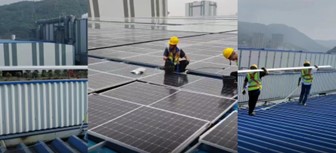
By Mandla Mpangase Setting up a sturdy, resilient and green energy mix for the Tshwane Automotive Special Zone (TASEZ) is a must-do on so many levels. Electricity is essential for driving manufacturing: automotive Original Equipment Manufacturers (OEMs) require a constant and consistent supply, and globally, countries are demanding clean energy products. A key aspect of the TASEZ business plan is to mitigate any risk in the energy supply chain and offer various alternatives, from solar to gas to power. “It is imperative that TASEZ, through its advancements in the formulation of a green energy mix solution, shares lessons and benchmarks with other industrial development zones and special economic zones (SEZs) that are underway with development of their green energy solutions,” says TASEZ head of infrastructure development, Andile Sangweni. “In this way, TASEZ becomes a catalyst in advancing green energy considerations.” TASEZ has positioned itself as a benchmark for green industrialisation through a 25-year solar photovoltaic rooftop and battery storage project across the 12 factories in its hub, reducing reliance on Eskom and enhancing energy resilience. In developing its green energy strategy, TASEZ has undertaken various initiatives in gaining a better understanding of the solar independent power producer model and its benefits. One such initiative was a due diligence mission to China that validated the technical, financial, and socio-economic viability of the solar initiative. In addition, there has also been a focus on the integration of local small, medium and micro enterprises (SMMEs) and labour from the City of Tshwane’s townships into the solar value chain. This also aligns with the Gauteng Provincial Government’s socio-economic development plans. These initiatives are not only mitigating power supply risks but also positioning TASEZ as a green manufacturing hub, particularly attractive to OEMs like the Ford Motor Company, which is TASEZ’s anchor tenant. The right thing to do Beyond being a smart business decision, it is also an ethical choice. The country’s National Development Plan, Vision 2030 envisages a country that has an energy sector that promotes: The United Nations’ Sustainable Development Goal 7 calls for access to affordable, reliable, sustainable and modern energy for all – placing an emphasis on clean energy. In Phase 1 of its development, TASEZ began introducing a mixed energy operation, with the planned installation of solar panels at its zone facilities, currently underway towards implementation. TASEZ, which is strategically based in the heart of Gauteng’s automotive manufacturing hub, has emerged as a trailblazer in renewable energy integration, particularly through its Solar Independent Power Producer (IPP) and green energy initiatives. TASEZ is a key driver in enabling the export of products worldwide and is committed to green manufacturing. It is predicted that beyond 2030, the country will need environmentally-friendly energy sources to retire the current fleet of coal-fired power stations.  Now, with the start of its Phase 2 development, TASEZ is working closely with Chinese energy supplier Heshun Energy, which has its headquarters in Xiamen, in the Fujian Province, on expanding its energy mix. Heshun Energy was the winning bidder to finance, design, supply, install, operate and maintain solar photovoltaic rooftop power panels and battery storage systems in the 12 factories based at TASEZ for a period of 25 years. At the end of that period, the plant will be transferred to TASEZ. Inclusive development As with all TASEZ’s projects, Heshun Energy is required to meet the requirement of setting a minimum target of 30% to subcontract local small, medium and micro enterprises and labour from the local communities, targeting specifically Wards 6, 15, 18, 28, 38, 41, 43, 67 and 86. Heshun Energy is engaged globally in the investment, construction and operation of distributed photovoltaic power stations (using solar energy) and distributed energy storage systems, with a focus on providing safer and more reliable green energy solutions. Some of its solutions have been implemented by Coca-Cola and China International Marine Containers, among others. “We need to harness different energy solutions, not only for our own sustainability, but also for the sustainability of the manufacturing that takes place at the economic hub,” CEO Dr Bheka Zulu noted during a presentation to a delegation of the Southern African Development Community to the zone. The European Union, for example, will not buy any imported vehicles that emit CO₂ from 2035, a short decade away. “We are already preparing to export abroad products that do not have a carbon footprint.” TASEZ’s aim is to attain a carbon-neutral footprint by 2027: “We don’t want to wait until 2035,” the CEO added. “Heshun Energy will be providing TASEZ with some of the energy we need in our SEZ,” Dr Zulu said.

TASEZ Phase 2 underway as new reservoir site is handed to contractor

By Mandla Mpangase Phase 1 of South Africa’s most successful special economic zones – the Tshwane Automotive Special Economic Zones – has scarcely wrapped up, and the dedicated economic hub is already turning to expanding its operations. Thursday, 3 July 2025, saw the first sod being turned as a key site was handed over to the contractor, MES Major Projects, a wholly black-owned local company, for the construction of a vital water reservoir for the zone. The task is to build a 200-ton reinforced concrete 15Ml reservoir standing 12m in height. Joining TASEZ CEO Dr Bheka Zulu at the event were leaders from the City of Tshwane, including Executive Mayor Dr Nasiphi Moya, Deputy Executive Mayor, Eugene Modise, and several MMCs, a team from the newly appointed contractor lead by managing director Musa Sambo, councillors from the neighbouring townships of Eersterust, Mamelodi and Nellmapius, and members of the local communities. So important is this development, TASEZ board member for infrastructure development, Vuyo Zithumane, noted: “We are launching one of the critical dependencies for the entire development of others, and especially Phase 2.” Zithumane, who is also the City of Tshwane’s COO, added that the political principals in the City of Tshwane took the conscious decision to prioritise this development, making a financial allocation within the City’s budget. TASEZ is a unique project, with shareholders from each of the three tiers of government, along with Ford Motor Company; the Department of Trade, Industry and Competition represents the national government, the Gauteng Department of Economic Development represents the province, and the City of Tshwane represents local government. Addressing the gathering, Dr Moya spoke about the City of Tshwane’s ambitious revitalisation strategy that is aiming for a 3.9% annual growth by 2029, targeting 80 000 new jobs. “As the City, we need to not only make a pronouncement saying we are committed to economic growth … but must be seen in action,” Dr Moya said, adding the City was committed to retaining investments and improving infrastructure, such as energy and water security. “We can’t expect people to come and invest in our city if we do not provide the infrastructure that is required.” This new development is significant, not only to the City of Tshwane, but to its residents, she added. The most recent statistics indicate that unemployment in the City of Tshwane has increased to 38.4%. Noting the sombre statistic, the executive mayor said the efforts of the City of Tshwane, supported by business and investment, were undertaken with the ordinary residents in mind. “A student at college who has studied something to do with automotive must know that there’s a future for them, because the City of Tshwane has an automotive centre here.” Noting the presence of members of the community, including the TASEZ Community Project Committee, which oversees the social compact between the local communities and the SEZ, Dr Moya also spoke about the importance of community involvement in the success of any development. “If communities understand the benefit of this project, then communities start to protect the projects that they have.” The appointed contractor is one of the success stories of TASEZ: during Phase 1 of the development, MES Major Projects was graded CE3 and today is a CE7. The work is expected to be completed within 12 months.

TASEZ makes an impact beyond SA’s borders

By Mandla Mpangase In a first for a South African special economic zone, the Tshwane Automotive Special Economic Zone (TASEZ) welcomed the heads of mission from the Southern African Development Community (SADC) to share information and talk about unlocking opportunities for economic growth in the region. On Monday, 1 July 2025, the TASEZ team, headed by CEO Dr Bheka Zulu, rolled out the red carpet for the distinguished SADC delegation – ambassadors, high commissioners, and chargés d’affaires – along with representatives from the Department of International Relations and Cooperation and the Department of Trade, Industry and Competition. This gathering was not just a simple meeting – it was a deliberate step toward weaving stronger ties between neighbours, aligning with the goals of SADC, the Southern Africa Customs Union, and the African Continental Free Trade Area. TASEZ gave the delegation a front-row seat to South Africa’s important automotive manufacturing industry and the exciting opportunities for partnerships and investments that could uplift not just South Africa, but the entire SADC region. Welcoming the SADC delegation to Africa’s first automotive city, Dr Zulu provided a telling context for their visit: TASEZ has a footprint beyond South Africa. “We are part of the 244 plus SEZs that exist in the African continent, and we’re part of the 5 000 plus that exist globally.” Driving industrial growth SEZs are seen as economic and infrastructural drivers. TASEZ was set up to support a significant investment by the Ford Motor Company – bringing component manufacturers closer to the Ford factory in Silverton, ensuring a streamlined, just-in-time, just-in-sequence provision of essential parts for the Ford Ranger. Critical to the success of TASEZ was the joint strategic partnership between all three tiers of government via the Department of Trade, Industry and Competition, the Gauteng Department of Economic Development, and the City of Tshwane, along with catalytic partnerships with the private sector. Over the five years TASEZ has been in development, it has seen 8 000 direct jobs and 15 000 indirect jobs created in the value chain. In addition, the SEZ has provided R1.7-billion towards small, medium, and micro enterprise (SMME) projects. “We’ve been a catalyst for about R30-billion investment to date,” Dr Zulu. He noted that none of this would have happened if it were not for the facilitation of the diplomats. Dr Zulu emphasised the lessons learnt by TASEZ during its development, offering to share the hard-earned knowledge with SADC. “We have a test case, a real case that has worked in the short time of five years … TASEZ has been a game-changer in an industry that contributes 5.3% to the country’s gross domestic product (GDP). “The contribution of TASEZ with its partners within Ford, we are looking at having contributed 1% to the GDP,” Dr Zulu noted. Cross-border partnerships However, regional integration was important to the SEZ. “We cannot grow alone as a country; we need to grow with our brothers and sisters within the south and the continent.” Manufacturing development in Africa is viewed as an opportunity to lessen dependence on commodities and engage in economic diversification as a way to boost competitiveness in the region. Despite this, the continent still accounts for a very low share of global manufacturing and global manufacturing exports. Recent research indicates that economic development requires structural change from low to high productivity activities and that the industrial sector is a key engine of growth in the development process, most particularly the growth of manufacturing development. Diplomatic missions play a crucial role in facilitating investment flows and promoting economic cooperation between countries. They serve as an important conduit for information sharing, networking, and advocacy on behalf of their countries. The goals of the joint meeting were: SADC’s Vision 2050 Andrew Maswanganyi, from the Department of International Relations and Cooperation’s Directorate: Economic Integration and Infrastructure, pointed out that regional integration was about “the small things we do”. He noted that SADC’s Vision 2050 was an important strategy looking to create a region where its people have food security, are healthy and educated. SADC’s Vision 2050 aims to create a peaceful, inclusive, and competitive region that is middle-to high-income industrialised, where all citizens enjoy sustainable economic well-being, justice, and freedom. It is built on the three pillars of industrial development and market integration, infrastructure development, and peace, security, and good governance. The meeting at TASEZ was “an opportunity for South Africa and its sister countries to cement strong bonds of friendship”, Maswanganyi said. The chairperson of the SADC group, Zimbabwe’s ambassador David Hamadziripi voiced appreciation of the opportunity witness first-hand what is being done in South Africa in its push for industrialisation. The visit by the delegation “not only deepens our understanding of South Africa’s industrial strategy but also speaks to the spirit of regional cooperation in shared development”, Hamadziripi said. Some of SADC’s member states were grappling with the imperative of industrialisation, job creation and inclusive economic transformation. SEZ’s as catalysts for growth “This special economic zone is a testament to how targeted investment, infrastructure development and strategic collaboration between government, the private sector and local communities can create a dynamic industrial hub with strong linkages to both domestic and global value chains.” TASEZ offers important lessons on how SADC can leverage special economic zones to drive manufacturing innovation and trade competitiveness, while also building infrastructure, promoting SMMEs, building critical skills and creating opportunities for young people. “Special economic zones can serve as a model or as model platforms for collaboration with the potential to align such initiatives with cross-border supply chains, promote investment partnerships and share these practices across our member states.” Hamadziripi added: “We are also cognisant that industrialisation can be driven by a combination of factors, including policy coherence, skills development, innovation and infrastructure investment.” The visit to TASEZ was not just about observing, but also about learning and exploring how SADC can replicate and adapt these lessons to their respective countries. The automotive sector has been identified as one of the key sectors with demonstrable

TASEZ – a force for industrial renewal through skills development

By Mandla Mpangase The future of South Africa’s manufacturing sector lies in the hands of the school learners, who need to be ready for a fast-changing environment marked by the complexities of artificial intelligence and the drive towards a carbon-neutral world. The automotive manufacturing sector is already embracing green technology, AI development and design, and the change from combustion engines to new energy vehicles. These issues, along with much-needed entrepreneurial skills, are core to the work being done by the TASEZ Training Academy. In keeping with this drive to develop skills for the future in the automotive manufacturing sector, the Tshwane Automotive Special Economic Zone (TASEZ) will be working closely with the Department of Basic Education to support local schools of specialisation and technical high schools. The two signed a memorandum of understanding to develop curricula that produce entrepreneurs and skilled learners who are ready for the automotive industry, along with providing skills development focused on the STEM subjects of science, technology, engineering and mathematics. So important is this development that the Ribane-Laka school in Mamelodi was turned into a science and ICT school of specialisation. The refurbished school was officially opened on 7 May 2025 by Gauteng Panyaza Lesufi, who observed that education makes economic sense. He added that it was important to make sure the education system in the townships is relevant. The school will focus on the automotive and electronic sectors – which is where TASEZ comes into the picture. “Africa’s first automotive city is not just a special economic zone. It is a force for industrial renewal,” said TASEZ CEO, Dr Bheka Zulu. In opening the school, Lesufi noted: “Today, we are launching education for purpose, where our children will not be taught things that will not assist them. Our children will not be taught things that will be irrelevant when they leave school.” The Ribane-Laka school is the future of education, he added, pointing out that the learners from the school will benefit from TASEZ, Africa’s first automotive city. “Never before has anyone thought that a Ford Ranger would be inside the school premises, not to boast but to teach our children how to repair it when it is broken. No one thought we could have an engine inside the school premises where our children can explain its meaning; where our children can explain to you how an engine functions.” The first next-generation Ranger was built by the Ford Motor Company of Southern Africa at its plant in Silverton, City of Tshwane. The components for that car were manufactured by the tenants housed at TASEZ, which is located next to the original equipment manufacturer. Emphasising the message by the premier, Dr Zulu noted that the TASEZ Training Academy is not simply about skills programmes, it is about creating relevance. “We’re preparing young people for the future of work – advanced manufacturing, electric vehicles, industrial automation. We’re building a talent pipeline that our automotive manufacturing tenants can depend on. So, when they set up operations here, they’re not bringing in imported expertise. They’re hiring our people.”

TASEZ explores electric mobility and investment partnerships in China

TASEZ CEO Dr Bheka Zulu and Business Development Executive Msokoli Ntombana reflect on their vital fact-finding visit to China, writes Mandla Mpangase. In a bid to deepen South Africa’s foothold in the global electric mobility revolution, a delegation from the Tshwane Automotive Special Economic Zone (TASEZ) embarked on a groundbreaking business and mobility study tour of China from 21 – 30 April 2025. The delegation, led by TASEZ Chief Executive Officer Dr Bheka Zulu and Business Development Executive Msokoli Ntombana, visited leading Chinese cities and innovation hubs to explore strategic investment, electric vehicle (EV) manufacturing opportunities, and clean energy technologies. Organised by the South Africa-China Transport and Technology Think Tank (SACTT), in partnership with Zhejiang Normal University and Valternative, the China mobility study tour took TASEZ to the heart of global electric vehicle production: from Shanghai’s smart cities to Shenzhen’s autonomous mobility ecosystems. “This mission was more than just a learning experience,” stated Dr Zulu. “It was a strategic positioning exercise. “As South Africa navigates the future of automotive manufacturing, China offers a blueprint for rapid, sustainable, and scalable industrialisation in electric mobility. We needed to be at the forefront of that conversation.” The tour provided unprecedented access to China’s booming electric mobility ecosystem. TASEZ’s engagements included visits to: The tour also featured a vital diplomatic engagement with the South African consulate general in Shanghai, which pledged facilitation of future investment efforts and participation in the upcoming China International Import Expo, scheduled for November 2025. “We are no longer in the age where TASEZ only chases internal combustion vehicle assembly,” explained Ntombana. “TASEZ is evolving into a future-focused industrial platform – one that is open to new energy technologies, battery innovation, and smart logistics. “This tour helped us connect the dots between Chinese capabilities and South African potential.” Accelerating South Africa’s new energy transition China’s meteoric rise as a global EV leader has disrupted traditional supply chains and redefined auto manufacturing. With brands like BYD, NIO, and SAIC exporting in growing volumes, the global centre of gravity in the automotive industry is clearly shifting east. South Africa, and particularly Gauteng – which accounts for over 40% of the country’s automotive output – must adapt quickly to remain competitive. The visit was aimed at positioning TASEZ as a gateway for Chinese investors looking to establish operations in Africa, with a focus on electric vehicle production, green energy components, and value-chain localisation. “One of the biggest takeaways was witnessing how Chinese companies localise technology and scale it rapidly,” said Dr Zulu. “We saw factories that were established within a year and are now producing thousands of electric units daily. South Africa has the human capital, we have the land, and we have strategic trade links. What we need now is the technology and investment, and China is a willing partner.” From Shanghai to Shenzhen – a panoramic view of China’s EV future The journey started in Shanghai, where the delegation engaged with the Consul General and visited the Lingang Special Area, a free trade zone renowned for housing Tesla’s Gigafactory and other advanced manufacturing operations. Here, TASEZ drew inspiration on how spatial planning and industrial policy can be aligned for EV growth. From Qingdao, where MESNAC and Sailun operate, to Xiamen and Shenzhen, home to battery innovators and autonomous vehicle manufacturers, each city offered insights into supply chain agility, automation, and EV infrastructure. “What struck us most was how integrated China’s innovation ecosystem is,” Ntombana said. “Their universities, government policy, manufacturers, and even property developers work in sync to build mobility cities. This is exactly the model South Africa needs to replicate, especially around the TASEZ hub in Tshwane.” The TASEZ team has committed to a series of post-tour engagements, including exploring partnerships with key players in the automotive sector. “We cannot let momentum fade,” added Dr Zulu. “Each conversation we had must be turned into a formal business case, each handshake into a partnership proposal. The goal is simple – make TASEZ the African home for clean automotive innovation.” This is no longer just about TASEZ. “It’s about how South Africa positions itself in the race for the green economy. The Chinese have moved – fast. Now it’s our turn to catch up.”

TASEZ focuses on developing small enterprises for future growth

By Mandla Mpangase The 2025 Tshwane SMME Symposium explored the best ways to prepare small businesses for the industries of the future. It is important to prepare now so that small, medium and micro enterprises (SMMEs) will be in a position to lead both the country and the continent in the green economy, in technology, and in automotive manufacturing. The symposium, held on 6 May 2025 at the Innovation Hub, was hosted by the Tshwane Economic Development Agency along with the South African Electrotechnical Export Council and the Innovation Hub. The Tshwane Automotive Special Economic Zone (TASEZ) featured in a panel discussion on the road map for South African SMMEs to participate in future economies, with a particular focus on the automotive sector, digital technology and the energy sector. TASEZ CEO Dr Bheka Zulu spoke of the importance of understanding the impact SMMEs made in their sector, rather than simply looking at the numbers. “We need to know how we change lives, what are the SMMEs taking home?” He noted that TASEZ had ring-fenced R1.7-billion for SMMEs during the special economic zone’s Phase 1 development. Dr Zulu also addressed the issue of the skills gap within the automotive sector. TASEZ is now working closely with a number of partners to make sure the gap is closed. Technology can be a vital way to help the informal sector to grow. Another aspect was that SMMEs needed to be supported with research and development, Dr Zulu noted. He referred to a Chinese company, BYD, that has only been going for a decade. “They started as a battery manufacturer, but they evolved as the economic environment changed and now build cars. Last year they manufactured five million vehicles.” South Africa’s SMMEs must be strong enough to follow the same trajectory. It is vital to make sure that all role players understand the needs of the SMMEs and that SMMEs understand the requirements of industry. “Partnerships are important so that everyone understands the needs, requirements, constraints and challenges.” Partnering with established companies and organisations also makes access to markets much easier for SMMEs, who then have a champion lobbying on their behalf with the larger role players, Dr Zulu said. A key focus for TASEZ as it rolls out its Phase 2 development, is its support for black industrialists. The SMME symposium involved local SMMEs, representatives from a number of government agencies, potential funders, and industry partners, who all joined forces come up with concrete strategies to integrate township small businesses into mainstream supply chains and future-focused sectors. The Executive Mayor of the City of Tshwane, Dr Nasiphi Moya, summed up the importance of SMMEs to the job creation and innovation: “These enterprises are the lifeblood of our economy, the backbone of local employment, and the heartbeat of township revitalisation.” The symposium focused on how all the economic sector players can support, strengthen, and boost local SMMEs.