
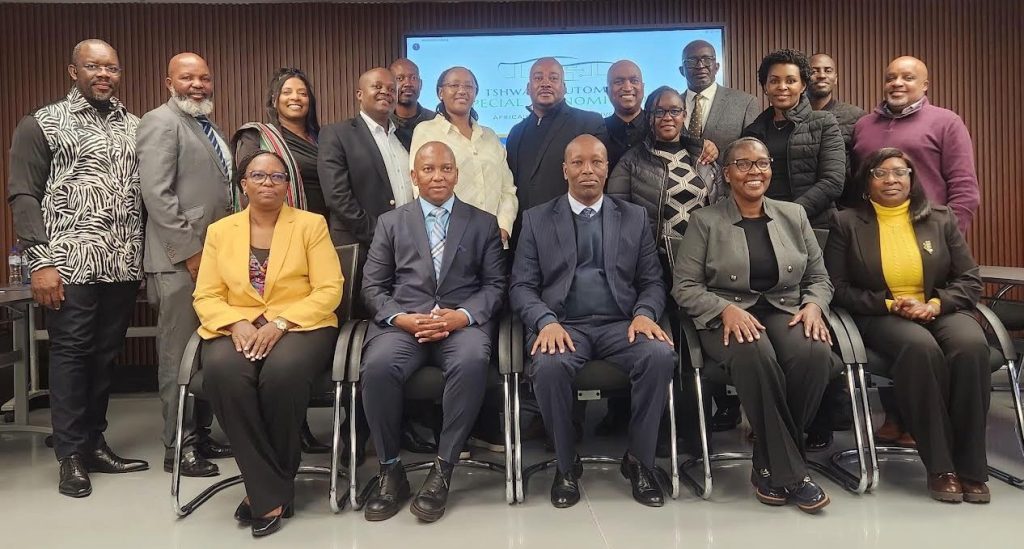
Kenyan delegation visits TASEZ to study South Africa’s automotive industrialisation success
By Mandla Mpangase A high-level Kenyan delegation accompanying President William Ruto on his state visit to South Africa visited the Tshwane Automotive Special Economic Zone (TASEZ) on 5 June 2026 to gain first-hand insight into one of the continent’s most successful industrial development projects. The Kenyan delegation was led by the cabinet secretary for investments, trade and industry, Lee Kinyanjui. The visit formed part of a broader programme aimed at deepening economic cooperation between South Africa and Kenya, with both countries seeking to strengthen trade, investment and industrialisation under the African Continental Free Trade Area (AfCFTA). During the state visit, Presidents Cyril Ramaphosa and William Ruto reaffirmed their commitment to expanding economic ties and signed several agreements intended to enhance trade, skills development, transport cooperation and regional integration. For the Kenyan delegation, TASEZ offered a practical example of how strategic industrial policy, public-private collaboration and targeted infrastructure investment can be used to establish a globally competitive manufacturing hub from the ground up. Located adjacent to Ford Motor Company’s Silverton Assembly Plant in Tshwane, TASEZ has emerged as the flagship of South Africa’s Special Economic Zone (SEZ) programme. Established to deepen localisation in the automotive sector, attract investment and create jobs, the zone has become a model for industrial development, drawing billions of rands in investment and creating thousands of employment opportunities while positioning South Africa as a major automotive manufacturing base on the continent. The Kenyan delegation’s interest in TASEZ reflects growing efforts across Africa to move beyond the export of raw materials and build value-added manufacturing industries capable of creating jobs and driving economic growth. TASEZ CEO Dr Bheka Zulu said the visit demonstrated the growing importance of SEZs as catalysts for industrialisation and regional economic integration. “Kenya’s interest in understanding the TASEZ journey is significant because it speaks to a broader African ambition to industrialise, create jobs and strengthen regional value chains. “What we have achieved here shows that with a clear vision, strong partnerships and sustained investment, it is possible to build a globally competitive automotive manufacturing ecosystem from scratch,” said Zulu. He noted that SEZs have become increasingly important instruments for attracting investment and supporting industrial development across Africa. “South Africa’s 12 SEZs collectively attracted R31.58-billion worth of investment since inception in the year 2000,” TASEZ executive for business development, Msokoli Ntombana, noted. “They have shown a net growth of R17.067-billion in the value of operational investments over the seven-year period starting from 2018/19FY, which has led to an additional 28 112 direct jobs being created, demonstrating the impact such zones can have on economic growth and employment,” Ntombana, added. The visit also provided an opportunity for discussions on the practical challenges and lessons associated with developing an automotive manufacturing hub, including infrastructure planning, investor attraction, supplier development, skills training and governance. As South Africa and Kenya seek to strengthen their strategic partnership, industrial cooperation is expected to become an increasingly important area of collaboration. Kenya has identified manufacturing as a key pillar of its economic development agenda, while South Africa continues to leverage its established automotive sector to drive exports, investment and industrial growth. The visit to TASEZ underscored a shared recognition that Africa’s future economic growth will depend not only on expanding trade between countries but also on building productive industrial capacity capable of supplying regional and global markets. For the Kenyan delegation, TASEZ was a case study in how targeted industrial development can transform a vision into a functioning manufacturing ecosystem, creating jobs, attracting investment and contributing to Africa’s broader industrialisation agenda.


