Tasez

Gauteng Growth and Development Agency

South Africa’s SEZs under spotlight as leaders push for greater industrial impact

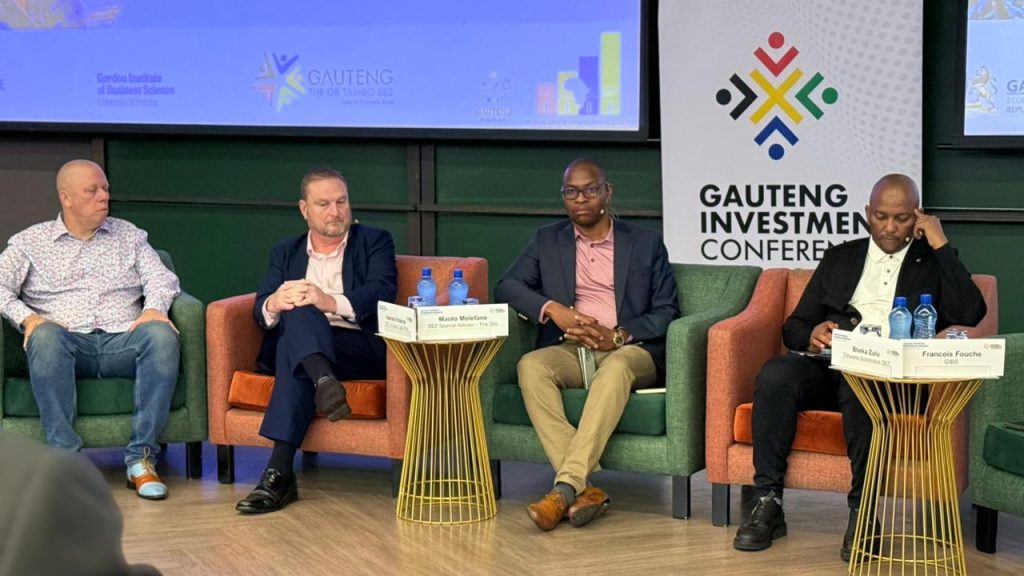
By Mandla Mpangase Government and industry leaders have called for a fundamental shift in how South Africa’s Special Economic Zones (SEZs) deliver value, arguing that stronger integration with spatial planning and industrial policy is key to unlocking growth. This emerged at a breakfast session hosted at the Gordon Institute of Business Science (GIBS) in Illovo, Johannesburg, on Friday, 20 March 2026, forming part of the roadshow to the 2026 Gauteng Investment Conference. Opening the session, Gauteng Growth and Development Agency (GGDA) acting CEO Sithembiso Dlamini outlined the province’s strategy to position SEZs as anchors of development corridors, driving infrastructure investment and manufacturing-led growth. She highlighted recent progress in Gauteng’s SEZ programme, stressing its role in catalysing regional economic activity. A central theme of the discussion was how to close the “value-for-money” gap in SEZ investments. Trade expert Donald MacKay presented findings from a comparative study of global and local SEZ performance, noting that while South Africa has made progress, structural and policy shortcomings continue to limit impact. He pointed to the need for targeted reforms to improve efficiency, attract investment, and boost export competitiveness. From a policy perspective, Maoto Molefane, the special advisor to the Minister of Trade, Industry, and Competition and chairperson of the Tshwane Automotive Special Economic Zone (TASEZ), outlined the government’s new Spatial Industrial Development Strategy. He acknowledged limitations in the current SEZ model, including fragmentation and uneven returns, and said the new approach aims to better align industrial spending with national development goals. “The focus is on ensuring that every rand invested delivers measurable industrial outcomes,” Molefane said. Insights from operational SEZs reinforced the importance of execution and partnerships. Dube TradePort CEO Hamish Erskine reflected on the evolution of the KwaZulu-Natal-based SEZ, highlighting the role of logistics integration, infrastructure planning, and strong governance in its success. He said the model demonstrates how SEZs can drive broader regional development, including job creation and small business growth. Meanwhile, TASEZ CEO Dr Bheka Zulu emphasised the importance of sector-focused development, noting that strategic partnerships – particularly with major investors such as Ford – have been central to its rapid growth. Zulu also pointed to the need for SEZs to adapt to global shifts, including the rise of new energy vehicles, as part of their future positioning. The session concluded with consensus that South Africa’s SEZ programme must evolve beyond isolated zones into fully integrated industrial ecosystems, capable of delivering sustained economic impact, increased exports and long-term investment attraction. The discussion forms part of ongoing engagements ahead of the Gauteng Investment Conference scheduled for 9 April 2026, where infrastructure, manufacturing and industrial policy are expected to take centre stage.
Gauteng Budget 2026 prioritises infrastructure, investment and industrial growth to drive job creation

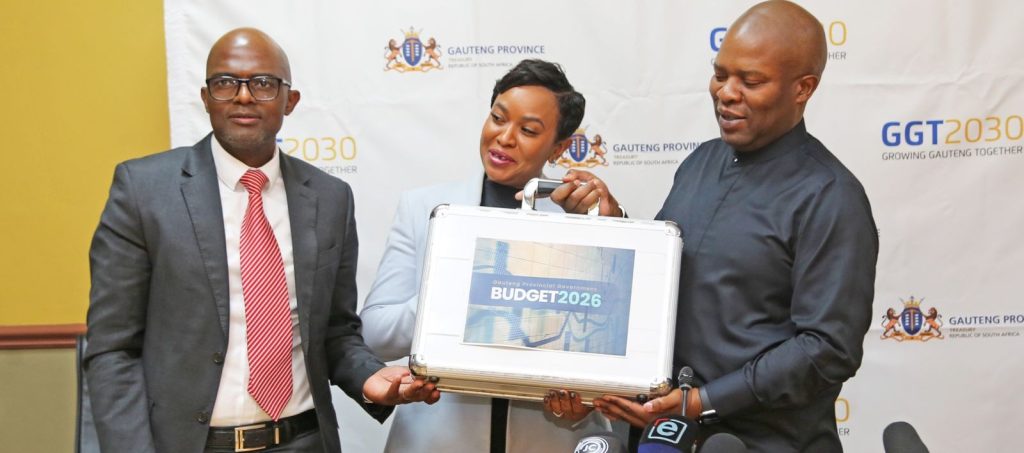
By Mandla Mpangase The Gauteng Provincial Government has tabled a R549.3-billion medium-term budget aimed at accelerating infrastructure development, attracting investment and strengthening manufacturing to stimulate economic growth and job creation across the province. Presenting the 2026/27 budget in the Gauteng Legislature, MEC for Economic Development and Finance, Lebogang Maile, said the province is prioritising infrastructure expansion, industrial development and investment facilitation as key drivers of inclusive growth. The budget theme, “The audacity of hope: A collective commitment to building a resilient Gauteng,” reflects the province’s strategy to rebuild economic momentum while addressing unemployment, infrastructure backlogs and service delivery challenges. Infrastructure spending to unlock growth Infrastructure investment forms a cornerstone of the provincial strategy, with R36.4-billion allocated to infrastructure programmes over the Medium-Term Expenditure Framework (MTEF). Of this amount, R22.7-billion will fund the expansion of infrastructure capacity to meet rising demand, while R13.8-billion will be directed towards maintaining and rehabilitating existing assets. Maile said infrastructure investment is critical to improving service delivery while also acting as a catalyst for economic growth and employment. “Infrastructure is the bridge between hope and visible delivery,” he said. “It supports long-term growth, improves service delivery and creates jobs.” Major allocations will focus on healthcare facilities, schools, human settlements and transport infrastructure, as well as bulk infrastructure to support economic development projects and Special Economic Zones. The province is also prioritising energy-related infrastructure projects to support municipalities and improve energy security. Special economic zones and industrial development The budget reinforces Gauteng’s re-industrialisation agenda, with funding directed towards Special Economic Zones, township industrial hubs and revitalised industrial parks. The Gauteng Growth and Development Agency and the Gauteng Enterprise Propeller will play a key role in implementing investment and industrial programmes. Funding will support: These initiatives are aimed at strengthening manufacturing capacity, boosting exports and integrating local firms into regional value chains under the African Continental Free Trade Area. Investment pipeline gaining momentum Investment attraction remains a central focus of the provincial growth strategy. Maile highlighted the success of the inaugural Gauteng Investment Conference 2025, which secured R312.5-billion in investment pledges from domestic and international investors. According to the MEC, implementation of these commitments is already underway. “Eighteen out of 60 projects are now in rollout stage, representing over R80 billion in investments entering the real economy,” Maile said. These projects include infrastructure construction, energy developments and industrial expansions expected to generate significant employment opportunities. The province aims to secure R800-billion in investment commitments by the end of the current administration, with the next Gauteng Investment Conference expected to announce additional projects. Public-private partnerships to expand infrastructure With fiscal pressures limiting government spending capacity, the province plans to expand the use of public-private partnerships (PPPs) to fund large-scale infrastructure projects. Maile cited the Gautrain as a successful example of a PPP model. The province is currently preparing to appoint a new concessionaire for the Gautrain system as the current concession agreement approaches its conclusion in March 2026. By that time, the system will become a fully paid-up state asset valued at approximately R45-billion. Beyond rail transport, PPP opportunities are being explored across sectors including water, tourism, digital infrastructure, energy and environmental services. Projects under consideration include the Gauteng Provincial Network, a provincial data centre and scholar transport infrastructure. Transport infrastructure and logistics Transport infrastructure remains another key economic priority. The Gauteng Department of Roads and Transport will receive R10.2-billion in 2026/27 to fund road upgrades, maintenance and public transport improvements. The programme includes strategic road upgrades linked to Special Economic Zones, expansion of intermodal transport hubs and the development of a single electronic ticketing system to integrate public transport across the province. Economic outlook and job creation Gauteng remains the largest contributor to the South African economy, generating more than R2.4-trillion in regional GDP, roughly one-third of the national economy. The province created over 250 000 jobs in 2025, with trade and construction among the leading sectors. Economic growth in Gauteng is projected to reach 2.1% in 2026, outperforming the national growth forecast. Maile said the province’s economic strategy is focused on converting investment commitments into real projects that generate employment. “Our focus is moving from plans to projects,” he said. “We are building an investment pipeline that translates strategy into bankable opportunities and tangible jobs.” Fiscal discipline amid constrained resources Despite its economic strength, Gauteng faces fiscal constraints due to rising service demands and obligations such as the province’s share of Gauteng e‑Toll System debt. The province has already paid R9.3 billion towards the R20 billion principal debt and must make further repayments over the medium term. Maile emphasised that fiscal discipline would remain central to the province’s approach. “We must be intentional in funding what works,” he said. “Hope must be funded, and commitment must be measured.” Building a resilient provincial economy Ultimately, the budget aims to align infrastructure investment, industrial development and investment attraction to strengthen Gauteng’s position as the economic engine of South Africa. Maile said the province’s long-term vision is to build an inclusive economy that creates jobs while improving living conditions for residents. “Our task is to restore public finances, sustain investment in infrastructure and unlock economic opportunities,” he said. “This is how we build a resilient Gauteng.”

Gauteng maps out its NEV future

By Mandla Mpangase The Big Question at this week’s New Energy Vehicles Summit can best be summed up as  ‘How can South Africa fast-track to alternative energy vehicles?’ On Day 2 of the NEV Summit 2025, hosted by the Gauteng Growth and Development Agency, the Automotive Industry Development Centre (AIDC) and the Tshwane Automotive Special Economic Zone at Gallagher Convention Centre, in Midrand, on 23 October 2025, a panel discussion on Challenges and opportunities in the charging infrastructure provided some answers. Moderated by the Department of Transport’s Pulane Manale, some pointed questions were posed to the panellists around “smart charging”, the use of artificial intelligence (AI), skills development, the business case for NEVs, the country’s readiness for the transition, and the role of government interventions. In response, the panel made it clear that South Africa’s road to green mobility will be powered not only by technology, but by collaboration, innovation and decisive government action. Technology at the heart of the transition Cathy Shilubana, CEO of Volt Hi reiterated that green mobility was tech-based. “AI helps us manage everything, from the interface between drivers and chargers to predicting carbon emissions and detecting vandalism or faults in real time. Our systems can lock down automatically if tampering is detected. That’s how AI is securing the infrastructure.” The company, which is partnering with the AIDC, revealed plans to establish an EV-charger assembly plant in South Africa, training local engineering graduates and sending them to China for hands-on experience. “We are reskilling young people for jobs that are fit for purpose,” she added. “This is how technology transfer becomes job creation.” Lessons from abroad Cangjun Zhou, from China’s EV Mengchen Wenzou, drew lessons from projects in Ethiopia. The first challenge is one well-known to South Africans – an unhindered power supply. “We need stronger transformers and upgraded grids.” The second challenge is that of s government planning. “Without long-term strategy and support, progress slows,” he said. His recommendation for South Africa was to focus on fast-charging infrastructure around 160 kW, which suits most vehicles in the mainstream market while being cost-efficient. Partnerships, he emphasised, are crucial – not only with government, but with local payment solutions. “The payment model affects how convenient EVs become. Every country needs its own solution.” He also announced that his firm would be building an assembly plant in South Africa, supported by local partners, aimed at serving the entire African market. “We hope South Africa will be the leader for green energy across the continent,” he said. Before NEVs there was GridCars For Winston Jordan, CEO of GridCars, the local EV-charging pioneer, the transition is already underway. “We started building charging infrastructure before EVs even arrived, back in 2011,” he said. “Now there are over 800 public chargers across the country and roughly 6 000 more installed in homes. So, the idea that South Africa isn’t ready simply isn’t true.” Jordan pointed out that charging in South Africa is cheaper than petrol by at least a third. Different chargers, speeds, and connections mean different prices. But the average driver pays far less than they would for fuel.” He also observed that the private sector should be driving the charging rollout, suggesting that the government had more pressing priorities in delivering basic services. Nonetheless, Jordan issued a challenge to the government to lead by example. “The biggest thing government can do is take the lead and set aggressive targets,” he said. “If the President announced tomorrow that all new government vehicles must be electric, it would send a clear signal to the market.” He also urged that the automotive sector look at targets closer than the South African Automotive Masterplan’s 2035. “The target of 2035 is too late; we need 2028 or 2030 at the latest.” Load shedding is in the rear-view mirror Eskom’s Mashangu Xivambu, responding to questions about grid capacity and energy security, was optimistic. “Load-shedding is now in the rear-view mirror,” he said. “We’ve had 157 consecutive days without it, and we’re learning from the past.” Eskom, he noted, has already launched a pilot programme for EVs and has committed to converting its entire 8 700-vehicle fleet to electric by 2035. The utility is also installing solar-powered charging stations at its offices, including in rural areas, and plans to open charging points to the public. “People need to see that they can drive anywhere and still charge their vehicles,” he said. “If Eskom is doing it, others will follow.” The way forward The panel agreed that while technology is key, policy coherence and skills development are equally important. “We need a conducive environment to grow the NEV sector,” Shilubana said, adding an innovative idea that would draw attention of the public to the importance of green mobility. She suggested the use of green number plates on NEVs to help the public recognise them on the road and normalise their presence. “The more people see them, the faster adoption grows.” Jordan said that skills transformation must include retraining traditional automotive technicians. “The future is electric, but we can’t leave petrol-engine mechanics behind. We must upskill them for the next generation of vehicles.” By the end of the discussion, one message came through clearly: South Africa is ready,  but urgency and alignment are essential. From AI-powered chargers to homegrown assembly plants, and from Eskom’s electric fleet to the private sector’s nationwide network, the building blocks are already in place. What is required is fearless leadership and an accelerated NEV rollout. As Jordan put it: “Electric mobility is not a choice between technologies, it’s a transition. The future is electric. The question is whether South Africa will be ready to lead, or just follow.”

From policy to action: Now is the time for South Africa to embrace new energy vehicles

South Africa must move from policy to action as a matter of urgency, aligning incentives, infrastructure, skills, and industrial coordination around new energy vehicles, writes the CEO of Tshwane Automotive Special Economic Zone, Dr Bheka Zulu. South Africa’s automotive industry stands at a turning point. The global race toward low- and zero-emission mobility is accelerating, and for a country whose automotive exports hinge on access to the European market, embracing new energy vehicles (NEVs) is no longer optional, it has become an industrial necessity. The Electric Vehicle (EV) White Paper and the South African Automotive Master Plan 2035 (SAAM) together lay a strong policy and strategic foundation. The challenge now is moving from intent to implementation. The country has a clear opportunity to build an inclusive, competitive, and sustainable automotive industry powered by innovation, ready for a net-zero world. Transformation is a must The global automotive landscape is undergoing a profound transformation, driven by the urgency to reduce carbon emissions and achieve net-zero goals. The European Union’s carbon neutrality policies are among the most influential in this shift, setting strict timelines for phasing out internal combustion engine (ICE) vehicles and promoting zero- and low emission alternatives. The EU aims to be climate-neutral by 2050. The objective is to ensure an economy with net-zero greenhouse emissions. For South Africa, this presents both a challenge and an opportunity. The EU remains South Africa’s largest export market for vehicles, accounting for the bulk of automotive exports. A significant 68,7% of light vehicle production was exported in 2024, with three out of every four cars headed to Europe. This means that the EU’s green regulations will directly determine South Africa’s ability to continue trading competitively in this critical sector. Vehicles built in Gauteng and other parts of the country will increasingly need to meet low- or zero-emission standards to remain eligible for export. Transitioning now is not optional, it is essential. Early investment in NEV production, local battery manufacturing, and supporting infrastructure such as charging networks will safeguard South Africa’s market access, maintain its global competitiveness, and create a foundation for long-term industrial sustainability. Policy meets opportunity The EV White Paper charts a managed transition from internal combustion engines to cleaner technologies, ensuring decarbonisation does not lead to deindustrialisation. It sets out steps to localise EV production, develop charging infrastructure, and build skills for the future. The White Paper allows for a managed transition, setting out a number of processes: It has identified 10 actions required to build an EV production ecosystem, including the beneficiation of critical minerals, battery reuse and refurbishment, regulatory alignment, and incentives for localisation. Complementing it, the South African Automotive Master Plan (SAAM 2035) envisions South Africa increasing local content in vehicle manufacturing, expanding exports, and doubling employment by 2035. SAAM 2035 sets out six focus areas: optimising the local market, developing the regional market, localisation, infrastructure development, industry transformation, and technology a skills development. Targets include: Together, the EV White Paper and SAAM 2035 frame a just, inclusive transition that can preserve and grow the country’s industrial base. Driving implementation Turning these policies into tangible outcomes depends on strong institutions. In Gauteng, the Gauteng Growth and Development Agency (GGDA), its subsidiary the Automotive Industry Development Centre (AIDC), and the Tshwane Automotive Special Economic Zone (TASEZ) are taking the lead. TASEZ, Africa’s first automotive city, is positioning itself as a hub for future-focused investment, where manufacturers and suppliers can plug into purpose-built infrastructure, training, and incentives. The AIDC, through its learning centres and supplier parks, is aligning skills and enterprise development with EV technologies. Together, these institutions are turning national ambition into provincial action. South Africa must act quickly to overcome power constraints, develop a local battery value chain, and align incentives to attract NEV and component investment. Global markets are already shifting and delays could cost South Africa export access, investor confidence, and thousands of jobs. A call to lead Africa’s NEV revolution The upcoming 2025 NEV Summit, hosted by GGDA, AIDC, and TASEZ on 22-23 October 2025 at the Gallagher Convention Centre, represents the next phase: uniting government, industry, and investors to accelerate implementation. From policy to action, South Africa’s NEV future depends on decisive execution.

Gauteng gears up for green revolution as New Energy Vehicle Summit kicks off

By Mandla Mpangase The inaugural New Energy Vehicle Summit is taking place this week in Gauteng, drawing attention to the importance and urgency of moving to green mobility within South Africa’s automotive industry. The landmark event, hosted by the Gauteng Growth and Development Agency (GGDA), the Automotive Industry Development Centre (AIDC), and the Tshwane Automotive Special Economic Zone (TASEZ), will assess the progress of the transition to new energy vehicles (NEVs), investigate possible partnerships, and plan practical strategies to accelerate the creation of a competitive local NEV ecosystem. Speaking ahead of the summit on Channel Africa’s Africa Update with Lulu Gaboo, the CEO of TASEZ, Dr Bheka Zulu, said the gathering marks more than just summit. “It’s a statement that Gauteng, as the heart of South Africa’s automotive sector, is ready to lead Africa’s technological shift,” said Dr Zulu. “With more than 60% of the country’s vehicles produced in this province, we are asserting South Africa’s leadership in the continent’s new energy vehicle transition.” Zulu said South Africa is no longer a “passenger” in the global race toward electric mobility. Since the release of the EV White Paper in 2023, the focus has been on positioning the country for global competitiveness through research, innovation, and partnerships. “We’re gearing up for the race on the global EV track,” he noted. “Our goal is to attract international investors, harmonise trade standards across African markets, and promote regional value chains that make South Africa the hub for sub-assemblies and NEV components.” Dr Zulu emphasised that the NEV Summit, taking place at the Gallagher Convention Centre on 22-23 October, will focus on building consensus between industry, labour, and government to develop a balanced roadmap for transformation, one that prioritises both ambition and pragmatism. Policy alignment Asked about policy readiness, Dr Zulu said South Africa already has the right frameworks in place, but faster implementation and targeted incentives are needed. “The road is paved; now we need the green light to move faster,” he said. “We must streamline tax incentives and develop charging infrastructure that supports local manufacturing and adoption.” The NEV shift represents a major opportunity for deepening local supply chains, creating high-value jobs, and transforming South Africa into the main exporter of NEV components across the continent. The South African Automotive Masterplan 2035 (SAAM 2035) is a key enabler of the transition, with its goals to increase local content from 40% to 60% and to double employment in the sector. It is supported by the Electric Vehicles White Paper, that was published at the end of 2023. “This is not just about swapping the engine for a battery,” he said. “It’s about creating new high-value jobs and ensuring that no one is left behind, including workers, black industrialists, and small suppliers.” At the heart of the TASEZ strategy is inclusivity, with initiatives to upskill the existing workforce, mentor small component manufacturers, and facilitate partnerships between local suppliers and global OEMs. Collaboration is vital Dr Zulu stressed that while Original Equipment Manufacturers (OEMs) like Ford play a critical role, the NEV opportunity is open to new entrants and innovators. “The NEV space is for everyone,” he said. “We want to see new black industrialists and emerging OEMs entering the field. This is the transformation we’ve been driving.” Although reliable energy and charging infrastructure remain a challenge, partnerships are being developed to roll out a national charging network and invest in renewable solutions. “We are identifying key sites and collaborating with private partners to ensure charging infrastructure keeps pace with NEV adoption,” he said. With the European Union’s zero-emission and carbon border adjustment policies set to take effect by 2035, dr Zulu said South Africa must align its timelines and environmental standards with international expectations. “We’re adapting our manufacturing processes to reduce coal-based energy use and increase solar, gas, and hydrogen integration,” he said. “Our ambition is to match the EU’s climate neutrality goals and maintain export competitiveness.” Looking ahead to 2035, Dr Zulu concluded: “We want NEVs to form a significant part of local production, deepen component manufacturing, and make South Africa the hub of NEV exports to Africa and beyond,” he said. “Most importantly, we want this transition to create jobs, skills, and shared prosperity.”

South Africa must shift towards green mobility

By Mandla Mpangase South Africa’s transition to a green and sustainable automotive industry is not a “nice-to-have” it’s a fundamental social and economic requirement. As the world accelerates toward green mobility, the country’s automotive leaders are racing to ensure that local manufacturing keeps pace with global change while also capturing greater value from Africa’s mineral wealth. This was the message from Andile Africa, CEO of the Automotive Industry Development Centre (AIDC), during an interview on SAfm Radio on Friday, 17 October 2025, with Cathy Mohlahlana on The Talking Point. Africa was speaking ahead of the inaugural New Energy Vehicle (NEV) Summit, set to take place on 22–23 October at Gallagher Convention Centre – an event that signals South Africa’s intent to move from policy to action in the NEV space. “Globally, the move from internal combustion engines towards NEVs, particularly battery electric vehicles, is no longer a debate – it’s a reality,” said Africa. “South Africa must move with the rest of the world or risk losing a significant part of our automotive export markets.” Gauteng at the centre of the shift Gauteng, the country’s economic engine, is at the forefront of this transformation. The province accounts for 37% of all vehicles sold in South Africa and is home to three major original equipment manufacturers (OEMs): BMW, Ford, and Nissan. The Gauteng province, led by the Gauteng Growth and Development Agency, and supported by the AIDC and the Tshwane Automotive Special Economic Zone, is playing a key role in preparing South Africa for the shift to green mobility. But, Africa notes, the transition will not be easy. South Africa’s NEV uptake remains modest at less than 2% of new vehicle sales – largely due to high vehicle prices and limited charging infrastructure. “Electric vehicles are still 40% to 50% more expensive than internal combustion cars,” Africa explained. Something to mull over is how other countries have managed to drive their NEV markets and combat high costs. “Other countries have introduced incentives or subsidies to bridge this gap. We’re not there yet in South Africa, and that’s one of the discussions we’ll be having at the summit.” Export pressures South Africa’s automotive industry, which exports most of its locally produced vehicles – BMW, for example, exports 97% of its vehicles to the UK and Europe, is already under pressure from international regulations. “Europe has made it clear that by 2030, they will no longer register new vehicles that are not zero-emission,” Africa noted. “If we don’t adapt our manufacturing base, we stand to lose access to those markets and the thousands of jobs they sustain.” This makes the South African Automotive Master Plan 2035 (SAAM 2035) and the EV White Paper more urgent than ever. Both frameworks envision a globally competitive, green automotive industry that supports innovation, industrialisation, and export growth. However, the transition cannot succeed without addressing energy security and infrastructure. As South Africans often point out, load-shedding remains a major obstacle. “It’s a fair concern but this is precisely why we need to use this transition to rethink how we generate and distribute energy. The entire value chain must move toward cleaner, more sustainable sources like solar and wind.” Beneficiating Africa’s minerals In a second interview on the same day, Africa told Ashraf Garda on SAfm’s afternoon show The National Pulse that another opportunity – and challenge – for South Africa’s automotive sector— lies beneath Africa’s soil. The continent holds vast reserves of critical minerals such as lithium, cobalt, manganese, and nickel, which are all essential for electric vehicle batteries. Yet much of this wealth leaves African shores unprocessed. “If Africa wants to truly benefit from the green transition, we must not only supply raw materials, we must manufacture and beneficiate them locally,” said Africa. South Africa and the continent can build value chains that produce battery components, not just export ore, and in so doing, secure jobs, industrial growth, and economic independence. The upcoming NEV Summit will bring together government, industry, academia, and investors to explore precisely this: how to build a sustainable ecosystem for NEVs, from mineral beneficiation and battery production to vehicle assembly and charging infrastructure. Although South Africa’s journey toward NEVs is still at an early stage, the momentum is growing. The policy groundwork is in place, global market pressures are mounting, and industrial leaders like Africa are pushing for coordinated action. South Africa has a strong foundation: the raw materials, the manufacturing base, and the industrial know-how. As the NEV Summit convenes in Gauteng next week, one thing is clear: South Africa’s green mobility revolution will not only depend on how it adapts to new technologies, but on how boldly it turns its mineral wealth into sustainable industrial value.

Gauteng charges ahead with Africa’s green mobility future

Gauteng is looking to secure its place on Africa’s map in terms of the production of New Energy Vehicles (NEVs), setting an agenda that will see a green transport revolution across the continent. Under the leadership of Gauteng Department of Economic Development, via the Gauteng Growth and Development Agency (GGDA), the province is translating big ideas into reality; from policy to production and from vision to economic reality. In September 2025, Gauteng MEC for Economic Development and Finance Lebogang Maile laid the foundation in an address at a dialogue with the automotive industry. There, he outlined the province’s ambition to turn Gauteng into the hub of Africa’s automotive industry – and NEVs have to play an important role in this. Gauteng already accounts for a third of the country’s automotive manufacturing output. In 2024, the automotive industry contributed 5.2% towards South Africa’s GDP, with 110 000 direct jobs – 33 154 in the original equipment manufacturers and 81 860 people employed by component manufacturers. It is also home to three original equipment manufacturers (OEMs), BMW, Ford and Nissan – all based in the City of Tshwane – as well as automotive development hubs such as the Automotive Industry Development Centre (AIDC) and the Tshwane Automotive Special Economic Zone (TASEZ). Together, Gauteng’s OEMs produced 1.8 million vehicles between 2014 and 2023, accounting for 32.8% of South Africa’s vehicle production, and, according to the naamsa (the Automotive Business Council), Gauteng’s automotive sector is expected to gain momentum, especially with the establishment of the Tshwane Automotive City. Making sure the vision becomes concrete, the GGDA, along with the AIDC and TASEZ, is hosting the 2025 NEV Summit to drive Gauteng towards a green automotive economy, providing insights into trends and innovations across the NEV sector. A strong manufacturing sector For decades, South Africa has powered Africa’s automotive industry. Yet the global automotive landscape is shifting rapidly. The European Union’s carbon neutrality commitments are reshaping trade and market access, making low- or zero-emission vehicles essential for competitiveness. NEVs are no longer optional, they are essential to South Africa’s continued participation in global markets and will play a significant role in meeting the target set in the South African Automotive Master Plan (SAAM 2025) to manufacture 1% of the global automotive output. Against this backdrop, the NEV Summit will unite manufacturers, investors, policymakers and innovators to accelerate South Africa’s NEV transition. It is where strategies from the SAAM 2035 and Electric Vehicle White Paper move from the drawing board to the production line. As South Africa’s industrial heartland, Gauteng – which produces a vehicle every three minutes – offers a complete ecosystem with world-class logistics, skilled labour, top universities, and a strong innovation network that is capable of driving the green mobility revolution forward. Through its focus on localisation, battery manufacturing, and value chain integration, Gauteng offers Original Equipment Manufacturers (OEMs) and investors a ready-made base for the NEV industry. Gauteng’s proactive approach positions South Africa as both compliant with international climate goals and competitive within the global market. Sustainability is no longer a nice-to-have; it is now a core driver of industrial success. Building skills for the future The shift to NEVs also demands new skills – from battery technology to software development and recycling innovation. Gauteng’s education and training institutions, supported by the GGDA, AIDC and TASEZ, are already preparing the workforce for this next-generation economy. The province is not only building factories, it is building people, ensuring that the transition is inclusive and sustainable. Gauteng’s ambition extends beyond South Africa’s borders. With Africa’s rich reserves of lithium, cobalt, and manganese – critical for battery production – the province aims to localise value-add and establish itself as the gateway for Africa’s NEV value chain. This also fits neatly in the target set in the SAAM 2025 to raise localisation to 60% by the middle of the next decade. By creating a connected network of automotive and energy hubs across the continent, Gauteng is laying the groundwork for Africa to lead the continent’s green transition. The NEV Summit 2025 will showcase how Gauteng is driving this transition, demonstrating that green growth and industrial expansion are not opposites, they are on the same route.