Tasez

Gauteng

Ramokgopa visits TASEZ as Gauteng pushes industrial growth and investment

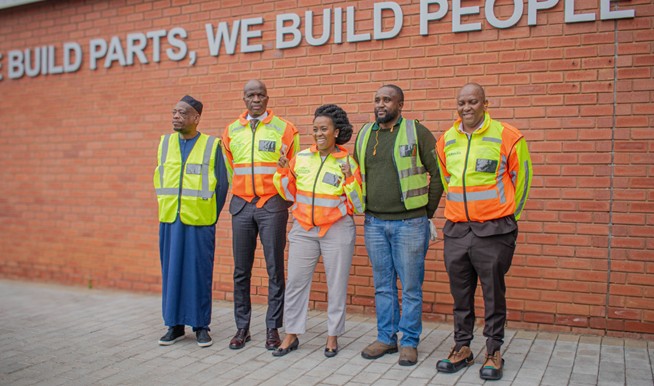
By Mandla Mpangase Gauteng MEC for Economic Development, Agriculture and Rural Development Vuyiswa Ramokgopa visited the Tshwane Automotive Special Economic Zone (TASEZ) on Thursday, 21 May 2026 where she received a comprehensive briefing on the zone’s growth plans and toured one of its key manufacturing facilities supporting the automotive sector. The visit formed part of the Gauteng provincial government’s ongoing efforts to strengthen industrial development, attract investment and create jobs through strategic manufacturing infrastructure projects. Ramokgopa was briefed on the progress and future outlook of the TASEZ project by the organisation’s Executive for Business Development, Msokoli Ntombana. The presentation focused on the economic impact of the special economic zone, ongoing infrastructure development and plans for Phase 2 expansion. Ntombana outlined how the next phase of development is expected to further expand manufacturing capacity within the zone, strengthen supplier networks and unlock additional investment opportunities linked to the automotive industry. The MEC was also taken on a guided tour of the Thai Summit factory, one of the major component manufacturers operating within the special economic zone. The facility supplies automotive metal forming products, interior and exterior finishes, as well as various vehicle components to the nearby Ford manufacturing plant in Silverton. During the tour, Ramokgopa engaged with management and officials on production processes, industrial innovation and the role of automotive component manufacturing in supporting Gauteng’s broader economic growth objectives. The visit highlighted the strategic importance of TASEZ in positioning Gauteng as a leading automotive manufacturing hub on the continent, while also supporting localisation, export growth and employment creation. TASEZ has become a central pillar of South Africa’s automotive value chain, with multiple component manufacturers operating alongside Ford’s production facilities in Tshwane. The special economic zone continues to attract both local and international investors seeking to participate in South Africa’s growing automotive and advanced manufacturing sectors. The Gauteng government has identified industrialisation and infrastructure-led growth as key priorities in addressing unemployment and rebuilding economic momentum in the province.
TASEZ stakes claim as blueprint for inclusive industrial growth

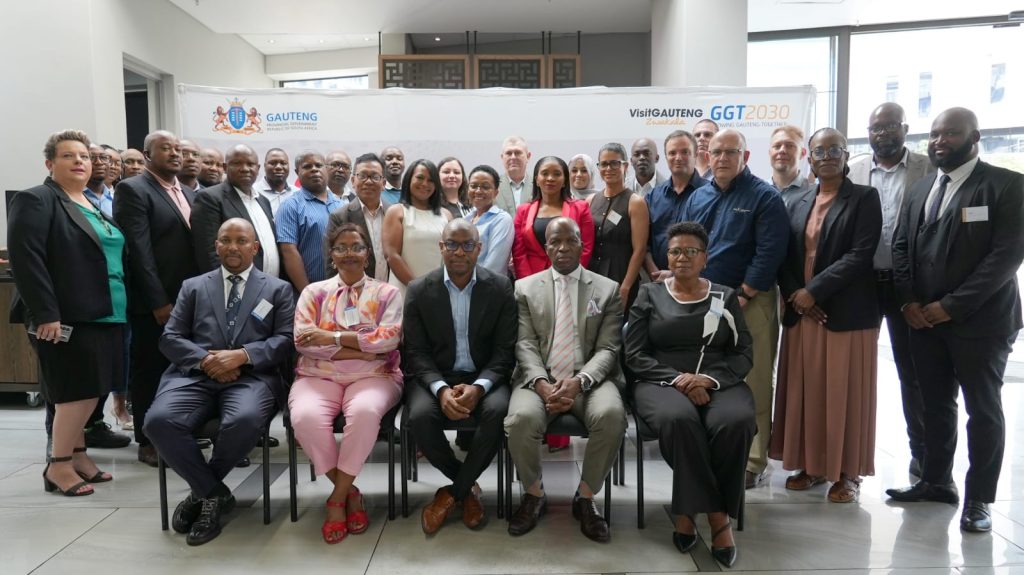
Infrastructure investment, the drive for localisation, and community integration position Tshwane’s automotive hub as a model for economic reform By Mandla Mpangase The Tshwane Automotive Special Economic Zone (TASEZ) is emerging as a leading model for inclusive industrialisation in South Africa, with government and industry leaders positioning the automotive hub as a practical pathway to drive economic reform, investment, and job creation. This message took centre stage at a high-level investor engagement held in Menlyn Maine, Pretoria, where stakeholders outlined how coordinated infrastructure investment, localisation strategies, and community integration are underpinning the zone’s growth. Addressing investors and industry partners, TASEZ board chair Maoto Molefane said the evolution of the zone reflects a deliberate shift towards ensuring that industrial development delivers measurable socio-economic outcomes. “This is not just about industrial expansion – it is about building a model that works for communities, for investors and for the country as a whole,” said Molefane. He added that, despite persistent economic headwinds, targeted interventions through special economic zones offer a credible mechanism to accelerate industrial growth, deepen localisation and support structural transformation. A model for economic reform and inclusion Gauteng’s head of the Department for Economic Development, Motlatjo Moholwa, described TASEZ as an emerging blueprint for how South Africa can better align industrial policy with community development outcomes. “We are not yet where we want to be, but we are getting there. What we are seeing here is a blueprint – one that can be adapted across the country to ensure that development reaches communities meaningfully,” said Moholwa. Infrastructure investment anchors growth The City of Tshwane COO Vuyo Zitumane outlined the City’s coordinated approach to enabling industrial expansion. “Our focus is on creating a reliable, investor-friendly environment through sustained infrastructure investment and strategic planning. These developments are about positioning Tshwane as a globally competitive automotive hub,” said Zitumane. Localisation and industrial deepening TASEZ CEO Dr Bheka Zulu said the zone’s strategy is firmly anchored in localisation, industrial deepening and measurable economic impact. “Our focus is on building an integrated automotive ecosystem that drives localisation, expands supplier participation and delivers sustainable industrial growth. TASEZ is not only attracting investment, but also ensuring that value is retained and expanded within the local economy,” said Zulu. As TASEZ continues to scale, stakeholders say the focus will remain on converting policy ambition into tangible outcomes – from deeper localisation and expanded supplier networks to sustained job creation and community inclusion. With further investment expected in the next phases and infrastructure upgrades gathering pace, the automotive hub is increasingly being viewed not only as a driver of regional growth, but as a test case for how South Africa can translate industrial policy into measurable economic reform.

Logistics roundtable sets stage for 2026 Gauteng Investment Conference

By Mandla Mpangase “The opportunity is not ahead of us – it is here,” the head of the Gauteng Department of Economic Development, Motlatjo Moholwa, told participants at a high-level roundtable on logistics in Pretoria on 19 March 2026. With Gauteng contributing approximately 34% of South Africa’s GDP and more than 45% of its manufacturing output, Moholwa used the platform to reinforce the province’s position as the country’s industrial powerhouse and a prime destination for investment. The roundtable, convened by the Automotive Industry Development Centre (AIDC) and the Tshwane Automotive Special Economic Zone (TASEZ), forms a key part of the build-up to the 2026 Gauteng Investment Conference taking place on 9 April 2026 It brings together senior representatives from government, state-owned entities, logistics operators, manufacturers and investors to align on priorities that will shape Gauteng’s investment pipeline. “This roundtable is more than a conversation,” Moholwa said. “It is a strategic platform feeding into the Gauteng Investment Conference, where we will showcase bankable projects and present Gauteng as an investment-ready destination.” Driving toward an investment-ready province At the heart of discussions is the need to strengthen Gauteng’s logistics ecosystem to support industrial expansion, particularly in the automotive sector, where the province hosts a dense network of component manufacturers and OEM-linked operations from Rosslyn in the west to Silverton in the east, and across the broader Tshwane corridor. Participants are focusing on practical reforms to: These interventions are expected to play a key role in attracting private sector participation and ensuring that infrastructure development aligns with the province’s broader industrial strategy ahead of April’s conference. Localisation and industrial growth A major theme emerging from the roundtable is the importance of component localisation in deepening Gauteng’s manufacturing base. “With its well-developed industrial infrastructure, access to skilled and semi-skilled labour, and strong technical training institutions, Gauteng is not just participating, it is a leading component manufacturing. “This makes the province an ideal destination for investment,” Moholwa said. Moholwa highlighted opportunities in import replacement, the growing automotive aftermarket, and export expansion through the African Continental Free Trade Area (AfCFTA). He also pointed to the rise of green mobility as a new frontier for investment, particularly in electric vehicle components and advanced materials. However, he stressed that unlocking this potential will require deliberate action, including stronger supplier development programmes, improved access to finance, and greater coordination between OEMs and local suppliers. Infrastructure is the foundation Infrastructure remains a central pillar of Gauteng’s investment drive. The roundtable discussions are exploring how enhanced road and rail integration, coupled with targeted infrastructure investment, can reduce inefficiencies and improve the movement of goods across key corridors. With established industrial zones, specialised facilities such as the Automotive Supplier Park, and incentives offered through special economic zones like TASEZ, Gauteng is positioning itself as a globally competitive manufacturing hub. “Manufacturers benefit from market access to the SADC region, an established industrial base that reduces the cost of entry, and dedicated facilities such as the Automotive Supplier Park and Special Economic Zones like TASEZ, which offer world-class infrastructure, incentives, and streamlined regulatory processes. Public-private partnerships and government commitment further strengthen the province’s investment readiness,” Moholwa added. Countdown to 9 April As the province prepares for the conference, engagements like today’s roundtable are helping to refine its investment narrative to one based on infrastructure development, industrial expansion and localisation. “Scaling localisation requires deliberate action,” he said. “We must strengthen supplier development programmes to build technical capability and quality standards, improve coordination across OEMs and suppliers, and invest in skills development, technology adoption, and industrial infrastructure. “Equally important is enhancing access to finance and markets for emerging manufacturers and providing policy certainty that encourages local production.” The head of the province’s Department of Economic Development issued a three-fold challenge to the participants at the roundtable: “We call on industry to invest, expand, and partner locally. We call on government and agencies to enable, support, and accelerate. And we call on all stakeholders to collaborate in building a globally competitive, locally anchored manufacturing ecosystem.” Moholwa’s call to action was unequivocal: collaboration between government, industry and institutions will be essential to translate plans into tangible investment outcomes. With just weeks remaining before the conference, Gauteng is not only making its case to investors, it is also shaping the conditions needed to secure long-term, inclusive economic growth.

From strategy to delivery: Gauteng’s response to the unemployment crisis

Addressing unemployment in Gauteng is about sustained, coordinated implementation that transforms growth into jobs, and jobs into dignity, stability, and hope, writes the MEC for Finance and Economic Development, Lebogang Maile. Unemployment remains one of South Africa’s most persistent and painful challenges. Nationally, the official rate eased to 31.4% in the fourth quarter of 2025 (down from 31.9% in the third quarter), according to the latest Statistics South Africa Quarterly Labour Force Survey. Yet Gauteng, the country’s economic engine, continues to grapple with a higher rate of 33.0%, with approximately 2.56 million residents unemployed, and recorded the largest provincial job losses of 54 000 in the same period. Even as the province shows a year-on-year employment increase of 102 000, these figures underscore that Gauteng is far from immune to the crisis. For years, the province has deployed a mix of supply- and demand-side interventions to tackle unemployment. While research has thoroughly documented its causes, scale, and consequences, the true measure of success is whether government action translates into real, sustained change in people’s lives. In his February 2025 State of the Province Address, Premier Panyaza Lesufi was unequivocal: unemployment ranks among Gauteng’s most urgent priorities. This challenge is intensified in 2026 by fiscal constraints, global economic uncertainty, volatile markets, and shifting geopolitical dynamics that impact investment, industrialisation, and trade. Against this backdrop, the adoption of the Gauteng City Region Economic Growth and Development Plan (2025–2030) in October 2025 marked a decisive shift toward evidence-driven, coordinated action. The plan serves as a strategic anchor for sustaining growth, enhancing competitiveness, and driving inclusive job creation. In the 2025/26 financial year, the Gauteng Department of Economic Development translated this strategy into tangible impact, placing unemployment at the heart of delivery. Interventions deliberately linked medium, small, and micro enterprise (MSME) development, investment mobilisation, tourism growth, and economic infrastructure. More than 2 300 MSMEs received non-financial support, while 2 128 accessed financial assistance worth R603-million through the Township Economic Partnership Fund, resulting in 11 833 jobs created, many in townships and local economies. These are not mere statistics; they represent restored livelihoods, strengthened community services, and more economically active neighbourhoods. Investment promotion added further momentum. The Gauteng Investment Conference secured R312.5-billion in pledges, with R61.2-billion already converted into active projects in manufacturing, logistics, and capital equipment sectors with strong employment multipliers. Tourism has complemented these efforts as a powerful absorber of labour, generating billions in direct spend and creating opportunities for youth, small businesses, and township enterprises. Looking ahead to 2026/27, the focus shifts decisively to scaling up impact. Priority infrastructure projects, action labs, township economic agencies, and MSME value-chain integration will drive labour-absorbing growth, crowd in private investment, and broaden economic participation. The message is clear: addressing unemployment in Gauteng is no longer about isolated interventions, but about sustained, coordinated implementation that transforms growth into jobs, and jobs into dignity, stability, and hope. This article was first published in the My Gauteng newsletter of February 2026.

TASEZ greets new Gauteng MEC, views operations

Gauteng’s newly-appointed member of the provincial executive council (MEC) for economic development and treasury, Lebogang Maile made time to the meet the Tshwane Automotive Special Economic Zone’s (TASEZ) executive team and familiarise himself with the special economic zone’s operations. Close relationships with strategic partners is vital to the SEZ, with the Gauteng government being one of the three government partners in TASEZ. As TASEZ chairperson Lionel October explained: “The establishment of Africa’s first automotive city was a pilot project of new integrated strategic partnerships to be used by SEZs in South Africa.” Central to its development is the three-tier partnership between national government that focuses on the high-level structure, the provincial government that provides funding for the infrastructure within the zone, and the local government that provides infrastructure such as roads and electricity into the zone. This catalysed the financial investment put into the project by the Ford Motor Company of Southern Africa as part of its plans to double the production of its vehicles in Silverton, City of Tshwane, by 40 000 units, to 200 000 units annually. The SEZ completed the first phase of its development in a mere 18 months – and during Covid-19 – using a R24-billion investment in setting up an automotive manufacturing zone that currently has 12 fully operational facilities and employs 3 500 people. MEC Maile, who met the TASEZ team, including CEO Dr Bheka Zulu and CFO Rebecca Hlabatau, on Friday 12 July 2024, is immersing himself in his extensive and economically critical portfolio. The Gauteng Department of Economic Development is tasked with leading, facilitating and managing sustainable job creation and inclusive economic growth and development in the Gauteng city region. And SEZs, as important instruments in advancing the country’s strategic objectives of industrialisation, regional development, the promotion of exports and job creation, have an important role to play – they are key to making South Africa an attractive option for foreign direct investments. “Our special economic zones programme, supported by intensive investment promotion, will be utilised to accelerate the re-industrialisation of the Gauteng city region,” Maile said.

State of the Province notes Gauteng is ready to create new opportunities

If potential investors were listening to Gauteng’s State of the Province speech on Monday evening, 19 February 2024, they would have much to encourage them to look closer at being based in the province. Premier Panyaza Lesufi noted that if Gauteng was a country, it would have the third largest economy after Egypt and Nigeria, having introduced processes to transform, modernise and reindustrialise the economic sectors. The premier described the five major economy corridors that are now ready to grow.  “We took a conscious decision that each corridor must have a powerful economic centre.” For example, one of the key economic sectors in the Tshwane region is that of the automotive industry, where the Tshwane Automotive Special Economic Zone plays a critical role. Moving away from being dependent on mining, the economic development of Gauteng has focused on four key aspects: the financial sector; telecommunications; pharmaceuticals; and ICT. All the banks and insurance companies, as well as the telecommunication giants have their headquarters in Gauteng. “Companies like Google and Huawei chose our province to have their head offices,” the premier noted. The premier went on to highlight the development of the various Gauteng regions and their specific economic focus. As pointed out, the motor vehicle industry is a key driver of the Tshwane economy. Premier Lesufi noted that Phase 1 of TASEZ’s development had been completed. TASEZ “operations are in full swing, with the completion of Phase 1 of its development seeing the production of the first next-generation Ford Ranger and the VW Amarok getting into gear in November 2022.” Lesufi explained that this was the result of a capital investment of R15.8-billion by the Ford Motor Company of South Africa, with the company looking to increase its capacity to produce 200 000 vehicles annually and export vehicles to more than 100 global markets. In addition to the investment from Ford, Ford suppliers invested R5.6-billion into TASEZ, along with an initial government investment of R3.9-billion. With the need to streamline the export of vehicles, the premier announced that “we are developing a new railway line between Tshwane and East London, led by the Minister of Public Enterprises, so that we can ship these cars from the East London port to the world”. “We are indeed excited that these developments are pointing to one direction and one direction only, our economy is back on its feet.”