Tasez

Minister of Trade Industry and Competition

TASEZ positioned as a flagship for South Africa’s next phase of industrialisation at SEZ Conference

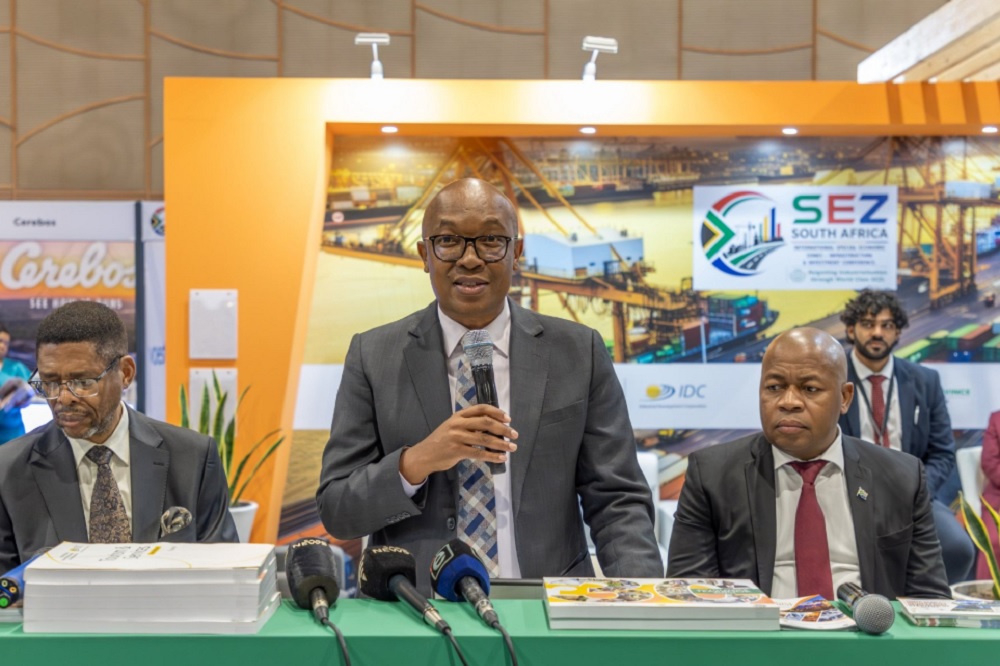
By Mandla Mpangase South Africa’s Special Economic Zones (SEZs) are expected to play an increasingly important role in driving industrialisation, investment and export-led growth, with the Tshwane Automotive Special Economic Zone (TASEZ) well-positioned as one of the country’s leading examples of what a modern, high-performing SEZ can achieve. Opening the exhibition component of the 2nd International Special Economic Zones Infrastructure and Investment Conference in Durban on Thursday, Minister of Trade, Industry and Competition, Parks Tau, said the country’s network of SEZs has become a significant contributor to industrial development and will form a central pillar of the government’s long-term economic strategy. Addressing more than 1 000 delegates from government, industry, development finance institutions, and international partners, Tau highlighted the scale of South Africa’s SEZ programme, noting that 13 designated SEZs across eight provinces now host 224 companies, which have collectively invested R31.7-billion and created more than 28 000 jobs. The Department of Trade, Industry and Competition (the dtic) has invested approximately R12-billion in bulk and top-structure infrastructure to support the zones. “The exhibition floor shows policy in practice,” Tau said, encouraging delegates to engage directly with investors, incentive packages, and development opportunities represented by the country’s SEZs. Among the country’s standout performers is TASEZ, which has rapidly established itself as one of South Africa’s flagship industrial zones. Situated adjacent to Ford Motor Company’s Silverton Assembly Plant in the City of Tshwane, the automotive-focused SEZ has become a benchmark for integrated industrial development, attracting major investment, strengthening local supplier networks, and supporting South Africa’s automotive manufacturing ambitions. The minister cited the expansion of another successful automotive-focused zone, the uMlathuze TradePort Special Economic Zone, as evidence that targeted infrastructure investment can unlock substantial private-sector participation. He noted that the expansion had attracted R16-billion in private investment, alongside billions more from public investors, and created more than 3 300 direct jobs. For TASEZ, these outcomes reinforce the value of the automotive SEZ model. The zone has already become a critical component of South Africa’s automotive value chain by enabling supplier localisation, supporting component manufacturers, and strengthening export competitiveness around one of the country’s largest vehicle assembly plants. Tau also announced that the government will use the conference to table an independent World Bank review of South Africa’s SEZ programme. The findings will inform a revised implementation model aimed at encouraging greater private-sector participation, strengthening financial and non-financial incentives, and introducing mechanisms to improve the performance of underperforming zones. Responding to questions from the media, Tau confirmed that the government had accepted many of the World Bank’s recommendations and was aligning them with its broader industrial strategy. “We see SEZs as a critical part of the industrialisation pathway for South Africa,” he said. Rather than setting arbitrary investment targets, Tau said the government wants SEZs to become catalysts for broader economic development, generating opportunities throughout supply chains and creating value beyond the zones’ boundaries. “It is about the supply chains, the suppliers that come into the industries in the SEZs. It is about value chains that are created,” Tau said. That vision closely aligns with TASEZ’s development model. The Tshwane-based SEZ has consistently focused on expanding local procurement, developing small and medium-sized enterprises, investing in workforce skills, and creating an automotive ecosystem capable of competing internationally. As South Africa prepares for the transition towards new energy vehicles and deeper participation in the African Continental Free Trade Area (AfCFTA), TASEZ is increasingly positioned to support regional manufacturing and export growth. Throughout the two-day conference, delegates are expected to discuss strengthening SEZ infrastructure, financing industrial development, expanding regional value chains, and unlocking export opportunities through the AfCFTA. The programme also includes export masterclasses, investor discussions, the inaugural SEZ Achievement Awards, and the presentation of new investment commitments and partnership agreements. For TASEZ, the conference represents more than an opportunity to showcase its achievements. It offers a platform to demonstrate how a strategically planned automotive SEZ can accelerate industrialisation, attract investment, and build resilient manufacturing value chains, precisely the role government envisages for South Africa’s next generation of economic development.

World Bank study backs SA’s Special Economic Zone model as TASEZ emerges as flagship of industrial growth

By Mandla Mpangase South Africa’s Special Economic Zone (SEZ) programme has received a significant vote of confidence from the World Bank, with a new study concluding that the country possesses the infrastructure, legal framework and institutional capacity required to build one of the world’s leading SEZ programmes. The findings have been welcomed by the Minister of Trade, Industry and Competition, Parks Tau, who said the report affirms the government’s long-term industrialisation strategy and provides a roadmap for strengthening the country’s network of Special Economic Zones. The World Bank study found that South Africa’s SEZ programme has a solid policy and governance foundation but identified opportunities to improve coordination, increase investment attraction, deepen supplier development and strengthen monitoring and evaluation systems. It also recommended greater collaboration between national, provincial and municipal governments to maximise the economic impact of the zones. Speaking after receiving the report, Tau said the government was encouraged by the findings, noting that South Africa had laid the foundations for a globally competitive SEZ ecosystem. “The study has found that South Africa has the infrastructure, legal framework and institutional capacity to build a leading Special Economic Zone programme,” Tau said, adding that the recommendations would assist the government in refining policy and improving implementation. The minister described the country’s SEZ programme as one of the government’s most important industrial policy tools for attracting investment, expanding manufacturing capacity, creating employment and increasing exports. He said the World Bank’s recommendations align with the government’s broader objective of accelerating industrialisation and building regional value chains. TASEZ illustrates the model in practice Among South Africa’s SEZs, the Tshwane Automotive Special Economic Zone (TASEZ) has become one of the clearest examples of what the World Bank’s findings seek to encourage. Established adjacent to Ford South Africa’s Silverton Assembly Plant in Pretoria, TASEZ has evolved into one of the country’s largest automotive manufacturing hubs and has become central to South Africa’s automotive export strategy. The zone has already demonstrated the economic impact that well-planned industrial infrastructure can deliver. Phase One of TASEZ contributed approximately 1% to South Africa’s GDP during its construction phase, while creating more than 6 000 construction jobs. Since becoming operational, the zone has generated more than 3 400 permanent direct jobs, with thousands more supported across supplier industries and logistics value chains. The development has also channelled more than R1.7-billion in procurement opportunities to South African small businesses while helping local manufacturers integrate into global automotive supply chains. TASEZ is home to numerous component manufacturers supplying Ford’s expanded production programme and is expected to play an even larger role as South Africa transitions towards new energy vehicles and higher levels of local component manufacturing under the South African Automotive Masterplan 2035. Its dedicated Training Academy, developed in partnership with technical colleges and universities, is also addressing one of the challenges identified in the World Bank study—building the skilled workforce required to support advanced manufacturing and industrial growth. Industrial policy delivering measurable results The World Bank’s findings arrive as South Africa’s SEZ programme continues to expand. According to the Department of Trade, Industry and Competition, the country’s network of Special Economic Zones has attracted hundreds of operational investments worth more than R31-billion while supporting tens of thousands of jobs across manufacturing, logistics, agro-processing and technology industries. For South Africa, the report reinforces the importance of maintaining industrial infrastructure capable of competing internationally for investment while supporting domestic manufacturing capabilities. For TASEZ, the findings provide further evidence that the zone represents more than a successful automotive project – it has become a practical demonstration of how modern Special Economic Zones can drive industrialisation, attract global manufacturers, strengthen local supply chains and contribute meaningfully to national economic growth. As the government considers the World Bank’s recommendations, TASEZ is likely to remain one of the benchmark projects that inform the next phase of South Africa’s industrial development strategy.

SA’s automotive sector can model African industrial resilience, says Minister

By Mandla Mpangase The annual Naacam Show takes place at a defining moment for the South African automotive sector, which is facing intersecting challenges that demand collaboration. With these words, Minister of Trade, Industry and Competition, Parks Tau, began his assessment of the automotive manufacturing sector in a keynote address to the Naacam audience in Gqeberha on 13 August 2025. This year’s show brings together automotive component manufacturers, public and private sector stakeholders, and service providers to foster collaboration, with the aim of galvanising the industry around the goals outlined in the South African Automotive Master Plan 2035. The automotive manufacturing sector is the cornerstone of South Africa’s manufacturing economy, contributing 5.2% to the country’s gross domestic product and 22.6% of the country’s industrial output. Despite these significant numbers, the industry faces several interconnected challenges, the minister noted. “Yet within these challenges lie transformative opportunities to redefine and leverage our global competitiveness.” The minister went on to urge all stakeholders to unify their actions across three pillars: on localisation, innovation, and inclusive transformation. Urgent challenges Although the industry employs 115 000 South Africans directly, with over 80 000 in component manufacturing alone, it faces the stark reality that domestic sales of locally produced vehicles plummeted to 515 850 units in 2024, far below the South African Automotive Master Plan 2035 (SAAM) target of 784 509. In addition, Minister Tau noted: “Importantly, 64% of vehicles sold here are imports, eroding local production scales.” Local content remains stagnant at 39%, well short of the 60% target, he said, adding this was at a time when United States tariffs are impacting significantly on the country’s R28.7-billion automotive exports. These pressures have triggered 12 company closures and over 4 000 job losses in two years. The erosion of the industrial value of the sector is exemplified by recent suspensions at Mercedes-Benz and other original equipment manufacturers. The path forward: Strategic imperatives “Localisation is not merely policy compliance, it is existential,” Minister Tau said. “A 5% increase in local content would unlock R30-billion in new procurement, dwarfing the R4.4-billion US export market.” However, to achieve this, “we must act collectively to address some of the bottlenecks to growth”. With this in mind, the Department of Trade, Industry and Competition is reviewing the Automotive Production Development Programme (ADPD) as a comprehensive way of responding to the challenges the sector is facing, but also to ensure regular growth in the sector meets the goals of the SAAM. Some of these reforms include the incentive structure and shifting duty credits to reward manufacturing instead of assembly credits. “Our critical minerals and metals strategy will prioritise beneficiating platinum group metals, copper, and manganese for high-value new energy vehicle components like fuel cells and batteries.” Digitisation, decarbonisation, and diversification – global competitiveness hinges on embracing disruption “At the dtic, we have been engaged on a path of developing a new industrial policy which focuses on decarbonisation, digitisation, and diversification. “As Naacam notes, carbon has become ‘part of the cost of doing business and increasingly, part of the value too’.” As the globe shifts to new energy vehicles and competition from China, it is crucial that South Africa scale new products such as e-axles and thermal systems, and markets, particularly under the African Continental Free Trade Agreement. Referring to development around new energy vehicles, the minister reported that amendments of the automotive production and development programme phase 2 legislative framework for the inclusion of electric vehicles and associated components have been completed. In addition, the relevant amendments to the existing Automotive Investment Scheme (AIS) guidelines are being finalised to align with APDP2 amendments and the energy vehicle legislative framework. “The Taxation Laws Amendment Act, gazetted on 24 December 2024, introduces a 150% capital allowance for qualifying investments in energy and hydrogen vehicle production. It covers assets such as buildings, plant, and equipment brought into use between 1 March 2026 and 1 March 2036.” A critical minerals strategy and battery value chain master plan are also being developed. A comprehensive skills gap analysis was completed under the energy vehicles skills workstream. Curricula and certification programmes are now being developed with Tshwane University of Technology, Cape Peninsula University of Technology, Durban University of Technology, and Unisa. A pilot project involving 100 students is expected to be rolled out in Q1 of 2026 once the academic materials are finalised. Transformation: Scale, skills, and equity “We have walked a long journey with the automotive sector on transformation. It therefore goes without saying that inclusion drives growth.” SAAM’s target of 130 new black-owned manufacturers is advancing, with 26 black-owned small, medium, and micro enterprises (SMMEs) exhibiting at the 2025 Naacam Show. However, the pace needs to be picked up. “To this end, we are hopeful that the industry will support the endeavour of the Transformation Fund that we are pursuing at the dtic with the view to enhancing overall transformation through Enterprise and Supplier Development (ESD) funds.” The minister added: “We need to accelerate skills development to ensure that we prepare our labour force for the dramatic changes that artificial intelligence will bring into the sector.” The government is also working hard to eliminate compliance burdens and reduce red tape, which inhibits investment into the country’s automotive sector. “Our policy response is accelerating, and we plan on introducing an Omnibus (General Laws Amendment) Bill, which looks to fast-track high-impact investments and projects within 90 days.” In addition, the government is looking at the impact of imports into the country and the impact they are having on local production. “We want to grow the sector, so our first option must not be to wield a stick but rather offer a carrot to these companies to attract more investment into the country, thereby increasing the value-add of particularly our component manufacturers.” Minister Tau also encouraged the industry to accelerate collaboration. “OEMs need to continue to honour local procurement targets and mentor and invest in SMMEs.” Tier 1 Suppliers must drive equity partnerships and Tier 2/3 development.  “Naacam’s

‘Vision with action can change the world’

It is fitting, in a month where the world remembers former president Nelson Mandela, that the Minister of Trade, Industry and Competition, Parks Tau, opened his budget vote address with a quote from Madiba: “Action without vision is only passing time. Vision without action is merely day-dreaming. But vision with action can change the world.” These words reverberate within the Tshwane Automotive Special Economic Zone’s core, sitting at the heart of the special economic zone’s (SEZ) ethos. Speaking in Parliament on 16 July 2024, Minister Tau noted that the words also echo the country’s aspirations to build a dynamic, industrial and globally competitive South Africa that is transformed, inclusive and equitable. This is “anchored on industrialisation, transformation, job creation and building a capable and developmental state”. The minister emphasised the importance of manufacturing-led growth. “Manufacturing creates jobs in upstream and downstream sectors,” Tau explained, adding that these jobs were typically permanent and paid decent wages, with workers able to access to skills development and career path opportunities. Instruments such as the South African Automotive Masterplan are crucial; with their focus on supporting localisation, increasing investment, and creating and retaining jobs. “We have industrial capabilities as a country,” he added. The Department of Trade, Industry and Competition (the dtic) would, in identified industries, work closely with relevant state-owned entities and industry to support local manufacturing of key products and to create jobs. Growing the export markets Of importance to TASEZ, is the fact that the minister identified the need to expand and improve exports. South Africa’s automotive sector already exports the bulk of the vehicles manufactured here. In May 2024, naamsa noted that “record high vehicle exports ensured that the automotive industry outperformed the rest of the manufacturing sector” last year.  “The export value of vehicles and automotive components increased by R43.5-billion, or 19,1%, from the R227.3-billion in 2022 to a record R270.8-billion in 2023, comprising 14,7% of total South African exports.” Naamsa noted the export performance included “record exports to all major regions, including the European Union, Africa, the Southern African Development Community, and North America”. Minister Tau pointed out that South Africa’s location at the tip of “the second-fastest growing region in the world”. To reduce a dependence on a small domestic market, “the dtic will implement new export measures, coupled with expanding the current measures and improving their effectiveness” and will work towards expanding its export footprint through BRICS+ (Brazil, Russia, India, China,Iran, Egypt, Ethiopia and the United Arab Emirates), the African Continental Free Trade Area (AfCFTA), the African Growth and Opportunity Act (AGOA) partnership with the United States, and the Economic Partnership Agreement with the EU. Turning to SEZs, the minister reminded parliament that the reason the country had set up SEZs was “to expand economic activity to under-developed parts of South Africa. There are many benefits to this including, creating jobs closer to where our people live and thereby reducing the cost burden poor people carry.” There was no logical or economic rationale for forcing people to live far from their families in increasingly crowded living spaces. “Spatial equity is therefore, a non-negotiable.” Referring to the 11 SEZs established so far, the minister noted: “These SEZs have generated investments amounting to R19.6-billion. In addition, these SEZs provide an on-going revenue stream to national government through ongoing corporate, PAYE and VAT payments. These contributions to tax revenue across over 100 firms located in SEZs far outweigh the initial establishment costs.” Like TASEZ, which is located between Eerstrust, Mamelod and Nelmapius, South Africa’s industrial parks are often located in or adjacent to townships. And these industrial parks provide jobs and incomes to people from the neighbouring townships. “We, therefore, encourage private-sector participation in the industrial parks, in order to assist to improve operations and facilities, and encourage private sector investment.”

Minister of Trade, Industry and Competition delivers key policy assessment at TASEZ

The Tshwane Automotive Special Economic Zone (TASEZ) was chosen to host the delivery of a critical national policy assessment by the Minister of Trade, Industry and Competition, Ebrahim Patel on Tuesday, 7 March 2024. The minister delivered the Industrial Policy and Strategic Review – Transforming Vision into Action: Charting South Africa’s Industrial Future. “TASEZ was chosen as the venue for this occasion as it demonstrates how changes in the approach to implementing industrial policy has given different, significantly positive, results,” the minister said at the beginning of his review. This review – and plan for the future – takes place at a critical time, as the country celebrates 30 years of democracy, and a few weeks before South Africa’s seventh administration takes office. South Africa’s economic development has, over the past three decades, leaned into the national industrial policy to drive growth and transformation in an effort to eliminate poverty and reduce inequality, with industrialisation identified as a key to unlocking the economy, building investor confidence and creating jobs across multiple sectors. Economic impact of investment into South Africa Minister Patel noted that foreign direct investment (FDI) into South Africa rose to R1.1-trillion between 2019 to 2023, a significant increase from the previous five-year period which garnered R312-billion. Investments over the past five years were 3½ times larger. This was despite the turbulent headwinds the country had to endure over the last five years:   The FDI packages ameliorated much of the negative impact of the six shocks the country endured. “The resilience of the South African economy has surprised many commentators,” Minister Patel noted. He referred to the 2023 EY Attractiveness Africa Report which highlighted that South Africa attracted the most FDI projects in Africa – 157, making up 23% of the continent’s total. According to the report, South Africa’s FDI was valued at US$26.8-billion and created about 15 000 jobs, the highest number in southern Africa. The minister also noted that of the R1.5-trillion pledged at the five cycles of the South Africa Investment Conference, a third of the projects had already been completed, with others under construction. “What we did in these five years is to try and get investment to flow notwithstanding the headwinds – and we have already seen some real impact.” Minister Patel reviewed the work done by the Department of Trade, Industry and Competition over the past five years, discussing a number of success stories in a variety of sectors; examining the challenges that had arisen; and charting a way forward to speed up the various economic programmes. Several key elements were vital to the success of the reimagined industrial strategy, including: This was supported by a number of programmes including the development of sectoral masterplans, which saw a move towards a multi-stakeholder approach, “in which government, the private sector and labour collectively developed and implemented plans”. The masterplan process modelled a new approach, where the state works in a flexible way to address the diverse concerns facing individual companies and other stakeholders. A catalytic project on SEZ development TASEZ is shining example of this approach; showcasing a more rapid and coordinated development process, particularly in reference to setting up special economic zones. One of the key drivers of TASEZ’s business approach is the South African Automotive Masterplan, with its focus on transforming the sector, promoting localization and creating jobs. TASEZ is a critical case study in the speedy implementation of the special economic zones in South Africa. It took four short years for TASEZ to develop from a dusty veld to a modern industrial hub, with an automotive original equipment manufacturer (OEM) – the Ford Motor Company of Southern Africa – supported by other component manufacturers. “Investment was unlocked through an anchor firm, Ford, while the dtic, the Gauteng government, and the City of Tshwane pooled their resources and capabilities,” the strategy review notes. “This solid base allowed for the rapid unlocking of 11 investments by component firms and help establish the SEZ by developing a network of interconnected producers around the zone.” The review noted: “All of this was underpinned by strong alignment with pre-existing policy including state support through the Automotive Production and Development Programme and investment funding through projects like the Automotive Investment Scheme.” In its short existence, TASEZ has seen an investment of R16-billion from Ford; R5.6-billion from the various component manufacturers; and R3.92-billion from government – in its first phase of development. In addition, the first phase of TASEZ has seen the creation of 3 244 permanent jobs in the automotive manufacturing sector and a further 5 071 jobs in construction. Procurement spend in the small, medium and micro enterprise sector has totalled R1.7-billion so far. “This mode – of moving quicky, working through partnerships, coordinating across the state and aligning with broader support programmes – offers a sturdy pathway for the revitilisation of industrial policy,” the review report noted. TASEZ is now preparing to begin the second phase of development, with several investors already preparing to join the hub. “As a special economic zone that plays an integral role in transforming the automotive manufacturing sector,” TASEZ CEO Dr Bheka Zulu, adding that the Africa’s first automotive city could attest to the importance of a strong industrial policy in encouraging global investors.