Tasez

Premier Panyaza Lesufi

Premier puts jobs at centre of Gauteng’s growth drive in his State of the Province Address

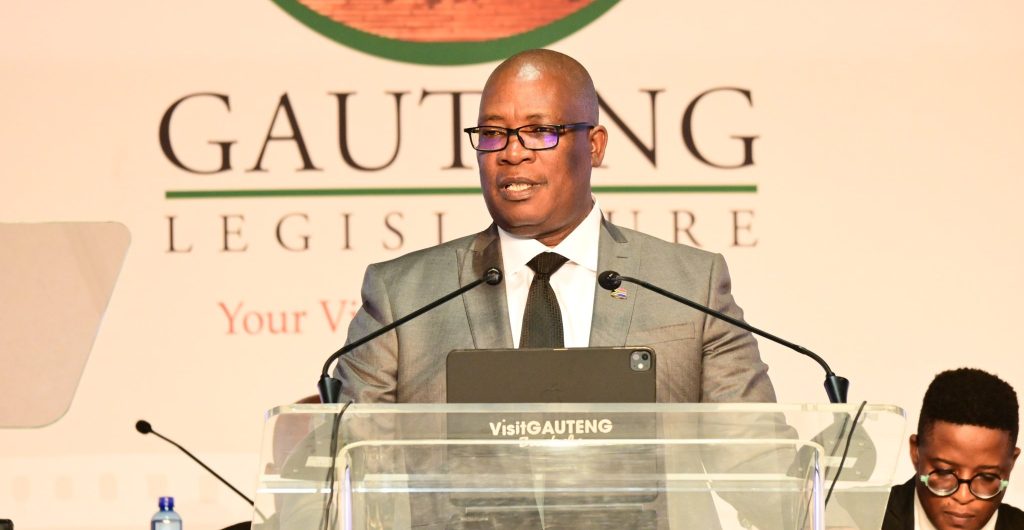
By Mandla Mpangase Gauteng Premier Panyaza Lesufi has placed job creation at the heart of the province’s economic agenda, announcing a pipeline of investments and infrastructure programmes expected to support hundreds of thousands of employment opportunities across sectors. Delivering the 2026 State of the Province Address at the Nasrec Expo Centre, Lesufi adopted a more urgent and delivery-focused tone, stressing that Gauteng’s success will ultimately be measured by how effectively growth translates into jobs, particularly for young people. “The economic heartland of South Africa must never stop beating,” he said, linking infrastructure reliability, investor confidence and industrial expansion directly to employment creation. Investment into employment The Premier revealed that Gauteng has secured R27-billion in foreign direct investment over the past year, while R73-billion of projects announced at the inaugural Gauteng Investment Conference have already moved into implementation. These projects alone are expected to create about 114 000 jobs across manufacturing, logistics, energy and services. In total, confirmed investments across sectors could support roughly 250 000 employment opportunities, Lesufi said, describing the pipeline as one of the largest provincial job-creation drives in recent years. Major projects with significant employment potential include: Lesufi emphasised that these investments are not isolated announcements but part of a deliberate reindustrialisation strategy aimed at expanding Gauteng’s productive economy. TASEZ and industrial zones as job engines Special Economic Zones remain central to this strategy, with the Tshwane Automotive Special Economic Zone (TASEZ) – the venue for the 2025 State of the Province Address – highlighted as a flagship project for industrial job creation. The Premier confirmed that TASEZ has secured R1.61-billion in new investment and remains on track to deliver 4 000 construction jobs during its Phase 2 expansion. The automotive hub is also expected to generate long-term manufacturing employment through localisation and supplier development, reinforcing Gauteng’s position in global automotive value chains. Other SEZ initiatives, including the proposed Vaal SEZ and Tambo Springs logistics hub,  are expected to further expand industrial employment and support small business participation in supply chains. Infrastructure unlocking employment Lesufi repeatedly linked infrastructure investment to job creation, arguing that reliable services are essential for both attracting investors and enabling economic participation. Following January’s water crisis, Gauteng has launched a R760-million upgrade programme in Johannesburg, alongside new reservoirs and storage projects across municipalities. Beyond improving services, these projects create construction employment and support industrial activity. The province will also establish a Bulk Infrastructure Agency to coordinate delivery across municipalities, a move intended to accelerate development projects and unlock additional private-sector investment. Transport infrastructure is another employment lever. Gauteng has already paid more than R9-billion toward e-toll debt to enable road maintenance and upgrades, while expansion plans for the Gautrain network and a proposed Gauteng-Limpopo high-speed rail link could generate thousands of construction and operational jobs. “These investments are about economic mobility – connecting people to opportunities and opportunities to markets,” Lesufi said. Community-level job programmes Beyond large infrastructure projects, the province is expanding direct employment programmes targeting unemployed youth. The Nasi iSpani initiative, supported by a R1.5-billion national Labour Activation Programme investment, is expected to unlock more than 30 000 training and workplace opportunities. Gauteng will also employ 2 500 young people to repair public infrastructure, including plumbing, paving and maintenance in communities. Refurbishment of 18 government buildings in Johannesburg, valued at R8-billion, will create more than 2 500 construction jobs over the next 30 months. Tourism, logistics and new sectors Tourism recovery is also contributing to employment growth. International arrivals increased to 3.8-million, generating R41-billion in revenue and supporting jobs across hospitality, transport and entertainment. Meanwhile, sector-focused “action labs” covering industries such as manufacturing, green economy and logistics will be relaunched in March to accelerate investment into high-growth sectors and convert plans into bankable projects that create jobs. Jobs as the measure of success Lesufi acknowledged ongoing risks, including infrastructure crime, illegal mining and municipal instability, but said declining crime statistics and coordinated law-enforcement interventions are improving the investment climate. He stressed that economic growth must translate into tangible improvements in people’s lives through employment, housing, healthcare and education. The Premier’s message was clear: Gauteng’s development strategy is now firmly centred on job creation, driven by infrastructure expansion, industrial zones such as TASEZ and partnerships with the private sector. “Our responsibility,” Lesufi said, “is to ensure that investment becomes jobs – and jobs become dignity.”
Milestones, meetings, momentum and meaningful growth: 2025, the year that was

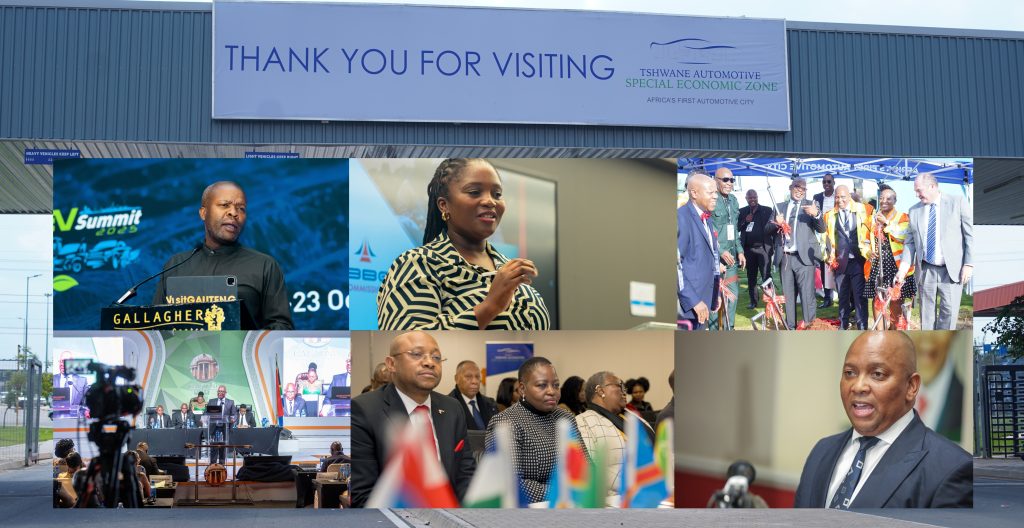
As 2025 draws to a close, the Tshwane Automotive Special Economic Zone looks back on a year that truly defined Africa’s first automotive city. It was a year of bold steps forward, strengthened partnerships, international visibility and a deepening role in South Africa’s industrialisation agenda, writes TASEZ CEO Dr Bheka Zulu. From breaking ground on new infrastructure to hosting high-level national events, TASEZ continued to prove why it is the country’s leading special economic zone (SEZ). Breaking new ground: Phase 2 takes off One of the standout highlights of the year was the sod-turning ceremony for Phase 2 of the TASEZ development, involving the Gauteng Premier, Panyaza Lesufi, TASEZ board members and anchor tenant Ford. The event signalled the start of an ambitious expansion designed to support South Africa’s next wave of automotive and component manufacturing investment. Phase 2 introduces new industrial platforms, expanded capacity for suppliers, and opportunities for medium, small, and micro enterprise (MSME) participation. It positions TASEZ to meet growing global demand, particularly in new energy vehicles (NEVs), and strengthens its integration into Tshwane’s industrial and logistics corridors. This moment marked a powerful step into the future and demonstrated the commitment from government, industry and local partners to drive sustainable, job-rich economic growth. An historic first: Hosting the State of the Province Address In February, TASEZ made history by becoming the first government institution to host a State of the Province Address (SOPA). This landmark moment brought South Africa’s leadership, the diplomatic community, the automotive sector and media into the heart of the SEZ. Hosting the SOPA showed that TASEZ is not only a centre of production, but a national platform for dialogue, policy direction and public accountability. The event showcased the SEZ’s impressive infrastructure, operational readiness and central role in the province’s economic plans. For many South Africans watching or attending, TASEZ became synonymous with Gauteng’s vision of a modern, industrial, investment-ready economy. Expanding global reach: TASEZ heads to China and hosts SADC International engagement was a defining feature of 2025. This was reinforced by a successful business mission to China, where TASEZ leadership met with major automotive manufacturers, potential investors and technology partners. The visit focused on: With China leading global NEV production and innovation, this mission placed TASEZ firmly on the radar of companies looking for a strategic African manufacturing base. In addition, in yet another first for a South African SEZ, TASEZ welcomed the heads of mission from the Southern African Development Community (SADC) to share information and talk about unlocking opportunities for economic growth in the region. The TASEZ team, headed by CEO Dr Bheka Zulu, rolled out the red carpet for the distinguished SADC delegation – ambassadors, high commissioners, and chargés d’affaires – along with representatives from the Department of International Relations and Cooperation and the Department of Trade, Industry and Competition, Brand South Africa, and Trade and Investment KwaZulu-Natal. This gathering was not just a simple meeting – it was a deliberate step toward weaving stronger ties between neighbours, aligning with the goals of SADC, the Southern Africa Customs Union, and the African Continental Free Trade Area. Strengthening policy alignment: Visits from TIPS and Parliament Two significant engagements this year reinforced TASEZ’s role as a strategic player in South Africa’s industrial development landscape: a visit by the parliamentary portfolio committee for trade, industry and competition, followed by a visit from TIPS (Trade and Industrial Policy Strategies). The parliamentary visit highlighted TASEZ’s importance in national oversight and industrial planning. Members engaged with management, toured facilities and assessed the SEZ’s socio-economic impact. The research institution visited the SEZ to assess its contribution to localisation, job creation and competitiveness. Their findings helped strengthen policy alignment and opened discussions on future collaboration. Both visits affirmed that TASEZ is not just delivering – it is taking the lead. Governance excellence: Five clean audits in a row In a year filled with milestones, one achievement stands out for its consistency and integrity: TASEZ received its fifth consecutive clean audit. This accomplishment highlights: At a time when transparent and ethical public administration is more important than ever, TASEZ continues to demonstrate what professional, compliant, high-performing institutions can achieve. A strong industry presence: Naacam and naamsa conferences TASEZ strengthened its industry footprint this year by participating in two major automotive forums: the Naacam Show held in Gqeberha in August 2025 – engaging component manufacturers and showcasing localisation opportunities; and naamsa’s Auto Week that also took place in Gqeberha, but in October 2025 – networking with OEMs and industry leaders while promoting TASEZ’s investment-ready platforms These conferences reinforced TASEZ’s growing reputation as a critical hub for automotive manufacturing, innovation and supplier development. Driving the future: Co-hosting the first NEV Summit TASEZ took centre stage in South Africa’s transition to electric mobility by co-hosting the inaugural New Energy Vehicles Summit held at the Gallagher Convention Centre in late October 2025. The summit brought together policymakers, OEMs, suppliers, researchers and energy experts to map out the country’s role in the global NEV shift. TASEZ’s involvement sent a strong message: the SEZ is ready to become South Africa’s home of NEV manufacturing. The summit provided a platform to discuss infrastructure needs, workforce readiness, supply-chain adjustment and opportunities for new investment. Looking ahead to 2026 If 2025 was a year of bold advances, 2026 promises to be a year of consolidation and delivery. With major construction underway, new investment discussions progressing, and a clear national mandate to support industrial growth, TASEZ is set to play an even bigger role in shaping the country’s economic future. TASEZ enters the new year with momentum, credibility and a clear vision to be Africa’s premier automotive manufacturing destination.

TASEZ – it’s time for the lions to tell their story

By Mandla Mpangase By hosting the opening of the Gauteng Provincial Legislature and the State of the Province Address at the Tshwane Special Automotive Zone on 24 February 2025, the provincial government – one of TASEZ’s shareholders – acknowledged how far the special economic zone has come in opening up the economy. Premier Panyaza Lesufi took the opportunity to talk about the impact TASEZ has had in its short existence as he began his speech. “Five years ago, where we are now, there was nothing but empty ground. Today, as we hold this State of the Province Address in this facility, we can show how we are moving forward, helping drive South Africa – the future of manufacturing starts here.” TASEZ – Africa’s first automotive city – sees the production of more than 700 cars every day, 200 000 annually thanks to the component manufacturers based in the special economic zone, next to Ford’s Silverton plant. The premier referenced the proverb “until the lions have their historians, tales of the hunt shall always glorify the hunter” pointing out that today, the lions are telling their story. “We are ready to tell our story,” he said, adding that the venue of the State of the Province Address stood as testament to the things that are being done in South Africa. “We have 8 000 people who were unemployed three years ago, that have jobs today.” Gauteng was proud to be the home of Africa’s first automotive city. Lesufi pointed out that TASEZ grew out of a multi-tiered partnership between the Gauteng Province, the national Department of Trade, Industry and Competition, and the City of Tshwane – and of course, the drive from the investment made by the Ford Motor Company of Southern Africa in expanding its plant. Phase 1 of TASEZ saw a total investment of R26-billion, with more than 8 000 jobs created in construction and permanently. “This innovation has also brought opportunities for 229 small businesses to work within the zone. They benefitted from R1.7-billion set aside for procurement packages from small, medium and micro enterprises (SMMEs).” Attention was paid to women, youth and people with disabilities in particular. “This special economic zone is a demonstration of what can be done by other special economic zones to create opportunities.” Premier Lesufi told the legislature that earlier in the day he had attended a sod-turning ceremony to mark the start of TASEZ’s Phase 2 development. Phase 2, the premier noted, will expand the SEZ and attract an investment of R6.1-billion from private sector investment, and R3.9-billion from government partnerships. This phase will see the creation of 6 150 jobs, and, like Phase 1, SMME procurement spend has been ringfenced to the amount of R1.1-billion. “We don’t want to simply build cars, we want to transfer these skills to our young people,” Lesufi said. “We are proud that Phase 2 is going to include an academy to train the young people for the future.” Reflecting on the fact that TASEZ was chosen to host the 2025 State of the Province Address, CEO Dr Bheka Zulu said: “History has been rewritten here, not with a pen, but with the presence of the people.” TASEZ is the first SEZ to host such a significant event. “Scores of people from all walks of life came to be part of this event,” Dr Zulu added. “For us, that is a significant indication that we are an organisation of choice.” The lions have told their story.