Tasez

training

Parliamentary committee hears how TASEZ is strengthening South Africa’s industrial future

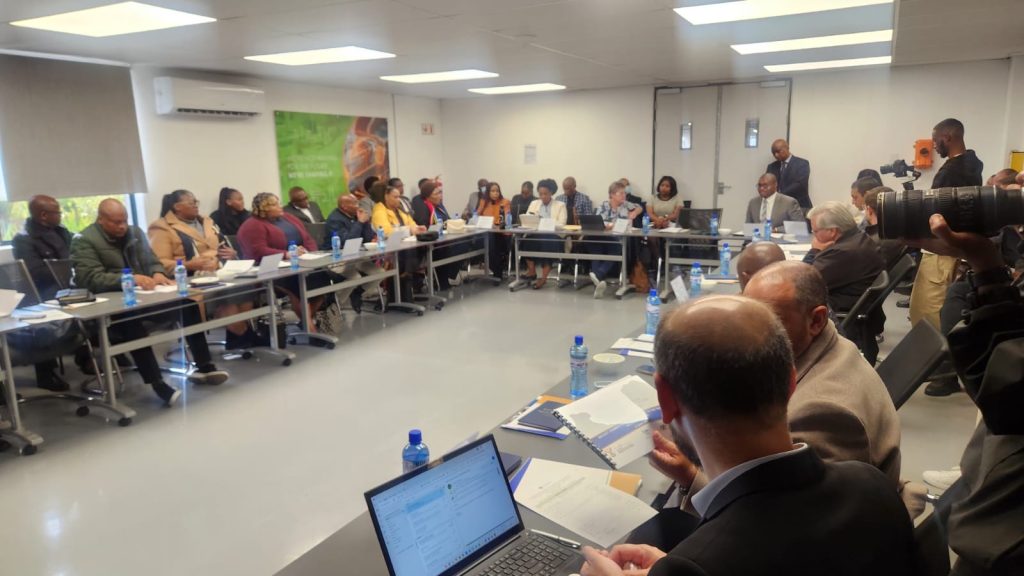
By Mandla Mpangase The Parliamentary Select Committee on Economic Development and Trade has heard how the Tshwane Automotive Special Economic Zone (TASEZ) is helping to drive industrialisation, attract investment and create jobs, while also serving as a model for the future development of Special Economic Zones (SEZs) across South Africa. The committee conducted an oversight visit to TASEZ on Thursday, 4 June 2026, to assess the impact of government investments aimed at stimulating economic growth, manufacturing competitiveness and employment creation. Addressing the committee, Gauteng MEC for Economic Development Vuyiswa Ramokgopa described TASEZ as one of the most significant industrial development projects undertaken in democratic South Africa. “TASEZ is not simply another industrial park. It is one of the most important industrial development projects undertaken in democratic South Africa and a practical demonstration of how industrial policy can be translated into real economic opportunity,” she said. Ramokgopa said the success of the zone demonstrates the power of cooperative governance, with national, provincial and local government working together to create an industrial ecosystem capable of attracting investment, supporting manufacturing and creating jobs. Ramokgopa noted that the Tshwane region produces approximately 40% of the country’s passenger vehicles and has become the anchor of what is increasingly recognised as Africa’s first automotive city. The automotive sector remains one of South Africa’s most strategic industries, contributing approximately 5.2% to national GDP and generating exports worth R268.8-billion in 2024 to 148 global markets. Since its inception, TASEZ has attracted approximately R5.9-billion in private-sector investment, contributed an estimated R2- billion to the economy, created 5 500 construction jobs and more than 3 400 permanent jobs, while supporting around 10 000 jobs across the broader automotive value chain. The benefits of the project have extended to young people, women, township enterprises and surrounding communities through targeted skills development, enterprise support programmes and a social compact model that is increasingly being replicated elsewhere in Gauteng. The committee also received a broader overview of the national SEZ programme from TASEZ board chair Maoto Molefane, who outlined the strategic role of the country’s industrial zones in advancing economic growth and regional development. South Africa currently has 12 designated SEZs spread across seven provinces, with nine operational and three still under development. Since 2016, the SEZ programme has generated more than 30 000 jobs and recorded total expenditure of R24.2-billion. Molefane highlighted the role of SEZs in attracting investment into priority sectors, promoting localisation and strengthening South Africa’s participation in global value chains. He said the zones are strategically located to leverage access to ports, airports, rail infrastructure and major transport corridors, while supporting balanced regional development and stronger integration with Southern African Development Community (SADC) markets and the broader African continent. Within this national context, TASEZ has emerged as one of the programme’s strongest performers. The zone currently hosts 12 operational investments valued at approximately R5.76-billion. The committee heard that Phase One of TASEZ is fully operational and that bulk infrastructure development for Phase Two is already underway. Construction has also begun on Ford’s new R300-million facility within the zone, further strengthening Tshwane’s position as South Africa’s automotive manufacturing hub. Both Ramokgopa and Molefane emphasised the importance of preparing South Africa’s manufacturing sector for future industrial opportunities, including the transition to new-energy vehicle production, advanced manufacturing and green industrialisation. Molefane outlined the government’s Spatial Industrial Development Strategy, which seeks to build globally and regionally competitive industrial clusters, promote beneficiation and value addition, support black industrialists, deepen local supply chains and integrate township and rural economies into industrial value chains. The strategy also prioritises youth and women-focused skills development programmes, learnerships and partnerships between industry, universities and TVET (Technical and Vocational Education and Training) colleges to strengthen the country’s industrial capabilities. While highlighting the achievements of the SEZ programme, Molefane also acknowledged ongoing challenges, including infrastructure constraints, unreliable electricity supply, logistics bottlenecks at ports and rail facilities, skills shortages in underdeveloped regions and delays in municipal service delivery. He said key lessons learned from the implementation of SEZs include the importance of strong political support, national government involvement, reliable infrastructure, effective stakeholder management, long-term planning, sound governance and active private-sector participation. The committee also received updates on major investments taking place across South Africa’s SEZ network, including a R110-billion green hydrogen project at the Coega SEZ, a R16-billion titanium dioxide plant in Richards Bay, a R1.3-billion automotive components facility at Dube TradePort, and major manufacturing, logistics and digital infrastructure investments in East London, OR Tambo and Nkomazi. TASEZ CEO Dr Bheka Zulu noted that TASEZ’s continued growth demonstrates what can be achieved when government, industry and communities work together to build productive industrial capacity. “Projects like TASEZ can inspire similar initiatives across our country that will deliver inclusive growth, re-industrialisation and economic renewal,” he added. The TASEZ model shows that economic development can be both globally competitive and locally inclusive. Echoing his message, the City of Tshwane’s MMC for economic development and spatial planning, Sarah Mabotsa, said: “The impact of TASEZ extends far beyond the boundaries of the SEZ itself.” TASEZ represents jobs, investment, economic growth, and opportunity for the City of Tshwane’s residents to put food on their tables, the MMC added. The City of Tshwane is committed to supporting the expansion of the automotive and manufacturing sectors and in April 2025, the council adopted an Economic Revitalisation Strategy to increase economic growth to at least 3,9%. The City has also approved the lease of a property in Nellmapius to support TASEZ’s skills development and training programme. The oversight visit formed part of the committee’s efforts to evaluate the effectiveness of strategic economic development initiatives and their contribution to South Africa’s industrialisation agenda, job creation objectives and long-term economic growth. Responding to the information received, the committee members pointed out that it would be greatly beneficial for the country’s SEZs to work closely with each other, sharing knowledge and lessons learnt.

Building South Africa’s economy begins with building its skills base

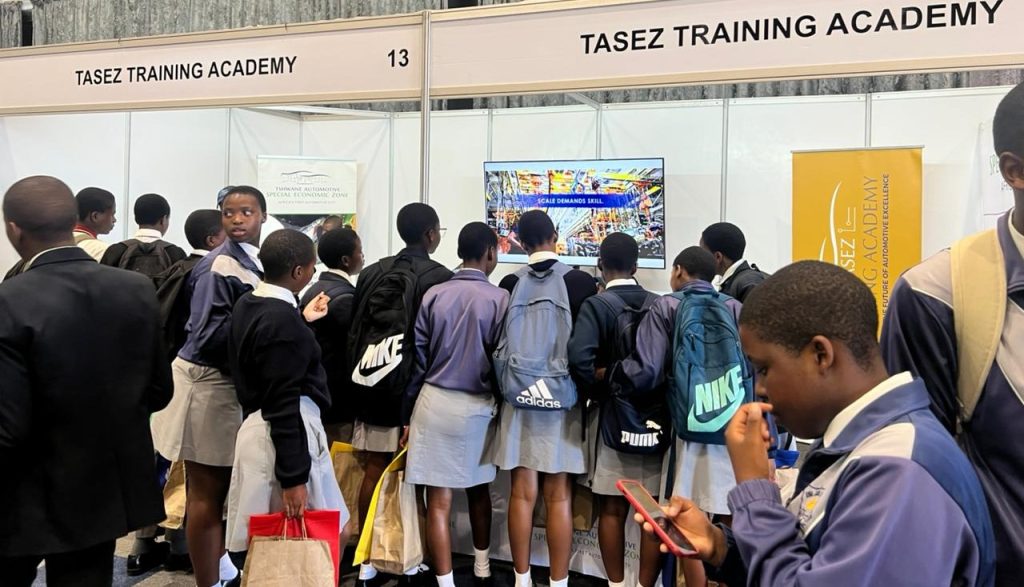
By Mandla Mpangase The importance of artisans and vocational excellence takes centre stage this week as the WorldSkills South Africa National Competition, Conference and Career Festival 2026 takes place at the Inkosi Albert Luthuli International Convention Centre in Durban. The event, on 9 and 10 March 2026, brings together various delegates, from industry leaders and policymakers to educators and young competitors, to explore how artisan and vocational skills can help build a more competitive and inclusive South African economy. Over 200 students from TVET (technical and vocational education and training) colleges, universities of technology and training providers are competing across 27 technical and vocational skill categories, with the top performers set to represent South Africa at the global WorldSkills competition in Shanghai later this year. Skills as a driver of economic growth The conference theme “Building a skilled and competitive workforce for the future” speaks directly to South Africa’s pressing challenge of unemployment and the shortage of skilled artisans across multiple sectors. Artisan training has become a strategic priority for the country, particularly in fields such as welding, electrical work, robotics, aircraft maintenance and manufacturing technologies. Programmes linked to the WorldSkills movement aim to strengthen vocational education and encourage young people to consider careers in the skilled trades, areas widely regarded as essential to economic expansion. Government has repeatedly highlighted that strengthening the artisan pipeline is key to achieving the ambitions of the National Development Plan 2030, which calls for a significant increase in the number of trained artisans to support industrialisation, infrastructure development and job creation. South Africa has set a target of producing around 30 000 qualified artisans annually by 2030, a goal closely aligned with initiatives such as WorldSkills that promote technical excellence and industry-ready training. Bridging education and industry Beyond the competition, the Durban event also features a conference programme and career festival designed to connect learners with employers and training institutions. High school learners and unemployed youth are being exposed to potential career pathways through apprenticeships, workplace learning and vocational training opportunities. The event is intended to help reshape perceptions about technical careers, positioning artisan professions as high-value contributors to the modern economy rather than fallback options. TASEZ Training Academy joins the conversation Among the organisations participating in the conference is the TASEZ Training Academy, representing the skills development arm of the Tshwane Automotive Special Economic Zone (TASEZ). The academy’s presence highlights the critical relationship between industrial development and vocational training. As an automotive manufacturing hub anchored by the Ford Motor Company assembly plant in Silverton, Pretoria, TASEZ depends heavily on a steady supply of skilled artisans in fields such as mechatronics, toolmaking, robotics and advanced manufacturing. Delegates from the academy are attending the conference to: “By aligning training programmes with industry demand, our academy aims to ensure graduates are not only qualified but work-ready for the rapidly evolving automotive manufacturing environment,” says TASEZ Training Academy head, Meriam Malebo. Building the workforce of the future The WorldSkills conference arrives at a time when South Africa is seeking to accelerate economic growth through localisation, manufacturing expansion and infrastructure investment – sectors that rely heavily on skilled artisans. Events like this reinforce the idea that economic transformation is inseparable from skills development. By connecting training institutions, government and industry, the initiative aims to cultivate a generation of technicians, artisans and innovators capable of driving the country’s industrial future.

TASEZ calls on youth to ‘wake up’ to jobs and training opportunities

By Mandla Mpangase The Tshwane Automotive Special Economic Zone (TASEZ) has issued a strong call to young people in Mamelodi, Eersterust and surrounding communities: opportunities exist, but initiative is essential. Speaking on Poort FM on 3 March 2026, TASEZ Stakeholder Engagement Manager Khutso Semetjane urged residents, particularly the youth, to actively pursue training and employment prospects linked to the automotive hub anchored by Ford Motor Company. 9 440 direct jobs, thousands more indirect Semetjane detailed the measurable economic impact of the special economic zone (SEZ) since its establishment. On the construction side alone, TASEZ has created over 6 000 jobs. Within the zone, more than 3 400 permanent jobs have been created by operational investor companies. “When you calculate indirect employment,” he explained, “for every job inside the SEZ, roughly three more are created outside.” That includes supply chain businesses such as paint manufacturers, logistics operators and component suppliers servicing vehicle production, including the Ford Ranger and Everest lines assembled in Tshwane. In total, the broader ecosystem linked to the SEZ supports more than 10 000 direct jobs and an estimated 40 000 indirect jobs. However, Semetjane acknowledged current pressures in the automotive sector, including job losses linked to global market adjustments. He confirmed that TASEZ has temporarily suspended its general labour database due to reduced hiring activity, but will reopen it as Phase 2 construction begins and new investors come on stream. 70% of construction jobs reserved for locals A key highlight of the interview was TASEZ’s commitment to local economic inclusion. For Phase 2 construction, 70% of jobs will be allocated to residents from surrounding communities, including Mamelodi, Eersterust, and Nellmapius. The remaining 30% will be sourced externally. Similar targets apply to permanent jobs, except where highly specialised skills are unavailable locally. “We are intentional about inclusion,” Semetjane said. “But we also have to protect the investment. Investors must have confidence in the environment.” Training that leads to work, not just certificates TASEZ has prioritised practical, industry-aligned training to ensure meaningful employment outcomes. Among the interventions are: Semetjane stressed that some programmes require minimum qualifications, often Grade 10, while others are open to participants without formal schooling. Importantly, he said, training is designed with an “exit plan” to connect graduates to real opportunities. In one recent example, a TLB (tractor, loader, backhoe) trainee secured employment within a month of completing training. The SEZ also works closely with TVET (technical and vocational education and training) colleges, including Tshwane North TVET College, from which 16 of the 23 current interns and graduates placed at TASEZ originate. A formal memorandum of understanding is being finalised. In addition, the TASEZ Training Academy bridges the gap between classroom learning and industry readiness, addressing investor concerns that some graduates lack practical competence. Youth readiness a growing concern While emphasising opportunity, Semetjane raised concerns about youth preparedness. He cited instances where job applicants: “There is a serious need for non-financial intervention,” he said. “We must engage youth about professionalism, research, digital literacy and self-development.” He encouraged matriculants to prioritise mathematics and science if they wish to enter the automotive or engineering sectors, noting that these subjects significantly improve competitiveness. Community access points TASEZ has appointed nine community liaison officers (CLOs), one for each ward in its catchment area, to serve as the first point of contact for employment and training enquiries. Semetjane urged community members to: CSI and community projects On corporate social investment, Semetjane said TASEZ facilitates partnerships between investors and local non-governmental organisations. However, he cautioned that due diligence is essential after instances of misrepresentation by some organisations. Community groups are encouraged to submit proposals well in advance, as investor approvals can take months. Let success be visible In closing, Semetjane made a heartfelt appeal to beneficiaries of SEZ opportunities. “When people succeed, they disappear,” he said. “We need those success stories to come back and inspire others. It builds confidence that this project is real.” As Phase 2 expansion begins, TASEZ leadership is positioning the zone not merely as an industrial hub but as a catalyst for inclusive economic transformation. “More investment means more jobs,” Semetjane concluded. “But we must act responsibly and seize the opportunity when it comes.”

TASEZ – a force for industrial renewal through skills development

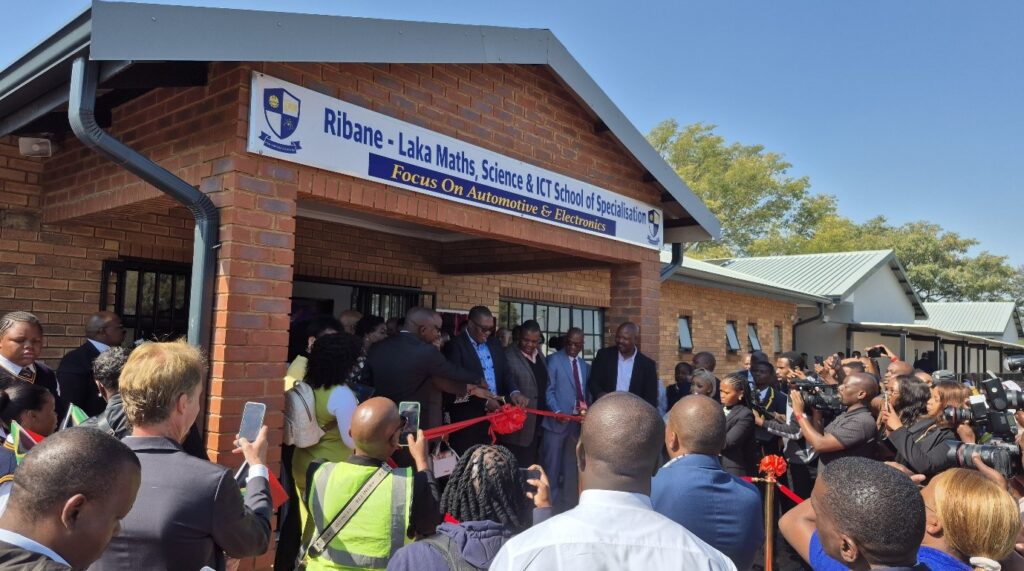
By Mandla Mpangase The future of South Africa’s manufacturing sector lies in the hands of the school learners, who need to be ready for a fast-changing environment marked by the complexities of artificial intelligence and the drive towards a carbon-neutral world. The automotive manufacturing sector is already embracing green technology, AI development and design, and the change from combustion engines to new energy vehicles. These issues, along with much-needed entrepreneurial skills, are core to the work being done by the TASEZ Training Academy. In keeping with this drive to develop skills for the future in the automotive manufacturing sector, the Tshwane Automotive Special Economic Zone (TASEZ) will be working closely with the Department of Basic Education to support local schools of specialisation and technical high schools. The two signed a memorandum of understanding to develop curricula that produce entrepreneurs and skilled learners who are ready for the automotive industry, along with providing skills development focused on the STEM subjects of science, technology, engineering and mathematics. So important is this development that the Ribane-Laka school in Mamelodi was turned into a science and ICT school of specialisation. The refurbished school was officially opened on 7 May 2025 by Gauteng Panyaza Lesufi, who observed that education makes economic sense. He added that it was important to make sure the education system in the townships is relevant. The school will focus on the automotive and electronic sectors – which is where TASEZ comes into the picture. “Africa’s first automotive city is not just a special economic zone. It is a force for industrial renewal,” said TASEZ CEO, Dr Bheka Zulu. In opening the school, Lesufi noted: “Today, we are launching education for purpose, where our children will not be taught things that will not assist them. Our children will not be taught things that will be irrelevant when they leave school.” The Ribane-Laka school is the future of education, he added, pointing out that the learners from the school will benefit from TASEZ, Africa’s first automotive city. “Never before has anyone thought that a Ford Ranger would be inside the school premises, not to boast but to teach our children how to repair it when it is broken. No one thought we could have an engine inside the school premises where our children can explain its meaning; where our children can explain to you how an engine functions.” The first next-generation Ranger was built by the Ford Motor Company of Southern Africa at its plant in Silverton, City of Tshwane. The components for that car were manufactured by the tenants housed at TASEZ, which is located next to the original equipment manufacturer. Emphasising the message by the premier, Dr Zulu noted that the TASEZ Training Academy is not simply about skills programmes, it is about creating relevance. “We’re preparing young people for the future of work – advanced manufacturing, electric vehicles, industrial automation. We’re building a talent pipeline that our automotive manufacturing tenants can depend on. So, when they set up operations here, they’re not bringing in imported expertise. They’re hiring our people.”

TASEZ supports training in manufacturing

The Tshwane Automotive Special Economic Zone’s (TASEZ) commitment to seeing young South Africans gain skills can be seen in the hub’s partnership in the Auvergne Skills Development Centre – a new training centre for young people in the furniture manufacturing sector. TASEZ and Auvergne Designs have signed a memorandum of understanding (MoU) to establish a strategic partnership, particularly in regard to skills training. “Young people hold the country’s economic future in their hands,” said TASEZ CEO, Dr Bheka Zulu. Skilled workers are critical to every sector within South Africa’s economy; being the primary drivers for industrialisation and economic growth. The MoU includes a number of areas where the partnership will be invaluable, including: All these elements will promote transformation within the automotive manufacturing sector, as expressed in the South African Automotive Masterplan (SAAM), which lists a number of objectives and goals the industry needs to see happen by 2035. Key goals in the SAAM are the localisation of labour and materials; encouraging access to the sector for previously disadvantaged businesses and communities; the embracing of new technologies; and the development of local and regional markets. The skills development centre was officially opened on 24 March 2024 by the MEC for Economic Development Tasneem Motara, who noted that the initiative “fosters employment opportunities within the furniture manufacturing sector”. Skills training can boost economic growth and change lives, Motara added. The curriculum of the training centre, based in Rosettenville, Johannesburg, covers a diverse range of skills ranging from upholstery to carpentry, from furniture design and making to building new ventures. The launch of the Auvergne Skills Development Centre also saw the first cohort of trainees begin their year-long course in upholstery. Along with the furniture refurbishment training, the group will also undergo training in new venture creation – a critical skill required for anyone wanting to start their own businesses, including SMMEs. As a partner, TASEZ stands ready to support youth development, unlocking access to workplace opportunities, providing mentorship, and encouraging local communities to develop their own businesses.