Tasez

Christabell

Industry and education must build the skills South Africa needs

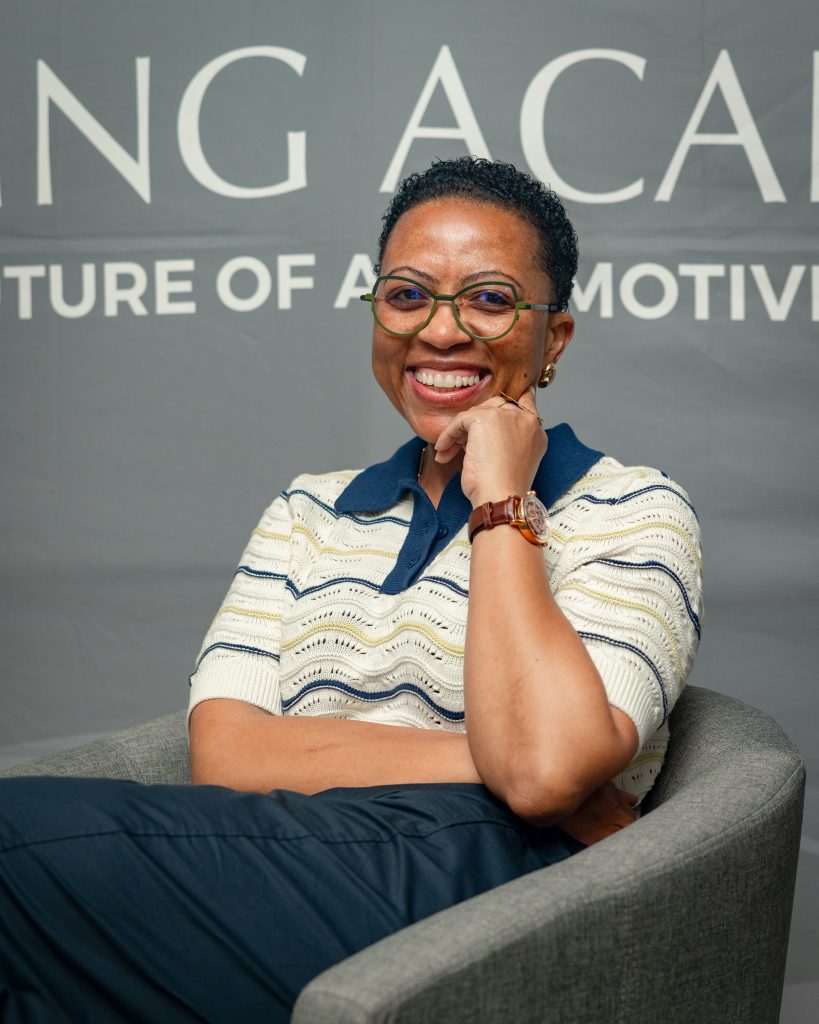
By Meriam Malebo, head of the TASEZ Training Academy South Africa cannot build a stronger industrial base if the people we educate are trained for a labour market that no longer exists. We need to connect industry and post-school education more closely, so that learning prepares people to contribute positively to societal needs, the economy and helps businesses build the capabilities they need. That was one of the central questions raised at the African Summit on Entrepreneurship and Innovation 2026, held at the CSIR International Convention Centre on 9 November. Under the theme “Re-imaging partnerships for Sustainable Entrepreneurship and Innovation in Africa”, the discussion challenged us to think differently about the relationship between academia, industry education, work and economic growth. For a special economic zone such as TASEZ, localisation is central to that conversation. It means creating greater opportunities for black industrialists to participate in the value chains of the sectors we serve. That ambition depends on more than investment and infrastructure. It also depends on people having relevant skills, competencies and capabilities and on local businesses being able to meet industry needs. Yet industry and the post-school education system are not always aligned. Curricula can struggle to keep pace with changing business requirements. Research can also be disconnected from the challenges companies and communities are trying to solve. When that happens, graduates may leave with qualifications that do not match available opportunities, while businesses struggle to find the capabilities they need. Industry must be an active partner in addressing this gap. Businesses understand the skills, technologies and standards required in their sectors. Education and training institutions bring the ability to develop those capabilities over time. Working together, they can shape more relevant curricula, identify research priorities and create practical routes for learners to gain experience. This partnership must also recognise the realities businesses face. Taking on inexperienced learners can require time and resources, particularly for companies under pressure to remain competitive. That is a reason to design better pathways into work, not to leave the responsibility to employers or education institutions alone. Structured work experience, targeted training and closer coordination can help both learners and businesses to retain and maintain the industries competitive advantage. The need is especially clear as the automotive sector changes. South Africans are major consumers of vehicles. We should also be asking how the country can become a stronger manufacturer, including in the new-energy vehicle value chain. That transition will require competencies where beneficiaries will be trained in new skills, reskilled and/or upskilled, with a clearer connection between training and the direction of the industry. We should also broaden our understanding of economic participation. Full-time employment is one route, but entrepreneurship, small business and other forms of work can also create livelihoods and opportunities. Education should help people see and prepare for these possibilities, while research should respond to real industry and societal needs. No single institution can make this shift alone. Industry, universities, post-school education and training providers, government and communities all have a role to play. We need regular communication, shared priorities and practical partnerships that connect learning with the economy. If we want to transform and redress our industrial sectors, we must build those partnerships now, and make sure they lead to skills, businesses and products that strengthen South Africa’s place in the value chain.

AIH bets on the work behind the electric vehicle shift 

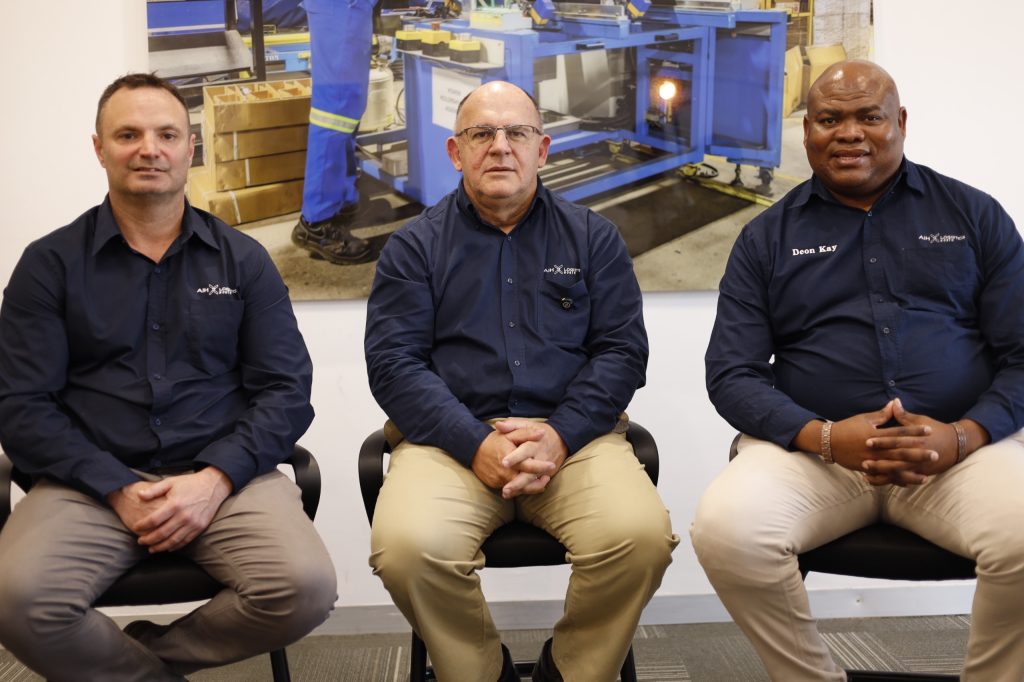
By Mandla Mpangase  The consulting and industrial services group is pursuing overseas business as changes in vehicle technology open new markets for South African expertise.  AIH Group sees a business opportunity in the automotive industry’s uncertainty: manufacturers need help adapting to new vehicle technologies, regardless of which gains ground.  The South African consulting and industrial services group is targeting work in manufacturing, aftermarket services and the infrastructure needed to support electric vehicles, says group director Dr Paulo Fernandes.  “We follow the industry trends and we try to support those where we see them developing,” he says.  Established in 2006 as an automotive consultancy, AIH Group has expanded into the broader industrial sector, adding contract assembly, vehicle modification and logistics to its advisory services.   South Africa remains central to AIH Group’s plans, with the group intending to continue investing locally as it expands abroad. L to R: Cornell Erasmus (Logistics North Manager); Dr Paulo Fernandes (Group Director) and Deon Kay (Plant Manager)  Automotive work accounts for about 50%-60% of its business, Fernandes says. The balance comes from the broader industrial sector.  Following clients abroad  Pretoria-headquartered AIH Group is 51% black-owned and has a level 2 BEE rating. It has an assembly facility in Durban and offices in East London, Gqeberha and Cape Town.  Abroad, it has followed existing clients and pursued contracts it believes it can service competitively from South Africa.  The group has offices in Europe, the UK, the US and Thailand, alongside a small, developing presence in Australia.  Fernandes argues that South African technical skills and an ability to adapt to clients’ needs give AIH an opening in competitive overseas markets.  “There’s a price advantage, but typically it’s about the flexibility,” he says.  The cost of change  The transition to electric vehicles could broaden demand for those services. The costs extend beyond manufacturing to vehicle service, charging infrastructure and financing — all areas in which clients face decisions about how to adapt.  AIH Group is keeping its options open on battery electric vehicles, hydrogen and internal combustion engines. Its strategy is to support clients as their plans develop.  Fernandes says South Africa is making progress in electric vehicle adoption, though it trails more developed markets.  He cautions against treating Europe as a blueprint. South Africa’s demographics, market conditions and driving patterns differ, shaping how quickly, and how far, the shift can go.  He points to electric vehicle sales, off a low base, and more charging stations as signs of progress, but offers no forecast for the eventual size of the market.  Staying invested  South Africa remains central to AIH Group’s plans, Fernandes says, with the group intending to continue investing locally as it expands abroad.  The opportunity is to help clients manage the transition. The test for AIH Group is how much of that demand becomes contracted work.   

TASEZ/RFQ 084/2026 – PROCUREMENT AND DELIVERY OF TOOLS, EQUIPMENT ANDSTORAGE CONTAINER

Supply, delivery and offloading of tools, electrical testing equipment, safety equipment, cleaning materials, ladders, a storage container, and related accessories for the Tshwane Automotive Special Economic Zone (TASEZ). The scope includes the provision of hand tools, measuring instruments, electrical testing devices, generators, pumps, extension cables, safety barricading equipment, padlocks, storage solutions, and all associated delivery costs to the designated TASEZ site as a once-off procurement Closing date 06 November 2026 by 12h00  Download TASEZ/RFQ 084/2026

TASEZ’s next phase puts black industrialists in the automotive growth story

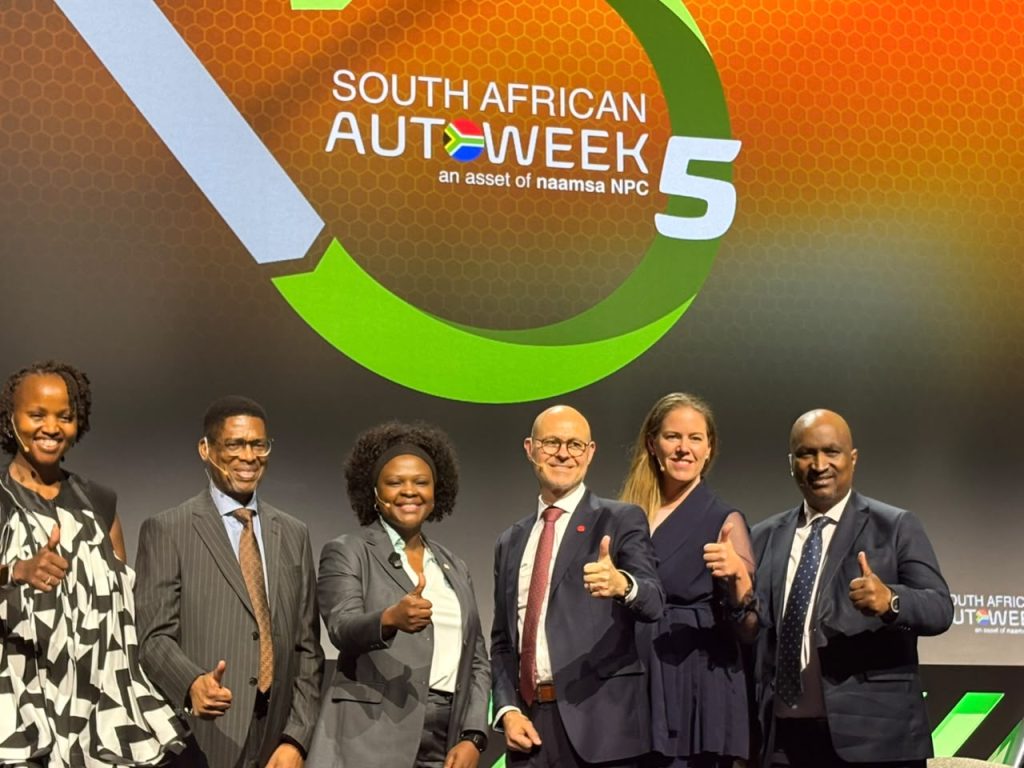
By Mandla Mpangase The next test for South Africa’s automotive sector is not only how much investment it can attract, but how widely that investment can strengthen local industry. That question was at the heart of South African Auto Week’s fifth-anniversary panel, “Setting the Scene: Commemorating 5 Years of SA Auto Week,” which included TASEZ Business Development Executive Msokoli Ntombana. TASEZ has begun Phase 2 development, with a focus on bringing black industrialists into the automotive value chain. Ntombana says the approach reflects a wider economic imperative. “When more local businesses can supply, manufacture, and build expertise in the sector, investment has a greater chance of deepening industrial capacity and spreading its benefits,” he says.  Inclusive growth is therefore central to the sector’s long-term competitiveness. Broadening participation can expand the supplier base, strengthen local capability, and give more businesses a stake in the value created by automotive investment. “South Africa’s automotive ambitions will be stronger when more black industrialists can participate across the value chain. Through Phase 2, TASEZ is working to open that space and connect investment with local enterprise development.”

TASEZ/RFQ 070-2026 – Appointment of a Service Provider to Conduct a Two-Day DueDiligence Training for Fifteen (15) People at TASEZ Premises

RFQ 070-2026 Provision of Due Dilligence Training The Tshwane Automotive Special Economic Zone (TASEZ) is co-owned by the Department of Trade, Industry and Competition (the DTIC), the Gauteng Provincial Government (GPG) and the City of Tshwane Municipality (CoT). TASEZ is registered in terms of the Companies Act No 71 of 2008 and it is the Operator of the Tshwane Automotive Special Economic Zone in terms of the Special Economic Zones Act 16 of 2014. TASEZ is situated east of Pretoria City in Silverton. It aims to offer a diversity of appropriate land uses and other economic activities. This RFQ is for the appointment of a Service Provider to Conduct a Two-Day Due Diligence Training for Fifteen (15) People. Download TASEZ/RFQ 084/2026

SA Auto Week puts investment at the centre of the industry’s next chapter.

By Mandla Mpangase The question facing South Africa’s automotive industry is no longer whether the global transition is coming. It is whether the country can attract the investment needed to remain part of it.That question is a central focus at SA Auto Week 2026, being held at the Durban International Convention Centre, from 13 to 16 October. The fifth annual gathering brings government, industry and investors together to discuss policy, manufacturing, new-energy vehicles and the conditions needed to drive investment and inclusive growth. For automotive investment destinations such as TASEZ, the NEV transition presents opportunities to localise components, attract new production technologies and develop suppliers across the value chain.   For the Tshwane Automotive Special Economic Zone (TASEZ), the debate goes to the heart of its mandate: making South Africa a competitive destination for automotive investment, while strengthening the industrial base around it. “South Africa’s automotive future will be shaped by where the next wave of production, technology and supplier investment is built. TASEZ is working to make Tshwane a compelling place for that investment, with world-class, fit-for-purpose facilities, access to an established automotive base and support to help investors move from interest to operation,” said Msokoli Ntombana, TASEZ Business Development Executive. The timing is significant. South Africa’s automotive exports reached a record R291bn in 2025, according to naamsa, underscoring the sector’s value to the economy, and the scale of the opportunity to deepen local production and supply chains. The industry accounts for 5.2% of GDP and 23.8% of manufacturing output, while vehicle and component exports reach 154 international markets. But the latest figures also reveal the pressures on the industry. Domestic new-vehicle sales rose 12.7% year on year to 61,645 units in September, according to naamsa’s October media statement, while vehicle exports fell 18.8% to 31,473 units.    The contrast underscores the need to turn demand at home into stronger local production and sustainable export growth.   The shift to new-energy vehicles adds urgency. Sales of hybrids, plug-in hybrids and batteryelectric vehicles reached 18,945 units in the first eight months of 2026, already exceeding the 16,703 sold throughout 2025. For automotive investment destinations such as TASEZ, that transition presents opportunities to localise components, attract new production technologies and develop suppliers across the value chain.With automotive manufacturing employing about 113,000 people, investment decisions carry  consequences well beyond vehicle assembly. The challenge for SA Auto Week is to turn discussions on competitiveness, localisation and the energy transition into projects that expand industrial capacity and create jobs

Vul’Amathuba opens a gateway to opportunity — and TASEZ is part of the conversation

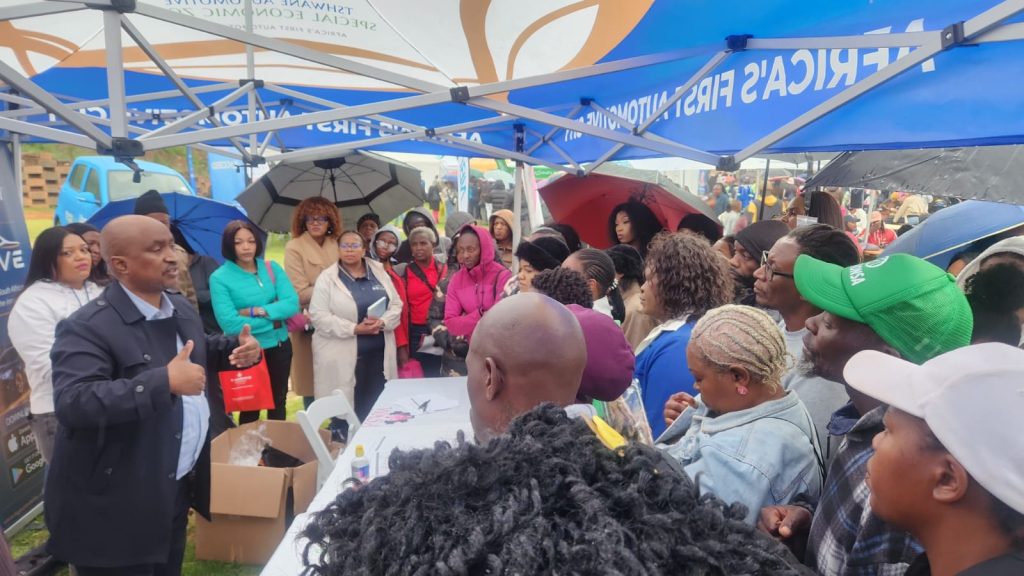
The launch of the Vul’Amathuba Campaign at Constitution Hill in Braamfontein has brought renewed focus to one of Gauteng’s most pressing economic priorities: connecting people not merely to information about opportunities, but to tangible pathways into the economy. The initiative brings job seekers, young people, artisans, graduates and entrepreneurs closer to opportunities in employment, skills development and enterprise support. Against this backdrop, TASEZ is engaging directly with participants seeking to understand how they can access opportunities generated through strategic industrial development. Conversations at the TASEZ exhibition stand span skills development and employment opportunities, SMME development, enterprise and supplier development and procurement opportunities , reflecting the growing expectation that industrialisation must translate into meaningful economic inclusion.

TASEZ/RFP 006/2026-Appointment of a service provider to supply, install and reroute fibre optic cable & power cable from the main halls in the parameters to inside the perimeter fence- Once Off

  TASEZ/RFP 006/2026-Appointment of a service provider to supply, install and reroute fibre optic cable & power cable from the main halls in the parameters to inside the perimeter fence- Once Off   Closing on the 09th of October 2026   Briefing Date: 25 September 2026 10h00-12h00 Location-Zone Download RFP006/2026 here Download Addendum

MEC Vuyiswa Ramokgopa to launch Vul’Amathuba campaign to expand access to economic opportunities

Gauteng Economic Development, Agriculture and Rural Development MEC VuyiswaRamokgopa will officially launch the Vulu2019Amathuba Campaign, a province-wide initiativedesigned to bring economic opportunities closer to Gauteng communities. The campaign seeks to connect job seekers, artisans, creatives, unemployed graduates andaspiring entrepreneurs with tangible opportunities for employment, skills development,business support and economic participation. Working in partnership with the private sector, skills development institutions, business support organisations and other strategic partners, the department has created a one-stopplatform where residents can access relevant information, networks, training programmes,enterprise support and job opportunities. Vulu2019Amathuba reflects the departmentu2019s commitment to removing barriers to economic participation and creating an enabling environment for inclusive growth, entrepreneurship, job creation and skills development across the province. Launch details are as follows:Venue: Constitution Hill, 11 Kotze Street, BraamfonteinDate: Tuesday, 29 September 2026Time: 09h00 u2013 16h00Requests for media interviews and confirmation of attendance can be directed [email protected] or 071133 3238EndsFor media inquiries and further information, please contact the MECu2019s Spokesperson,Danisile Sathekge, on 074 301 9454Follow us on X: @GautengDEDLike our Facebook page: @GautengDEDFollow us on Instagram: gautengded1Issued by the Gauteng Department of Economic Development. For more information,photos and videos of the department please visit:Website: www.gauteng.gov.za n