Tasez

Uncategorised

Industry and education must build the skills South Africa needs

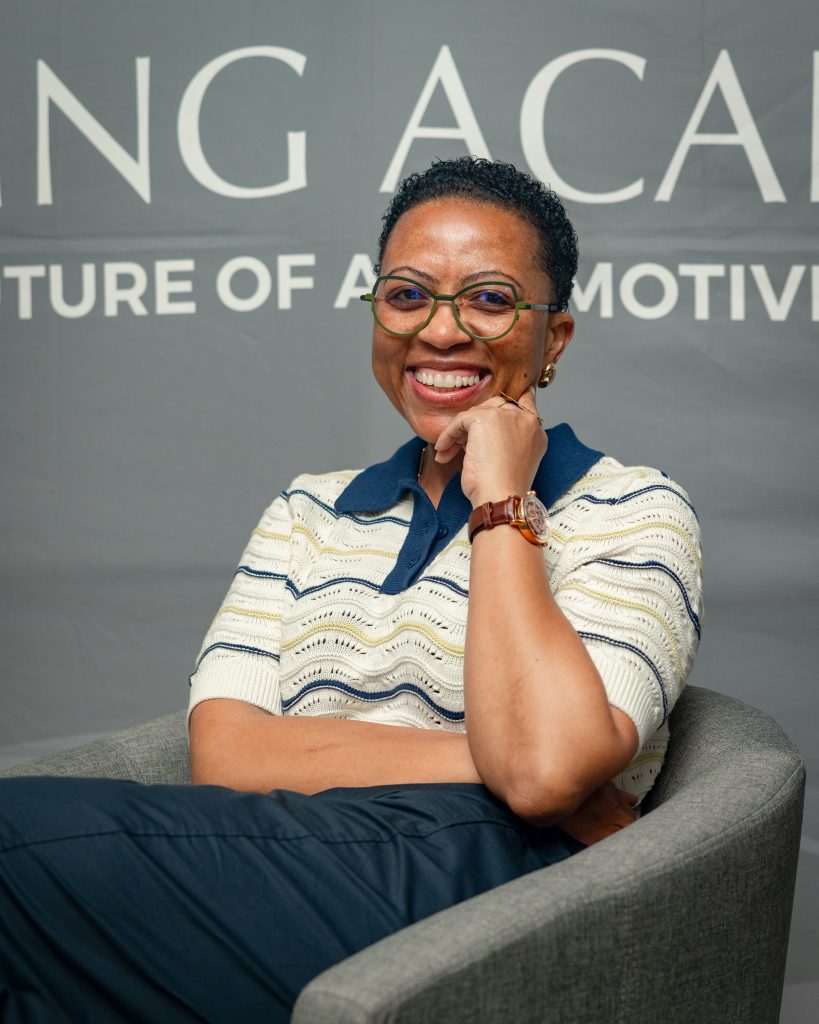
By Meriam Malebo, head of the TASEZ Training Academy South Africa cannot build a stronger industrial base if the people we educate are trained for a labour market that no longer exists. We need to connect industry and post-school education more closely, so that learning prepares people to contribute positively to societal needs, the economy and helps businesses build the capabilities they need. That was one of the central questions raised at the African Summit on Entrepreneurship and Innovation 2026, held at the CSIR International Convention Centre on 9 November. Under the theme “Re-imaging partnerships for Sustainable Entrepreneurship and Innovation in Africa”, the discussion challenged us to think differently about the relationship between academia, industry education, work and economic growth. For a special economic zone such as TASEZ, localisation is central to that conversation. It means creating greater opportunities for black industrialists to participate in the value chains of the sectors we serve. That ambition depends on more than investment and infrastructure. It also depends on people having relevant skills, competencies and capabilities and on local businesses being able to meet industry needs. Yet industry and the post-school education system are not always aligned. Curricula can struggle to keep pace with changing business requirements. Research can also be disconnected from the challenges companies and communities are trying to solve. When that happens, graduates may leave with qualifications that do not match available opportunities, while businesses struggle to find the capabilities they need. Industry must be an active partner in addressing this gap. Businesses understand the skills, technologies and standards required in their sectors. Education and training institutions bring the ability to develop those capabilities over time. Working together, they can shape more relevant curricula, identify research priorities and create practical routes for learners to gain experience. This partnership must also recognise the realities businesses face. Taking on inexperienced learners can require time and resources, particularly for companies under pressure to remain competitive. That is a reason to design better pathways into work, not to leave the responsibility to employers or education institutions alone. Structured work experience, targeted training and closer coordination can help both learners and businesses to retain and maintain the industries competitive advantage. The need is especially clear as the automotive sector changes. South Africans are major consumers of vehicles. We should also be asking how the country can become a stronger manufacturer, including in the new-energy vehicle value chain. That transition will require competencies where beneficiaries will be trained in new skills, reskilled and/or upskilled, with a clearer connection between training and the direction of the industry. We should also broaden our understanding of economic participation. Full-time employment is one route, but entrepreneurship, small business and other forms of work can also create livelihoods and opportunities. Education should help people see and prepare for these possibilities, while research should respond to real industry and societal needs. No single institution can make this shift alone. Industry, universities, post-school education and training providers, government and communities all have a role to play. We need regular communication, shared priorities and practical partnerships that connect learning with the economy. If we want to transform and redress our industrial sectors, we must build those partnerships now, and make sure they lead to skills, businesses and products that strengthen South Africa’s place in the value chain.

MEC Vuyiswa Ramokgopa to launch Vul’Amathuba campaign to expand access to economic opportunities

Gauteng Economic Development, Agriculture and Rural Development MEC VuyiswaRamokgopa will officially launch the Vulu2019Amathuba Campaign, a province-wide initiativedesigned to bring economic opportunities closer to Gauteng communities. The campaign seeks to connect job seekers, artisans, creatives, unemployed graduates andaspiring entrepreneurs with tangible opportunities for employment, skills development,business support and economic participation. Working in partnership with the private sector, skills development institutions, business support organisations and other strategic partners, the department has created a one-stopplatform where residents can access relevant information, networks, training programmes,enterprise support and job opportunities. Vulu2019Amathuba reflects the departmentu2019s commitment to removing barriers to economic participation and creating an enabling environment for inclusive growth, entrepreneurship, job creation and skills development across the province. Launch details are as follows:Venue: Constitution Hill, 11 Kotze Street, BraamfonteinDate: Tuesday, 29 September 2026Time: 09h00 u2013 16h00Requests for media interviews and confirmation of attendance can be directed [email protected] or 071133 3238EndsFor media inquiries and further information, please contact the MECu2019s Spokesperson,Danisile Sathekge, on 074 301 9454Follow us on X: @GautengDEDLike our Facebook page: @GautengDEDFollow us on Instagram: gautengded1Issued by the Gauteng Department of Economic Development. For more information,photos and videos of the department please visit:Website: www.gauteng.gov.za n

Women’s Day celebrations at TASEZ

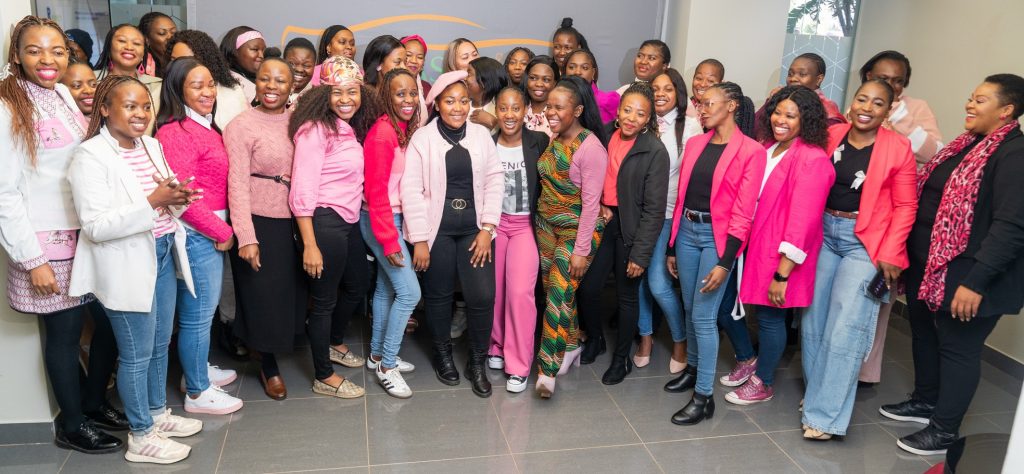
The Tshwane Automotive Special Economic Zone took some time out of the day on Friday, 8 August 2025 to celebrate and honour the women staff of the special economic zone, the day ahead of South Africa’s Women’s Day. As the women started arriving at work, they were greeted by a significant message playing on the screen at the TASEZ head office reception. The familiar TASEZ logo was prominently displayed along with its well-known pay-off line “Africa’s first automotive city”. But that message soon changed. Breaking from tradition, the TASEZ pay-off line morphed into “National Women’s Month – you are the heartbeat”. Then came an unexpected message – an explanation as to why TASEZ had taken the bold step to amend its pay-off line for August: “We decided to change the branding because you have changed us”. The women were also greeted by TASEZ’s Infrastructure Executive, Andile Sangweni. He acknowledged those in the room, noting they were all women of resilience and strength. “I thank each and every one of you for being the strong women you are – not the women of social media, but the women who stand their ground and excel.” He reminded the group of the historic Women’s March on 9 August 1956, when 20 000 women from across the country converged on the Union Buildings, just a few kilometres from where TASEZ is located, to deliver signed petitions against the apartheid pass laws, which severely curtailed the movement of black South Africans. “If I had to characterise the women of that time, they were women of courage, they were women of resilience, they were strong women,” Sangweni said, pausing briefly before adding that when he looked around the room, he saw the same. Acknowledging that the women often found themselves in an environment that could be difficult for them, in an environment dominated by men, he saw them always striving to do better and achieve. “I thank you for setting the example, I thank you for passing on the torch to the younger generation.” The women of TASEZ have taken to heart the message from the United Nations’ secretary general, António Guterres, when he said: “When women and girls can rise, we all thrive.”

TASEZ welcomes new colleagues

We extend a warm welcome to three new colleagues who have joined our TASEZ family: Rembuluwani Mavhungu and Noluthando Mkhathini, who are both members of the South African Institute of Chartered Accountants, and Khutso Semetjane. Rembuluwani will be taking up the position of financial reporting manager. He has worked in the finance and auditing field for more than eight years in the both private and public sectors, including spending time in the office of the Auditor-General. A registered Chartered Accountant, Rembuluwani also holds two post graduate diplomas in accounting science and applied accounting science on the back of his business degree in finance and accounting. Noluthando is joining us as financial accounting manager. She too has two post graduate diplomas in accounting sciences and in finance, banking, and investments, following her degree in accounting at the University of KwaZulu-Natal. Noluthando has extensive experience in public entities, having worked for provincial and local government departments and development agencies for 14 years. Khutso will be taking up the important role of TASEZ’s stakeholder engagement manager. He brings with him a wealth of experience in stakeholder engagement as well as in dispute resolution. He too has a finance background, holding a national diploma in internal auditing, and previously held anumber of finance positions at the South African Nuclear Energy Corporation. We wish Rembuluwani, Noluthando and Khutso all the very best as they join a team that is committed to transforming South Africa’s socio-economic future and building a strong, inclusive, and innovative automotive industry. Vangile NeneCorporate Services Executive

Prime Propositioning

With over 162.6 hectares, the TASEZ offers direct and ready linkages to regional and international markets, making exports easy to Southern African Development Community

Our Purpose

Facilitate the creation of an industrial complex, having a strategic national and regional economic advantage for targeted investments in the automotive