Tasez

Tasez

Premier puts jobs at centre of Gauteng’s growth drive in his State of the Province Address

By Mandla Mpangase Gauteng Premier Panyaza Lesufi has placed job creation at the heart of the province’s economic agenda, announcing a pipeline of investments and infrastructure programmes expected to support hundreds of thousands of employment opportunities across sectors. Delivering the 2026 State of the Province Address at the Nasrec Expo Centre, Lesufi adopted a more urgent and delivery-focused tone, stressing that Gauteng’s success will ultimately be measured by how effectively growth translates into jobs, particularly for young people. “The economic heartland of South Africa must never stop beating,” he said, linking infrastructure reliability, investor confidence and industrial expansion directly to employment creation. Investment into employment The Premier revealed that Gauteng has secured R27-billion in foreign direct investment over the past year, while R73-billion of projects announced at the inaugural Gauteng Investment Conference have already moved into implementation. These projects alone are expected to create about 114 000 jobs across manufacturing, logistics, energy and services. In total, confirmed investments across sectors could support roughly 250 000 employment opportunities, Lesufi said, describing the pipeline as one of the largest provincial job-creation drives in recent years. Major projects with significant employment potential include: Lesufi emphasised that these investments are not isolated announcements but part of a deliberate reindustrialisation strategy aimed at expanding Gauteng’s productive economy. TASEZ and industrial zones as job engines Special Economic Zones remain central to this strategy, with the Tshwane Automotive Special Economic Zone (TASEZ) – the venue for the 2025 State of the Province Address – highlighted as a flagship project for industrial job creation. The Premier confirmed that TASEZ has secured R1.61-billion in new investment and remains on track to deliver 4 000 construction jobs during its Phase 2 expansion. The automotive hub is also expected to generate long-term manufacturing employment through localisation and supplier development, reinforcing Gauteng’s position in global automotive value chains. Other SEZ initiatives, including the proposed Vaal SEZ and Tambo Springs logistics hub,  are expected to further expand industrial employment and support small business participation in supply chains. Infrastructure unlocking employment Lesufi repeatedly linked infrastructure investment to job creation, arguing that reliable services are essential for both attracting investors and enabling economic participation. Following January’s water crisis, Gauteng has launched a R760-million upgrade programme in Johannesburg, alongside new reservoirs and storage projects across municipalities. Beyond improving services, these projects create construction employment and support industrial activity. The province will also establish a Bulk Infrastructure Agency to coordinate delivery across municipalities, a move intended to accelerate development projects and unlock additional private-sector investment. Transport infrastructure is another employment lever. Gauteng has already paid more than R9-billion toward e-toll debt to enable road maintenance and upgrades, while expansion plans for the Gautrain network and a proposed Gauteng-Limpopo high-speed rail link could generate thousands of construction and operational jobs. “These investments are about economic mobility – connecting people to opportunities and opportunities to markets,” Lesufi said. Community-level job programmes Beyond large infrastructure projects, the province is expanding direct employment programmes targeting unemployed youth. The Nasi iSpani initiative, supported by a R1.5-billion national Labour Activation Programme investment, is expected to unlock more than 30 000 training and workplace opportunities. Gauteng will also employ 2 500 young people to repair public infrastructure, including plumbing, paving and maintenance in communities. Refurbishment of 18 government buildings in Johannesburg, valued at R8-billion, will create more than 2 500 construction jobs over the next 30 months. Tourism, logistics and new sectors Tourism recovery is also contributing to employment growth. International arrivals increased to 3.8-million, generating R41-billion in revenue and supporting jobs across hospitality, transport and entertainment. Meanwhile, sector-focused “action labs” covering industries such as manufacturing, green economy and logistics will be relaunched in March to accelerate investment into high-growth sectors and convert plans into bankable projects that create jobs. Jobs as the measure of success Lesufi acknowledged ongoing risks, including infrastructure crime, illegal mining and municipal instability, but said declining crime statistics and coordinated law-enforcement interventions are improving the investment climate. He stressed that economic growth must translate into tangible improvements in people’s lives through employment, housing, healthcare and education. The Premier’s message was clear: Gauteng’s development strategy is now firmly centred on job creation, driven by infrastructure expansion, industrial zones such as TASEZ and partnerships with the private sector. “Our responsibility,” Lesufi said, “is to ensure that investment becomes jobs – and jobs become dignity.”

Gauteng Investment Conference 2026 sets sights on R200-billion at JSE launch

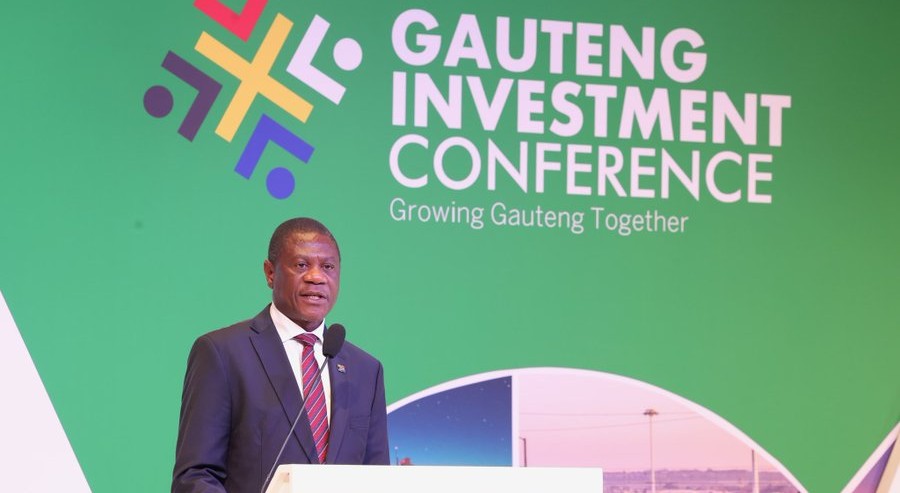
By Mandla Mpangase The Gauteng Provincial Government has formally launched the Gauteng Investment Conference 2026, positioning the event as a central mechanism to convert investor interest into tangible projects, infrastructure delivery, and job creation across South Africa’s economic hub. Gauteng MEC for Finance and Economic Development, Lebogang Maile, unveiled the initiative on 17 February 2026 at the Johannesburg Stock Exchange in Sandton, describing the venue as symbolic of the province’s ambition to mobilise capital at scale. “It is profoundly symbolic that we gather here today at the Johannesburg Stock Exchange as it represents the power of investment,” Maile said, noting the exchange’s market capitalisation of more than R24-trillion and its role in enabling businesses to access capital, expand operations, and create jobs. From pledges to projects The launch builds on the inaugural conference held in April 2025, which secured R312.5-billion in investment pledges across 60 projects, with expected support for more than 114 000 jobs and significant economic opportunities across sectors such as agro-processing, transport infrastructure, property development, and aviation. Maile emphasised that the provincial government is now shifting focus from commitments to delivery. “As of this month, 28% of the pledges secured in 2025 have already been converted into active implementation,” he said, adding that 17 projects are currently being rolled out, unlocking approximately R73-billion into the “real economy”. This conversion rate, he said, is central to Gauteng’s credibility as an investment destination, demonstrating that the conference is not an “event-driven exercise” but a continuous lifecycle spanning project origination, structuring, facilitation, and execution. A key example cited was the ongoing development of the OR Tambo International Airport precinct, which is emerging as a major logistics, manufacturing, and industrial hub. Strategic projects and industrial growth The 2026 conference will showcase large-scale catalytic projects aligned with corridor-based development and industrial clustering. These include: Maile said these projects are supported by feasibility studies, regulatory alignment, and institutional backing to strengthen Gauteng’s competitiveness and long-term growth trajectory. The conference also aligns with broader policy frameworks such as the African Continental Free Trade Area and Agenda 2063, with Gauteng seeking to deepen pan-African value chains and leverage international partnerships established through engagements in Europe and global investment forums. Targeting new commitments For 2026, the province aims to secure at least R200-billion in new investment commitments, a target Maile described as “pipeline-backed and supported by structured engagement with investors, development finance institutions and sector leaders”. Priority sectors include: The conference will also feature curated deal rooms and structured policy dialogues involving African governments, global investors, and private-sector stakeholders, with municipalities playing a central role in project preparation and approvals. “In 2025, we demonstrated that Gauteng can mobilise capital,” Maile said. “In 2026, we are showing that Gauteng can convert capital into projects, jobs and economic growth.” Improving investor confidence Speaking at the launch, Sam Mokorosi, Head of Origination and Deals at the JSE, said recent macroeconomic improvements were helping to restore investor confidence in South Africa. These include easing inflation, improving interest rate trends, stronger global engagement with emerging markets, and South Africa’s exit from the Financial Action Task Force grey list, followed by a sovereign credit rating upgrade. He noted that the FTSE/JSE All Share Index surpassed 100 000 points last year, with foreign participation and daily equity volumes increasing, alongside a healthy pipeline of new listings expected in 2026. “For Gauteng and for the Gauteng Investment Conference, these trends matter,” Mokorosi said. “They reinforce the message that confidence is returning — not abstractly, but in measurable ways that shape investment decisions and long-term growth prospects.” He added that the JSE is supporting investment mobilisation through new financial products, inward listings, and initiatives such as a voluntary carbon market, which issued its first carbon credit in 2025. Gauteng’s role in the continental economy As South Africa’s economic powerhouse, Gauteng contributes roughly 34% of the national GDP, about 7% of sub-Saharan Africa’s output, and drives around 60% of South Africa’s exports to the continent. The conference is therefore not only about provincial growth, but also about strengthening Africa’s industrialisation and regional value chains. The event, taking place on 9 April 2026, will bring together investors, development finance institutions, municipalities, business leaders and continental partners. “With the investment pipeline structured and coordination mechanisms in place, we are ready,” Maile said. “Together, we move from mobilisation to scaling — turning commitments into tangible impacts for our people and the economy.”

President doubles down on industrialisation, manufacturing and green growth in SONA 2026

By Mandla Mpangase President Cyril Ramaphosa used his 2026 State of the Nation Address (SONA) to place industrialisation, manufacturing and green growth at the centre of South Africa’s economic recovery agenda, outlining a sweeping strategy that positions the automotive sector – and hubs such as the Tshwane Automotive Special Economic Zone (TASEZ) – as catalysts for investment, jobs and technological transition. Speaking to a joint sitting of Parliament in Cape Town on 12 February 2026, President Ramaphosa said South Africa was entering a decisive phase in which it must pivot from exporting raw materials to producing high-value manufactured goods for global markets. “The biggest opportunity of all lies in green growth. We are pivoting our economy to be a leading supplier of the products which the world will rely on in decades to come,” he said. Manufacturing and green industrialisation The president confirmed expanded support for manufacturing, particularly export-oriented green industries such as fertiliser, jet fuel, chemicals and steel. For the automotive sector, the most significant announcement was the introduction of a 150% tax deduction for investment in new energy vehicles (NEVs) from March 2026, alongside government support for local battery production. This policy could accelerate investment in South Africa’s electric and hybrid vehicle value chain, with special economic zones such as TASEZ well-positioned to anchor new assembly lines, component manufacturing and battery-related industries. President Ramaphosa also highlighted R250-billion in international pledges to the Just Energy Transition Investment Plan, which will finance manufacturing, infrastructure and skills development – pillars for industrial hubs such as TASEZ that aim to integrate clean energy, logistics and advanced manufacturing. Critical minerals, beneficiation and the automotive value chain The president also underscored South Africa’s mineral endowment, with ore reserves valued at more than R40-trillion, and reiterated the government’s commitment to local beneficiation of critical minerals. This beneficiation push is expected to underpin domestic production of battery materials, catalytic converters, lightweight metals and other automotive components, strengthening localisation in zones like TASEZ. The Industrial Development Corporation’s R300-million investment in the Frontier Rare Earths Project was highlighted as a step towards building supply chains for lithium batteries and electronics – technologies increasingly integral to next-generation vehicles. Investment pipeline and industrial infrastructure President Ramaphosa said South Africa had secured R1.5-trillion in investment commitments through its first five investment conferences, with R600-billion already flowing into projects, including new factories and mines. Government is targeting R2-trillion in new investments over the next five years, with the next investment conference scheduled for 31 March 2026. Public infrastructure investment of more than R1-trillion over three years will underpin industrial growth, with energy, water, transport and digital infrastructure prioritised. Improved logistics, ports and rail corridors were flagged as critical to exporting manufactured goods from industrial zones such as TASEZ to global markets. Jobs, SMEs and inclusive industrialisation Job creation was framed as the ultimate goal of industrialisation. The president said if every small and medium enterprise (SME) employed one additional person, three million jobs could be created. Government will provide R2.5-billion in funding to 180 000 SMEs, extend R1-billion in guarantees, and prioritise women- and youth-led businesses. This is expected to support supplier development and localisation programmes linked to manufacturers operating in TASEZ and other SEZs. Public employment programmes will be expanded and better coordinated to provide skills development pathways into long-term industrial employment, particularly for young people and women. Skills development for a future automotive workforce Ramaphosa stressed that industrialisation depends on human capital, noting that a strong economy relies on a well-educated, capable and skilled population. The Youth Employment Service and South Africa Youth platform will be strengthened, while regulatory changes will make it easier for businesses to offer work experience opportunities. This could bolster talent pipelines for advanced manufacturing, engineering, robotics and electric mobility technologies in zones such as TASEZ. Protecting and transforming the automotive sector The president reaffirmed the government’s commitment to safeguarding and modernising the automotive industry, which employs hundreds of thousands of South Africans in high-quality jobs. Government is working with industry and labour to close tariff loopholes, protect domestic manufacturing and prepare the sector for the global shift to electric vehicles. TASEZ is well-positioned to play a central role in this transition by clustering OEMs, component manufacturers, logistics providers and research institutions. A strategic window for TASEZ and South Africa President Ramaphosa acknowledged persistent challenges, including unemployment and service delivery failures, but said energy reforms, rising investor confidence and infrastructure investment had created a critical opportunity for economic transformation. “We have a unique window of opportunity to translate these gains into sustained growth,” he said. For South Africa’s automotive sector and industrial platforms such as TASEZ, the 2026 SONA signals a renewed policy push towards localisation, electric mobility and high-value manufacturing, positioning the country to compete in global automotive value chains while driving jobs and inclusive growth at home.

SONA 2026: A TASEZ wish list for South Africa’s industrial reset

By TASEZ CEO Dr Bheka Zulu As South Africa prepares for the 2026 State of the Nation Address by President Cyril Ramaphosa on 12 February 2026, the Tshwane Automotive Special Economic Zone (TASEZ) – Africa’s first automotive city – is hoping to see an emphasis being placed on putting manufacturing at the centre of the country’s economic strategy. Manufacturing remains one of the few sectors capable of creating large-scale employment, driving exports and anchoring technology transfer. Yet, despite its strategic importance, South Africa’s manufacturing sector continues to underperform relative to its potential, constrained by energy insecurity, logistics inefficiencies and policy uncertainty. Special Economic Zones (SEZs) are among the most effective tools available to reverse this trend. Zones such as TASEZ have demonstrated that targeted infrastructure, incentives and policy alignment can crowd in private investment and build globally competitive industrial clusters. SONA 2026 is an opportunity to scale this model. From a TASEZ perspective, there are several policy signals we would like to hear. First, a credible manufacturing growth pactSouth Africa needs a clear, time-bound commitment to manufacturing expansion, aligned with the Industrial Policy Framework, the Automotive Masterplan and the transition to new energy vehicles (NEVs). This should include measurable localisation and export targets, backed by regulatory certainty. Investors require predictability; industrial policy cannot shift with every political cycle. Second, a competitive SEZ incentive regimeSEZs compete globally. Countries such as Morocco, Vietnam and Egypt have built industrial bases by offering compelling fiscal incentives, streamlined customs processes and reliable infrastructure. South Africa must remain competitive. Enhanced incentives, faster approvals and dedicated industrial energy solutions would materially improve the country’s investment proposition. Third, explicit positioning of SEZs as anchors of the green and automotive transitionThe global automotive sector is undergoing a structural shift towards electrification, batteries and smart mobility. South Africa risks being locked out of future value chains if it does not act decisively. SEZs should be designated as production hubs for NEV (new energy vehicle) assembly, battery manufacturing and hydrogen-related industries, supported by targeted incentives and infrastructure. Fourth, localisation that delivers for MSMEsLocalisation policy must translate into real procurement opportunities for South African firms, particularly black-owned and township-based enterprises. Stronger localisation thresholds in public procurement, integrated with SEZ supplier development programmes, can help domestic firms integrate into global value chains rather than remaining peripheral participants. Fifth, infrastructure as an industrial enablerIndustrial policy without reliable infrastructure is aspirational at best. Manufacturing requires predictable electricity supply, efficient rail and port logistics, and high-quality digital connectivity. Commitments to stabilise industrial energy supply and modernise logistics networks would significantly improve South Africa’s industrial competitiveness. Sixth, blended finance to bring in private capitalIndustrial projects are capital-intensive and long-term. Development finance institutions can play a catalytic role by de-risking SEZ-based projects through blended finance structures. Public capital, concessional funding and private investment must be combined at scale to accelerate industrial development. Finally, a national skills pipeline for advanced manufacturingFuture factories require technicians, engineers and digital specialists. Coordinated partnerships between industry, TVET (Technical and Vocational Education and Training) colleges, universities and SEZs could position South Africa as a manufacturing talent hub on the continent. SONA 2026 comes at a defining moment. Global supply chains are fragmenting, the energy transition is reshaping trade patterns, and the African Continental Free Trade Area offers an unprecedented market for manufactured goods. South Africa has the industrial base, institutional capacity and geographic advantage to benefit – but only if policy ambition is matched by execution. SEZs such as TASEZ are platforms for a new economic narrative: one where South Africa builds, makes and exports at scale. If SONA 2026 delivers a bold and credible manufacturing and SEZ agenda, it could mark the beginning of a long-overdue industrial reset.

TASEZ CEO positions automotive city as engine for jobs, skills, and inclusive growth

By Mandla Mpangase The Tshwane Automotive Special Economic Zone (TASEZ) is emerging as one of South Africa’s most significant industrial infrastructure projects, with the potential to accelerate manufacturing growth, deepen localisation and drive inclusive economic participation, according to TASEZ CEO Dr Bheka Zulu. Speaking in an interview with Poort FM on Tuesday, 10 February 2026, Zulu said the special economic zone had become a critical growth engine for the City of Tshwane, Gauteng and the national economy, particularly through its role in supporting the automotive sector. “It brings an engine for growth, an engine for development and an engine for innovation,” Zulu said. “It has been a pillar of employment for the city, especially for communities such as Mamelodi and surrounding areas.” Boosting manufacturing and exports Zulu highlighted TASEZ’s role in supporting the expansion of automotive manufacturing, citing the Ford investment at the adjacent Silverton plant, which has increased production capacity and strengthened South Africa’s export footprint in more than 100 global markets. He said government and industry aim to raise South Africa’s share of global vehicle production to above 1%, which would require output of about 1.4 million vehicles annually. “Part of our role is to support OEMs that have been in this country for decades, and ensure increased capacity, sustainability and meaningful jobs,” he said. Africa’s first automotive city TASEZ markets itself as “Africa’s first automotive city,” a concept Zulu described as a fully integrated ecosystem combining industrial, residential and social infrastructure. “It’s about bringing industry closer to where people live and play,” he said, adding that the automotive city model includes training, services, affordable business infrastructure and incentives to support investors and workers. Zulu said the vision is to position Tshwane as a globally competitive automotive hub, leveraging South Africa’s long history in vehicle manufacturing and attracting new original equipment manufacturers (OEMs). Focus on meaningful jobs and STEM skills Zulu emphasised that job creation must be linked to skills development, particularly in science, technology, engineering and mathematics (STEM). “Meaningful jobs are permanent jobs that bring innovation and future development,” he said. TASEZ has established the TASEZ Academy to train and reskill young people from surrounding communities, working with sector education and training authorities (SETAs) and other institutions to align training with industry needs. SMME development and inclusive procurement Zulu said small, medium and micro enterprises (SMMEs) are central to TASEZ’s development model, with incubation, mentorship and enterprise supply development programmes designed to integrate local firms into the automotive value chain. He noted that TASEZ has set a minimum target of 30% procurement spend for SMMEs and aims for 60% township procurement in line with Gauteng’s Township Economic Development Act (TEDA) framework. “We’ve injected more than R2-billion into local SMMEs, and we are still growing,” he said, adding that procurement targets prioritise black-owned businesses, women, youth and people with disabilities. Driving transformation and localisation Zulu acknowledged that transformation in the automotive sector has been slow, particularly in localisation and black industrialist participation, but said TASEZ is guided by the South African Automotive Masterplan 2035. The sector aims to increase local content in vehicle production from around 30-40% to 60% and raise black participation in the industry, which remains below 3%. “It’s a competitive world, and we need all hands on deck, government, industry and communities, to reach these targets,” he said. Preparing for electric vehicles and new technologies Zulu said the global shift toward electric and new-energy vehicles presents both risks and opportunities for South Africa, urging industry and policymakers to adapt quickly. “The reality is that we need to wake up and embrace new energy vehicles, automation and green manufacturing,” he said, adding that TASEZ plans to roll out charging infrastructure and is seeking partners with innovative technologies. Message to youth and entrepreneurs In closing, Zulu encouraged young people and entrepreneurs to engage with TASEZ, bring innovative ideas and participate in skills programmes and supplier opportunities. “Don’t lose hope. We are your partner. Knock on our door with your ideas, and we will help you grow,” he said.

TASEZ award for RFP 004/2025

The Tshwane Automotive Special Economic Zone (TASEZ) has announced the winning bidder for RFP No: 004/2025 (short-term insurance services). The winning bidder is Sankofa Insurance Brokers (Pty) Ltd, with an amount of R338 654.01.

We must build on the momentum of our economic recovery

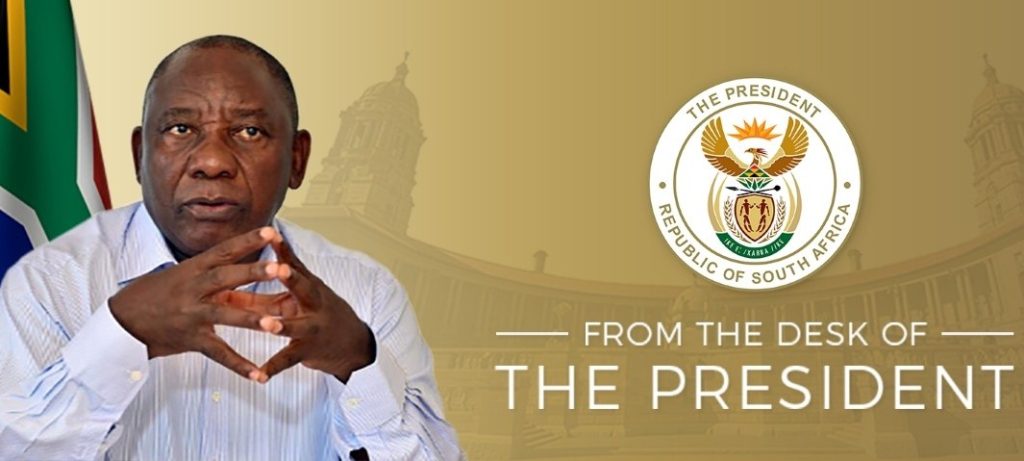
In his weekly newsletter on Monday, 26 January 2026, President Cyril Ramaphosa noted that the country’s economic recovery is on the up, with four consecutive quarters showing growth and unemployment showing a decline. As we enter a new year, the momentum of our economic recovery is gathering pace. In the last months of 2025, we saw a number of indicators that our collective efforts to rebuild our economy are bearing fruit. The economy has posted four consecutive quarters of growth. There has been a steady reduction in unemployment, while recent data released by Statistics South Africa shows that levels of poverty and inequality have declined considerably. Confidence in our economy is rising, the stock exchange has been performing well and the average inflation rate is the lowest in two decades. Late last year, South Africa exited the Financial Action Task Force grey list, which is an important signal of institutional improvement and a boost to investor confidence. We have also seen a sovereign credit ratings upgrade, reflecting strengthened fiscal credibility. While these signs of progress are encouraging, there is no time to rest. The difference between a temporary lift in growth and sustained shift in our economic trajectory lies in expanding investment. With a strengthening currency and rising commodity prices, we have wind in our sails. Now we must steer our ship towards greater prosperity for all South Africans. Last week, at its first meeting of the year, the Presidential Economic Advisory Council (PEAC) made clear proposals on how to achieve this goal. A body of respected local and international economists, academics and practitioners, the council provides strategic and evidence-based advice on policy decisions that promote economic stability, growth and inclusivity. The council said that government should translate recent positive developments into enduring growth by simultaneously boosting public infrastructure spending and lowering the cost of doing business. Increasing infrastructure investment is not simply about spending more. It is about delivering projects that reduce the cost of doing business, unlock growth and create jobs. Council members expressed strong support for the ongoing programme of structural transformation in key sectors such as electricity, logistics and water. These interventions, which have brought an end to load-shedding and improved rail and port performance, aim to enable competition, improve the efficiency of network industries and reduce costs across the economy. Our electricity reforms are critical to this effort. A competitive electricity market is essential to bringing down the cost of electricity. And lower electricity prices are critical for both inclusive growth and social development. Similarly, improving logistics performance in rail, ports and freight corridors remains essential to exports, industrialisation and job creation. In addition to boosting private investment, we need to achieve higher levels of public investment in infrastructure. Over the last few years, we have laid a solid foundation for investment by streamlining the regulations that have held back infrastructure projects, making it easier to pursue public-private partnerships, and establishing strong institutions such as Infrastructure South Africa and the Infrastructure Fund. We have committed more than R1-trillion of public funds for infrastructure projects over the next three years. We need to build on this foundation by strengthening our state-owned enterprises and enabling them to invest at much higher levels. We must do all of this at a time when the international environment is increasingly volatile and uncertain. Global growth is expected to remain subdued over the medium term and many countries are facing heightened trade and geopolitical tensions. This underscores the need for South Africa to sharpen its competitiveness and expand markets, particularly on the African continent. We must capitalise on the positive momentum of recent months by building strong partnerships, strengthening delivery, and closing the gap between policy intent and implementation. Only if our own institutions are strong can we compete and remain responsive in a rapidly changing world. During the course of this year, we need to double down on our efforts to grow investment and create jobs. We must seize the momentum we built and translate this into long-term gains for our economy. In the coming days, Cabinet will hold its annual Lekgotla to outline the actions that will be taken across Government and with social partners to achieve these goals. Through these actions, by working together, we will ensure that the progress we’ve seen in the last year will have an impact on the lives of South Africans this year.

Why TASEZ, and SA’s other SEZs, should care about the 2026 World Economic Forum

As the 2026 World Economic Forum (WEF) annual meeting unfolds in Davos, Switzerland, it presents an opportunity for the Tshwane Automotive Special Economic Zone (TASEZ) to gain strategic insights into global business trends, writes TASEZ CEO Dr Bheka Zulu. While some may view Davos as an elite gathering far removed from local development practices, the reality is that the decisions, discourses and partnerships fashioned at this global crossroads directly shape the economic terrain in which TASEZ operates. At its heart, the WEF’s theme this year, “A Spirit of Dialogue”, reflects a global recognition that in an increasingly contested and fragmented world, renewed cooperation across sectors is essential to unlocking growth, managing technological disruption, and building resilient societies. The 56th global gathering – a diverse mix of governments, industries and sectors – takes place from 19 – 23 January 2026. South Africa, which will be sending a delegation to the WEF, is taking the key message that the country is ripe for investment and ready to do business. Davos is where global growth blueprints are crafted One of the key pillars of discussion in 2026 is unlocking new sources of growth, an agenda TASEZ must align with as it seeks to attract investment, scale industrial capacity and foster innovation. At a time when global growth is projected to slow and trade dynamics are shifting, constructive dialogue on growth strategies becomes vital. TASEZ should care because the forum shapes narratives about where capital flows next – whether it is into manufacturing hubs in Africa, decarbonising industries, or smart-technology value chains. Strategic awareness and engagement with the WEF ecosystem enable TASEZ to position itself within these narratives rather than being shaped by them. Technology and the future of work are not just global issues; they are local necessities. At the heart of WEF’s agenda is the rapid reshaping of work and skills due to artificial intelligence and other frontier technologies. These trends are not abstract discussions. Nearly one in five jobs worldwide could change significantly in the next five years, and reskilling labour forces is central to global competitiveness. For TASEZ, this has direct implications for workforce development, educational partnerships, and industry-ready training programmes. Being plugged into these global conversations helps ensure that TASEZ’s talent pipeline matches investor expectations and technological realities, especially in automotive manufacturing, digital services, and green tech sectors. Public-private collaboration is no longer optional The WEF thrives on multistakeholder cooperation, bringing together governments, businesses, civil society and experts precisely because global challenges today do not have single-actor solutions. TASEZ’s success depends on forging alliances that transcend borders: with multinationals scouting for regional entry points, with development finance institutions seeking credible partners in Africa, and with governments looking to catalyse industrial nodes. What happens in Davos is not simply a talk shop; it is where ideas are mooted, and alliances are formed – and it provides for participation far beyond Davos through an open digital media experience, including live-streamed sessions and community engagement. Take, for example, how subnational delegations use the forum to showcase investment roadmaps and attract concrete commitments. Recent state delegations to Davos have used the platform to situate long-term visions in front of global investors. A changing geopolitical and economic order matters to local zones too. This year’s Davos opens against the backdrop of a shifting geopolitical order where trade tensions, fragmented cooperation, and contested norms are no longer fringe concerns. For South Africa and TASEZ, geopolitical shifts translate into supply chain volatility, changing tariff regimes, and new expectations for economic zones to support resilient, diversified manufacturing. Simply put, ignoring these macrotrends undercuts the zone’s ability to anticipate risk and opportunity. Finally, Davos offers lessons in governance and accountability, relevant for an institution like TASEZ striving to model excellence in public-private economic management. Even global institutions like the WEF have had to grapple publicly with leadership transitions and internal scrutiny, a reminder that credibility and ethical leadership matter deeply in today’s interconnected world. TASEZ’s interest in the 2026 World Economic Forum is neither cursory nor ceremonial. This global meeting encapsulates the forces shaping 21st-century economies – from innovation ecosystems to skills futures, from cooperative governance to investment flows. Ensuring that the engagement extends beyond Davos is crucial, particularly for South Africa’s economic growth trajectory. South Africa, and by extension its special economic zones, should be not only anchored in the global economic currents, but able to influence them in ways that benefit the country and the broader continent.

2025 – a year of resilience and recalibration

It turns out that 2025 was a year that tested the Tshwane Automotive Special Economic Zone’s agility but also reaffirmed its strategic direction, writes acting executive of zone operations, Sibusiso Khuzwayo. As 2025 draws to a close, the Tshwane Automotive Special Economic Zone (TASEZ) continues to cement its position as one of South Africa’s leading special economic zones (SEZs) – an achievement built on resilience, collaboration, and a sharpened focus on sustainable industrialisation. Yet 2025 was anything but ordinary. The year placed TASEZ at the forefront of numerous conferences, industry engagements, and national conversations on automotive manufacturing, transformation, and economic development. These platforms allowed us to present TASEZ’s successes and the challenges we continue to navigate. They also reinforced the importance of capacitating TASEZ so that we not only meet our mandate but also deepen our impact on communities, stakeholders, and industry partners. Strong relationships Strengthening relationships with tenants was a key priority. Improved engagement has already laid the groundwork for future collaborations, particularly projects designed to uplift communities and micro, small, and medium enterprises (MSMEs). Industry-wide discussions on the future of the automotive sector, marked by technological shifts, supply chain pressures, and evolving investment landscapes, also prompted TASEZ to reassess its long-term strategy. We have had to rethink our tenant mix to ensure that TASEZ remains sustainable even as the automotive sector faces economic headwinds. Highlights of 2025 What stands out most during the year is a mix of organisational achievements and personal milestones. From an organisational perspective, TASEZ significantly expanded its collaboration footprint. Engagements with the National Skills Fund, universities, the CSIR (the Council for Scientific and Industrial Research), the AIDC (the Automotive Industry Development Centre), and the Gauteng Department of Economic Development strengthened the zone’s innovation ecosystem. These partnerships also supported TASEZ’s emerging e-mobility concept, positioning the SEZ as a future leader in new-energy technologies and skills development. As acting zone executive 2025 marked a number successful initiatives such as: These engagements helped us demonstrate what TASEZ does, why it matters, and how it can play an even bigger role in transforming the economy. More to do Despite the great strides already made, there is always more to do. First on the list is the need to further capacitate zone operations, ensuring the SEZ maintains its infrastructure, supports tenants effectively, and strengthens sustainability. Second is the need for improved collaboration across TASEZ’s internal departments. We cannot work in silos, but must support each other so that we deliver on our mandate in a way that benefits all stakeholders. Looking at TASEZ’s broader economic impact, it is clear that the organisation is making meaningful progress, particularly through Phase 2, which focuses strongly on supporting black industrialists. TASEZ has a tremendous opportunity to lead by bringing together funding institutions, OEMs, Tier 1 suppliers, aftermarket players, the National Empowerment Fund, and the Automotive Industry Transformation Fund. If we implement this effectively, it can serve as a model for other SEZs such as Dube TradePort, Richards Bay, and the AIDC. In addition, partnerships with the CSIR on research and innovation will further support TASEZ’s ambitions in industrialisation and advanced manufacturing. Looking forward From the perspective of zone operations, there are three key priorities for the coming year that will allow TASEZ to unlock more responsiveness, agility, and meaningful impact. Further capacitating departments to improve efficiency and service delivery; TASEZ is poised to play a transformative role in strengthening the South African economy by driving employment opportunities, empowering MSMEs, and equipping the workforce with future-ready skills. With its commitment to industrialisation, sustainability, and inclusive growth, Africa’s first automotive city continues to evolve as a catalyst for long-term national development – one that remains resilient even in the face of industry uncertainty.