Tasez

African Continental Free Trade Area

Gauteng targets R200bn in new investment as MEC Maile positions province as Africa’s deal-making hub

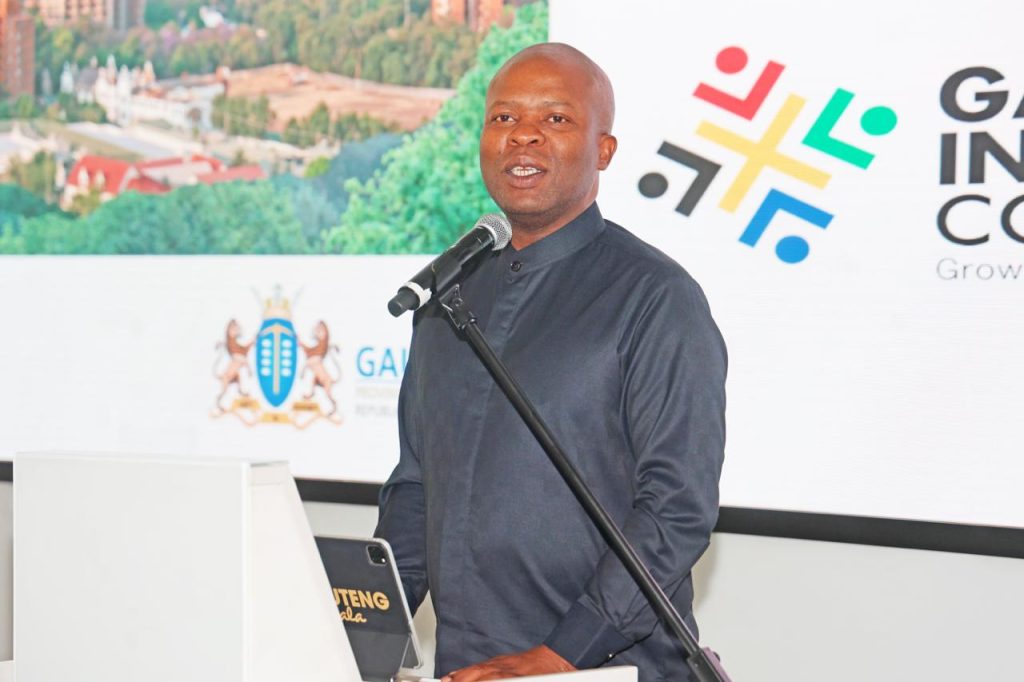
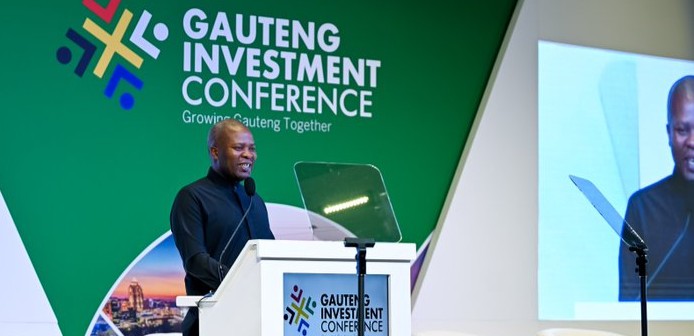
By Mandla Mpangase Lebogang Maile, former Gauteng MEC for Finance and Economic Development and now MEC for Education, has set an ambitious target of mobilising at least R200-billion in new investment commitments at the 2026 Gauteng Investment Conference, positioning the province as a leading subnational platform for deal-making on the continent. Speaking at the opening of the conference, Maile said Gauteng is shifting from “mobilisation to institutionalisation” of investment, as the province seeks to convert pledges into tangible economic activity. The conference, now in its second year, has evolved from a traditional investment showcase into what Maile described as a “central instrument” for driving growth, coordinating stakeholders, and translating policy into implementation. From pledges to projects The inaugural 2025 conference attracted more than 1 800 participants and secured R312.5-billion in investment pledges, signalling renewed investor confidence in South Africa’s economic hub. However, Maile stressed that success is no longer measured by headline figures alone. “Investment conferences are not judged by what is announced, but by what is delivered,” he said. According to Maile, a “meaningful portion” of those commitments has already moved into implementation, unlocking tens of billions of rand into infrastructure, industrial capacity, energy systems, and job creation. This progress, he argued, reflects a deliberate shift to a lifecycle-based investment model – one that spans project origination, preparation, packaging, investor engagement, facilitation, delivery, and aftercare. A multiplier for growth Maile described the Gauteng Investment Conference as a “force multiplier” that integrates project preparation, intergovernmental coordination and capital mobilisation into a single system aligned with the Gauteng Economic Plan. The province, which contributes roughly a third of South Africa’s GDP, remains the country’s primary economic engine and a key gateway into African markets. Yet it faces structural constraints, including low national investment levels, infrastructure backlogs, and energy instability. At the same time, intensifying global competition for capital and shifting supply chains are reshaping investor expectations. “Investors are no longer responding to ambition alone,” Maile said. “They are responding to credibility, governance, execution capability, and the ability to convert opportunity into outcomes.” Focus on high-growth sectors The 2026 conference is structured around transactions rather than presentations, with curated deal rooms and sector-focused engagements aimed at accelerating project closure. Priority sectors include: Maile said the province is strengthening coordination across national, provincial, and municipal pipelines to present “one government” to investors, reducing fragmentation and improving project visibility. Continental ambitions A key feature of this year’s conference is the Gauteng Pan-African Economic Partnership Mobilisation initiative, which seeks to align with the African Continental Free Trade Area and the African Union’s Agenda 2063. The aim is to build cross-border value chains and position Gauteng as a gateway to Africa’s industrialisation. Maile argued that if successful, Gauteng’s model could serve as a blueprint for other African regions seeking to compete globally through integrated, investment-ready ecosystems. Aftercare and execution in focus A major emphasis for the 2026 Gauteng Investment Conference is post-conference implementation. Maile highlighted the importance of “aftercare” in ensuring that projects progress efficiently through regulatory approvals, financing, and construction. He called on municipalities to accelerate approvals and align project pipelines, while urging development finance institutions and banks to expand blended finance solutions that can de-risk large-scale infrastructure investments. The private sector, he added, should view itself not merely as participants but as co-investors in the province’s growth trajectory. From promise to performance Framing the conference under the theme Re-Industrialising Africa’s Gateway: Investment, Innovation and Integrated Growth, Maile said Gauteng is building a system for continuous capital formation rather than relying on one-off events. “We are not presenting a wish list,” he told delegates. “We are presenting structured opportunity – bankable projects, aligned policy frameworks, coordinated institutions, and an administration committed to delivery.” With project pipelines prepared and partnerships taking shape, Maile concluded that the province is ready to move “from promise to performance” as it seeks to entrench investment-led growth in South Africa’s economic heartland.


Logistics roundtable sets stage for 2026 Gauteng Investment Conference

By Mandla Mpangase “The opportunity is not ahead of us – it is here,” the head of the Gauteng Department of Economic Development, Motlatjo Moholwa, told participants at a high-level roundtable on logistics in Pretoria on 19 March 2026. With Gauteng contributing approximately 34% of South Africa’s GDP and more than 45% of its manufacturing output, Moholwa used the platform to reinforce the province’s position as the country’s industrial powerhouse and a prime destination for investment. The roundtable, convened by the Automotive Industry Development Centre (AIDC) and the Tshwane Automotive Special Economic Zone (TASEZ), forms a key part of the build-up to the 2026 Gauteng Investment Conference taking place on 9 April 2026 It brings together senior representatives from government, state-owned entities, logistics operators, manufacturers and investors to align on priorities that will shape Gauteng’s investment pipeline. “This roundtable is more than a conversation,” Moholwa said. “It is a strategic platform feeding into the Gauteng Investment Conference, where we will showcase bankable projects and present Gauteng as an investment-ready destination.” Driving toward an investment-ready province At the heart of discussions is the need to strengthen Gauteng’s logistics ecosystem to support industrial expansion, particularly in the automotive sector, where the province hosts a dense network of component manufacturers and OEM-linked operations from Rosslyn in the west to Silverton in the east, and across the broader Tshwane corridor. Participants are focusing on practical reforms to: These interventions are expected to play a key role in attracting private sector participation and ensuring that infrastructure development aligns with the province’s broader industrial strategy ahead of April’s conference. Localisation and industrial growth A major theme emerging from the roundtable is the importance of component localisation in deepening Gauteng’s manufacturing base. “With its well-developed industrial infrastructure, access to skilled and semi-skilled labour, and strong technical training institutions, Gauteng is not just participating, it is a leading component manufacturing. “This makes the province an ideal destination for investment,” Moholwa said. Moholwa highlighted opportunities in import replacement, the growing automotive aftermarket, and export expansion through the African Continental Free Trade Area (AfCFTA). He also pointed to the rise of green mobility as a new frontier for investment, particularly in electric vehicle components and advanced materials. However, he stressed that unlocking this potential will require deliberate action, including stronger supplier development programmes, improved access to finance, and greater coordination between OEMs and local suppliers. Infrastructure is the foundation Infrastructure remains a central pillar of Gauteng’s investment drive. The roundtable discussions are exploring how enhanced road and rail integration, coupled with targeted infrastructure investment, can reduce inefficiencies and improve the movement of goods across key corridors. With established industrial zones, specialised facilities such as the Automotive Supplier Park, and incentives offered through special economic zones like TASEZ, Gauteng is positioning itself as a globally competitive manufacturing hub. “Manufacturers benefit from market access to the SADC region, an established industrial base that reduces the cost of entry, and dedicated facilities such as the Automotive Supplier Park and Special Economic Zones like TASEZ, which offer world-class infrastructure, incentives, and streamlined regulatory processes. Public-private partnerships and government commitment further strengthen the province’s investment readiness,” Moholwa added. Countdown to 9 April As the province prepares for the conference, engagements like today’s roundtable are helping to refine its investment narrative to one based on infrastructure development, industrial expansion and localisation. “Scaling localisation requires deliberate action,” he said. “We must strengthen supplier development programmes to build technical capability and quality standards, improve coordination across OEMs and suppliers, and invest in skills development, technology adoption, and industrial infrastructure. “Equally important is enhancing access to finance and markets for emerging manufacturers and providing policy certainty that encourages local production.” The head of the province’s Department of Economic Development issued a three-fold challenge to the participants at the roundtable: “We call on industry to invest, expand, and partner locally. We call on government and agencies to enable, support, and accelerate. And we call on all stakeholders to collaborate in building a globally competitive, locally anchored manufacturing ecosystem.” Moholwa’s call to action was unequivocal: collaboration between government, industry and institutions will be essential to translate plans into tangible investment outcomes. With just weeks remaining before the conference, Gauteng is not only making its case to investors, it is also shaping the conditions needed to secure long-term, inclusive economic growth.

Budget 2026 signals infrastructure push and investment drive to unlock growth

By Mandla Mpangase South Africa’s 2026 national budget has positioned infrastructure investment, structural reform and private-sector participation as the central levers to accelerate economic growth, attract investment and create jobs – priorities that align closely with the country’s industrialisation agenda and the expansion of Special Economic Zones (SEZs) such as the Tshwane Automotive Special Economic Zone (TASEZ). Delivering the budget in Parliament on 25 February 2026, Finance Minister Enoch Godongwana said the country had reached “an important turning point” in public finance management, with debt stabilising for the first time in 17 years and fiscal credibility improving following South Africa’s removal from the Financial Action Task Force (FATF) grey list and its first credit-rating upgrade in 16 years. “These are signals of restored credibility. Of renewed resilience. And of a nation regaining its footing.” These improvements, he argued, create the foundation for investment-led growth. “The lesson is a simple but powerful one: steady structural reform and responsible public finances are the bedrock of a prosperous and more inclusive South Africa,” he told Parliament. Infrastructure at the centre of growth strategy For industrial zones and manufacturing hubs, the most significant announcement is the government’s commitment to spend more than R1-trillion on public-sector infrastructure over the medium term. Transport and logistics will receive the largest share, including: These investments are critical for SEZ competitiveness, where efficient logistics, reliable utilities and modern transport connections are key determinants of investor decisions. Government is also advancing a credit guarantee vehicle (CGV) with development partners to unlock large-scale investment in electricity transmission, an intervention expected to improve energy security for industrial users. Structural reforms to unlock investment The budget reinforced ongoing reforms under Operation Vulindlela, focusing on energy market liberalisation, logistics reform and improved local government performance – all longstanding constraints on industrial expansion. Reforms to municipal utilities, including a R27.7-billion performance-linked programme for electricity, water and sanitation services in metros such as Johannesburg, are particularly relevant for industrial zones dependent on reliable municipal infrastructure. National Treasury warned that poor municipal reinvestment practices have created massive infrastructure backlogs, including a R64-billion water backlog in Johannesburg alone. For industrial investors, improved municipal governance could reduce operational risk and improve investment attractiveness in urban economic nodes. Public-private partnerships and industrial opportunity Government signalled a renewed push for public-private partnerships (PPPs), with 63 projects currently in development and new municipal public-private partnership regulations expected by June 2026. Among the most advanced projects are border post upgrades aimed at improving regional trade flows – a priority for export-oriented manufacturing located in SEZs. The Budget Facility for Infrastructure (BFI) has already approved R21.9-billion for strategic projects, including Transnet rail corridor upgrades that will restore freight capacity for bulk commodities – an important signal for industrial supply chains. Industrialisation, data infrastructure and new-economy investment The budget also highlighted data centres and artificial intelligence infrastructure as emerging strategic investment areas, with the government exploring incentives to expand South Africa’s role as a regional technology hub. For zones like TASEZ, which are seeking to attract advanced manufacturing and technology-enabled production, this focus could open opportunities for new categories of investors beyond traditional automotive manufacturing. Trade reforms linked to the African Continental Free Trade Area (AfCFTA) were also emphasised, with National Treasury easing cross-border investment rules to position South Africa as a continental financial hub. Skills reform and workforce development A major policy shift announced in the budget is the planned restructuring of the national skills system, including the introduction of a dual-training model combining theoretical learning with workplace training. This approach mirrors international vocational systems and could directly support industrial employers seeking artisans, technicians and production workers – a key workforce requirement for SEZ-based manufacturers. The government acknowledged that existing SETA (Sector Education and Training Authority) and National Skills Fund outcomes have fallen short and pledged reforms to improve labour-market readiness. Support for small businesses and suppliers Measures to support small enterprises include: For industrial zones, these policies could strengthen supplier development ecosystems by improving the sustainability of small manufacturers and service providers integrated into SEZ value chains. Growth outlook and job creation challenge Despite reform progress, economic growth remains modest, projected at 1.6% in 2026 and averaging 1.8% over the medium term, rising to 2% by 2028. “These developments are unfolding within an unprecedented global trade environment characterised by persistent geopolitical tensions and shifting trade policies which are reshaping supply chains,” the Minister said. “In response, we need to diversify our trading portfolios, secure new markets, reduce vulnerability to external shocks and position ourselves to benefit from emerging global growth centres.” While the government has acknowledged that logistics inefficiencies, infrastructure weaknesses and agricultural disruptions continue to constrain growth, infrastructure-led investment remains the most credible pathway to sustainable job creation. “Our efforts to promote faster economic growth continue to revolve around the four pillars: These pillars are the foundation upon which inclusivity is built, and how we ensure that growth is faster.” Implications for TASEZ and SEZs The budget sends several positive signals for Special Economic Zones: While SEZs were not explicitly mentioned in the Budget, the policy direction reinforces their role as catalytic platforms for industrialisation, localisation and job creation. Fiscal stability as an investment signal Debt is expected to stabilise at 78.9% of GDP in 2025/26, then decline gradually, while the budget deficit narrows to 3.1% by 2027/28. For investors, these indicators are significant. Improved fiscal credibility lowers borrowing costs, reduces macroeconomic risk and strengthens confidence in long-term investment decisions, particularly for capital-intensive manufacturing projects typically located in SEZs. A cautious but investment-focused trajectory Although the 2026 budget does not promise rapid economic expansion, it does signal a more stable policy environment and a stronger commitment to infrastructure-led growth. For industrial development initiatives like TASEZ, the combination of infrastructure spending, structural reform and skills investment provides a supportive policy framework. As Minister Godongwana concluded, inclusive growth and fiscal sustainability must move together if South Africa is to reduce unemployment and build a more competitive economy.

Gauteng Investment Conference 2026 sets sights on R200-billion at JSE launch

By Mandla Mpangase The Gauteng Provincial Government has formally launched the Gauteng Investment Conference 2026, positioning the event as a central mechanism to convert investor interest into tangible projects, infrastructure delivery, and job creation across South Africa’s economic hub. Gauteng MEC for Finance and Economic Development, Lebogang Maile, unveiled the initiative on 17 February 2026 at the Johannesburg Stock Exchange in Sandton, describing the venue as symbolic of the province’s ambition to mobilise capital at scale. “It is profoundly symbolic that we gather here today at the Johannesburg Stock Exchange as it represents the power of investment,” Maile said, noting the exchange’s market capitalisation of more than R24-trillion and its role in enabling businesses to access capital, expand operations, and create jobs. From pledges to projects The launch builds on the inaugural conference held in April 2025, which secured R312.5-billion in investment pledges across 60 projects, with expected support for more than 114 000 jobs and significant economic opportunities across sectors such as agro-processing, transport infrastructure, property development, and aviation. Maile emphasised that the provincial government is now shifting focus from commitments to delivery. “As of this month, 28% of the pledges secured in 2025 have already been converted into active implementation,” he said, adding that 17 projects are currently being rolled out, unlocking approximately R73-billion into the “real economy”. This conversion rate, he said, is central to Gauteng’s credibility as an investment destination, demonstrating that the conference is not an “event-driven exercise” but a continuous lifecycle spanning project origination, structuring, facilitation, and execution. A key example cited was the ongoing development of the OR Tambo International Airport precinct, which is emerging as a major logistics, manufacturing, and industrial hub. Strategic projects and industrial growth The 2026 conference will showcase large-scale catalytic projects aligned with corridor-based development and industrial clustering. These include: Maile said these projects are supported by feasibility studies, regulatory alignment, and institutional backing to strengthen Gauteng’s competitiveness and long-term growth trajectory. The conference also aligns with broader policy frameworks such as the African Continental Free Trade Area and Agenda 2063, with Gauteng seeking to deepen pan-African value chains and leverage international partnerships established through engagements in Europe and global investment forums. Targeting new commitments For 2026, the province aims to secure at least R200-billion in new investment commitments, a target Maile described as “pipeline-backed and supported by structured engagement with investors, development finance institutions and sector leaders”. Priority sectors include: The conference will also feature curated deal rooms and structured policy dialogues involving African governments, global investors, and private-sector stakeholders, with municipalities playing a central role in project preparation and approvals. “In 2025, we demonstrated that Gauteng can mobilise capital,” Maile said. “In 2026, we are showing that Gauteng can convert capital into projects, jobs and economic growth.” Improving investor confidence Speaking at the launch, Sam Mokorosi, Head of Origination and Deals at the JSE, said recent macroeconomic improvements were helping to restore investor confidence in South Africa. These include easing inflation, improving interest rate trends, stronger global engagement with emerging markets, and South Africa’s exit from the Financial Action Task Force grey list, followed by a sovereign credit rating upgrade. He noted that the FTSE/JSE All Share Index surpassed 100 000 points last year, with foreign participation and daily equity volumes increasing, alongside a healthy pipeline of new listings expected in 2026. “For Gauteng and for the Gauteng Investment Conference, these trends matter,” Mokorosi said. “They reinforce the message that confidence is returning — not abstractly, but in measurable ways that shape investment decisions and long-term growth prospects.” He added that the JSE is supporting investment mobilisation through new financial products, inward listings, and initiatives such as a voluntary carbon market, which issued its first carbon credit in 2025. Gauteng’s role in the continental economy As South Africa’s economic powerhouse, Gauteng contributes roughly 34% of the national GDP, about 7% of sub-Saharan Africa’s output, and drives around 60% of South Africa’s exports to the continent. The conference is therefore not only about provincial growth, but also about strengthening Africa’s industrialisation and regional value chains. The event, taking place on 9 April 2026, will bring together investors, development finance institutions, municipalities, business leaders and continental partners. “With the investment pipeline structured and coordination mechanisms in place, we are ready,” Maile said. “Together, we move from mobilisation to scaling — turning commitments into tangible impacts for our people and the economy.”

Milestones, meetings, momentum and meaningful growth: 2025, the year that was

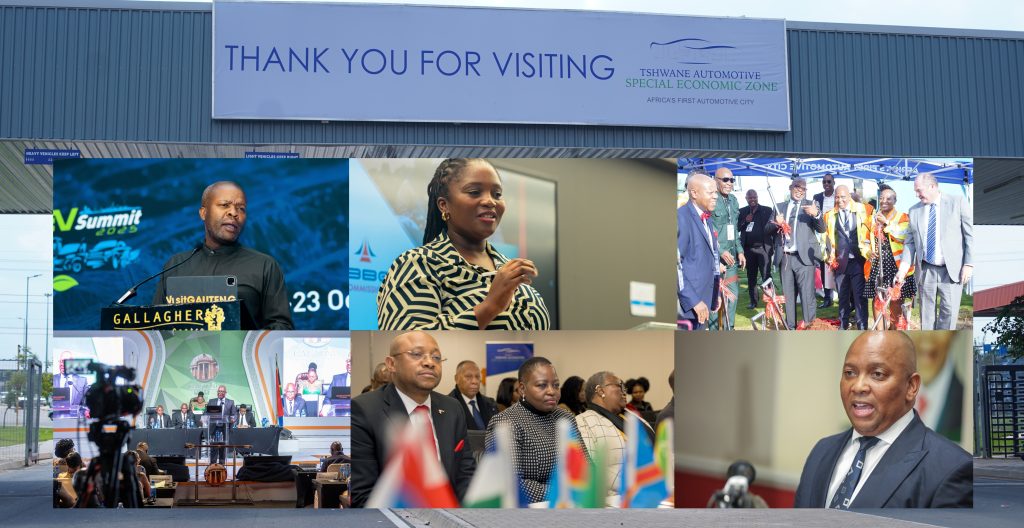
As 2025 draws to a close, the Tshwane Automotive Special Economic Zone looks back on a year that truly defined Africa’s first automotive city. It was a year of bold steps forward, strengthened partnerships, international visibility and a deepening role in South Africa’s industrialisation agenda, writes TASEZ CEO Dr Bheka Zulu. From breaking ground on new infrastructure to hosting high-level national events, TASEZ continued to prove why it is the country’s leading special economic zone (SEZ). Breaking new ground: Phase 2 takes off One of the standout highlights of the year was the sod-turning ceremony for Phase 2 of the TASEZ development, involving the Gauteng Premier, Panyaza Lesufi, TASEZ board members and anchor tenant Ford. The event signalled the start of an ambitious expansion designed to support South Africa’s next wave of automotive and component manufacturing investment. Phase 2 introduces new industrial platforms, expanded capacity for suppliers, and opportunities for medium, small, and micro enterprise (MSME) participation. It positions TASEZ to meet growing global demand, particularly in new energy vehicles (NEVs), and strengthens its integration into Tshwane’s industrial and logistics corridors. This moment marked a powerful step into the future and demonstrated the commitment from government, industry and local partners to drive sustainable, job-rich economic growth. An historic first: Hosting the State of the Province Address In February, TASEZ made history by becoming the first government institution to host a State of the Province Address (SOPA). This landmark moment brought South Africa’s leadership, the diplomatic community, the automotive sector and media into the heart of the SEZ. Hosting the SOPA showed that TASEZ is not only a centre of production, but a national platform for dialogue, policy direction and public accountability. The event showcased the SEZ’s impressive infrastructure, operational readiness and central role in the province’s economic plans. For many South Africans watching or attending, TASEZ became synonymous with Gauteng’s vision of a modern, industrial, investment-ready economy. Expanding global reach: TASEZ heads to China and hosts SADC International engagement was a defining feature of 2025. This was reinforced by a successful business mission to China, where TASEZ leadership met with major automotive manufacturers, potential investors and technology partners. The visit focused on: With China leading global NEV production and innovation, this mission placed TASEZ firmly on the radar of companies looking for a strategic African manufacturing base. In addition, in yet another first for a South African SEZ, TASEZ welcomed the heads of mission from the Southern African Development Community (SADC) to share information and talk about unlocking opportunities for economic growth in the region. The TASEZ team, headed by CEO Dr Bheka Zulu, rolled out the red carpet for the distinguished SADC delegation – ambassadors, high commissioners, and chargés d’affaires – along with representatives from the Department of International Relations and Cooperation and the Department of Trade, Industry and Competition, Brand South Africa, and Trade and Investment KwaZulu-Natal. This gathering was not just a simple meeting – it was a deliberate step toward weaving stronger ties between neighbours, aligning with the goals of SADC, the Southern Africa Customs Union, and the African Continental Free Trade Area. Strengthening policy alignment: Visits from TIPS and Parliament Two significant engagements this year reinforced TASEZ’s role as a strategic player in South Africa’s industrial development landscape: a visit by the parliamentary portfolio committee for trade, industry and competition, followed by a visit from TIPS (Trade and Industrial Policy Strategies). The parliamentary visit highlighted TASEZ’s importance in national oversight and industrial planning. Members engaged with management, toured facilities and assessed the SEZ’s socio-economic impact. The research institution visited the SEZ to assess its contribution to localisation, job creation and competitiveness. Their findings helped strengthen policy alignment and opened discussions on future collaboration. Both visits affirmed that TASEZ is not just delivering – it is taking the lead. Governance excellence: Five clean audits in a row In a year filled with milestones, one achievement stands out for its consistency and integrity: TASEZ received its fifth consecutive clean audit. This accomplishment highlights: At a time when transparent and ethical public administration is more important than ever, TASEZ continues to demonstrate what professional, compliant, high-performing institutions can achieve. A strong industry presence: Naacam and naamsa conferences TASEZ strengthened its industry footprint this year by participating in two major automotive forums: the Naacam Show held in Gqeberha in August 2025 – engaging component manufacturers and showcasing localisation opportunities; and naamsa’s Auto Week that also took place in Gqeberha, but in October 2025 – networking with OEMs and industry leaders while promoting TASEZ’s investment-ready platforms These conferences reinforced TASEZ’s growing reputation as a critical hub for automotive manufacturing, innovation and supplier development. Driving the future: Co-hosting the first NEV Summit TASEZ took centre stage in South Africa’s transition to electric mobility by co-hosting the inaugural New Energy Vehicles Summit held at the Gallagher Convention Centre in late October 2025. The summit brought together policymakers, OEMs, suppliers, researchers and energy experts to map out the country’s role in the global NEV shift. TASEZ’s involvement sent a strong message: the SEZ is ready to become South Africa’s home of NEV manufacturing. The summit provided a platform to discuss infrastructure needs, workforce readiness, supply-chain adjustment and opportunities for new investment. Looking ahead to 2026 If 2025 was a year of bold advances, 2026 promises to be a year of consolidation and delivery. With major construction underway, new investment discussions progressing, and a clear national mandate to support industrial growth, TASEZ is set to play an even bigger role in shaping the country’s economic future. TASEZ enters the new year with momentum, credibility and a clear vision to be Africa’s premier automotive manufacturing destination.

South Africa’s auto industry holds advantage in Africa, Says Minister Tau

By Mandla Mpangase South Africa’s automotive industry continues to anchor the country’s manufacturing capacity and offers a “unique competitive advantage” on the African continent, despite facing significant global and domestic headwinds. This was the message from Minister of Trade, Industry and Competition, Parks Tau, addressing delegates at South Africa Auto Week 2025, hosted by naamsa (The Automotive Business Council) in Gqeberha from 1–3 October. Tau said that while the sector has weathered one of its most challenging periods over the past nine months, it remains one of the cornerstones of South Africa’s economy. “In 2024, the industry contributed 5.2% to GDP and accounted for 22.6% of total manufacturing output. It provides nearly 500 000 formal jobs across assembly, components, retail and services, while supporting around one million livelihoods,” he told delegates. New markets and partnerships Tau highlighted fresh opportunities emerging on the continent and beyond. Following recent engagements in Saudi Arabia and Nigeria, he said South African component manufacturers could partner with counterparts in those countries to expand their footprint. “We’re prepared to allow African investors to partner with our local companies and create manufacturing capacity in those markets. It is an opportunity we must take advantage of,” Tau explained. At the same time, global OEMs operating in South Africa have committed to transitioning from semi-knockdown to complete knockdown production, deepening local manufacturing capacity. “Our duty is to work with these companies to ensure they become part of the local production base, taking advantage of South Africa’s skills and positioning the country as a platform for access to African markets,” Tau added. Transition to new energy vehicles The minister stressed that the industry is at a critical “inflection point” as global markets accelerate their shift away from fossil fuel vehicles towards new energy vehicles (NEVs). With major export destinations such as the European Union and the United Kingdom moving to ban new petrol and diesel vehicles from 2035, South Africa must adapt or risk losing market share. Already, the shift is underway: in 2024, South Africa recorded 15 600 new energy vehicle sales, representing 3% of the local market. The sector also attracted R12-billion in new investment for NEV-related manufacturing. Government has introduced measures to support this transition, including a 50% tax deduction for qualified NEV investments, partnerships with universities and research institutions, and strategies to localise production of critical inputs such as battery materials. “This is not just an industrial project,” Tau said. “It is about positioning South Africa at the heart of the global mobility revolution, not as a taker of technology, but as a maker. If we succeed, we will safeguard exports, create jobs, and place Africa at the forefront of clean mobility solutions.” Africa as an engine of growth Africa has emerged as a key market, with the continent becoming South Africa’s second-largest export destination in 2024. Vehicle exports into Africa grew by 12.4% year-on-year to R48.1-billion. The African Continental Free Trade Area (AfCFTA) is expected to further unlock opportunities, from reducing logistics costs to enabling vehicle assembly across the continent. Beyond vehicles, Tau noted, it could also drive mineral beneficiation, particularly for critical minerals such as cobalt, graphite, and lithium essential for the NEV transition. “Together, Africa can build a battery industry that reduces dependence on imports and positions the continent as a hub for clean mobility,” he said, adding that South Africa is leading the development of an African automotive hub that could align policies and attract investment. In closing, Tau emphasised that South Africa’s auto sector, with its industrial depth and mineral wealth, is uniquely positioned to lead Africa’s role in the global energy transition. “The automotive sector has been at the heart of our industrial story for more than a century. Today, it stands at a defining moment. “Its transition to new energy vehicles will define our relevance in a low-carbon world, while its integration into Africa’s free trade area positions us as leaders on the continent,” he said. “If we seize this opportunity, we will not only secure South Africa’s competitiveness but also place Africa at the forefront of the global mobility revolution.”

SA’s auto industry is the backbone of the country’s economic growth

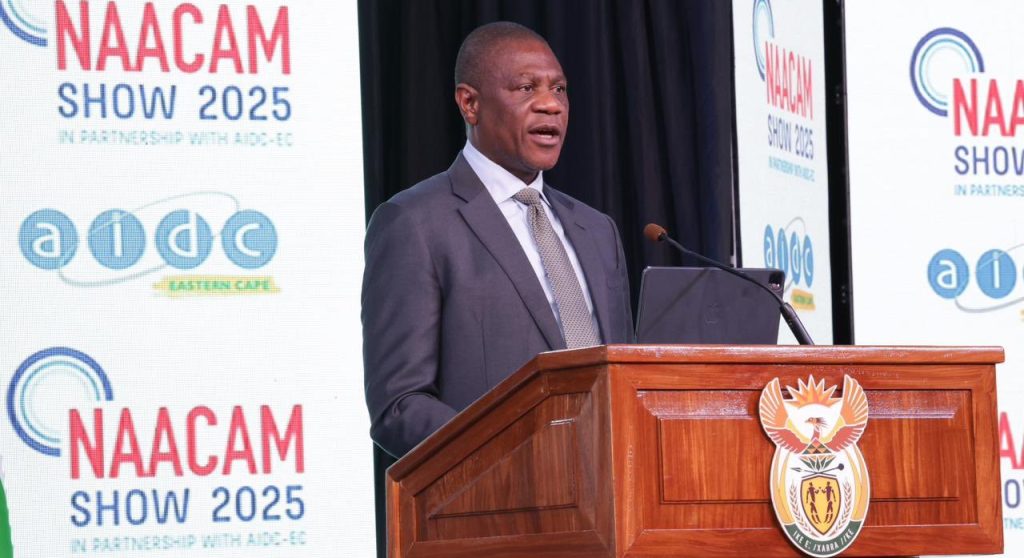
By Mandla Mpangase The automotive industry holds significant potential for shared prosperity through targeted industrial development, according to South Africa’s Deputy President Paul Mashatile. He was delivering the keynote address on 14 August 2025 at this year’s Naacam Show, currently taking place in Gqeberha, in the Eastern Cape. The automotive sector is one of South Africa’s most strategically important and internationally linked industries, accounting for 22.6% of manufacturing output and 5.2% of the country’s gross domestic product. Although the sector is a success story of industrial policy, it is important to increase employment in the sector. Currently, 115 000 people are employed in the sector, with more than 80 000 of those working in component manufacturing. The deputy president noted that the industry is export-oriented, globally competitive, and plays a vital role in regional and national industrial development. In 2024, the component sector exported R62.5 billion of components. “We must never allow the loss of these gains because of external and internal pressures. I say this with concern because the employment levels in the sector have been under strain due to ongoing economic pressures and reduced production volumes.” Naacam, the National Association of Automotive Component and Allied Manufacturers, recorded 12 company closures over the past two years, affecting the livelihoods of 4 000 individuals. “What is of more concern are the recently released figures by Statistics South Africa showing that the country’s unemployment rate has climbed to 33.2% in the second quarter of 2025, an increase from 32.9% in the previous quarter,” Mashatile said. “This latest figure is a clear indication that the nation’s unemployment crisis remains an urgent concern.” More effort is needed to combat unemployment, including improving education and skills to match labour market demands, promoting entrepreneurship and small enterprises, and investing in public employment programmes to generate jobs. TASEZ is currently attending Naacam to share knowledge and monitor the latest developments and trends in the sector. The deputy president noted that the government supports the automotive industry through a combination of investment incentives, improved policy frameworks, and infrastructure development, including: Guiding the sector is the South African Automotive Master Plan 2035 (SAAM), which aims to build a globally competitive and transformed industry. SAAM goals include growing vehicle production to 1% of global output (1.4 million vehicles), increasing local content to 60%, doubling employment to 224,000 employees, and deepening transformation and value addition, with 25% Black-owned involvement at the Tier 2 and Tier 3 component manufacturer level. The Automotive Production Development Programme Phase 2 is the policy programme intended to support and enable the realisation of the objectives of SAAM. “We recognise the industry’s significant role and see it as the backbone of our economic growth, promoting industrial development and encouraging innovation,” Mashatile said. “I am of the view that by increasing investment in research and development, we can use the power of technology to improve efficiency and sustainability, ensuring that our products and services stay competitive in the global market.” New opportunities for growth could be unlocked through nurturing a culture of collaboration and partnership among manufacturers, suppliers, and stakeholders, he added. Support for the African Continental Free Trade Area “This sector, not just in South Africa but in Africa as a whole, has emerged as a critical area of investment, providing substantial prospects for growth and development.” In this context, it was important to acknowledge the significance of the African Continental Free Trade Area (AfCFTA) agreement on economic integration and industrialisation, which is projected to draw additional international investment into the African automotive industry. “The agreement has the potential to significantly boost the automotive industry across the continent by reducing trade barriers, fostering regional value chains, and harmonising regulations. This could lead to increased production, lower costs for consumers, and a more competitive market.” The implementation of the agreement has the potential to lessen the dependency of African countries on developing countries for automotive components and completed vehicles by promoting regional value chains and increasing local production. “Creating a single continental market for goods and services could potentially lead to increased trade, investment, and job creation within Africa.” However, Mashatile added that this does not suggest that South Africa does not need other nations as trading partners. “We believe in diversifying our investments and engaging in trade with several partners.”  Mashatile explained that the Cabinet has adopted a new trade proposal to the United States that aims not just to settle the 30% tariff but also has ramifications for over 130 other trading partners who may reroute products into the South African market. “I must highlight that there will be repercussions felt throughout the entire value chain if we do not reach an amicable trade agreement with the White House. “It is probable that South African suppliers who provide support to domestic original equipment manufacturers that export automobiles or integrated systems to the United States would experience volume cutbacks. This will put pressure on production planning, employment decisions, and investment choices.” The tariffs threaten to disrupt well-established trade flows and weaken the global competitiveness of South Africa’s automotive manufacturing ecosystem. “However, South Africa remains resilient and steadfast in its efforts to grow and protect our economy. We will continue engaging with the USA to identify practical solutions.” Attracting significant investment and driving innovation could strengthen South Africa’s manufacturing capabilities and global competitiveness. Proactive transformation of the sector “We can increase localisation with existing and potential new original equipment manufacturer entrants to market, achieving a 5% growth in South Africa’s localisation rate, potentially resulting in R30-billion in new local procurement.” In addition, research has indicated that South Africa is well positioned to localise high-value new energy vehicle components, including fuel cells, thermal management systems, e-axle and high-voltage battery mineral beneficiation and assembly. “At the heart of our vision for the automotive industry is a commitment to shared prosperity. We believe that sustainable development must benefit all members of society, empowering individuals and communities to thrive and succeed.”

SMMEs – engines of economic growth and regional trade

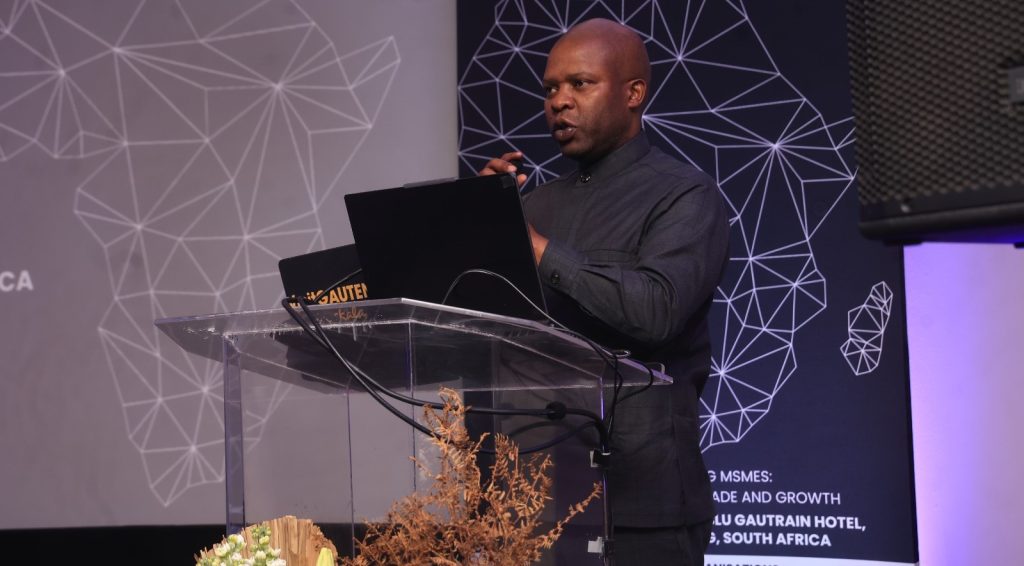
By Mandla Mpangase Small, medium, and micro enterprises stand poised to become powerful catalysts for regional trade and economic growth. This was one of the key messages Gauteng MEC for Finance and Economic Development Lebogang Maile told delegates at the African Continental Free Trade Area (AfCFTA) Conference taking place on 24 July 2025 in Johannesburg. “Micro, small, and medium enterprises (SMMEs) represent the heartbeat of Africa’s economy,” the MEC said. SMMES across Africa create the most employment, drive innovation, and provide much-needed goods and services that sustain communities. In South Africa SMMEs account for 80% of the country’s workforce and create an estimated R5-trillion turnover annually. It is estimated that there are three million SMMEs in South Africa, which employ some 13.4 million people. Of those, 2.5 million are micro-enterprises. Of these micro-enterprises, 72% operate in the informal sector. The SMME sector is vitally important to the Tshwane Automotive Special Economic Zone, which, from its inception, committed to building the local township economies of Eersterus, Mamelodi and Nellmapius. During its Phase 1 development, Africa’s first automotive city ring-fenced R1.7-billion of its procurement spend for SMMES and emerging entrepreneurs. As it expands Phase 2 of its development, TASEZ is planning to increase the numbers of SMMEs it supports through infrastructure projects, the creation of job opportunities, and skills training in both business development and in technical training for the automotive manufacturing industry. SMMEs as catalysts Speaking at the AfCFTA Conference, MEC Maile noted: “In light of the African Continental Free Trade Area – the largest free trade area in the world by the number of participating countries – SMMEs stand poised to become powerful catalysts for regional trade and economic growth.” The responsibility of the Gauteng Provincial Government, and all the stakeholders attending the conference, is not only to explore the pivotal role of SMMEs in shaping Africa’s economic landscape, but to outline their opportunities and challenges under AfCFTA, the MEC added. It was important to identify the strategies needed to harness the full potential of SMMEs for sustainable development. SMMEs in Africa operate across diverse sectors, from agriculture and manufacturing to services and digital innovation. They drive local value addition, foster entrepreneurship, and serve as engines of social mobility, particularly for youth and women. The latest FinScope MSME South Africa 2024 Survey, launched a few months ago, found that in the South African context of high unemployment rates, particularly among the youth, 30% of SMME-owners are 35 years old or younger. “While this may be considered too low, given that 50% of the adult population are youth aged 16-35 years, and that this demographic constitute 60% of the unemployed population, it indicates the important role that the SMME sector can play in turning the tide of youth unemployment in a continent with the world’s youngest population,” MEC Maile said. SMMEs creating jobs SMMEs are vital for job creation, notably absorbing the continent’s rapidly growing workforce. Their size also allows them to adapt quickly to market needs and to experiment with new products and services, facilitating innovation and flexibility. They also play a significant role in poverty reduction on the African continent, the MEC said, adding that by offering livelihoods to millions, they also play a direct role in reducing poverty and enhancing inclusive growth. The AfCFTA promises to reduce tariffs, eliminate barriers to intra-African trade, and stimulate industrialisation and investment. In doing so, it will allow the SMMEs to access a much larger market beyond their national borders and create unprecedented opportunities for growth by tapping into regional value chains, supplying components, services, or finished goods. “This not only promises gross domestic product growth across the African Union but also sets parameters for attracting investment in a depressed and volatile global economy.” A harmonised market environment would make African SMMEs more attractive to investors, both domestic and foreign, like the European Union. “The integration of markets through AfCFTA empowers SMMEs to play a transformative role in regional trade.” They can do this through enhancing of cross border trade, leveraging AfCFTA to expand their reach. “Reduced tariffs and simplified customs procedures lower the cost of doing business across borders, Maile added. This enables SMMEs to diversify their customer base, mitigate risks, and benefit from economies of scale. SMMEs as innovators In addition to this, they can also act as catalysts in driving innovation and competition. “Exposure to a broader market compels SMMEs to innovate and improve their competitiveness. This, in turn, stimulates higher quality standards, greater efficiency, and the adoption of new technologies,” Maile said. The AfCFTA facilitates the creation of regional value chains, where SMMEs can serve as suppliers, assemblers, or distributors. “By collaborating with firms in other African countries, SMMEs can access raw materials, expertise, and markets otherwise beyond their reach.” Such integration boosts industrialisation and intra-African trade, which remains concerningly low. “Intra-African trade still represents a relatively small portion of Africa’s overall global trade. In 2022, a year after the implementation of the AfCFTA, it reached $102-billion but only accounted for 15% of Africa’s total trade. “However, in 2024, intra-African trade reached $208-billion, representing a 7.7% increase compared to the previous year.” This growth could be attributed to the implementation of the AfCFTA and improved trade policies. The final key catalyst of SMMEs in the context of the AfCFTA is the promotion of inclusive economic growth. SMMEs are often owned or led by women and youth. “Their participation in regional trade under AfCFTA ensures that the benefits of integration are broadly shared. This inclusivity promotes equitable development and reduces inequalities within and between countries.” MEC Maile noted the AfCFTA creates a fertile environment in which SMMEs could survive, providing opportunities to access new markets, an improved business environment, technology and knowledge transfer, and finance and investment. However, SMMEs also face hurdles that could hinder their ability to capitalise on AfCFTA, such as a lack of information, inadequate access to finance, poor infrastructure, capacity constraints, and a complex regulatory environment. “To ensure that SMMEs become true catalysts for

Manufacturing has the potential to transform the economy and create jobs

By Mandla Mpangase Expanding manufacturing is not merely a desirable goal for Africa; it is an essential foundation on which the continent’s economic transformation, job creation, and long-term prosperity depend. This strong message was shared by Gauteng MEC for Economic Development, Lebogang Maile, at the Manufacturing Indaba 2025, taking place at the Sandton Convention Centre in Johannesburg. “This year’s gathering takes place under complex global economic and political realities where the African continent, and the entire global south, must re-think its place in the geo-political landscape,” the MEC said. “Re-thinking our place in this landscape also necessitates that we re-think how we are managing our economies and trade relationships,” Maile said, adding: “It is becoming increasingly evident that the future of our continent lies in our ability to strengthen collaborations.” The message resonates strongly with the Tshwane Automotive Special Economic Zone (TASEZ), which has set out on a mission to be a catalyst for employment, transformation, and socio-economic development and industry growth by being a node attracting automotive suppliers and automotive manufacturers, assemblers and supporting services. The MEC noted that agriculture and raw material exports had long been the backbone of African economies; the future lies in a sector that has fuelled the rise of every modern economy: manufacturing. “The expansion of manufacturing is not merely a desirable goal for the continent. It is an essential foundation upon which Africa’s economic transformation, job creation, and long-term prosperity depend.” The manufacturing sector’s ability to absorb large numbers of workers, foster innovation, and build complex value chains, makes it a critical pillar for sustainable development, Maile added. The South African Automotive Master Plan Something that is important to the TASEZ efforts to support the South African Automotive Master Plan 2035, is that of localisation and by extension, beneficiation of materials that are mined in the country. The master plan sets out several priorities to deliver on its vision of creating “a globally competitive and transformed industry that actively contributes to the sustainable development of South Africa’s productive economy, creating prosperity for industry stakeholders and broader society”. Included in the priorities is increasing local content used in manufacturing by 60% by 2035 – critical to this is the ability to beneficiate local minerals for use in manufacturing. As Maile noted, “Exporting raw materials without adding value reinforces economic dependence on foreign nations that process and manufacture these materials for profit.” Manufacturing offers an opportunity to move up the value chain, diversify economies, and reduce dependence on volatile international markets. “The continent’s demographic dividend could be the most important instrument in defining the future of the manufacturing sector.” Manufacturing is also uniquely placed to provide the scale and diversity of jobs required for Africa’s youth – Africa has a young population that is growing. It is expected that the continent’s population will double by 2050 to reach 2.5 billion people, with the majority being under the age of 25. “Manufacturing can offer employment across a spectrum of skill levels, from low-skilled assembly to high-skilled engineering. Moreover, manufacturing jobs tend to offer higher wages, better job security, and more opportunities for advancement compared to informal and even agricultural work.” Adding value – and jobs Value addition not only increases export revenues but also fosters the development of supporting industries such as packaging, transportation, marketing, and financial services. These interlinked sectors create a multiplier effect, generating jobs and boosting incomes across the economy. “In the Gauteng Province, we see the value of our investment in the manufacturing sector,” Maile said. It is the largest sector in the provincial economy, employing more than 500 000 people, and is also the biggest in South Africa, contributing more than 33% to the gross domestic product. Manufacturing is also a powerful conduit for technology transfer. “As African firms engage in manufacturing, they gain access to new machinery, production processes, and management techniques.” Partnerships with foreign firms and integration into global value chains further accelerate the transfer of knowledge and skills. At the moment, Africa’s share of global manufacturing output remains less than 2%. “But the continent’s potential is enormous,” Maile said. The African Continental Free Trade Area, which seeks to create a single market of over a billion people, offers an unprecedented opportunity for manufacturers to achieve economies of scale, access new markets, and increase competitiveness. “With the right policies, African manufacturers can integrate into global value chains, supplying not only regional markets but also Europe, Asia, and the Americas.” Despite its promise, the development of manufacturing in Africa faces significant hurdles, including inadequate infrastructure, unreliable energy supplies, limited access to finance, bureaucratic red tape, and skills gaps. “Addressing these challenges requires coordinated action by governments, the private sector, and international partners.” Key is investing in infrastructure. Reliable roads, ports, energy, and digital networks are essential for competitive manufacturing. “We must also prioritise improving the business environment. Streamlined regulations and transparent governance attract investment and foster entrepreneurship.” Skills are needed Another message from Maile hit home for TASEZ: making the building of human capital a key priority. TASEZ has launched its training academy to provide business-related skills to small, medium, and micro enterprises (SMMEs) as well as technical skills to workers who will be dealing with a changed automotive manufacturing sector that is focused on new energy vehicles. “Education and vocational training tailored to industry needs will ensure a skilled and adaptable workforce,” Maile told the Manufacturing Indaba. In addition, regional integration is one of the most critical priorities if the continent is to realise its manufacturing potential. “Strengthening trade ties and harmonising regulations across borders is crucial,” the MEC said. “Regional integration significantly boosts manufacturing economic development by expanding markets, fostering specialisation, and promoting innovation and efficiency. It allows countries to overcome limitations of smaller domestic markets, creating larger customer bases and facilitating economies of scale in manufacturing.” Integration also encourages specialisation within regional value chains, leading to increased efficiency and competitiveness. In his conclusion, the MEC reminded the audience: “The choices made today will determine whether the