Tasez

infrastructure

We must build on the momentum of our economic recovery

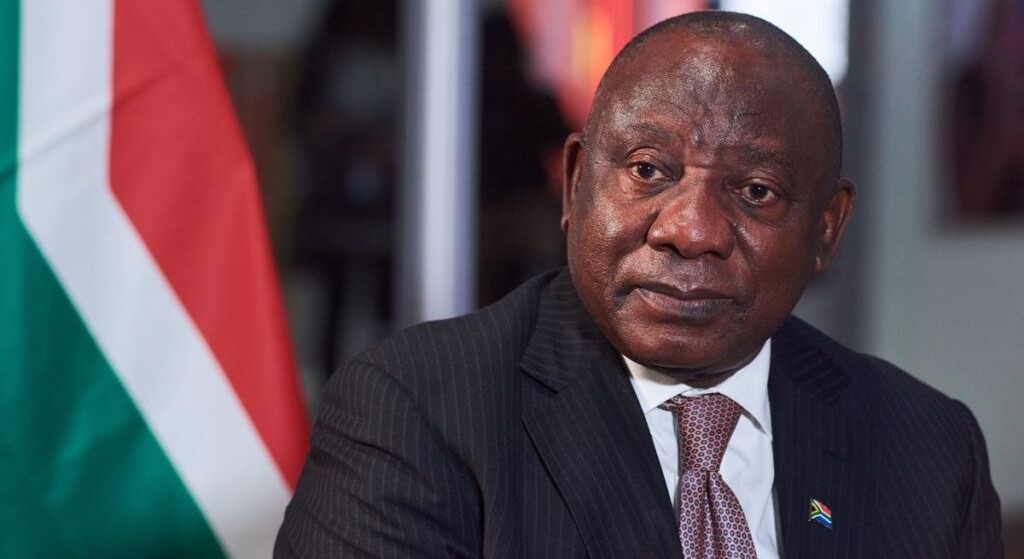
In his weekly newsletter on Monday, 26 January 2026, President Cyril Ramaphosa noted that the country’s economic recovery is on the up, with four consecutive quarters showing growth and unemployment showing a decline. As we enter a new year, the momentum of our economic recovery is gathering pace. In the last months of 2025, we saw a number of indicators that our collective efforts to rebuild our economy are bearing fruit. The economy has posted four consecutive quarters of growth. There has been a steady reduction in unemployment, while recent data released by Statistics South Africa shows that levels of poverty and inequality have declined considerably. Confidence in our economy is rising, the stock exchange has been performing well and the average inflation rate is the lowest in two decades. Late last year, South Africa exited the Financial Action Task Force grey list, which is an important signal of institutional improvement and a boost to investor confidence. We have also seen a sovereign credit ratings upgrade, reflecting strengthened fiscal credibility. While these signs of progress are encouraging, there is no time to rest. The difference between a temporary lift in growth and sustained shift in our economic trajectory lies in expanding investment. With a strengthening currency and rising commodity prices, we have wind in our sails. Now we must steer our ship towards greater prosperity for all South Africans. Last week, at its first meeting of the year, the Presidential Economic Advisory Council (PEAC) made clear proposals on how to achieve this goal. A body of respected local and international economists, academics and practitioners, the council provides strategic and evidence-based advice on policy decisions that promote economic stability, growth and inclusivity. The council said that government should translate recent positive developments into enduring growth by simultaneously boosting public infrastructure spending and lowering the cost of doing business. Increasing infrastructure investment is not simply about spending more. It is about delivering projects that reduce the cost of doing business, unlock growth and create jobs. Council members expressed strong support for the ongoing programme of structural transformation in key sectors such as electricity, logistics and water. These interventions, which have brought an end to load-shedding and improved rail and port performance, aim to enable competition, improve the efficiency of network industries and reduce costs across the economy. Our electricity reforms are critical to this effort. A competitive electricity market is essential to bringing down the cost of electricity. And lower electricity prices are critical for both inclusive growth and social development. Similarly, improving logistics performance in rail, ports and freight corridors remains essential to exports, industrialisation and job creation. In addition to boosting private investment, we need to achieve higher levels of public investment in infrastructure. Over the last few years, we have laid a solid foundation for investment by streamlining the regulations that have held back infrastructure projects, making it easier to pursue public-private partnerships, and establishing strong institutions such as Infrastructure South Africa and the Infrastructure Fund. We have committed more than R1-trillion of public funds for infrastructure projects over the next three years. We need to build on this foundation by strengthening our state-owned enterprises and enabling them to invest at much higher levels. We must do all of this at a time when the international environment is increasingly volatile and uncertain. Global growth is expected to remain subdued over the medium term and many countries are facing heightened trade and geopolitical tensions. This underscores the need for South Africa to sharpen its competitiveness and expand markets, particularly on the African continent. We must capitalise on the positive momentum of recent months by building strong partnerships, strengthening delivery, and closing the gap between policy intent and implementation. Only if our own institutions are strong can we compete and remain responsive in a rapidly changing world. During the course of this year, we need to double down on our efforts to grow investment and create jobs. We must seize the momentum we built and translate this into long-term gains for our economy. In the coming days, Cabinet will hold its annual Lekgotla to outline the actions that will be taken across Government and with social partners to achieve these goals. Through these actions, by working together, we will ensure that the progress we’ve seen in the last year will have an impact on the lives of South Africans this year.
2025 – A transformative year for TASEZ

As 2025 draws to a close, it offers an important moment to reflect on the achievements, challenges, and defining developments that have shaped the Tshwane Automotive Special Economic Zone (TASEZ), writes TASEZ executive for infrastructure, Andile Sangweni. This has been a year of momentum, consolidation, and forward vision, and one that has reaffirmed our position as one of South Africa’s leading special economic zones (SEZs) while pushing the boundaries of what world-class infrastructure delivery can look like. This has indeed been a transformative year for TASEZ. We have not only upheld our position as one of the country’s most advanced and impactful SEZs, but we have also redefined excellence in infrastructure delivery. Despite various national and global challenges, Phase 1 milestones were successfully achieved, demonstrating the strength of our operational planning and the resilience of our development model. With Phase 2 now underway, our focus is shifting decisively toward breaking ground and embracing the next wave of industrial growth. This phase is not simply an expansion; it is a catalytic step in deepening South Africa’s manufacturing capabilities and strengthening the country’s role in the global automotive value chain. Heading into Phase 2 A central achievement of 2025 has been laying the groundwork for the next phase of TASEZ’s evolution. The defining highlight of the year has been our work on ensuring the seamless integration of new infrastructure with Phase 1 facilities. This preparation is more than a technical requirement; it is a strategic pointer to our ongoing growth trajectory. It is about investor confidence, job creation, and community impact. The readiness to commence Phase 2 represents a collective vote of confidence from our stakeholders. It also confirms that infrastructure remains the backbone of sustainable economic transformation. Ready to tackle any test The year has not been without its challenges. South Africa continues to grapple with issues that directly influence industrial performance: Our response to these pressures has been deliberate and solution-driven. We are advancing energy resilience through renewable integration, ensuring that future phases of the zone offer greater stability and sustainability. We are driving a skills revolution through strengthened partnerships with educational and training institutions through the TASEZ Training Academy, preparing young people for the advanced manufacturing jobs of the future. And we are sharpening our global edge by streamlining processes and enhancing investor support mechanisms. Amid these dynamics, TASEZ’s role in advancing South Africa’s industrial development has become even more pronounced. TASEZ is a catalyst for the country’s industrialisation ambitions. By hosting world-class manufacturers, the zone embeds advanced technologies, creates sustainable employment opportunities, and supports the development of resilient supply chains. Our work also contributes to economic diversification, reducing import dependency and positioning South Africa as a globally competitive producer. In every sense, TASEZ is shaping industries, futures, and communities—delivering impact far beyond our physical footprint. As we look ahead, 2026 must be a year defined by acceleration and bold action. Our priorities are clear: These commitments will ensure that TASEZ continues to set the benchmark for industrial excellence, innovation, and inclusiveness.

Gauteng must ensure every rand derives tangible value and benefits for the people – MEC

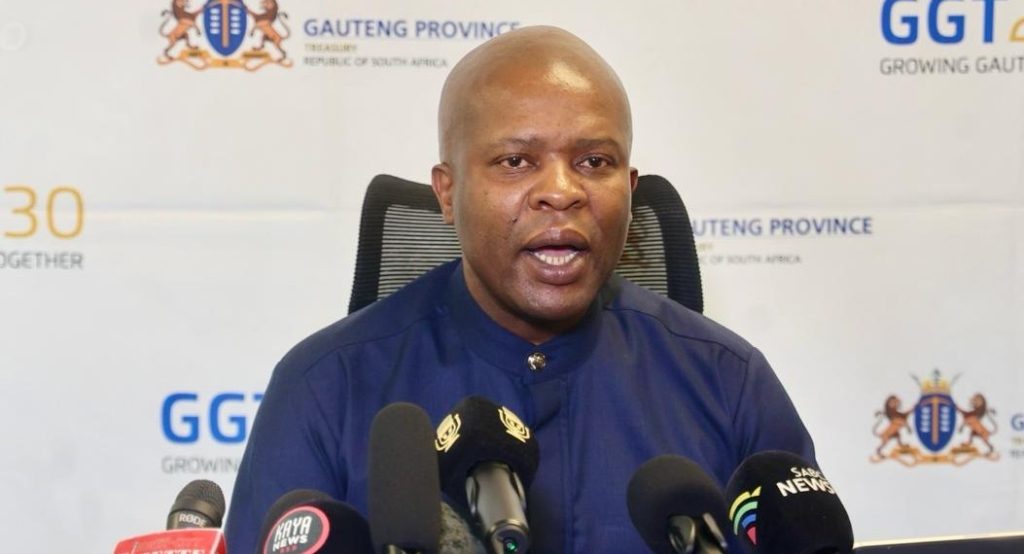
By Mandla Mpangase Infrastructure investment plays a pivotal role in economic development, job creation and contributes directly to the quality of life of our citizens Gauteng MEC for Finance and Economic Development Lebogang Maile told the Gauteng Legislature during the tabling of the province’s medium-term policy statement and adjustment budget. Addressing the Legislature on 2 December 2025 Maile said that Gauteng must increase its investment in infrastructure and improve on robust infrastructure systems that support all provincial services including transport, health, education and social development.  “The Provincial Treasury has already introduced various measures to improve on the efficient and effective use of financial resources allocated for infrastructure projects,” MEC Maile said, adding that Instruction Notes have been issued as promised with the aim of responding to the needs of the intended beneficiaries and to prevent wasteful expenditure. “When we fail to deliver projects on time, within budget and to specifications inclusive of legislative compliance, we compromise on value for money.” Funding constraints meant that the provincial government had to intensify its efforts to secure alternative resource financing models. MEC Maile noted: “The high level of dependence on the provincial fiscus to fund infrastructure projects must also be addressed through the strengthening of cost recovery and exploring alternative funding sources.” More focus was being placed on consequence management of poorly performing service providers. “All provincial departments and entities are encouraged to work with the Provincial Treasury and other relevant stakeholders to prepare bankable applications for infrastructure projects that qualify for Budget Infrastructure Fund funding.” One key measure being taken was to focus on public-private partnerships as a vehicle to attract additional resources for infrastructure projects.  Maile pointed out that Gauteng’s economic output in 2024 had reached R2.4-trillion in 2024, making the province the country’s economic hub, responsible for R33 out of every R100 the country’s economy produces. Gauteng, with KwaZulu-Natal, and Western Cape, contributes approximately 63% of South Africa’s GDP. “However, we understand that the economy of this province must record far higher growth rates to lift South Africa’s GDP, accelerate the creation of much needed jobs and reduce poverty,” Maile said. Economic overview It was against this backdrop that the provincial executive council recently approved the Gauteng City Region Economic Growth and Development Plan. The plan is intended to contribute to the three strategic priorities of inclusive economic growth and job creation; improved living conditions and enhanced health and well-being; and a capable, ethical, and developmental state. The strategy is anchored on 10 pillars: The cross-cutting pillars of the strategy are innovation and digital transformation; women, youth and people with disabilities; township procurement; and research and development. Gauteng City Region Economic Growth and Development Plan is also supported by 12 sector master plans to enable policies and strategies, including the Township Economy Development Act (and the Township Economy Revitalisation Strategy), the Informal Business Upliftment Strategy, the Medium, Small and Micro Enterprises Strategy, the Trade and Investment Strategy and Green Hydrogen. MEC Maile told the Legislature that the Department of Economic Development is currently hosting several sector roundtables which will culminate in the establishment of the 12 sector-specific action labs. “These action labs will act as multistakeholder collaborative and solution-oriented platforms to enhance the effectiveness and implementation of the strategy. “The effective implementation of this strategy will set Gauteng on a positive economic growth path and create much needed jobs, amid global headwinds and domestic economic challenges,” Maile said. “We are working in partnership with all key stakeholders to accelerate efforts to facilitate economic infrastructure development; trade and investment promotion; improve the ease of doing business; and empower micro, small and medium enterprises, particularly those owned by previously disadvantaged groups.” This will go a long way in enabling the province to close the current output gap, enhance production and significantly increase our participation in international markets, he explained. The MEC tabled the Medium-Term Budget Policy Statement 2025, the Adjusted Estimates of Provincial Revenue and Expenditure 2025, and the Adjusted Estimates of Capital Expenditure 2025 for consideration. A responsible balance “The national fiscal framework is aimed at ensuring a responsible balance between government spending, tax revenue, and borrowing to prevent unsustainable debt to create a stable environment for long-term growth, job creation and investment financing of public services,” Maile said. “As the provincial government, our fiscal trajectory reflects these national issues. That is why our focus is on debt management, revenue strategies, and spending restraint, while seeking alternative funding sources to meet increasing public service demands amidst weak economic performance.” The provincial five-year budget approach introduced in the previous financial year will be continued for the 2026 Medium-Term Expenditure Framework (MTEF) Budget with the aim of addressing high-level provincial risks and stabilising public finances. The principles guiding the 2026 MTEF Budget include: “The goal of these principles is to stabilise provincial public finances by maintaining fiscal discipline and credibility and ensure impactful service delivery.” Adustments Budget The 2025/26 Adjustments Budget addresses pressures in frontline services, as a means of equipping the Gauteng Provincial Government to continue responding to the provincial imperatives underpinning the 2024 – 2029 MTDP and the G13 priorities. The total adjustment is R3.3-billion which includes the rollovers, national and provincial funding.  As part of this Adjustments Budget, an additional R2.2-billion has been allocated to provincial departments as follows:  “As we have said before, we are operating in a difficult environment in which we must find ways to strike a balance between the growing demand for public services and the fiscally constrained economy. We are addressing Gauteng’s fiscal trajectory through a combination of active debt management strategies and spending restraint.” The MEC also used the occasion to launch the pilot phase of TendaSwift – the province’s new e-procurement platform that will automate and digitise the entire tender management process in the province. Reiterating the message of Finance Minister Enoch Godongwana during his medium-term budget policy statement speech, Maile concluded: “‘We are choosing growth, stability, and reform’. I would like to affirm that as the Gauteng Provincial Government, we remain

Thank you to the people of South Africa for a historic G20 Presidency

“We have placed Africa’s growth and development at the heart of the G20’s agenda,” writes South Africa’s president Cyril Ramaphosa in his latest weekly newsletter published on 24 November 2025 – the day after the closing of the 2025 G20 Leaders’ Summit. Over the past two days, our country hosted leaders from around the world for the G20 Leaders’ Summit in Johannesburg.  This is the first time that the G20 has been hosted on African soil. Recognising the importance of this milestone, we have placed Africa’s growth and development at the heart of the G20’s agenda.  The G20 matters for South Africa not only to cement our important role in international affairs, but also to support our own growth and create jobs for South Africans. We can only achieve these objectives in an environment of global stability, inclusive growth and a level playing field.  Leading up to the G20 Leaders’ Summit, we hosted tens of thousands of delegates for more than 130 meetings in every part of our country, from Gqeberha to George, Cape Town to eThekwini, Hoedpsruit to Polokwane. We welcomed visitors from around the world to see and enjoy the beauty of our natural landscapes, the warmth of our people’s hospitality and the sophistication of our economy.  Our G20 Presidency has been rooted in the conviction that the world needs more solidarity, equality and sustainability.  While some have sought to create division and polarisation between nations, we have reinforced our shared humanity. We have fostered collaboration and goodwill. Above all, we have affirmed that our shared goals outweigh our differences.  We have prioritised issues that are important for advancing more rapid and inclusive growth in our own country. We reached agreements that will benefit every South African.  We secured a clear commitment from the international community to address the high levels of debt which divert spending by developing economies – including our own – on infrastructure, health and education. We placed this issue firmly on the agenda to increase investment on the continent and seize the unique opportunity that Africa presents.  The G20 leaders agreed on the need for increased global investment for climate action. This will be crucial for South Africa as we undertake a just energy transition to a low-carbon economy in a manner that protects workers, businesses and communities.  As the G20, we have agreed on the need for scaled-up disaster prevention and post-disaster reconstruction to address the rising impact of extreme heat, floods, droughts and wildfires. We raised this issue because a few areas in our country, particularly the Eastern Cape and KwaZulu-Natal, frequently experience disasters.  We have secured international agreement on a new approach to critical minerals so that they become a source of prosperity and sustainable development in the countries that produce them.  This supports our own ambition to use our extensive endowment of minerals to become a leading global player while ensuring that beneficiation takes place in South Africa and creates jobs in mining areas.  This has been the People’s G20. It has given new prominence to engagement groups from across global society, bringing together sectors like business, labour, parliaments, scientists, think tanks, women, young people, start-ups, civil society, mayors and the media. We can be proud of what South Africa has achieved in hosting a successful G20 Presidency and guiding countries towards agreement on complex and important issues. This has been the historic effort to which all South Africans have contributed. We thank the many people who welcomed visitors to our country, and the security services who ensured that the G20 Leaders’ Summit and all G20 events took place without incident. We thank all the members of different social sectors who participated in the engagement groups and in other G20 activities throughout the year. We thank our Premiers and Mayors for having been such welcoming hosts. We thank our Ministers and Deputy Ministers, G20 Sherpas and government officials who guided the deliberations with wisdom and purpose. Above all, we thank each and every South African for contributing to this success, and for showing the world the strength of our values, the generosity of our people and the power of what we can achieve when we work together. Many of the foreign leaders and delegates who came to our country recognised what our Ubuntu spirit is all about. The success of the G20 Leader’s Summit, together with the improving performance of our economy and growing confidence in our reform programme, shows that South Africa is a country on the rise.

TASEZ shows how SA can build an economy that works for all

By Mandla Mpangase Every South African knows that when infrastructure fails, life becomes harder. Jobs disappear. Businesses relocate. Communities lose hope. But when infrastructure works, everything else begins to work too. Factories stay open. Investors arrive. That is the import of the speech given today by President Cyril Ramaphosa at the National Construction Summit held in Kempton Park, Ekurhuleni. “We are gathered here not just to talk about building an industry, but to build a nation,” the president said, adding: “We are gathered here to share a dream and determination to build a country that works for all its people. South Africa’s national economic drive has never been only about building structures; it has always been about building a country that gives every person a fair chance – something clearly articulated in the National Development Plan (Vision 2030). And the message has been clearly stated through the years of democracy. “From a social development perspective, infrastructure provides people with what they need to thrive,” President Ramaphosa told the summit participants. “It improves the quality of life and can play a key role in reducing inequality. Through reliable infrastructure, we can boost productivity and reduce the costs of living.” It also provides countries with what they need to grow and develop. “Infrastructure facilitates trade and commerce. When we boost infrastructure through the construction industry, we attract investment.” And few places capture this mission more clearly than the Tshwane Automotive Special Economic Zone (TASEZ). Where infrastructure becomes industrial strength “Infrastructure is the backbone of development because, among many other reasons, it bolsters economic competitiveness and sustainability. Without infrastructure, economic growth slows down, inequality deepens, and the quality-of-life declines,” Ramaphosa said. For years, underinvestment in roads, rail, and logistics has held back the key sectors of mining, agriculture, and manufacturing. But South Africa is now shifting course. As the president pointed out: “Infrastructure is poised to once again become the flywheel of the economy. Infrastructure investment is one of the most effective levers for stimulating economic activity.” This is evident in the employment figures released by Statistics SA earlier this week. The latest Quarterly Labour Force Survey released by Statistics South Africa in November 2025 indicates a decrease in the official unemployment rate from 33.2% in the second quarter of this year to 31.9% in the third quarter. Employment increased by 248 000 in the third quarter, with construction the largest contributor with 130 000 new jobs. This is not an accident. It is the result of a deliberate national effort to turn infrastructure into a growth engine. And TASEZ is one of the clearest examples of what that looks like in practice. The special economic zone (SEZ) is proof that when investment is made in the right infrastructure, such as reliable power, efficient logistics, and modern digital systems, further investment is made, jobs are created, and industrial capability is strengthened. TASEZ is where South Africa’s automotive future is being built, factory by factory, with global manufacturers choosing the Tshwane SEZ because the fundamentals are already in place. A model for inclusive growth The zone is succeeding not only because of its industrial strength but because of its social impact. It is bringing economic activity to communities long left on the periphery. It is creating opportunities for young people entering technical fields. It is giving small businesses a stake in a globally competitive value chain. As TASEZ CEO, Dr Bheka Zulu, notes: “When we talk about spatial redress, this is what it looks like: development that doesn’t speak about communities but works with them.” Towards investment Government has committed R1-trillion in infrastructure spending over the medium term, alongside reforms to unlock greater private investment. Procurement war rooms, new public-private partnership guidelines, and accountability frameworks are designed to ensure that projects do not stall but move quickly from planning to ground-breaking. As the world prepares to join South Africa for the G20 Leaders’ Summit, the country is showing what renewal looks like on the ground. Roads are being rebuilt. Industrial zones like TASEZ are expanding. If this momentum is sustained, TASEZ will not be the exception but the blueprint, demonstrating what is possible when strong infrastructure, a capable state, and committed investors come together.

TASEZ Phase 2 underway as new reservoir site is handed to contractor

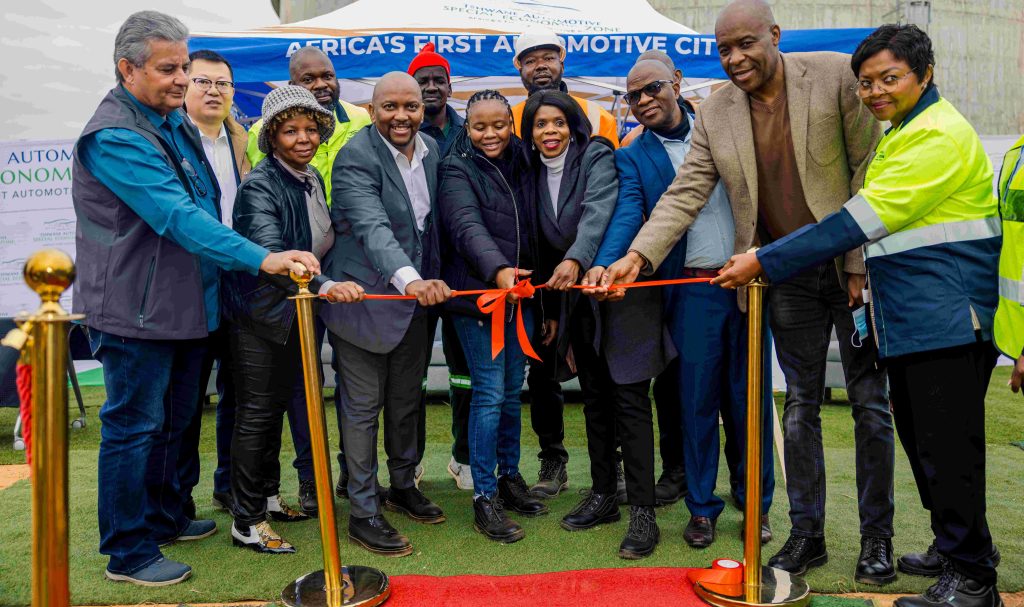
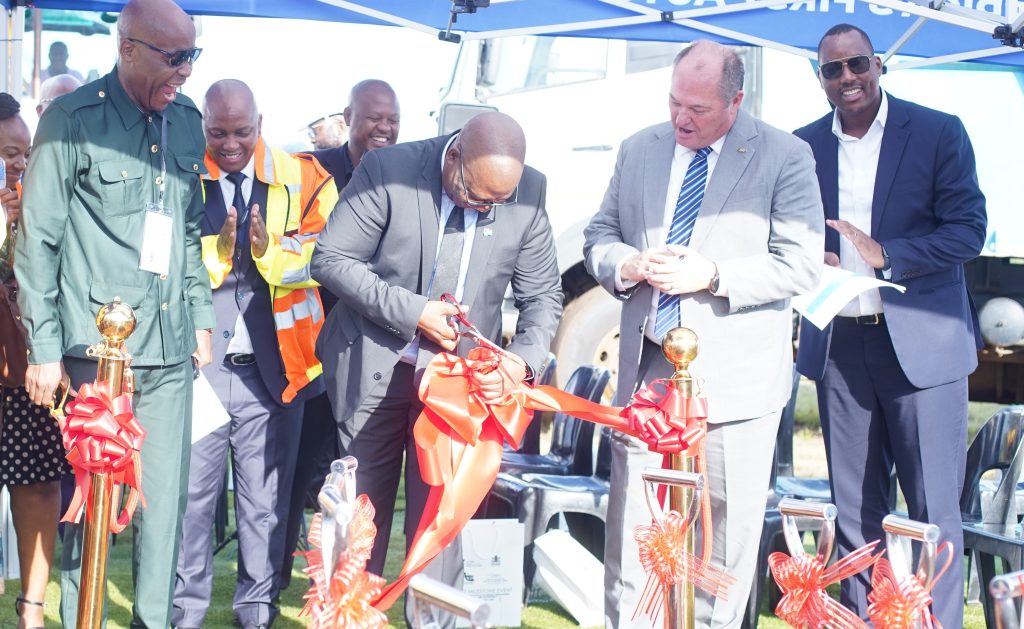
By Mandla Mpangase Phase 1 of South Africa’s most successful special economic zones – the Tshwane Automotive Special Economic Zones – has scarcely wrapped up, and the dedicated economic hub is already turning to expanding its operations. Thursday, 3 July 2025, saw the first sod being turned as a key site was handed over to the contractor, MES Major Projects, a wholly black-owned local company, for the construction of a vital water reservoir for the zone. The task is to build a 200-ton reinforced concrete 15Ml reservoir standing 12m in height. Joining TASEZ CEO Dr Bheka Zulu at the event were leaders from the City of Tshwane, including Executive Mayor Dr Nasiphi Moya, Deputy Executive Mayor, Eugene Modise, and several MMCs, a team from the newly appointed contractor lead by managing director Musa Sambo, councillors from the neighbouring townships of Eersterust, Mamelodi and Nellmapius, and members of the local communities. So important is this development, TASEZ board member for infrastructure development, Vuyo Zithumane, noted: “We are launching one of the critical dependencies for the entire development of others, and especially Phase 2.” Zithumane, who is also the City of Tshwane’s COO, added that the political principals in the City of Tshwane took the conscious decision to prioritise this development, making a financial allocation within the City’s budget. TASEZ is a unique project, with shareholders from each of the three tiers of government, along with Ford Motor Company; the Department of Trade, Industry and Competition represents the national government, the Gauteng Department of Economic Development represents the province, and the City of Tshwane represents local government. Addressing the gathering, Dr Moya spoke about the City of Tshwane’s ambitious revitalisation strategy that is aiming for a 3.9% annual growth by 2029, targeting 80 000 new jobs. “As the City, we need to not only make a pronouncement saying we are committed to economic growth … but must be seen in action,” Dr Moya said, adding the City was committed to retaining investments and improving infrastructure, such as energy and water security. “We can’t expect people to come and invest in our city if we do not provide the infrastructure that is required.” This new development is significant, not only to the City of Tshwane, but to its residents, she added. The most recent statistics indicate that unemployment in the City of Tshwane has increased to 38.4%. Noting the sombre statistic, the executive mayor said the efforts of the City of Tshwane, supported by business and investment, were undertaken with the ordinary residents in mind. “A student at college who has studied something to do with automotive must know that there’s a future for them, because the City of Tshwane has an automotive centre here.” Noting the presence of members of the community, including the TASEZ Community Project Committee, which oversees the social compact between the local communities and the SEZ, Dr Moya also spoke about the importance of community involvement in the success of any development. “If communities understand the benefit of this project, then communities start to protect the projects that they have.” The appointed contractor is one of the success stories of TASEZ: during Phase 1 of the development, MES Major Projects was graded CE3 and today is a CE7. The work is expected to be completed within 12 months.

Igniting a spark: TASEZ’s Andile Sangweni inspires future engineers at Oprah Winfrey Leadership Academy

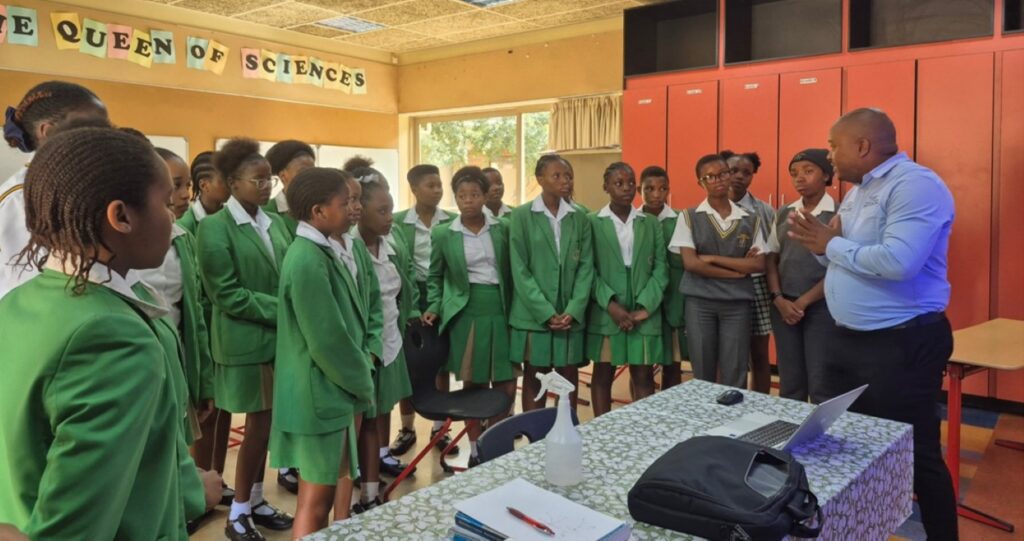
By Mandla Mpangase In a world shaped by innovation, engineering stands as the backbone of progress – designing, building, and maintaining the infrastructure and technology that drive modern life. This powerful message was at the heart of Andile Sangweni’s presentation at the Oprah Winfrey Leadership Academy for Girls, where he engaged young minds on the endless possibilities within the field of engineering. Speaking at the career exhibition, themed ‘Igniting the Spark of Endless Possibilities’, Sangweni, Infrastructure Executive at the Tshwane Automotive Special Economic Zone (TASEZ), shared insights on the role of engineers in transforming societies. “Engineering is more than a career; it is a commitment to problem-solving, innovation, and shaping the future,” he told the aspiring students. The event featured a diverse lineup of industry leaders, each offering unique perspectives on career opportunities in science, technology, engineering, and mathematics (STEM). Sangweni emphasised that engineering is crucial for South Africa’s economic development, particularly in sectors like automotive manufacturing, infrastructure, and renewable energy. “Young people, especially young women, have the power to redefine the engineering landscape. The key is curiosity, resilience, and a passion for problem-solving,” he encouraged. With TASEZ at the forefront of advancing South Africa’s automotive sector, Sangweni highlighted the importance of skills development and industry transformation. He urged the learners to explore engineering not just as a profession but as a platform to drive meaningful change. As the event concluded, learners left with a renewed sense of purpose, ready to embrace the boundless opportunities that engineering offers. With role models like Sangweni paving the way, the future of South African engineering looks brighter than ever.

TASEZ shares investment ideas, experience with African SEZs

By Mandla Mpangase The leaders of Africa’s special economic zones (SEZs) – including Africa’s first automotive city – are putting their minds to the role they can play in attracting impactful investments and redefining competitiveness. This theme set the tone for the annual meeting of the African SEZs which was held in Nairobi, Kenya, at the end of November 2024. The meeting was attended by some 300 participants representing governments, international experts, decision-makers, financial institutions and representatives from the various SEZs. The Tshwane Automotive Special Economic (TASEZ) team participated in the meeting in order to “see how we are positioned in terms of the SEZs across the continent”, according to TASEZ CEO Dr Bheka Zulu, adding that it was surprising to find that TASEZ was ahead of the curve. “We have a lot to contribute, and we have much to learn too,” Dr Zulu adds. There are more than 200 operational SEZs in 47 countries on the continent, according to the African Economic Zones Outlook 2021. This breaks down into 150 000 hectares dedicated to manufacturing, ago-processing and services. It is estimated that more than $2.6-billion has been invested in these zones. South Africa currently has 11 SEZs based in different provinces: in the Eastern Cape are Coega and the East London SEZs; Maluti-A-Phofung is in the Free State; OR Tambo and the Tshwane Automotive Special Economic Zone (TASEZ) are situated in Gauteng; Dube Tradeport and Richards Bay are based in KwaZulu-Natal; the Musina/Makhado SEZ is in Limpopo; Nkomazi is based in Mpumalanga; and the Atlantis and Saldanha Bay SEZs are in the Western Cape. The African SEZs annual meeting is the flagship event of the African Union Commission (AUC) and the Africa Economic Zones Organisation (AEZO), providing insights on critical issues related to the development of SEZs in Africa. Said Business Development Executive Msokoli Ntombana: “SEZs are viewed as one of the key instruments to accelerate industrialisation, attract important foreign direct investments, and stimulate the country’s economy. It is crucial that these elements are firmly in place to answer the call of the National Development Plan to create jobs, fight poverty and promote socio-economic equality. “Not only are these priorities for South Africa, but are crucial for Africa’s success, as driven by the Africa Agenda 2063. SEZs have a critical role to play in shaping Africa’s economic landscape long-term,” Ntombana says. Topics covered at the Nairobi meeting included: Building intelligent infrastructure, focusing on necessary infrastructure upgrades, such as 5G networks and data centres to support industrial activity securely; Workforce development, looking at strategies for upskilling the workforce to integrate large-scale technologies; Regulatory frameworks for new technologies, examining how policies can be adapted to foster technology innovation while protecting data privacy and ensuring ethical use; Sustainability, discussing the integration of circular economy principles, eco-industrial parks, and sustainable urban planning in SEZ development; Financing sustainable SEZs, looking at innovative financing mechanisms such as green bonds and climate funds to support the sustainable development of SEZs; and Policy and governance, examining how African governments can create conducive environments for the growth of socially inclusive and sustainable SEZs. “As we head into the age of the new energy vehicles (NEVs), it is important to recognise that most of the commodities required for NEV development comes from the African continent,” the CEO says. “So for us to tap into the relationships with our brothers and sisters is actually forward- looking, because we have the insight to be able to create trade lines between ourselves,” Dr Zulu notes. “It is important to capacitate the rail infrastructure between the original equipment manufacturers based in the City of Tshwane and our ports, which are crucial to the export of vehicles to our global markets,” TASEZ CEO Dr Bheka Zulu noted.

Inclusive growth path will benefit SA economy – Finance Minister

By Mandla Mpangase While fiscal prudence is the name of the game for the Minister of Finance Enoch Godongwana, a key standout – as far as automotive manufacturing industry in general, and the Tshwane Automotive Special Economic Zone (TASEZ) in particular – is the confirmation of rail upgrades between Tshwane and Gqeberha. Minister Godongwana delivered his 2024 Medium-term Budget Policy Statement (MTBPS) in the National Assembly on 30 October 2024. His policy statement outlined the country’s strategy to lift the economy to a higher and more inclusive growth path, and rests on four pillars: maintaining macroeconomic stability; implementing structural reforms; supporting growth-enhancing infrastructure; and building state capability. Speaking of the renewed energy that followed the national elections earlier this year, the minister said: “There is a new light that is shining down on our country and on our economy. The recent elections demonstrated the resilience and maturity of our young democracy.”   Three priorities sit at the heart of government policy: Pillar three of the MTBPS is about effective infrastructure investment that will boost economic activity and enable higher growth over the medium term. “In this regard, we are implementing reforms that will create conditions to attract greater private sector participation.” One particular aspect of this is “to increase the pool of funders to diversify public infrastructure financing through new mechanisms and instruments. These include build-operate-transfer (BOT) structures and other concessions”.   Included in this particular programme are capacity upgrades on the rail network from Watloo in the City of Tshwane – near TASEZ and the Ford plant in Silverton – to Gqeberha. This is particularly important given that the South African automotive industry is export-driven, with vehicles needing to be shipped to international markets. “It is important to capacitate the rail infrastructure between the original equipment manufacturers based in the City of Tshwane and our ports, which are crucial to the export of vehicles to our global markets,” TASEZ CEO Dr Bheka Zulu noted. Minister Godongwana added that a request for proposals will be issued this year for funders who are interested in supporting projects such as the Watloo to Gqeberha upgrades. “Collectively, the infrastructure reforms will strengthen planning, appraisal, contracting, financing, and monitoring and evaluation.  “The outcome will be faster delivery of infrastructure that supports economic growth, the expansion of access to basic services and boosting job creation.” According to naamsa, the Automotive Business Council, Gauteng has the highest diversity in the country’s automotive profile, housing three OEMs as well as the majority of first- and second-tier automotive component suppliers in the country. “The economic muscle of the South African automotive industry, with its economic gains far outweighing its fiscal costs, cannot be underplayed.” Vehicle export value topped R203,9-billion in 2023.

Tshwane SEZ shows the way on how to successfully attract investment and create employment

The Tshwane Automotive Special Economic Zone (TASEZ) has set the benchmark for the development of South Africa’s new special economic zones. Special economic zones (SEZs) are key to making South Africa an attractive option for foreign direct investments. SEZs are important instruments in advancing the country’s strategic objectives of industrialisation, regional development, the promotion of exports and job creation. Africa’s first automotive city, based in the City of Tshwane, was an exemplary case in how to develop and set up an SEZ to hit the road running. From being gazette in January 2020 to seeing the first cars come off the production line in November 2022, TASEZ achieved all of this in just two short years – and during the Covid 19 pandemic. The TASEZ case study was central to discussions that took place in a workshop held in Pretoria on Thursday, 11 April 2024, that looked at how SEZs can be implemented speedily. Piloting a new method “We are conscious of the responsibility we have been given in piloting this new model for the development of SEZs,” says TASEZ CEO Dr Bheka Zulu. “It could not have been done without the strong strategic partnerships between our investors and all three tiers of government.” The TASEZ model has now set the benchmark for the establishment of new SEZs. Representatives from the country’s new SEZs joined the teams from the Department of Trade, Industry and Competition (the dtic) responsible for SEZ development, the Industrial Development Corporation’s (IDC’s) SEZ unit, and TASEZ. TASEZ chair and executive director of the Industrial Zones Programme at the IDC, Lionel October, said: “We are here today to begin to standardise and formulate SEZ set up procedures.” The dtic’s Shaun Moses set the scene for the discussion, outlining the policy and strategies driving the development of SEZs. He highlighted the underlying economic challenges South Africa had to tackle: This led to the government identifying a number of objectives to change the economic landscape: combining growth with transformation; boosting local production; growing exports and expanding trade within Africa; increasing investment; establishing a reliable and low-cost energy system while greening the economy; and growing employment. This, Moses pointed out, would be achieved through promoting jobs and higher incomes via industrialisation; building an inclusive economy; and making sure public policies make an impact. Factors for success It was against this background that TASEZ became the pilot project for a new approach to setting up SEZs. There were a number of critical factors that ensured the project’s success: “The scale of the TASEZ project demanded a well-coordinated, systematic and objective approach in responding to the socio-economic performance targets, job creation and SMME opportunities.” Crucially, it was the agile project management approach that ensured TASEZ’s success. Key factors to this success were: One of the proposals to speed up the development of new SEZs, put forward by the technical advisor of the Industrial Zones Programme at the IDC, Dr Siyabonga Simayi, was the creation of multi-sites, or the extension of the boundaries of existing SEZs, to incorporate the development of new SEZs. This would see the development of a zone with more than one site, or the development on land that did not share a border with the existing SEZ. The licence of an existing Industrial Development Zone could be used to facilitate the creation of new SEZs, cutting down on read tape and allowing for a speedier and more agile process, Dr Simayi told the workshop. This would see a single licensee, operator and entity, with one management team and board; single operating systems and processes, and a single budget with one audit process. The workshop concluded by agreeing that there was a need to develop clear guidelines and operating procedures to implement successful SEZs within two years. As Stieneke Jensma, the chief operations officer of the Industrial Zones Programme at the IDC, noted in summing up the day: “TASEZ has done it – we know it’s doable.”