Tasez

Maoto Molefane

Parliamentary committee hears how TASEZ is strengthening South Africa’s industrial future

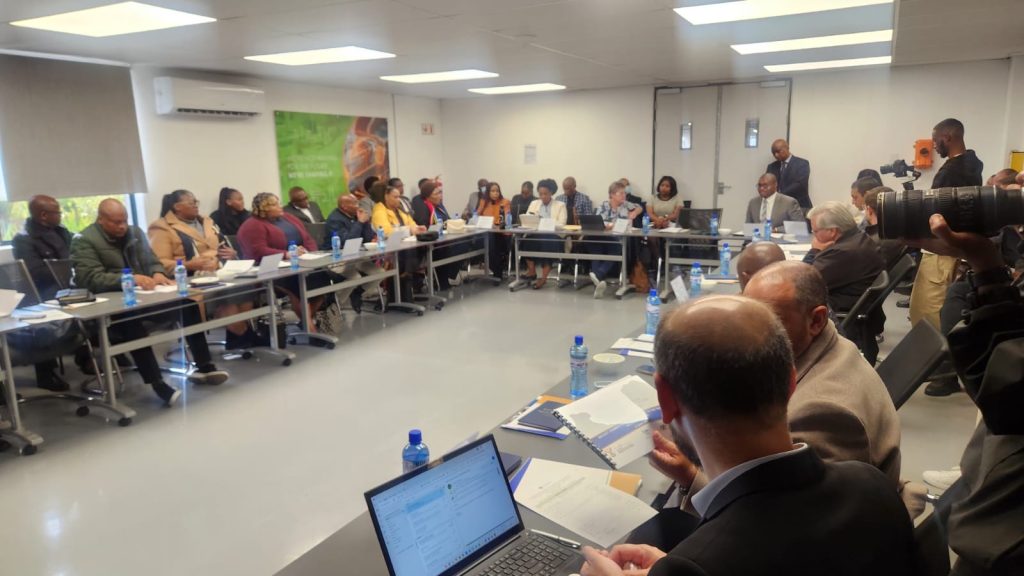
By Mandla Mpangase The Parliamentary Select Committee on Economic Development and Trade has heard how the Tshwane Automotive Special Economic Zone (TASEZ) is helping to drive industrialisation, attract investment and create jobs, while also serving as a model for the future development of Special Economic Zones (SEZs) across South Africa. The committee conducted an oversight visit to TASEZ on Thursday, 4 June 2026, to assess the impact of government investments aimed at stimulating economic growth, manufacturing competitiveness and employment creation. Addressing the committee, Gauteng MEC for Economic Development Vuyiswa Ramokgopa described TASEZ as one of the most significant industrial development projects undertaken in democratic South Africa. “TASEZ is not simply another industrial park. It is one of the most important industrial development projects undertaken in democratic South Africa and a practical demonstration of how industrial policy can be translated into real economic opportunity,” she said. Ramokgopa said the success of the zone demonstrates the power of cooperative governance, with national, provincial and local government working together to create an industrial ecosystem capable of attracting investment, supporting manufacturing and creating jobs. Ramokgopa noted that the Tshwane region produces approximately 40% of the country’s passenger vehicles and has become the anchor of what is increasingly recognised as Africa’s first automotive city. The automotive sector remains one of South Africa’s most strategic industries, contributing approximately 5.2% to national GDP and generating exports worth R268.8-billion in 2024 to 148 global markets. Since its inception, TASEZ has attracted approximately R5.9-billion in private-sector investment, contributed an estimated R2- billion to the economy, created 5 500 construction jobs and more than 3 400 permanent jobs, while supporting around 10 000 jobs across the broader automotive value chain. The benefits of the project have extended to young people, women, township enterprises and surrounding communities through targeted skills development, enterprise support programmes and a social compact model that is increasingly being replicated elsewhere in Gauteng. The committee also received a broader overview of the national SEZ programme from TASEZ board chair Maoto Molefane, who outlined the strategic role of the country’s industrial zones in advancing economic growth and regional development. South Africa currently has 12 designated SEZs spread across seven provinces, with nine operational and three still under development. Since 2016, the SEZ programme has generated more than 30 000 jobs and recorded total expenditure of R24.2-billion. Molefane highlighted the role of SEZs in attracting investment into priority sectors, promoting localisation and strengthening South Africa’s participation in global value chains. He said the zones are strategically located to leverage access to ports, airports, rail infrastructure and major transport corridors, while supporting balanced regional development and stronger integration with Southern African Development Community (SADC) markets and the broader African continent. Within this national context, TASEZ has emerged as one of the programme’s strongest performers. The zone currently hosts 12 operational investments valued at approximately R5.76-billion. The committee heard that Phase One of TASEZ is fully operational and that bulk infrastructure development for Phase Two is already underway. Construction has also begun on Ford’s new R300-million facility within the zone, further strengthening Tshwane’s position as South Africa’s automotive manufacturing hub. Both Ramokgopa and Molefane emphasised the importance of preparing South Africa’s manufacturing sector for future industrial opportunities, including the transition to new-energy vehicle production, advanced manufacturing and green industrialisation. Molefane outlined the government’s Spatial Industrial Development Strategy, which seeks to build globally and regionally competitive industrial clusters, promote beneficiation and value addition, support black industrialists, deepen local supply chains and integrate township and rural economies into industrial value chains. The strategy also prioritises youth and women-focused skills development programmes, learnerships and partnerships between industry, universities and TVET (Technical and Vocational Education and Training) colleges to strengthen the country’s industrial capabilities. While highlighting the achievements of the SEZ programme, Molefane also acknowledged ongoing challenges, including infrastructure constraints, unreliable electricity supply, logistics bottlenecks at ports and rail facilities, skills shortages in underdeveloped regions and delays in municipal service delivery. He said key lessons learned from the implementation of SEZs include the importance of strong political support, national government involvement, reliable infrastructure, effective stakeholder management, long-term planning, sound governance and active private-sector participation. The committee also received updates on major investments taking place across South Africa’s SEZ network, including a R110-billion green hydrogen project at the Coega SEZ, a R16-billion titanium dioxide plant in Richards Bay, a R1.3-billion automotive components facility at Dube TradePort, and major manufacturing, logistics and digital infrastructure investments in East London, OR Tambo and Nkomazi. TASEZ CEO Dr Bheka Zulu noted that TASEZ’s continued growth demonstrates what can be achieved when government, industry and communities work together to build productive industrial capacity. “Projects like TASEZ can inspire similar initiatives across our country that will deliver inclusive growth, re-industrialisation and economic renewal,” he added. The TASEZ model shows that economic development can be both globally competitive and locally inclusive. Echoing his message, the City of Tshwane’s MMC for economic development and spatial planning, Sarah Mabotsa, said: “The impact of TASEZ extends far beyond the boundaries of the SEZ itself.” TASEZ represents jobs, investment, economic growth, and opportunity for the City of Tshwane’s residents to put food on their tables, the MMC added. The City of Tshwane is committed to supporting the expansion of the automotive and manufacturing sectors and in April 2025, the council adopted an Economic Revitalisation Strategy to increase economic growth to at least 3,9%. The City has also approved the lease of a property in Nellmapius to support TASEZ’s skills development and training programme. The oversight visit formed part of the committee’s efforts to evaluate the effectiveness of strategic economic development initiatives and their contribution to South Africa’s industrialisation agenda, job creation objectives and long-term economic growth. Responding to the information received, the committee members pointed out that it would be greatly beneficial for the country’s SEZs to work closely with each other, sharing knowledge and lessons learnt.
TASEZ stakes claim as blueprint for inclusive industrial growth

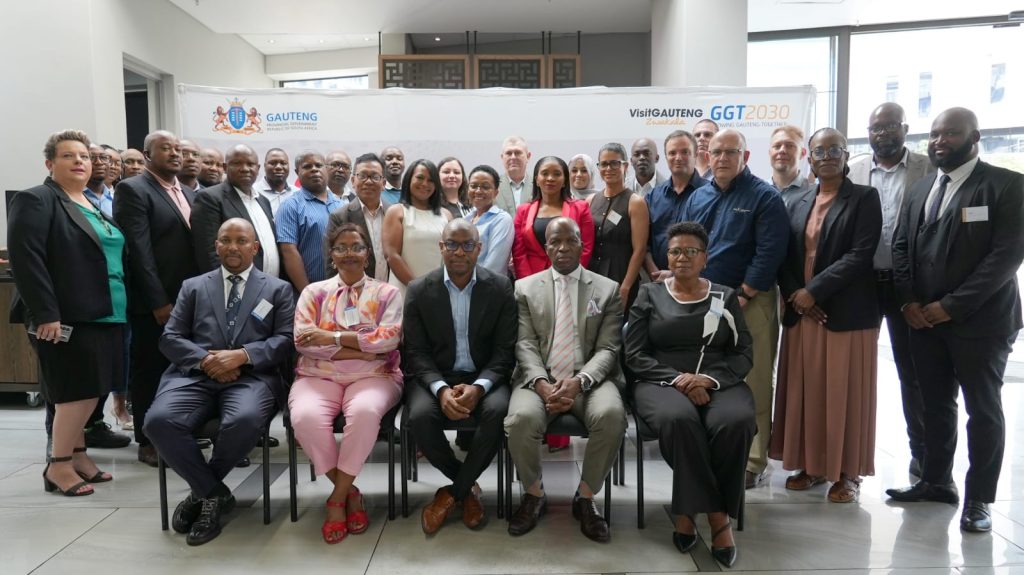
Infrastructure investment, the drive for localisation, and community integration position Tshwane’s automotive hub as a model for economic reform By Mandla Mpangase The Tshwane Automotive Special Economic Zone (TASEZ) is emerging as a leading model for inclusive industrialisation in South Africa, with government and industry leaders positioning the automotive hub as a practical pathway to drive economic reform, investment, and job creation. This message took centre stage at a high-level investor engagement held in Menlyn Maine, Pretoria, where stakeholders outlined how coordinated infrastructure investment, localisation strategies, and community integration are underpinning the zone’s growth. Addressing investors and industry partners, TASEZ board chair Maoto Molefane said the evolution of the zone reflects a deliberate shift towards ensuring that industrial development delivers measurable socio-economic outcomes. “This is not just about industrial expansion – it is about building a model that works for communities, for investors and for the country as a whole,” said Molefane. He added that, despite persistent economic headwinds, targeted interventions through special economic zones offer a credible mechanism to accelerate industrial growth, deepen localisation and support structural transformation. A model for economic reform and inclusion Gauteng’s head of the Department for Economic Development, Motlatjo Moholwa, described TASEZ as an emerging blueprint for how South Africa can better align industrial policy with community development outcomes. “We are not yet where we want to be, but we are getting there. What we are seeing here is a blueprint – one that can be adapted across the country to ensure that development reaches communities meaningfully,” said Moholwa. Infrastructure investment anchors growth The City of Tshwane COO Vuyo Zitumane outlined the City’s coordinated approach to enabling industrial expansion. “Our focus is on creating a reliable, investor-friendly environment through sustained infrastructure investment and strategic planning. These developments are about positioning Tshwane as a globally competitive automotive hub,” said Zitumane. Localisation and industrial deepening TASEZ CEO Dr Bheka Zulu said the zone’s strategy is firmly anchored in localisation, industrial deepening and measurable economic impact. “Our focus is on building an integrated automotive ecosystem that drives localisation, expands supplier participation and delivers sustainable industrial growth. TASEZ is not only attracting investment, but also ensuring that value is retained and expanded within the local economy,” said Zulu. As TASEZ continues to scale, stakeholders say the focus will remain on converting policy ambition into tangible outcomes – from deeper localisation and expanded supplier networks to sustained job creation and community inclusion. With further investment expected in the next phases and infrastructure upgrades gathering pace, the automotive hub is increasingly being viewed not only as a driver of regional growth, but as a test case for how South Africa can translate industrial policy into measurable economic reform.

South Africa’s SEZs under spotlight as leaders push for greater industrial impact

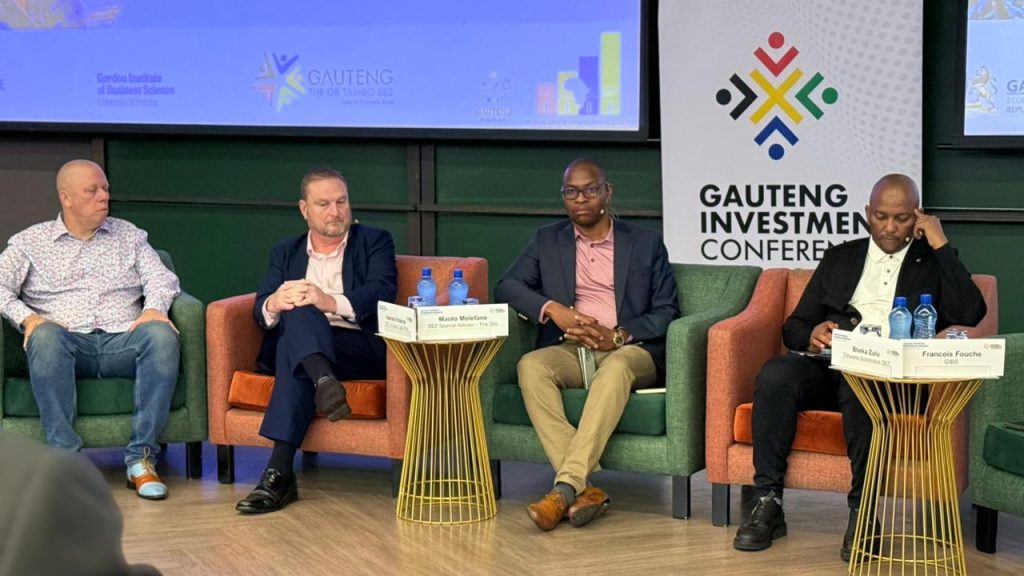
By Mandla Mpangase Government and industry leaders have called for a fundamental shift in how South Africa’s Special Economic Zones (SEZs) deliver value, arguing that stronger integration with spatial planning and industrial policy is key to unlocking growth. This emerged at a breakfast session hosted at the Gordon Institute of Business Science (GIBS) in Illovo, Johannesburg, on Friday, 20 March 2026, forming part of the roadshow to the 2026 Gauteng Investment Conference. Opening the session, Gauteng Growth and Development Agency (GGDA) acting CEO Sithembiso Dlamini outlined the province’s strategy to position SEZs as anchors of development corridors, driving infrastructure investment and manufacturing-led growth. She highlighted recent progress in Gauteng’s SEZ programme, stressing its role in catalysing regional economic activity. A central theme of the discussion was how to close the “value-for-money” gap in SEZ investments. Trade expert Donald MacKay presented findings from a comparative study of global and local SEZ performance, noting that while South Africa has made progress, structural and policy shortcomings continue to limit impact. He pointed to the need for targeted reforms to improve efficiency, attract investment, and boost export competitiveness. From a policy perspective, Maoto Molefane, the special advisor to the Minister of Trade, Industry, and Competition and chairperson of the Tshwane Automotive Special Economic Zone (TASEZ), outlined the government’s new Spatial Industrial Development Strategy. He acknowledged limitations in the current SEZ model, including fragmentation and uneven returns, and said the new approach aims to better align industrial spending with national development goals. “The focus is on ensuring that every rand invested delivers measurable industrial outcomes,” Molefane said. Insights from operational SEZs reinforced the importance of execution and partnerships. Dube TradePort CEO Hamish Erskine reflected on the evolution of the KwaZulu-Natal-based SEZ, highlighting the role of logistics integration, infrastructure planning, and strong governance in its success. He said the model demonstrates how SEZs can drive broader regional development, including job creation and small business growth. Meanwhile, TASEZ CEO Dr Bheka Zulu emphasised the importance of sector-focused development, noting that strategic partnerships – particularly with major investors such as Ford – have been central to its rapid growth. Zulu also pointed to the need for SEZs to adapt to global shifts, including the rise of new energy vehicles, as part of their future positioning. The session concluded with consensus that South Africa’s SEZ programme must evolve beyond isolated zones into fully integrated industrial ecosystems, capable of delivering sustained economic impact, increased exports and long-term investment attraction. The discussion forms part of ongoing engagements ahead of the Gauteng Investment Conference scheduled for 9 April 2026, where infrastructure, manufacturing and industrial policy are expected to take centre stage.

A key lesson from the G20: Industrialisation must power SA’s economic growth

As South Africa concludes its historic G20 Presidency, the first hosted on African soil, a clear message has emerged: the world is ready to recognise Africa as a central engine of shared prosperity, writes the chairperson of the Tshwane Automotive Special Economic Zone, Maoto Molefane. We must make the most of the momentum. Over 22 and 23 November 2025, the G20 global leaders gathered in Johannesburg to endorse commitments that speak directly to the continent’s long-standing aspirations: equitable development, sustainable industrialisation, resilient economies, and fair participation in global trade. For South Africa, and for advanced industrial platforms like the Tshwane Automotive Special Economic Zone (TASEZ), this moment is far more than diplomatic symbolism; it is about accelerating economic growth to combat poverty and inequality, with industrialisation as a key driver of inclusive growth, job creation, and global competitiveness. The G20 2025 mandate President Cyril Ramaphosa’s closing message from the G20 Summit underscored the stakes. South Africa’s development needs – jobs for young people, robust infrastructure, energy security, thriving export industries – require global stability, inclusive growth and a level playing field. The G20 outcomes align directly with South Africa’s industrial ambitions: These are not abstract policy wins. They reshape the environment in which industrial zones like TASEZ operate: they unlock space for growth that is sustainable, technologically advanced and globally aligned. As President Ramaphosa said: “Together, we must accelerate progress towards the 2030 Sustainable Development Goals and the Pact for the Future. We have laid the foundation of solidarity. Now we must build the walls of justice and the roof of prosperity.” Industrialisation as an engine for growth Given that the 2025 G20 provided a strong voice for Africa, it must be noted that the continent has anchored the world’s supply chains for far too long without capturing its share of industrial value. “The greatest opportunity for prosperity in the 21st century lies in Africa,” President Ramaphosa said in his closing remarks. He described the continent as a driving force for future growth, innovation, mineral beneficiation, climate resilience and energy transition.  The 2025 G20 Declaration calls for structural reforms, investment mobilisation, and digital transformation that place industrialisation at the heart of global development priorities. What this means for South Africa is that the country must build, manufacture, innovate, export, and compete. This is the work TASEZ – Africa’s first automotive city – was created to do. Based in the country’s capital city, TASEZ is demonstrating what coordinated industrial policy can achieve: TASEZ is not just an industrial hub; it is a catalyst for economic resilience and can serve as a model for the equitable, future-oriented development highlighted in the G20 Declaration. Beneficiation is a must The global commitment to fair critical mineral development provides South Africa a generational opportunity: to build integrated value chains centred on electric vehicles, battery manufacturing, renewable energy components and advanced materials. As the President noted, minerals must become “a source of prosperity and sustainable development in the countries that produce them”. This aligns perfectly with South Africa’s automotive transition strategy and TASEZ’s expansion into green manufacturing, downstream processing and high-value production clusters. The President called the 2025 summit the People’s G20, characterised by the engagement of business, labour, youth, scientists, mayors and civil society. This spirit of collaboration is the very essence of industrial and special economic zones, which rely on coordinated action between government, investors, communities and workers. South Africa’s G20 success, combined with improving economic indicators and growing confidence in our reform programme, demonstrates that the country is ready for a new industrial chapter based not on extractive development, but on shared value, skills development, innovation, and sustainable manufacturing. Looking ahead As global leaders return home, the world’s attention shifts from diplomacy to delivery. For TASEZ, the task is to translate the political momentum of the G20 into practical industrial capacity. The Johannesburg G20 summit marks a critical turning point for global industrialisation, especially for Africa. The commitments around infrastructure, climate transition, and inclusive development resonate deeply with our vision to build a sustainable, high-tech automotive hub that benefits local communities, talents, and small industrial players. However, for this to be more than rhetoric, the world must translate pledges into concrete investment, local value-chain development, and support for medium, small, and micro enterprises. The timing could not be better, as TASEZ ratchets up its Phase 2 developments. TASEZ will be focused on: The G20 Summit has shown the world what South Africa can achieve when united by purpose. As President Ramaphosa said: “Let us move forward together, demonstrating to the world that we have the capacity to confront and overcome the world’s challenges. Through partnerships across society, and by remembering our common humanity, we can create a more secure, a more just and a more prosperous world. Together, we can ensure that no one is left behind.”  Now, industrialisation must carry that momentum forward. TASEZ stands ready to be part of that charge.