Tasez

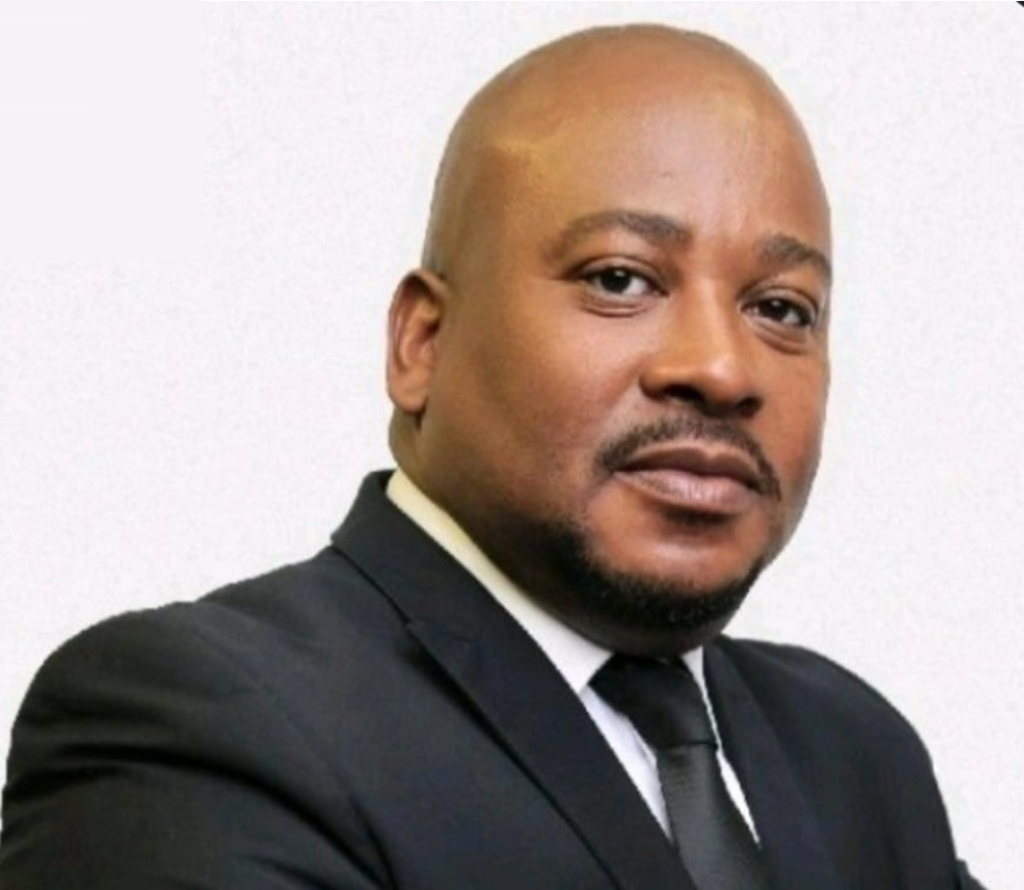
Andile Sangweni

South Africa’s industrial future will be decided by what happens after Durban

By Andile Sangweni, TASEZ CEO The 2nd International Special Economic Zones Infrastructure and Investment Conference, taking place in Durban on 16 and 17 July, has the potential to redefine how South Africa thinks about industrial development in an era of slowing global growth, rapid technological change and increasing competition for investment. And the timing could not be more important. If its programme is any indication, this is not simply another investment conference. It is an opportunity to redefine how South Africa thinks about industrial development. For too long, South Africa’s economy has struggled to escape low growth, high unemployment and declining industrial competitiveness. Manufacturing’s contribution to GDP has steadily contracted, while many industrial towns have become shadows of what they once were. At the same time, global supply chains are being rewritten as countries seek resilience, localisation and regional manufacturing hubs. South Africa cannot afford to watch from the sidelines. The conference theme of “Reigniting industrialisation through world-class special economic zones” recognises that Special Economic Zones (SEZs) are no longer simply fenced industrial estates offering tax incentives. Around the world, successful SEZs have evolved into sophisticated ecosystems that combine infrastructure, logistics, skills development, innovation, research, housing and investment into integrated economic regions. The Durban programme reflects this shift. It begins not with discussions about incentives, but with the launch of South Africa’s new Industrial Policy before moving into a keynote address by President Cyril Ramaphosa – an acknowledgement that industrialisation must once again occupy the centre of economic policy. Equally significant is the discussion asking the fundamental question: “Why invest in SEZs now?” Rather than relying on theory, the panel brings together leaders from Ford Motor Company South Africa, DP World Mozambique, AIH Group and Nyanza Light Metals to provide an investor’s perspective on why SEZs remain attractive destinations for global capital. That conversation matters because governments do not create jobs—businesses do. Governments create the environment in which investment becomes possible. Perhaps the most important evolution in thinking is reflected in the session examining SEZs as engines for smart city development. This signals a departure from the traditional notion of industrial parks as isolated manufacturing precincts. Instead, delegates will consider how Special Economic Zones can become complete economic ecosystems incorporating transport, energy, logistics, housing, services and skills development. This is precisely where South Africa must go. The Tshwane Automotive Special Economic Zone has already demonstrated elements of this approach by integrating supplier development, skills training and automotive manufacturing into a broader industrial ecosystem. Other zones are beginning similar journeys. The conference also recognises that South Africa’s industrial future cannot be built in isolation. Sessions devoted to the African Continental Free Trade Area (AfCFTA), cross-border collaboration and regional competitiveness acknowledge that the next generation of industrial growth will increasingly depend on continental value chains rather than purely domestic markets. Africa’s market of more than a billion people presents opportunities that South African manufacturers simply cannot ignore. Equally encouraging is the attention given to subjects often overlooked in industrial policy debates. There are dedicated discussions on financing industrial infrastructure, public-private partnerships, supplier development for small businesses, export diversification, technology, innovation and the role of development finance institutions. Together, these sessions recognise an important truth: successful industrialisation depends on an entire ecosystem, not a single policy intervention. This is where the conference has the potential to become genuinely transformative. South Africa has spent years discussing industrialisation. The challenge now is implementation. That means ensuring infrastructure is delivered on time. It means creating regulatory certainty for investors. It means strengthening partnerships between government and business. It means developing skilled workers for advanced manufacturing. It means integrating small businesses into industrial value chains instead of leaving them at the margins. And it means building export-oriented industries capable of competing internationally. SEZs cannot solve every structural problem facing the economy. But they can become laboratories for reform – places where better governance, faster approvals, modern infrastructure and collaborative partnerships demonstrate what is possible for the wider economy. Ultimately, the real measure of the Durban conference will not be the number of delegates attending, the quality of its presentations or the awards handed out at the gala dinner. Its success will be measured by what happens afterwards. These are the questions that matter. Industrialisation is not a nostalgic return to the factories of the past. It is about building a competitive economy capable of producing the technologies, products and supply chains that will define the future. If South Africa is serious about inclusive growth, reducing unemployment and competing in the global economy, then the conversations taking place in Durban should not remain inside the conference venue. They should become the blueprint for the country’s next chapter of industrial development.
TASEZ to showcase automotive industrialisation at international SEZ conference

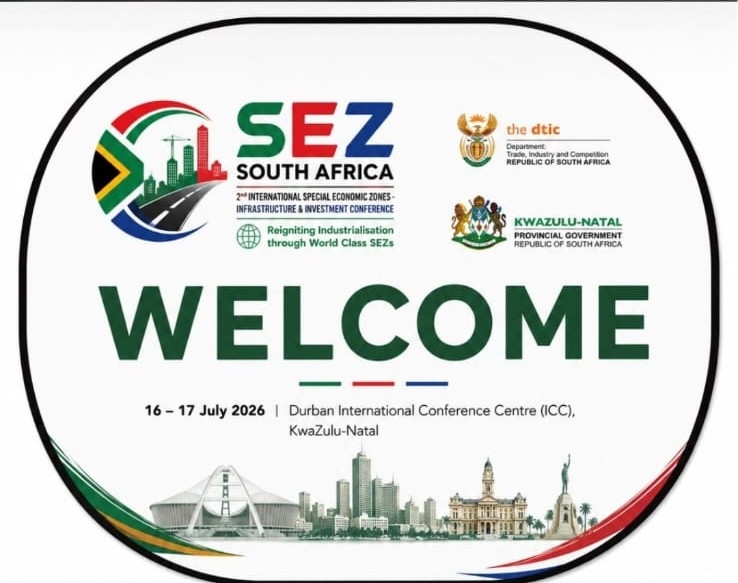
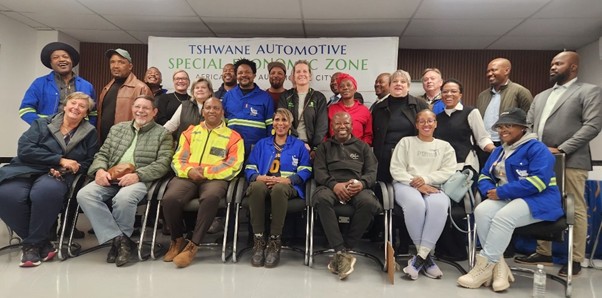
By Mandla Mpangase The Tshwane Automotive Special Economic Zone (TASEZ) will join other Special Economic Zones, policymakers, investors and industry leaders from across South Africa, the Southern African Development Community (SADC) and beyond at the 2nd International Special Economic Zones Infrastructure and Investment Conference in Durban on 16 and 17 July 2026. Hosted by the Department of Trade, Industry and Competition (the dtic) in partnership with the KwaZulu-Natal Department of Economic Development, Tourism and Environmental Affairs, the conference will be held under the theme “Reigniting Industrialisation through World-class Special Economic Zones”. The flagship event is expected to attract more than 1 000 delegates and will focus on strengthening investment, advancing industrialisation and promoting collaboration between government and the private sector. Discussions will also explore the role of Special Economic Zones (SEZs) in supporting regional integration through the African Continental Free Trade Area (AfCFTA) and South Africa’s broader industrial development agenda. TASEZ acting CEO Andile Sangweni said the conference provides an important opportunity to demonstrate how South Africa’s SEZs are contributing to inclusive economic growth. “This conference brings together the leading voices shaping the future of industrial development on the continent. “For TASEZ, it is an opportunity to showcase the impact of our automotive-focused model, exchange best practices with our peers, strengthen partnerships and contribute to the national conversation on how world-class SEZs can accelerate investment, localisation, skills development and sustainable job creation,” Sangweni said. It will also be an opportunity to learn from others and understand the latest global trends in industrialisation and economic development. The conference will also feature a two-day exhibition where companies operating within South Africa’s SEZs will showcase their products and capabilities, while the SEZ Achievement Awards Gala Dinner will recognise excellence and innovation across the country’s SEZ programme. According to the dtic, the conference will reinforce the role of SEZs as a key industrial policy instrument to attract investment, build world-class infrastructure, boost exports and create sustainable employment opportunities.

Tshwane councillors encouraged by TASEZ progress after oversight visit

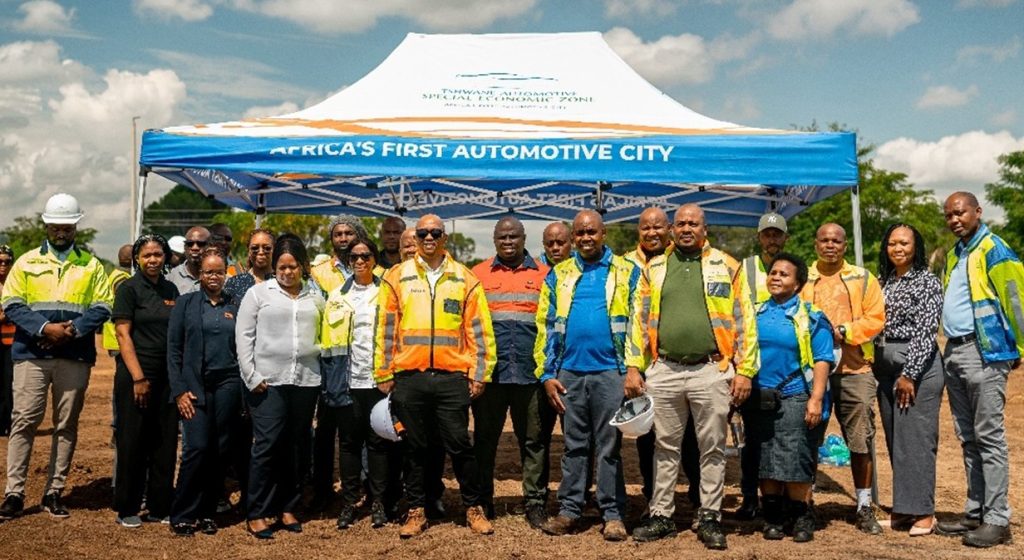
Tshwane councillors have expressed confidence in the progress made at the Tshwane Automotive Special Economic Zone (TASEZ), saying the project is emerging as one of the City’s most important industrial development platform, writes Mandla Mpangase. Members of the City of Tshwane’s Section 79 Oversight Committee on Integrated Development Planning, visited TASEZ on 12 May 2026 for an oversight inspection and engagement with management. The visit included a presentation by the TASEZ leadership team and a walkabout of two facilities within the Special Economic Zone (SEZ). The engagement focused on job creation, small, medium and micro enterprise (SMME) development, infrastructure delivery and the zone’s next phase of expansion, which is expected to deepen Tshwane’s position as one of South Africa’s automotive manufacturing hubs. TASEZ CEO Dr Bheka Zulu briefed councillors on the SEZ’s development, performance and strategic positioning as one of Gauteng’s most significant industrial projects, anchored by Ford’s Silverton operations and positioned in the wider Tshwane automotive corridor. Zulu said Tshwane produced about 40% of South Africa’s passenger vehicles and was home to five original equipment manufacturers – Ford, BMW, Nissan, Iveco and UD Trucks – with Chery also expected to enter the market. The region also hosts more than 100 component suppliers and supports more than 40 000 direct jobs in the automotive sector. Since its establishment, TASEZ in its first phase of development has attracted R4.12-billion in government investment and R5.9-billion in private-sector investment. It has created 5 500 construction jobs and 3 422 permanent jobs, while more than R1.7-billion has been spent on SMME procurement. The first phase of the project was largely built around supplier facilities linked to Ford’s R16-billion investment in its Silverton production plan in South Africa between 2020 and 2023, followed by a further R5.2-billion investment cycle from 2024 to 2026. Zulu said the zone’s supply-chain impact extended to about 10 000 jobs and made a significant contribution to GDP. He also highlighted TASEZ’s transformation and enterprise-development work. TASEZ reported that 229 SMMEs had benefited from Phase 1 and Phase 1A, while 265 SMME packages had been awarded and 370 SMMEs trained. TASEZ infrastructure executive Andile Sangweni briefed councillors on the SEZ’s expansion plans, saying the master plan included the 81ha Phase 1, a 10.5ha Phase 1A, an 81ha for Phase 2, and future land parcels. Phase 2 includes an industrial node, the TASEZ Centre of Excellence campus, truck staging and mixed-use elements aligned with market demand. Sangweni said Phase 2 was already being implemented, with work under way on the La Montagne reservoir, bulk water reticulation, bulk electrical infrastructure, roads, stormwater systems and internal engineering services. TASEZ expects Phase 2 to unlock further economic activity, with government investment of R1.95-billion in top structures and bulk services, and private-sector investment of R3.5-billion in machinery, equipment and technology. The phase is expected to create 2 000 construction jobs and 2 500 permanent jobs. The zone is also looking increased SMME procurement, with a minimum 30% of spending earmarked for SMME participation. The visit came as TASEZ advances plans to diversify its energy infrastructure. Sangweni said the zone’s energy plans include a solar independent power producer project by Heshun, which is expected to install rooftop solar photovoltaic and battery storage systems across selected factories in Phase 1 and Phase 1A. The project is expected to provide 20MW of photovoltaic capacity with battery storage, carry an estimated investment value of R600-million and be completed by May 2027. The solar project forms part of TASEZ’s broader green energy initiatives and extends its energy mix programme, which also includes a 20MVA gas-to-power solution. Zulu said the visit was more than a routine site inspection. “For Tshwane, the visit was more than a routine site inspection. TASEZ is an implementation partner of the City, has been in operation for five years and is linked to a memorandum of understanding with the municipality,” he said. “The engagement gave councillors an opportunity to see first-hand the progress being made, the economic impact already delivered, and the next phase of work required to deepen Tshwane’s role in South Africa’s automotive economy.”

TASEZ begins Phase 2 expansion to bolster automotive capacity  

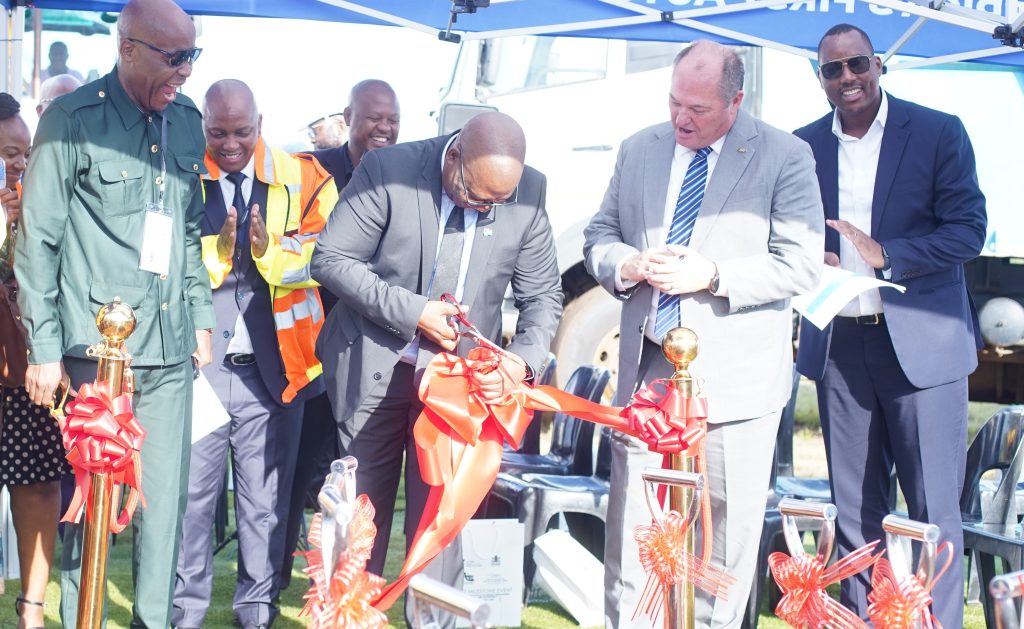
TASEZ has broken ground on Phase 2 of its expansion, with bulk infrastructure works and a 15ML reservoir underway, as the SEZ scales up capacity, attracts new investment, and advances localisation in South Africa’s automotive value chain, writes Mandla Mpangase. The Tshwane Automotive Special Economic Zone (TASEZ) has commenced Phase 2 of its expansion, building on the successful delivery of Phases 1 and 1A as its footprint to strengthen South Africa’s automotive manufacturing capacity. Phase 2 includes enabling bulk infrastructure works and the development of top structures. A key milestone is the construction of a 15‑megalitre reservoir, which began in July 2025 and is being undertaken by MES Major Projects, a black‑owned local contractor. At 13m high, the reservoir is expected to secure a water supply for future industrial activity and support the Tshwane area. External bulk works are underway, while internal bulk construction started on 17 March 2026, marking site establishment and preparation for incoming investors. Top structures will follow, further expanding the special economic zone’s industrial base. “Phase 2 is about integration, readiness, and growth,” said TASEZ infrastructure executive, Andile Sangweni. “The start of internal bulk works signals investor confidence, enabling us to accelerate delivery, unlock investment, and create jobs.” Phase 2 is expected to deepen localisation in the automotive value chain and advance South Africa’s broader industrialisation agenda.

2025 – A transformative year for TASEZ

As 2025 draws to a close, it offers an important moment to reflect on the achievements, challenges, and defining developments that have shaped the Tshwane Automotive Special Economic Zone (TASEZ), writes TASEZ executive for infrastructure, Andile Sangweni. This has been a year of momentum, consolidation, and forward vision, and one that has reaffirmed our position as one of South Africa’s leading special economic zones (SEZs) while pushing the boundaries of what world-class infrastructure delivery can look like. This has indeed been a transformative year for TASEZ. We have not only upheld our position as one of the country’s most advanced and impactful SEZs, but we have also redefined excellence in infrastructure delivery. Despite various national and global challenges, Phase 1 milestones were successfully achieved, demonstrating the strength of our operational planning and the resilience of our development model. With Phase 2 now underway, our focus is shifting decisively toward breaking ground and embracing the next wave of industrial growth. This phase is not simply an expansion; it is a catalytic step in deepening South Africa’s manufacturing capabilities and strengthening the country’s role in the global automotive value chain. Heading into Phase 2 A central achievement of 2025 has been laying the groundwork for the next phase of TASEZ’s evolution. The defining highlight of the year has been our work on ensuring the seamless integration of new infrastructure with Phase 1 facilities. This preparation is more than a technical requirement; it is a strategic pointer to our ongoing growth trajectory. It is about investor confidence, job creation, and community impact. The readiness to commence Phase 2 represents a collective vote of confidence from our stakeholders. It also confirms that infrastructure remains the backbone of sustainable economic transformation. Ready to tackle any test The year has not been without its challenges. South Africa continues to grapple with issues that directly influence industrial performance: Our response to these pressures has been deliberate and solution-driven. We are advancing energy resilience through renewable integration, ensuring that future phases of the zone offer greater stability and sustainability. We are driving a skills revolution through strengthened partnerships with educational and training institutions through the TASEZ Training Academy, preparing young people for the advanced manufacturing jobs of the future. And we are sharpening our global edge by streamlining processes and enhancing investor support mechanisms. Amid these dynamics, TASEZ’s role in advancing South Africa’s industrial development has become even more pronounced. TASEZ is a catalyst for the country’s industrialisation ambitions. By hosting world-class manufacturers, the zone embeds advanced technologies, creates sustainable employment opportunities, and supports the development of resilient supply chains. Our work also contributes to economic diversification, reducing import dependency and positioning South Africa as a globally competitive producer. In every sense, TASEZ is shaping industries, futures, and communities—delivering impact far beyond our physical footprint. As we look ahead, 2026 must be a year defined by acceleration and bold action. Our priorities are clear: These commitments will ensure that TASEZ continues to set the benchmark for industrial excellence, innovation, and inclusiveness.

Women’s Day celebrations at TASEZ

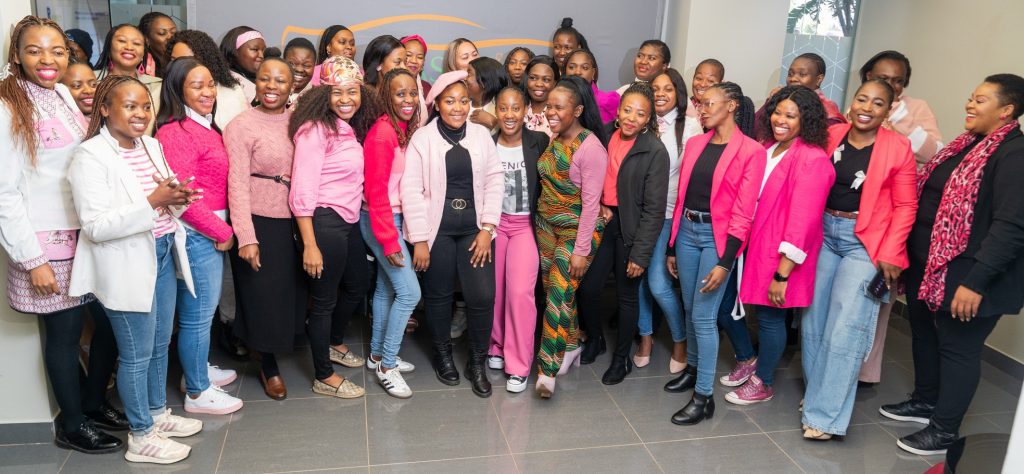
The Tshwane Automotive Special Economic Zone took some time out of the day on Friday, 8 August 2025 to celebrate and honour the women staff of the special economic zone, the day ahead of South Africa’s Women’s Day. As the women started arriving at work, they were greeted by a significant message playing on the screen at the TASEZ head office reception. The familiar TASEZ logo was prominently displayed along with its well-known pay-off line “Africa’s first automotive city”. But that message soon changed. Breaking from tradition, the TASEZ pay-off line morphed into “National Women’s Month – you are the heartbeat”. Then came an unexpected message – an explanation as to why TASEZ had taken the bold step to amend its pay-off line for August: “We decided to change the branding because you have changed us”. The women were also greeted by TASEZ’s Infrastructure Executive, Andile Sangweni. He acknowledged those in the room, noting they were all women of resilience and strength. “I thank each and every one of you for being the strong women you are – not the women of social media, but the women who stand their ground and excel.” He reminded the group of the historic Women’s March on 9 August 1956, when 20 000 women from across the country converged on the Union Buildings, just a few kilometres from where TASEZ is located, to deliver signed petitions against the apartheid pass laws, which severely curtailed the movement of black South Africans. “If I had to characterise the women of that time, they were women of courage, they were women of resilience, they were strong women,” Sangweni said, pausing briefly before adding that when he looked around the room, he saw the same. Acknowledging that the women often found themselves in an environment that could be difficult for them, in an environment dominated by men, he saw them always striving to do better and achieve. “I thank you for setting the example, I thank you for passing on the torch to the younger generation.” The women of TASEZ have taken to heart the message from the United Nations’ secretary general, António Guterres, when he said: “When women and girls can rise, we all thrive.”

TASEZ takes steps towards a zero-carbon footprint

By Mandla Mpangase Setting up a sturdy, resilient and green energy mix for the Tshwane Automotive Special Zone (TASEZ) is a must-do on so many levels. Electricity is essential for driving manufacturing: automotive Original Equipment Manufacturers (OEMs) require a constant and consistent supply, and globally, countries are demanding clean energy products. A key aspect of the TASEZ business plan is to mitigate any risk in the energy supply chain and offer various alternatives, from solar to gas to power. “It is imperative that TASEZ, through its advancements in the formulation of a green energy mix solution, shares lessons and benchmarks with other industrial development zones and special economic zones (SEZs) that are underway with development of their green energy solutions,” says TASEZ head of infrastructure development, Andile Sangweni. “In this way, TASEZ becomes a catalyst in advancing green energy considerations.” TASEZ has positioned itself as a benchmark for green industrialisation through a 25-year solar photovoltaic rooftop and battery storage project across the 12 factories in its hub, reducing reliance on Eskom and enhancing energy resilience. In developing its green energy strategy, TASEZ has undertaken various initiatives in gaining a better understanding of the solar independent power producer model and its benefits. One such initiative was a due diligence mission to China that validated the technical, financial, and socio-economic viability of the solar initiative. In addition, there has also been a focus on the integration of local small, medium and micro enterprises (SMMEs) and labour from the City of Tshwane’s townships into the solar value chain. This also aligns with the Gauteng Provincial Government’s socio-economic development plans. These initiatives are not only mitigating power supply risks but also positioning TASEZ as a green manufacturing hub, particularly attractive to OEMs like the Ford Motor Company, which is TASEZ’s anchor tenant. The right thing to do Beyond being a smart business decision, it is also an ethical choice. The country’s National Development Plan, Vision 2030 envisages a country that has an energy sector that promotes: The United Nations’ Sustainable Development Goal 7 calls for access to affordable, reliable, sustainable and modern energy for all – placing an emphasis on clean energy. In Phase 1 of its development, TASEZ began introducing a mixed energy operation, with the planned installation of solar panels at its zone facilities, currently underway towards implementation. TASEZ, which is strategically based in the heart of Gauteng’s automotive manufacturing hub, has emerged as a trailblazer in renewable energy integration, particularly through its Solar Independent Power Producer (IPP) and green energy initiatives. TASEZ is a key driver in enabling the export of products worldwide and is committed to green manufacturing. It is predicted that beyond 2030, the country will need environmentally-friendly energy sources to retire the current fleet of coal-fired power stations.  Now, with the start of its Phase 2 development, TASEZ is working closely with Chinese energy supplier Heshun Energy, which has its headquarters in Xiamen, in the Fujian Province, on expanding its energy mix. Heshun Energy was the winning bidder to finance, design, supply, install, operate and maintain solar photovoltaic rooftop power panels and battery storage systems in the 12 factories based at TASEZ for a period of 25 years. At the end of that period, the plant will be transferred to TASEZ. Inclusive development As with all TASEZ’s projects, Heshun Energy is required to meet the requirement of setting a minimum target of 30% to subcontract local small, medium and micro enterprises and labour from the local communities, targeting specifically Wards 6, 15, 18, 28, 38, 41, 43, 67 and 86. Heshun Energy is engaged globally in the investment, construction and operation of distributed photovoltaic power stations (using solar energy) and distributed energy storage systems, with a focus on providing safer and more reliable green energy solutions. Some of its solutions have been implemented by Coca-Cola and China International Marine Containers, among others. “We need to harness different energy solutions, not only for our own sustainability, but also for the sustainability of the manufacturing that takes place at the economic hub,” CEO Dr Bheka Zulu noted during a presentation to a delegation of the Southern African Development Community to the zone. The European Union, for example, will not buy any imported vehicles that emit CO₂ from 2035, a short decade away. “We are already preparing to export abroad products that do not have a carbon footprint.” TASEZ’s aim is to attain a carbon-neutral footprint by 2027: “We don’t want to wait until 2035,” the CEO added. “Heshun Energy will be providing TASEZ with some of the energy we need in our SEZ,” Dr Zulu said.

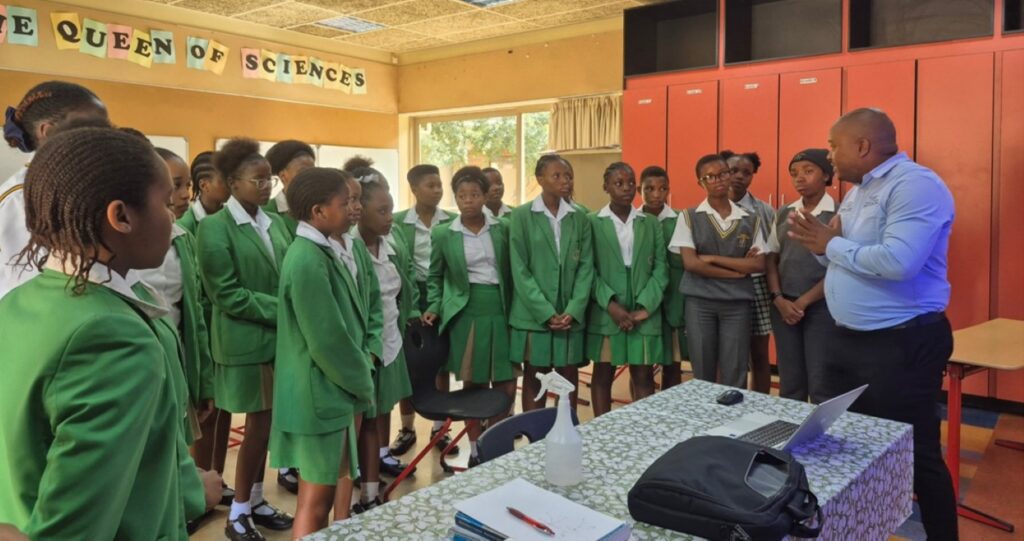
Igniting a spark: TASEZ’s Andile Sangweni inspires future engineers at Oprah Winfrey Leadership Academy

By Mandla Mpangase In a world shaped by innovation, engineering stands as the backbone of progress – designing, building, and maintaining the infrastructure and technology that drive modern life. This powerful message was at the heart of Andile Sangweni’s presentation at the Oprah Winfrey Leadership Academy for Girls, where he engaged young minds on the endless possibilities within the field of engineering. Speaking at the career exhibition, themed ‘Igniting the Spark of Endless Possibilities’, Sangweni, Infrastructure Executive at the Tshwane Automotive Special Economic Zone (TASEZ), shared insights on the role of engineers in transforming societies. “Engineering is more than a career; it is a commitment to problem-solving, innovation, and shaping the future,” he told the aspiring students. The event featured a diverse lineup of industry leaders, each offering unique perspectives on career opportunities in science, technology, engineering, and mathematics (STEM). Sangweni emphasised that engineering is crucial for South Africa’s economic development, particularly in sectors like automotive manufacturing, infrastructure, and renewable energy. “Young people, especially young women, have the power to redefine the engineering landscape. The key is curiosity, resilience, and a passion for problem-solving,” he encouraged. With TASEZ at the forefront of advancing South Africa’s automotive sector, Sangweni highlighted the importance of skills development and industry transformation. He urged the learners to explore engineering not just as a profession but as a platform to drive meaningful change. As the event concluded, learners left with a renewed sense of purpose, ready to embrace the boundless opportunities that engineering offers. With role models like Sangweni paving the way, the future of South African engineering looks brighter than ever.