Tasez

investment

Mashatile: Gauteng key to turning R1.5tn investment pledges into jobs and industrial growth

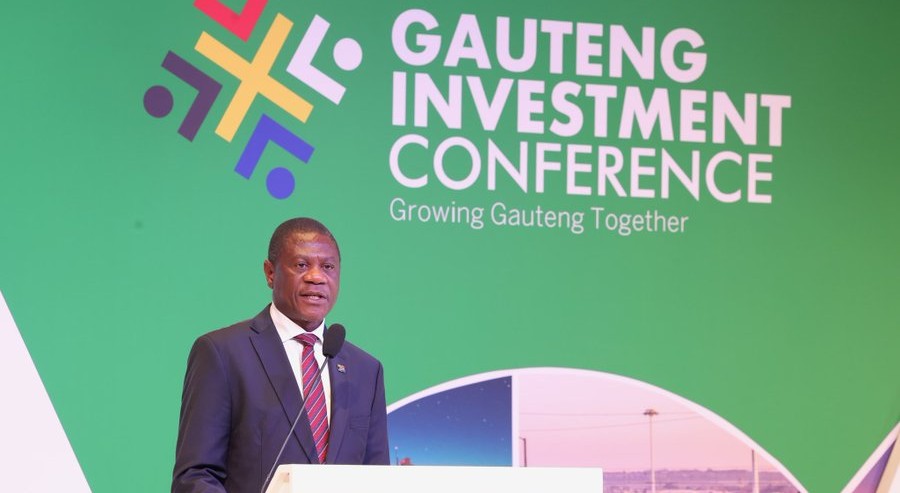
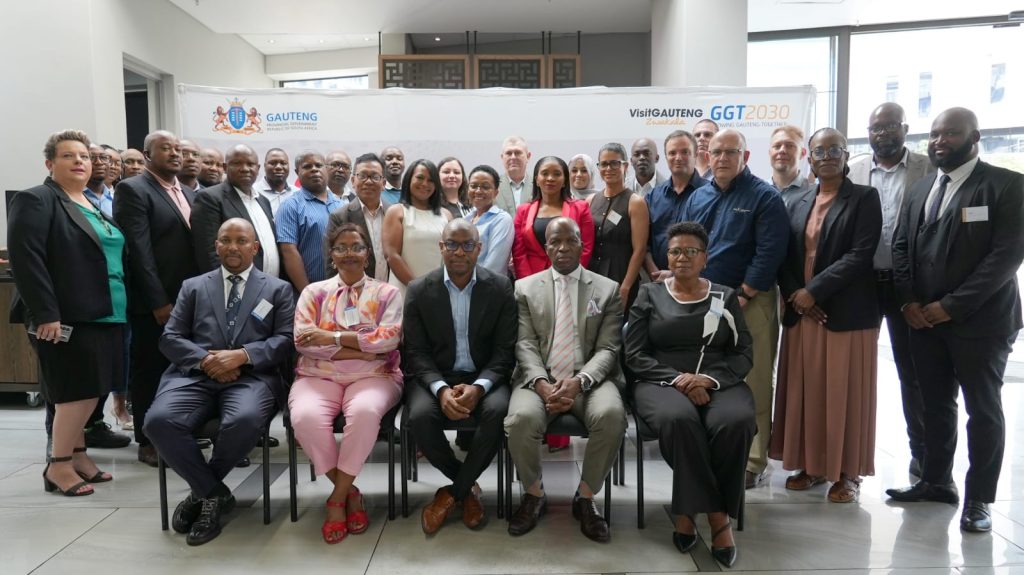
By Mandla Mpangase South African Deputy President Paul Mashatile has positioned Gauteng as the critical engine for converting South Africa’s record investment pledges into tangible economic outcomes, urging faster implementation, stronger partnerships, and a renewed focus on industrialisation. Addressing the 2026 Gauteng Investment Conference on Thursday, 9 April 2026, Mashatile said the province would play a central role in delivering on the commitments secured at the recent South African Investment Conference 2026, where approximately R890-billion in pledges were announced in a single day. The latest commitments push total investment pledges since 2018 to well over R1.5-trillion, prompting the government to set a new national target of R3-trillion in the years ahead. From pledges to implementation Mashatile stressed that the credibility of South Africa’s investment drive would depend not on headline figures, but on execution. “The true value lies in delivery – translating commitments into factories, infrastructure, energy capacity, and above all, jobs,” he said. In this context, Gauteng, South Africa’s largest contributor to GDP and a gateway to regional and global markets, has been identified as the primary platform where many of these projects will be implemented and scaled. The Gauteng Investment Conference, he noted, serves to “localise investment, accelerate execution, and remove obstacles at project level”, effectively bridging the gap between national ambition and on-the-ground delivery. Aligning national priorities with provincial strengths Mashatile said many of the investments announced at the South African Investment Conference align directly with Gauteng’s economic strengths, including advanced manufacturing, energy, logistics, digital services, and infrastructure development. The province’s industrial base, financial system, skilled workforce, and connectivity position it as a natural hub for large-scale project rollout. “This conference moves us from national pledges to provincial pipelines, from policy certainty to site readiness, and from investor intent to operational delivery,” he said. A new model of industrialisation Framed under the theme Re-industrialising Africa’s Gateway, Mashatile outlined a modern approach to industrialisation built on four pillars: Investment lifecycle approach Mashatile said the Gauteng Investment Conference is evolving into a full investment lifecycle platform, covering project origination, preparation, financing, implementation, and delivery. Government’s role, he said, is to de-risk investment through policy certainty and regulatory efficiency, crowd in private capital, and ensure accountability through project tracking and coordination across all spheres. “Credibility is built not on what we announce, but on what we deliver,” he said. Call for public-private partnership The deputy president called for deeper collaboration between government, business, and development finance institutions to unlock large-scale investment. He urged businesses to invest in skills development, support localisation and integrate small enterprises into value chains, while positioning themselves as “co-architects” of South Africa’s industrial future. Investors, meanwhile, were encouraged to view South Africa, and Africa more broadly, not as a risk, but as a long-term growth opportunity. “Africa is not a risk story; it is a growth and return story,” Mashatile said. Gauteng as a gateway to Africa Reaffirming Gauteng’s strategic importance, Mashatile said the province offers a combination of returns and resilience, underpinned by a skilled workforce, established infrastructure, and a commitment to enterprise development. He concluded with a call to action for all stakeholders to move decisively from commitments to implementation. “Let this conference mark a turning point, from commitments to implementation, towards integrated growth that is inclusive, sustainable, and transformative,” he said.

Gauteng targets R200bn in new investment as MEC Maile positions province as Africa’s deal-making hub

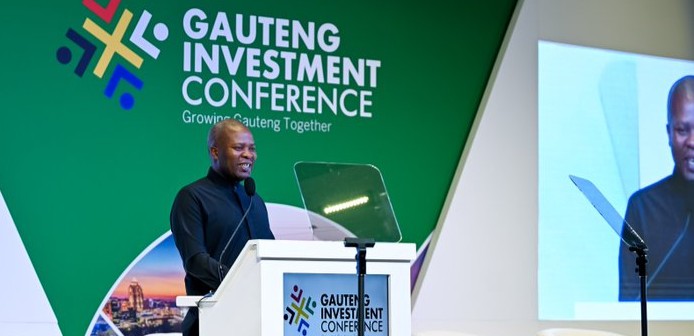
By Mandla Mpangase Lebogang Maile, former Gauteng MEC for Finance and Economic Development and now MEC for Education, has set an ambitious target of mobilising at least R200-billion in new investment commitments at the 2026 Gauteng Investment Conference, positioning the province as a leading subnational platform for deal-making on the continent. Speaking at the opening of the conference, Maile said Gauteng is shifting from “mobilisation to institutionalisation” of investment, as the province seeks to convert pledges into tangible economic activity. The conference, now in its second year, has evolved from a traditional investment showcase into what Maile described as a “central instrument” for driving growth, coordinating stakeholders, and translating policy into implementation. From pledges to projects The inaugural 2025 conference attracted more than 1 800 participants and secured R312.5-billion in investment pledges, signalling renewed investor confidence in South Africa’s economic hub. However, Maile stressed that success is no longer measured by headline figures alone. “Investment conferences are not judged by what is announced, but by what is delivered,” he said. According to Maile, a “meaningful portion” of those commitments has already moved into implementation, unlocking tens of billions of rand into infrastructure, industrial capacity, energy systems, and job creation. This progress, he argued, reflects a deliberate shift to a lifecycle-based investment model – one that spans project origination, preparation, packaging, investor engagement, facilitation, delivery, and aftercare. A multiplier for growth Maile described the Gauteng Investment Conference as a “force multiplier” that integrates project preparation, intergovernmental coordination and capital mobilisation into a single system aligned with the Gauteng Economic Plan. The province, which contributes roughly a third of South Africa’s GDP, remains the country’s primary economic engine and a key gateway into African markets. Yet it faces structural constraints, including low national investment levels, infrastructure backlogs, and energy instability. At the same time, intensifying global competition for capital and shifting supply chains are reshaping investor expectations. “Investors are no longer responding to ambition alone,” Maile said. “They are responding to credibility, governance, execution capability, and the ability to convert opportunity into outcomes.” Focus on high-growth sectors The 2026 conference is structured around transactions rather than presentations, with curated deal rooms and sector-focused engagements aimed at accelerating project closure. Priority sectors include: Maile said the province is strengthening coordination across national, provincial, and municipal pipelines to present “one government” to investors, reducing fragmentation and improving project visibility. Continental ambitions A key feature of this year’s conference is the Gauteng Pan-African Economic Partnership Mobilisation initiative, which seeks to align with the African Continental Free Trade Area and the African Union’s Agenda 2063. The aim is to build cross-border value chains and position Gauteng as a gateway to Africa’s industrialisation. Maile argued that if successful, Gauteng’s model could serve as a blueprint for other African regions seeking to compete globally through integrated, investment-ready ecosystems. Aftercare and execution in focus A major emphasis for the 2026 Gauteng Investment Conference is post-conference implementation. Maile highlighted the importance of “aftercare” in ensuring that projects progress efficiently through regulatory approvals, financing, and construction. He called on municipalities to accelerate approvals and align project pipelines, while urging development finance institutions and banks to expand blended finance solutions that can de-risk large-scale infrastructure investments. The private sector, he added, should view itself not merely as participants but as co-investors in the province’s growth trajectory. From promise to performance Framing the conference under the theme Re-Industrialising Africa’s Gateway: Investment, Innovation and Integrated Growth, Maile said Gauteng is building a system for continuous capital formation rather than relying on one-off events. “We are not presenting a wish list,” he told delegates. “We are presenting structured opportunity – bankable projects, aligned policy frameworks, coordinated institutions, and an administration committed to delivery.” With project pipelines prepared and partnerships taking shape, Maile concluded that the province is ready to move “from promise to performance” as it seeks to entrench investment-led growth in South Africa’s economic heartland.

Ramaphosa hails record investment pledges as South Africa ‘turns a corner’

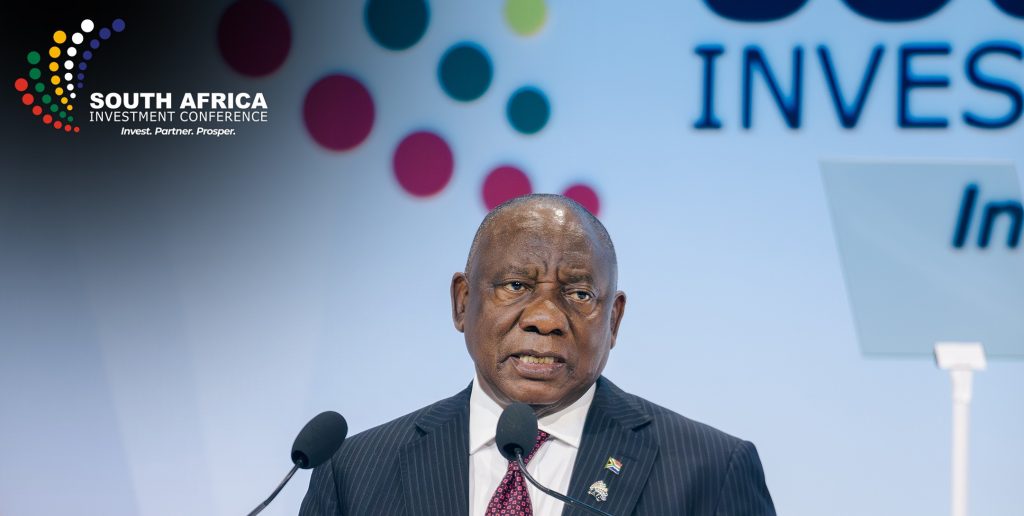
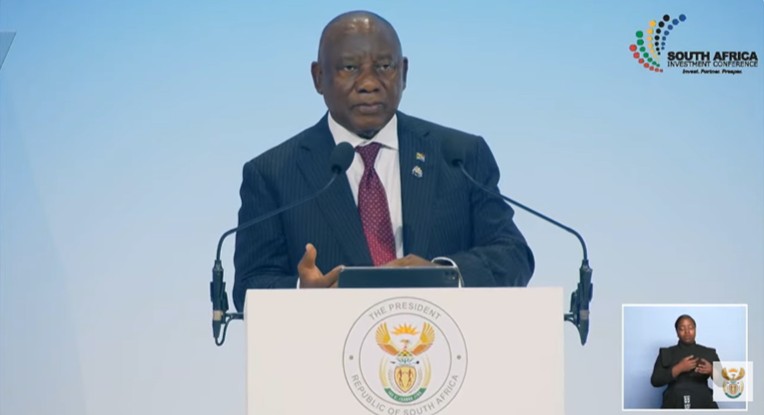
By Mandla Mpangase President Cyril Ramaphosa has declared that South Africa is entering a “new phase of growth”, following record-breaking investment commitments announced at the 2026 South Africa Investment Conference (SAIC) held at the Sandton Convention Centre in Johannesburg. Delivering his closing remarks to delegates, investors, and business leaders, Ramaphosa said the scale and scope of pledges made at this year’s conference provide compelling evidence that confidence in the country’s economy is strengthening. The conference marked the launch of a second investment mobilisation drive, targeting R2-trillion in new investments between 2026 and 2030. This builds on the success of the first drive, which exceeded its R1-trillion target. A total of R889.8-billion was pledged during the day-long conference on 31 March 2026. “The cumulative value of the pledges made at this conference is the highest we have achieved since the first South Africa Investment Conference,” he said, noting that the number of projects announced had also reached a new peak. A notable feature of this year’s commitments is the strong showing from domestic investors, which Ramaphosa said reflects growing confidence within South Africa’s own business community. At the same time, foreign direct investment has “increased phenomenally”, supported by participation from international firms and development finance institutions. The investments span all nine provinces and cut across key sectors including energy, mining, manufacturing, infrastructure and global business services. Among the headline commitments, Toyota will invest R10.4-billion in KwaZulu-Natal to support the automotive sector’s transition to cleaner energy. Sasol has pledged R60-billion for plant upgrades and new technologies in Mpumalanga and the Free State. At the same time, Valterra Platinum will expand mining operations in Limpopo to supply critical minerals for future-facing industries. Infrastructure and energy also feature prominently. South32 is investing R3.9-billion in rail upgrades linked to manganese mining in the Northern Cape and KwaZulu-Natal, while black-owned manufacturer Actom will inject R250-million into equipment to support electricity grid expansion. In the services sector, Teleperformance will invest R145-million in the Eastern and Western Cape, creating 2,600 jobs, while renewable energy company Mulilo has committed R14.8-billion to projects across multiple provinces. Ramaphosa emphasised that these commitments align with the government’s broader push to scale up infrastructure spending, describing it as the “largest infrastructure investment intervention” in South Africa’s history. Despite the positive momentum, the President acknowledged that significant work remains. Fixed investment currently stands at around 15% of GDP, and the country must double this level over time to achieve sustained economic growth. “There is a gap between improved sentiment on one hand, and greater capital deployment that translates to strong growth and jobs on the other,” he said. Central to closing that gap is the government’s structural reform agenda, which Ramaphosa described as “irreversible”. The reforms, coupled with a robust regulatory framework and adherence to the rule of law, are aimed at providing certainty and predictability for investors. He also highlighted the importance of South Africa’s constitutional democracy, noting that the rule of law underpins economic development, protects rights, and ensures accountable governance. Ramaphosa credited the private sector as a key partner in the country’s economic recovery, pointing to longstanding collaboration between business and government since 2019. Initiatives such as the Youth Employment Service have created more than 200 000 work opportunities, while joint efforts during the Covid-19 pandemic and the Economic Reconstruction and Recovery Plan helped stabilise the economy. The evolving Government Business Partnership, now in its third phase, is focused on improving logistics, securing energy supply, and tackling crime and corruption – issues that remain critical to investor confidence. On this front, Ramaphosa outlined a series of interventions to strengthen the criminal justice system, including the establishment of a new reform initiative targeting organised crime, corruption, the illicit economy, and illegal firearms. He also confirmed that new regulations under the Public Procurement Act will be finalised soon to combat corruption in state procurement. Reflecting on the past decade, Ramaphosa said South Africa has made significant progress since the era of state capture and economic stagnation. “Today, the green shoots of renewal are emerging. We have turned a corner, and confidence in our economic trajectory is rising,” he said. He urged delegates to convert pledges into tangible projects and long-term partnerships that drive inclusive growth and job creation. “You are not merely investing in an economy,” he said. “You are investing in a nation determined to grow, transform, and succeed.”

South Africa sets the stage for broad-based, investment-led growth

By Mandla Mpangase South Africa is entering a new phase in its economic trajectory, with President Cyril Ramaphosa positioning the country as a reform-driven, investment-ready destination focused on inclusive and sustainable growth. Addressing more than 1 000 delegates from over 50 countries at the sixth South Africa Investment Conference on 31 March 2026, Ramaphosa made it clear that the government’s priority is not only to attract capital, but to ensure investment translates into tangible, broad-based benefits. “We are creating the conditions for investment-led growth that is broad-based, inclusive, and durable,” he said. “Investment conferences such as this are an opportunity for us to showcase the attractiveness of investment opportunities in our country to domestic and international investors. By connecting investors with local opportunities, we are able to attract foreign direct investment (FDI). They also facilitate strong partnerships by bringing together governments, business, banks, and development finance institutions.” Gauteng, the country’s economic hub, provided a fitting backdrop. As the largest contributor to national GDP, the province remains central to South Africa’s investment proposition. South Africa’s post-1994 journey has been marked by resilience. The country has navigated global and domestic shocks, from the financial crisis to state capture and the COVID-19 pandemic, while maintaining institutional stability. Now, that resilience is being translated into growth. Under the Government of National Unity formed after the 2024 elections, the economy has recorded four consecutive quarters of expansion into early 2026, alongside stabilising inflation and improved investor sentiment. However, Ramaphosa stressed that credibility must be backed by delivery. “We know that investors reward execution, not just commitment,” he said, highlighting a shift toward measurable reform outcomes. Central to this effort is Operation Vulindlela, a joint initiative between the Presidency and National Treasury aimed at removing structural constraints to growth. Its focus is on reducing the cost and complexity of doing business across key sectors, including energy, logistics, water, and visas. Nowhere has reform been more consequential than in the energy sector. Following years of load shedding, the government has restructured the electricity market, unbundled Eskom, and opened the grid to private investment. The result is a rapidly expanding pipeline of renewable energy projects and improved energy security. Through these interventions, Ramaphosa said, “we have brought an end to load shedding and ensured a reliable supply of electricity”, a critical milestone for restoring investor confidence. Energy reform also underpins South Africa’s broader transition to a low-carbon economy. Opportunities in green hydrogen, electric vehicle manufacturing, battery storage, and critical minerals are expected to drive future growth, while aligning with global climate commitments. With its significant reserves of platinum group metals and other resources, the country is well-positioned to play a strategic role in global clean energy value chains. Importantly, the transition is being framed as inclusive. “We have been firm that the energy transition must be just and that it should leave no one behind,” Ramaphosa said. Infrastructure investment is another cornerstone of the growth strategy. Over the next three years, the government has committed more than R1 trillion to infrastructure development across transport, energy, water, and digital systems. “Infrastructure is the flywheel that propels growth,” Ramaphosa said, noting its role in reducing costs, improving productivity, and creating jobs at scale. The approach is designed to crowd in private sector participation. Reforms in logistics are opening rail and port operations to competition, while new public-private partnership frameworks and blended finance instruments aim to de-risk investment and accelerate delivery. In the water sector, a pipeline of projects worth more than R50 billion is being prepared for private investment. Beyond infrastructure, the government is emphasising inclusion. Investment projects are expected to incorporate local content, skills development, and community benefits, ensuring that growth is shared more widely. At the same time, South Africa’s empowerment framework is being refined to balance transformation with investment attraction. Mechanisms such as the Equity Equivalent Investment Programme allow multinational firms to contribute to development without altering ownership structures. “Our overriding objective is to support firms with compliance, and to embrace empowerment as a meaningful investment in South Africa’s long-term economic stability,” Ramaphosa said. The conference also marked the launch of a second investment mobilisation drive, targeting R2-trillion in new investments between 2026 and 2030. This builds on the success of the first drive, which exceeded its R1-trillion target. The new phase begins with a strong pipeline of 81 projects worth nearly R890-billion, expected to create more than 230 000 jobs. “This is not ambition for its own sake,” Ramaphosa said. “It is the arithmetic of what South Africa requires to achieve meaningful unemployment reduction and industrialise at scale.” As global uncertainty reshapes capital flows, South Africa is positioning itself as a stable, reform-oriented destination. While Africa continues to attract a relatively small share of global foreign direct investment, the country remains a leading recipient on the continent. “We are meeting at a time of uncertainty for the global economy. Geopolitical fragmentation, supply chain disruptions from conflicts and wars, and trade tensions are radically impacting global capital flows,” Ramaphosa noted. “In such conditions, South Africa presents a favourable proposition as a resilient, credible and reform-oriented investment destination with strong fundamentals.” Ultimately, the success of this strategy will depend on sustained implementation. “This is only the start of an era of new growth and dynamism for South Africa’s economy,” Ramaphosa said. The task now is to convert investment commitments into real projects and ensure those projects deliver lasting, inclusive growth.

SA investment drive shifts from promises to infrastructure delivery

By Mandla Mpangase South Africa’s investment agenda is entering a new phase, with infrastructure development emerging as central to converting pledges into visible economic growth, as the country prepares to host the sixth South Africa Investment Conference under the theme “Investment that delivers”. The conference, on 31 March 2026 at the Sandton Convention Centre in Johannesburg, is designed to move beyond policy commitments toward “bankable, deployable opportunities” that translate into measurable outcomes. This shift reflects a broader evolution in the country’s investment strategy – from attracting commitments to ensuring implementation – with infrastructure positioned as the backbone of that transition. Infrastructure at the centre of investment strategy Government and industry leaders have increasingly aligned around a common understanding: without modern, reliable infrastructure, investment cannot scale. Recent policy signals reinforce this priority. In the Presidency Budget vote for 2025/2026,  South Africa committed more than R1-trillion to public-sector infrastructure over three years, with a strong focus on transport, logistics, and energy systems – all critical enablers of industrial expansion. At the same time, the South Africa Investment Conference is structured to showcase projects that are not only investment-ready but also already placed within broader infrastructure ecosystems. These include logistics corridors, industrial parks, and sector-focused development zones designed to unlock productivity and competitiveness. Minister of Trade, Industry, and Competition Parks Tau underscored this approach in the build-up to the conference, noting that South Africa is making its investment case “not with promises alone, but with proof”, as billions in previous pledges are already being funneled into operational projects. More than R600-billion from earlier investment commitments has already flowed into new factories, mines and productive infrastructure, signaling a growing emphasis on execution. Speaking in the run-up to the conference, Minister Tau emphasised that South Africa’s national strategic landscape, underpinned by the Growth and Inclusion Strategy and the country’s ongoing reform agenda, provides a coherent, compelling framework for investors who are serious about long-term returns in a high-potential emerging market. TASEZ: A model of infrastructure-led industrialisation Within this national framework, the Tshwane Automotive Special Economic Zone (TASEZ) has emerged as a leading example of how targeted infrastructure investment can catalyse industrial growth. Strategically located within Gauteng’s automotive corridor, TASEZ integrates world-class manufacturing facilities with purpose-built logistics infrastructure, enabling seamless movement of goods between production sites, suppliers and export channels. Its development has been closely tied to anchor investments in the automotive sector, demonstrating how infrastructure, when aligned with industry needs, can rapidly unlock value chains and attract further investment. Crucially, TASEZ illustrates a shift in how special economic zones are being positioned in South Africa. Rather than operating as isolated industrial parks, SEZs are increasingly viewed as integrated ecosystems, combining: This integrated approach is central to improving competitiveness, particularly in sectors such as automotive manufacturing, where logistics efficiency and supply chain reliability are decisive factors. Linking infrastructure to localisation and jobs Infrastructure investment is also directly tied to South Africa’s localisation and job creation agenda. Discussions feeding into the South Africa Investment Conference have highlighted how infrastructure gaps continue to constrain local manufacturing, particularly in component production and supply chain integration. By addressing these bottlenecks, projects like TASEZ are helping to: This aligns with broader industrial policy objectives, with infrastructure viewed as a strategic tool for economic transformation. From investment platform to delivery engine The evolution of the South Africa Investment Conference reflects a maturing investment ecosystem that prioritises delivery, accountability and measurable impact. With infrastructure at its core, the conference is positioning South Africa as a destination where capital is not only welcomed, but effectively deployed. In this context, TASEZ stands out as a tangible demonstration of what “investment that delivers” looks like in practice: a project where infrastructure, policy alignment and private-sector participation converge to create a functioning industrial hub. As the country seeks to deepen its investment pipeline and accelerate growth, infrastructure is the foundation upon which South Africa’s next phase of industrialisation will be built.

SA’s investment prospects buoyed by economic recovery

In his weekly newsletter on Monday, 30 March 2026, President Cyril Ramaphosa gears up for the sixth South Africa Investment Conference taking place in Sandton, Gauteng. This week, we will be welcoming delegates from more than 50 countries to the sixth South Africa Investment Conference (SAIC) in Sandton, Gauteng. Since its inception in 2018, the SAIC has grown to become a premier global forum for showcasing the attractiveness of investment opportunities in our country to domestic and international investors. Investment conferences play a key role in attracting foreign direct investment (FDI) as high-profile platforms that connect international investors with local opportunities. They also facilitate strong partnerships by bringing together governments, business, banks and development finance institutions. As investors look to destinations that have demonstrated resilience in the face of increasingly volatile global financial conditions, South Africa presents a favourable proposition. We are Africa’s largest economy with a diversified industrial base. Since we began our first R1,2-trillion investment mobilisation drive in 2018, we have secured investment pledges in mining, healthcare, automotive, food and beverage and others, reflecting the sophistication of our economy.  South Africa is also the leading destination for renewable energy investment on the continent, with these investments making up a considerable share of the total pledges made at previous conferences. We have a sound policy and regulatory environment, offering certainty to investors at a time when we are just one of many emerging markets across the globe vying for capital. We are also a gateway for businesses looking to set up or expand their operations in Africa. Through this conference, as well as the five preceding ones, we will be seeking to build even greater confidence in our country as an investment destination, and to demonstrate our commitment to structural reform, policy certainty and policy execution. The green shoots of economic recovery we are experiencing further bolster our position. The macroeconomic outlook has improved. We experienced four consecutive quarters of growth by the end of 2025, national debt has stabilised, and more jobs are being created. Last year, our sovereign rating was upgraded for the first time in 17 years, and we were removed from the Financial Action Task Force grey list. The structural reform agenda being driven through Operation Vulindlela has unlocked progress in electricity, freight logistics, water, telecommunications, and the visa system. We have brought load-shedding to an end and are creating a new, competitive electricity market that will ensure energy security and attract investment. The country’s logistics sector is being rapidly modernised, and we are enabling private investment in port and rail operations. Among the projects for which we have initiated a Private Sector Participation (PSP) process are the Ngqura Manganese Export Corridor in the Eastern Cape and the Richards Bay Dry Bulk Terminal in KwaZulu-Natal. Last year we also signed a 25–year concession for the Durban Container Terminal Pier 2, representing R11-billion in private investment. A system for third-party access to the freight rail network is in place, and 41 freight rail slots have been allocated to private companies. We have implemented reforms to the visa regime to attract new skills and promote tourism. These include operationalising the Remote Work Visa, introducing a Trusted Employer Scheme to support major investors, and piloting an Electronic Travel Authorisation system. By showcasing the progress and durability of the reform agenda, our goal is to grow the pool of inward investment from businesses and countries that will ultimately be a bridge to new markets, technologies and networks for South Africa. This year’s conference has to date attracted more than 1 000 delegates from more than 50 countries. At the end of our first five-year investment mobilisation drive in 2024, we exceeded our target by 26%, securing pledges valued at R1,57-trillion. Over 300 projects were initiated, and to date, 161 of these have been finalised or are under construction. The pledges have not been merely vague commitments and promises, but have materialised as tangible, brick-and-mortar projects that are creating jobs for our people. Last year I opened the Platreef Mine in Mokopane in Limpopo, which is positioned to play a leading role in the production of sought-after critical minerals for the energy transition. This facility that employs more than 2 000 workers from the local community and is partly owned by a community trust emanated from a R2,8-billion investment pledge by Ivanhoe Mines at the South Africa Investment Conference in 2022. Last year, I also visited the BMW plant in Rosslyn in Tshwane, where the automotive giant has invested R4,2-billion for the electrification of its only plant on the continent that will be producing the BMW X3 Plug-in Hybrid electric vehicle. This was also an investment pledged at the SAIC. By showcasing our unique and favourable proposition as an investment destination of choice, we have set ourselves the goal of mobilising R2-trillion in new investments by 2028. As we strive to achieve growth that creates jobs for our people, this next phase will move from pledges towards implementation. This year’s investment conference stands at the crossroads of opportunity and ambition. The clear message we will be delivering is that we remain committed to staying the course on fiscal discipline, to accelerating the momentum of the reform agenda – and to leveraging investment to build an economy that is inclusive, transformed and that benefits all.

TASEZ stakes claim as blueprint for inclusive industrial growth

Infrastructure investment, the drive for localisation, and community integration position Tshwane’s automotive hub as a model for economic reform By Mandla Mpangase The Tshwane Automotive Special Economic Zone (TASEZ) is emerging as a leading model for inclusive industrialisation in South Africa, with government and industry leaders positioning the automotive hub as a practical pathway to drive economic reform, investment, and job creation. This message took centre stage at a high-level investor engagement held in Menlyn Maine, Pretoria, where stakeholders outlined how coordinated infrastructure investment, localisation strategies, and community integration are underpinning the zone’s growth. Addressing investors and industry partners, TASEZ board chair Maoto Molefane said the evolution of the zone reflects a deliberate shift towards ensuring that industrial development delivers measurable socio-economic outcomes. “This is not just about industrial expansion – it is about building a model that works for communities, for investors and for the country as a whole,” said Molefane. He added that, despite persistent economic headwinds, targeted interventions through special economic zones offer a credible mechanism to accelerate industrial growth, deepen localisation and support structural transformation. A model for economic reform and inclusion Gauteng’s head of the Department for Economic Development, Motlatjo Moholwa, described TASEZ as an emerging blueprint for how South Africa can better align industrial policy with community development outcomes. “We are not yet where we want to be, but we are getting there. What we are seeing here is a blueprint – one that can be adapted across the country to ensure that development reaches communities meaningfully,” said Moholwa. Infrastructure investment anchors growth The City of Tshwane COO Vuyo Zitumane outlined the City’s coordinated approach to enabling industrial expansion. “Our focus is on creating a reliable, investor-friendly environment through sustained infrastructure investment and strategic planning. These developments are about positioning Tshwane as a globally competitive automotive hub,” said Zitumane. Localisation and industrial deepening TASEZ CEO Dr Bheka Zulu said the zone’s strategy is firmly anchored in localisation, industrial deepening and measurable economic impact. “Our focus is on building an integrated automotive ecosystem that drives localisation, expands supplier participation and delivers sustainable industrial growth. TASEZ is not only attracting investment, but also ensuring that value is retained and expanded within the local economy,” said Zulu. As TASEZ continues to scale, stakeholders say the focus will remain on converting policy ambition into tangible outcomes – from deeper localisation and expanded supplier networks to sustained job creation and community inclusion. With further investment expected in the next phases and infrastructure upgrades gathering pace, the automotive hub is increasingly being viewed not only as a driver of regional growth, but as a test case for how South Africa can translate industrial policy into measurable economic reform.

FER designates gain insight into TASEZ’s catalytic role in driving economic growth

By Mandla Mpangase Foreign Economic Representative (FER) designates in South Africa were given an on-the-ground look at one of the country’s most strategic industrial assets during a site visit to the Tshwane Automotive Special Economic Zone (TASEZ) on Monday, 23 March 2026. The visit highlights the zone’s growing role as a catalyst for investment, trade and industrial expansion. FERs provide direct access links to foreign markets for South African businesses, spot and recruit foreign direct investment into South Africa, gather foreign market intelligence, and assist South African and foreign businesses in accessing the Department of Trade, Industry, and Competition’s (the dtic) various programmes. They play a central role in marketing South Africa internationally and are essential for attracting foreign investment and ensuring that South African businesses can access international markets. Monday’s visit to TASEZ formed part of the dtic’s FER Capacity Building Programme, which is aimed at equipping South Africa’s economic diplomats with the tools and insights needed to position the country competitively in global markets. TASEZ, South Africa’s flagship Special Economic Zone, is driving a new model of integrated, export-oriented industrial development anchored in the automotive sector. “Our vision is to be the benchmark for SEZs in South Africa while contributing to the growth of the automotive sector, to be a major creator of new businesses and contributor to employment, transformation, and socio-economic development,” TASEZ CEO Dr Bheka Zulu told the designates. Located adjacent to the Ford Motor Company’s Silverton assembly plant in the City of Tshwane, the zone has become an important node in South Africa’s automotive value chain, linking manufacturers, component suppliers and logistics infrastructure. For FER designates, the visit underscored the importance of SEZs as practical instruments of economic policy, not simply as investment destinations, but as places that enable scale, efficiency and global competitiveness. The programme emphasises the role of provincial investment promotion agencies and SEZs in attracting foreign direct investment, facilitating trade and supporting exporters. Through exposure to projects like TASEZ, designates are able to see for themselves how economic policy converts into investment assets that appeal to international investors. During the visit, participants were introduced to the operational aspects of the zone, including its infrastructure offering, investor incentives and sectoral focus. The experience provided insight into how TASEZ is addressing key investor requirements such as proximity to original equipment manufacturers (OEMs), access to logistics corridors, and a supportive regulatory environment. “We see TASEZ as an engine for growth, an engine for development and an engine for innovation,” Dr Zulu told the visitors. In addition to its location in the country’s economic hub of Gauteng, TASEZ is also positioned as a catalytic project within the province’s broader industrial strategy – demonstrating how public-private partnerships can unlock large-scale investment and stimulate downstream economic activity. The site visit also highlighted the importance of aligning national economic diplomacy with provincial growth strategies. The on-site visit allows FER designates to identify investment opportunities and facilitate trade partnerships in their respective markets. As South Africa intensifies its efforts to attract investment and expand exports, initiatives such as the FER Capacity Building Programme, coupled with exposure to high-impact projects like TASEZ, are working hard to strengthen the country’s ability to compete globally.

South Africa’s SEZs under spotlight as leaders push for greater industrial impact

By Mandla Mpangase Government and industry leaders have called for a fundamental shift in how South Africa’s Special Economic Zones (SEZs) deliver value, arguing that stronger integration with spatial planning and industrial policy is key to unlocking growth. This emerged at a breakfast session hosted at the Gordon Institute of Business Science (GIBS) in Illovo, Johannesburg, on Friday, 20 March 2026, forming part of the roadshow to the 2026 Gauteng Investment Conference. Opening the session, Gauteng Growth and Development Agency (GGDA) acting CEO Sithembiso Dlamini outlined the province’s strategy to position SEZs as anchors of development corridors, driving infrastructure investment and manufacturing-led growth. She highlighted recent progress in Gauteng’s SEZ programme, stressing its role in catalysing regional economic activity. A central theme of the discussion was how to close the “value-for-money” gap in SEZ investments. Trade expert Donald MacKay presented findings from a comparative study of global and local SEZ performance, noting that while South Africa has made progress, structural and policy shortcomings continue to limit impact. He pointed to the need for targeted reforms to improve efficiency, attract investment, and boost export competitiveness. From a policy perspective, Maoto Molefane, the special advisor to the Minister of Trade, Industry, and Competition and chairperson of the Tshwane Automotive Special Economic Zone (TASEZ), outlined the government’s new Spatial Industrial Development Strategy. He acknowledged limitations in the current SEZ model, including fragmentation and uneven returns, and said the new approach aims to better align industrial spending with national development goals. “The focus is on ensuring that every rand invested delivers measurable industrial outcomes,” Molefane said. Insights from operational SEZs reinforced the importance of execution and partnerships. Dube TradePort CEO Hamish Erskine reflected on the evolution of the KwaZulu-Natal-based SEZ, highlighting the role of logistics integration, infrastructure planning, and strong governance in its success. He said the model demonstrates how SEZs can drive broader regional development, including job creation and small business growth. Meanwhile, TASEZ CEO Dr Bheka Zulu emphasised the importance of sector-focused development, noting that strategic partnerships – particularly with major investors such as Ford – have been central to its rapid growth. Zulu also pointed to the need for SEZs to adapt to global shifts, including the rise of new energy vehicles, as part of their future positioning. The session concluded with consensus that South Africa’s SEZ programme must evolve beyond isolated zones into fully integrated industrial ecosystems, capable of delivering sustained economic impact, increased exports and long-term investment attraction. The discussion forms part of ongoing engagements ahead of the Gauteng Investment Conference scheduled for 9 April 2026, where infrastructure, manufacturing and industrial policy are expected to take centre stage.

Logistics roundtable sets stage for 2026 Gauteng Investment Conference

By Mandla Mpangase “The opportunity is not ahead of us – it is here,” the head of the Gauteng Department of Economic Development, Motlatjo Moholwa, told participants at a high-level roundtable on logistics in Pretoria on 19 March 2026. With Gauteng contributing approximately 34% of South Africa’s GDP and more than 45% of its manufacturing output, Moholwa used the platform to reinforce the province’s position as the country’s industrial powerhouse and a prime destination for investment. The roundtable, convened by the Automotive Industry Development Centre (AIDC) and the Tshwane Automotive Special Economic Zone (TASEZ), forms a key part of the build-up to the 2026 Gauteng Investment Conference taking place on 9 April 2026 It brings together senior representatives from government, state-owned entities, logistics operators, manufacturers and investors to align on priorities that will shape Gauteng’s investment pipeline. “This roundtable is more than a conversation,” Moholwa said. “It is a strategic platform feeding into the Gauteng Investment Conference, where we will showcase bankable projects and present Gauteng as an investment-ready destination.” Driving toward an investment-ready province At the heart of discussions is the need to strengthen Gauteng’s logistics ecosystem to support industrial expansion, particularly in the automotive sector, where the province hosts a dense network of component manufacturers and OEM-linked operations from Rosslyn in the west to Silverton in the east, and across the broader Tshwane corridor. Participants are focusing on practical reforms to: These interventions are expected to play a key role in attracting private sector participation and ensuring that infrastructure development aligns with the province’s broader industrial strategy ahead of April’s conference. Localisation and industrial growth A major theme emerging from the roundtable is the importance of component localisation in deepening Gauteng’s manufacturing base. “With its well-developed industrial infrastructure, access to skilled and semi-skilled labour, and strong technical training institutions, Gauteng is not just participating, it is a leading component manufacturing. “This makes the province an ideal destination for investment,” Moholwa said. Moholwa highlighted opportunities in import replacement, the growing automotive aftermarket, and export expansion through the African Continental Free Trade Area (AfCFTA). He also pointed to the rise of green mobility as a new frontier for investment, particularly in electric vehicle components and advanced materials. However, he stressed that unlocking this potential will require deliberate action, including stronger supplier development programmes, improved access to finance, and greater coordination between OEMs and local suppliers. Infrastructure is the foundation Infrastructure remains a central pillar of Gauteng’s investment drive. The roundtable discussions are exploring how enhanced road and rail integration, coupled with targeted infrastructure investment, can reduce inefficiencies and improve the movement of goods across key corridors. With established industrial zones, specialised facilities such as the Automotive Supplier Park, and incentives offered through special economic zones like TASEZ, Gauteng is positioning itself as a globally competitive manufacturing hub. “Manufacturers benefit from market access to the SADC region, an established industrial base that reduces the cost of entry, and dedicated facilities such as the Automotive Supplier Park and Special Economic Zones like TASEZ, which offer world-class infrastructure, incentives, and streamlined regulatory processes. Public-private partnerships and government commitment further strengthen the province’s investment readiness,” Moholwa added. Countdown to 9 April As the province prepares for the conference, engagements like today’s roundtable are helping to refine its investment narrative to one based on infrastructure development, industrial expansion and localisation. “Scaling localisation requires deliberate action,” he said. “We must strengthen supplier development programmes to build technical capability and quality standards, improve coordination across OEMs and suppliers, and invest in skills development, technology adoption, and industrial infrastructure. “Equally important is enhancing access to finance and markets for emerging manufacturers and providing policy certainty that encourages local production.” The head of the province’s Department of Economic Development issued a three-fold challenge to the participants at the roundtable: “We call on industry to invest, expand, and partner locally. We call on government and agencies to enable, support, and accelerate. And we call on all stakeholders to collaborate in building a globally competitive, locally anchored manufacturing ecosystem.” Moholwa’s call to action was unequivocal: collaboration between government, industry and institutions will be essential to translate plans into tangible investment outcomes. With just weeks remaining before the conference, Gauteng is not only making its case to investors, it is also shaping the conditions needed to secure long-term, inclusive economic growth.