Tasez

Lebogang Maile

Gauteng targets R200bn in new investment as MEC Maile positions province as Africa’s deal-making hub

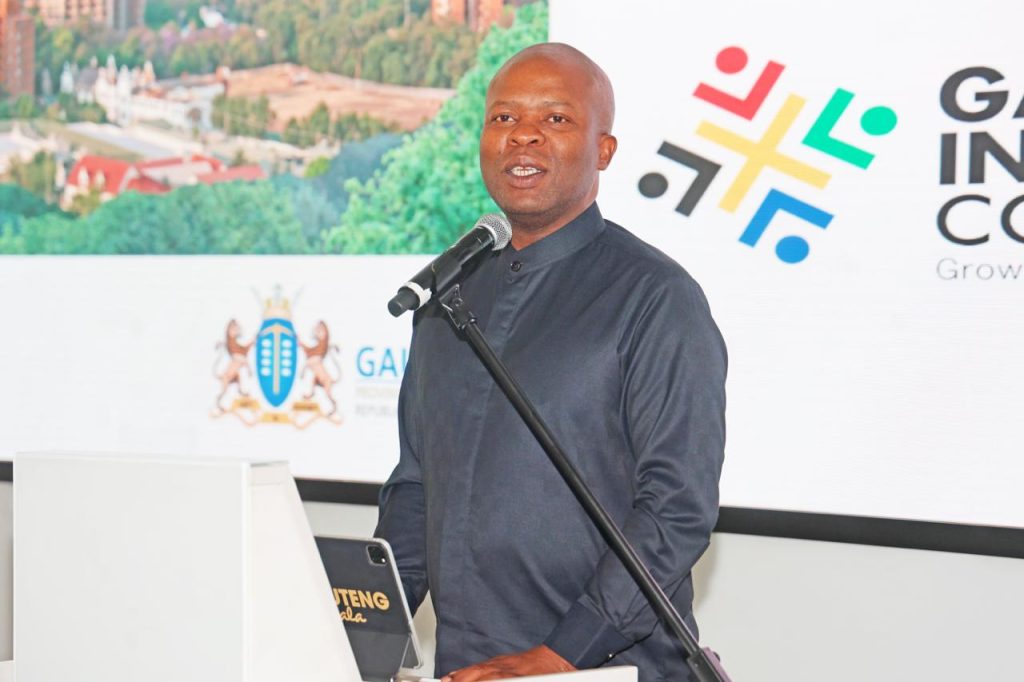
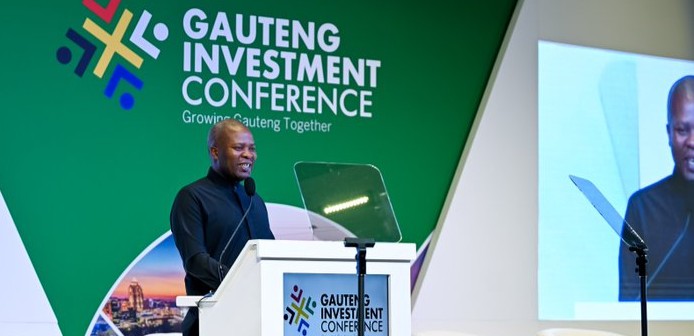
By Mandla Mpangase Lebogang Maile, former Gauteng MEC for Finance and Economic Development and now MEC for Education, has set an ambitious target of mobilising at least R200-billion in new investment commitments at the 2026 Gauteng Investment Conference, positioning the province as a leading subnational platform for deal-making on the continent. Speaking at the opening of the conference, Maile said Gauteng is shifting from “mobilisation to institutionalisation” of investment, as the province seeks to convert pledges into tangible economic activity. The conference, now in its second year, has evolved from a traditional investment showcase into what Maile described as a “central instrument” for driving growth, coordinating stakeholders, and translating policy into implementation. From pledges to projects The inaugural 2025 conference attracted more than 1 800 participants and secured R312.5-billion in investment pledges, signalling renewed investor confidence in South Africa’s economic hub. However, Maile stressed that success is no longer measured by headline figures alone. “Investment conferences are not judged by what is announced, but by what is delivered,” he said. According to Maile, a “meaningful portion” of those commitments has already moved into implementation, unlocking tens of billions of rand into infrastructure, industrial capacity, energy systems, and job creation. This progress, he argued, reflects a deliberate shift to a lifecycle-based investment model – one that spans project origination, preparation, packaging, investor engagement, facilitation, delivery, and aftercare. A multiplier for growth Maile described the Gauteng Investment Conference as a “force multiplier” that integrates project preparation, intergovernmental coordination and capital mobilisation into a single system aligned with the Gauteng Economic Plan. The province, which contributes roughly a third of South Africa’s GDP, remains the country’s primary economic engine and a key gateway into African markets. Yet it faces structural constraints, including low national investment levels, infrastructure backlogs, and energy instability. At the same time, intensifying global competition for capital and shifting supply chains are reshaping investor expectations. “Investors are no longer responding to ambition alone,” Maile said. “They are responding to credibility, governance, execution capability, and the ability to convert opportunity into outcomes.” Focus on high-growth sectors The 2026 conference is structured around transactions rather than presentations, with curated deal rooms and sector-focused engagements aimed at accelerating project closure. Priority sectors include: Maile said the province is strengthening coordination across national, provincial, and municipal pipelines to present “one government” to investors, reducing fragmentation and improving project visibility. Continental ambitions A key feature of this year’s conference is the Gauteng Pan-African Economic Partnership Mobilisation initiative, which seeks to align with the African Continental Free Trade Area and the African Union’s Agenda 2063. The aim is to build cross-border value chains and position Gauteng as a gateway to Africa’s industrialisation. Maile argued that if successful, Gauteng’s model could serve as a blueprint for other African regions seeking to compete globally through integrated, investment-ready ecosystems. Aftercare and execution in focus A major emphasis for the 2026 Gauteng Investment Conference is post-conference implementation. Maile highlighted the importance of “aftercare” in ensuring that projects progress efficiently through regulatory approvals, financing, and construction. He called on municipalities to accelerate approvals and align project pipelines, while urging development finance institutions and banks to expand blended finance solutions that can de-risk large-scale infrastructure investments. The private sector, he added, should view itself not merely as participants but as co-investors in the province’s growth trajectory. From promise to performance Framing the conference under the theme Re-Industrialising Africa’s Gateway: Investment, Innovation and Integrated Growth, Maile said Gauteng is building a system for continuous capital formation rather than relying on one-off events. “We are not presenting a wish list,” he told delegates. “We are presenting structured opportunity – bankable projects, aligned policy frameworks, coordinated institutions, and an administration committed to delivery.” With project pipelines prepared and partnerships taking shape, Maile concluded that the province is ready to move “from promise to performance” as it seeks to entrench investment-led growth in South Africa’s economic heartland.

From growth to dignity: Why coordinated industrialisation is Gauteng’s best weapon against unemployment

Dr Bheka Zulu, CEO of the Tshwane Automotive Special Economic Zone, reflects on Gauteng’s MEC for Economic Development and Finance, Lebogang Maile’s call to tackle unemployment through sustained, coordinated implementation that transforms growth into jobs. Gauteng MEC for Finance and Economic Development, Lebogang Maile, is correct in asserting that addressing unemployment in the province is no longer about isolated interventions, but about sustained, coordinated implementation that transforms growth into jobs – and jobs into dignity, stability, and hope. This is not simply a policy statement; it is a call to action that speaks directly to the structural realities of South Africa’s economy. For too long, economic growth and employment outcomes have moved on separate tracks. Investment announcements have not always translated into meaningful opportunities for communities, and skills programmes have not always aligned with industry demand. Bridging this gap requires precisely the kind of coordinated execution the MEC is advocating. At the Tshwane Automotive Special Economic Zone (TASEZ), we see daily evidence that when alignment is intentional, growth does convert into jobs. Special Economic Zones are designed to function as integrated ecosystems – bringing together government policy, infrastructure investment, private sector capital, skills development institutions, and local enterprise participation into a single industrial platform. This coordination reduces barriers to investment while accelerating employment creation across multiple layers of the economy. The automotive sector provides a powerful illustration. Industrial expansion anchored by major manufacturers such as Ford Motor Company not only creates jobs on the factory floor, but also drives supplier development, logistics demand, construction activity, services growth, and opportunities for small and medium enterprises. Each manufacturing job can support several additional jobs across the value chain. When scaled, this multiplier effect becomes a meaningful response to unemployment. However, coordination cannot stop at attracting investment. It must extend to localisation strategies that deepen domestic supplier participation, targeted skills development that prepares young people for modern manufacturing, and deliberate pathways for township and small businesses to enter industrial value chains. Without these linkages, economic growth risks remaining abstract — visible in statistics but not felt in households. The MEC’s emphasis on dignity and hope is particularly important. Employment is not merely an economic indicator; it is a foundation for social stability. Work provides income, certainly, but it also provides identity, confidence, and belonging. Communities with access to sustainable employment experience lower inequality, stronger family structure,s and greater resilience. Industrialisation, therefore, should be understood not only as an economic strategy but as a social compact. For Gauteng to succeed, three priorities stand out. First, implementation discipline must become non-negotiable. Plans and strategies are abundant; execution is the differentiator. Projects must move from announcement to completion faster, with measurable outcomes and clear accountability. Second, collaboration across spheres of government and institutions must deepen. Provincial initiatives, national industrial policies, municipal planning, and private sector investment need to operate within a shared framework focused on employment outcomes. Third, policy certainty and investor confidence must be protected. Industrial investment is long-term by nature. Businesses commit capital when they trust the stability of the environment in which they operate. Consistency and reliability in policy signals are therefore critical to sustaining job creation momentum. Gauteng remains South Africa’s economic engine. Its infrastructure, industrial base, financial ecosystem and human capital position it uniquely to lead a new phase of re-industrialisation. But leadership will ultimately be judged not by growth rates alone, but by whether that growth changes lives. If we succeed in translating investment into factories, factories into jobs, and jobs into dignity, stability and hope, then we will have met the challenge MEC Maile has placed before us. And that is a goal worth coordinating around.

From strategy to delivery: Gauteng’s response to the unemployment crisis

Addressing unemployment in Gauteng is about sustained, coordinated implementation that transforms growth into jobs, and jobs into dignity, stability, and hope, writes the MEC for Finance and Economic Development, Lebogang Maile. Unemployment remains one of South Africa’s most persistent and painful challenges. Nationally, the official rate eased to 31.4% in the fourth quarter of 2025 (down from 31.9% in the third quarter), according to the latest Statistics South Africa Quarterly Labour Force Survey. Yet Gauteng, the country’s economic engine, continues to grapple with a higher rate of 33.0%, with approximately 2.56 million residents unemployed, and recorded the largest provincial job losses of 54 000 in the same period. Even as the province shows a year-on-year employment increase of 102 000, these figures underscore that Gauteng is far from immune to the crisis. For years, the province has deployed a mix of supply- and demand-side interventions to tackle unemployment. While research has thoroughly documented its causes, scale, and consequences, the true measure of success is whether government action translates into real, sustained change in people’s lives. In his February 2025 State of the Province Address, Premier Panyaza Lesufi was unequivocal: unemployment ranks among Gauteng’s most urgent priorities. This challenge is intensified in 2026 by fiscal constraints, global economic uncertainty, volatile markets, and shifting geopolitical dynamics that impact investment, industrialisation, and trade. Against this backdrop, the adoption of the Gauteng City Region Economic Growth and Development Plan (2025–2030) in October 2025 marked a decisive shift toward evidence-driven, coordinated action. The plan serves as a strategic anchor for sustaining growth, enhancing competitiveness, and driving inclusive job creation. In the 2025/26 financial year, the Gauteng Department of Economic Development translated this strategy into tangible impact, placing unemployment at the heart of delivery. Interventions deliberately linked medium, small, and micro enterprise (MSME) development, investment mobilisation, tourism growth, and economic infrastructure. More than 2 300 MSMEs received non-financial support, while 2 128 accessed financial assistance worth R603-million through the Township Economic Partnership Fund, resulting in 11 833 jobs created, many in townships and local economies. These are not mere statistics; they represent restored livelihoods, strengthened community services, and more economically active neighbourhoods. Investment promotion added further momentum. The Gauteng Investment Conference secured R312.5-billion in pledges, with R61.2-billion already converted into active projects in manufacturing, logistics, and capital equipment sectors with strong employment multipliers. Tourism has complemented these efforts as a powerful absorber of labour, generating billions in direct spend and creating opportunities for youth, small businesses, and township enterprises. Looking ahead to 2026/27, the focus shifts decisively to scaling up impact. Priority infrastructure projects, action labs, township economic agencies, and MSME value-chain integration will drive labour-absorbing growth, crowd in private investment, and broaden economic participation. The message is clear: addressing unemployment in Gauteng is no longer about isolated interventions, but about sustained, coordinated implementation that transforms growth into jobs, and jobs into dignity, stability, and hope. This article was first published in the My Gauteng newsletter of February 2026.

Gauteng Investment Conference 2026 sets sights on R200-billion at JSE launch

By Mandla Mpangase The Gauteng Provincial Government has formally launched the Gauteng Investment Conference 2026, positioning the event as a central mechanism to convert investor interest into tangible projects, infrastructure delivery, and job creation across South Africa’s economic hub. Gauteng MEC for Finance and Economic Development, Lebogang Maile, unveiled the initiative on 17 February 2026 at the Johannesburg Stock Exchange in Sandton, describing the venue as symbolic of the province’s ambition to mobilise capital at scale. “It is profoundly symbolic that we gather here today at the Johannesburg Stock Exchange as it represents the power of investment,” Maile said, noting the exchange’s market capitalisation of more than R24-trillion and its role in enabling businesses to access capital, expand operations, and create jobs. From pledges to projects The launch builds on the inaugural conference held in April 2025, which secured R312.5-billion in investment pledges across 60 projects, with expected support for more than 114 000 jobs and significant economic opportunities across sectors such as agro-processing, transport infrastructure, property development, and aviation. Maile emphasised that the provincial government is now shifting focus from commitments to delivery. “As of this month, 28% of the pledges secured in 2025 have already been converted into active implementation,” he said, adding that 17 projects are currently being rolled out, unlocking approximately R73-billion into the “real economy”. This conversion rate, he said, is central to Gauteng’s credibility as an investment destination, demonstrating that the conference is not an “event-driven exercise” but a continuous lifecycle spanning project origination, structuring, facilitation, and execution. A key example cited was the ongoing development of the OR Tambo International Airport precinct, which is emerging as a major logistics, manufacturing, and industrial hub. Strategic projects and industrial growth The 2026 conference will showcase large-scale catalytic projects aligned with corridor-based development and industrial clustering. These include: Maile said these projects are supported by feasibility studies, regulatory alignment, and institutional backing to strengthen Gauteng’s competitiveness and long-term growth trajectory. The conference also aligns with broader policy frameworks such as the African Continental Free Trade Area and Agenda 2063, with Gauteng seeking to deepen pan-African value chains and leverage international partnerships established through engagements in Europe and global investment forums. Targeting new commitments For 2026, the province aims to secure at least R200-billion in new investment commitments, a target Maile described as “pipeline-backed and supported by structured engagement with investors, development finance institutions and sector leaders”. Priority sectors include: The conference will also feature curated deal rooms and structured policy dialogues involving African governments, global investors, and private-sector stakeholders, with municipalities playing a central role in project preparation and approvals. “In 2025, we demonstrated that Gauteng can mobilise capital,” Maile said. “In 2026, we are showing that Gauteng can convert capital into projects, jobs and economic growth.” Improving investor confidence Speaking at the launch, Sam Mokorosi, Head of Origination and Deals at the JSE, said recent macroeconomic improvements were helping to restore investor confidence in South Africa. These include easing inflation, improving interest rate trends, stronger global engagement with emerging markets, and South Africa’s exit from the Financial Action Task Force grey list, followed by a sovereign credit rating upgrade. He noted that the FTSE/JSE All Share Index surpassed 100 000 points last year, with foreign participation and daily equity volumes increasing, alongside a healthy pipeline of new listings expected in 2026. “For Gauteng and for the Gauteng Investment Conference, these trends matter,” Mokorosi said. “They reinforce the message that confidence is returning — not abstractly, but in measurable ways that shape investment decisions and long-term growth prospects.” He added that the JSE is supporting investment mobilisation through new financial products, inward listings, and initiatives such as a voluntary carbon market, which issued its first carbon credit in 2025. Gauteng’s role in the continental economy As South Africa’s economic powerhouse, Gauteng contributes roughly 34% of the national GDP, about 7% of sub-Saharan Africa’s output, and drives around 60% of South Africa’s exports to the continent. The conference is therefore not only about provincial growth, but also about strengthening Africa’s industrialisation and regional value chains. The event, taking place on 9 April 2026, will bring together investors, development finance institutions, municipalities, business leaders and continental partners. “With the investment pipeline structured and coordination mechanisms in place, we are ready,” Maile said. “Together, we move from mobilisation to scaling — turning commitments into tangible impacts for our people and the economy.”

Gauteng charges ahead with Africa’s green mobility future

Gauteng is looking to secure its place on Africa’s map in terms of the production of New Energy Vehicles (NEVs), setting an agenda that will see a green transport revolution across the continent. Under the leadership of Gauteng Department of Economic Development, via the Gauteng Growth and Development Agency (GGDA), the province is translating big ideas into reality; from policy to production and from vision to economic reality. In September 2025, Gauteng MEC for Economic Development and Finance Lebogang Maile laid the foundation in an address at a dialogue with the automotive industry. There, he outlined the province’s ambition to turn Gauteng into the hub of Africa’s automotive industry – and NEVs have to play an important role in this. Gauteng already accounts for a third of the country’s automotive manufacturing output. In 2024, the automotive industry contributed 5.2% towards South Africa’s GDP, with 110 000 direct jobs – 33 154 in the original equipment manufacturers and 81 860 people employed by component manufacturers. It is also home to three original equipment manufacturers (OEMs), BMW, Ford and Nissan – all based in the City of Tshwane – as well as automotive development hubs such as the Automotive Industry Development Centre (AIDC) and the Tshwane Automotive Special Economic Zone (TASEZ). Together, Gauteng’s OEMs produced 1.8 million vehicles between 2014 and 2023, accounting for 32.8% of South Africa’s vehicle production, and, according to the naamsa (the Automotive Business Council), Gauteng’s automotive sector is expected to gain momentum, especially with the establishment of the Tshwane Automotive City. Making sure the vision becomes concrete, the GGDA, along with the AIDC and TASEZ, is hosting the 2025 NEV Summit to drive Gauteng towards a green automotive economy, providing insights into trends and innovations across the NEV sector. A strong manufacturing sector For decades, South Africa has powered Africa’s automotive industry. Yet the global automotive landscape is shifting rapidly. The European Union’s carbon neutrality commitments are reshaping trade and market access, making low- or zero-emission vehicles essential for competitiveness. NEVs are no longer optional, they are essential to South Africa’s continued participation in global markets and will play a significant role in meeting the target set in the South African Automotive Master Plan (SAAM 2025) to manufacture 1% of the global automotive output. Against this backdrop, the NEV Summit will unite manufacturers, investors, policymakers and innovators to accelerate South Africa’s NEV transition. It is where strategies from the SAAM 2035 and Electric Vehicle White Paper move from the drawing board to the production line. As South Africa’s industrial heartland, Gauteng – which produces a vehicle every three minutes – offers a complete ecosystem with world-class logistics, skilled labour, top universities, and a strong innovation network that is capable of driving the green mobility revolution forward. Through its focus on localisation, battery manufacturing, and value chain integration, Gauteng offers Original Equipment Manufacturers (OEMs) and investors a ready-made base for the NEV industry. Gauteng’s proactive approach positions South Africa as both compliant with international climate goals and competitive within the global market. Sustainability is no longer a nice-to-have; it is now a core driver of industrial success. Building skills for the future The shift to NEVs also demands new skills – from battery technology to software development and recycling innovation. Gauteng’s education and training institutions, supported by the GGDA, AIDC and TASEZ, are already preparing the workforce for this next-generation economy. The province is not only building factories, it is building people, ensuring that the transition is inclusive and sustainable. Gauteng’s ambition extends beyond South Africa’s borders. With Africa’s rich reserves of lithium, cobalt, and manganese – critical for battery production – the province aims to localise value-add and establish itself as the gateway for Africa’s NEV value chain. This also fits neatly in the target set in the SAAM 2025 to raise localisation to 60% by the middle of the next decade. By creating a connected network of automotive and energy hubs across the continent, Gauteng is laying the groundwork for Africa to lead the continent’s green transition. The NEV Summit 2025 will showcase how Gauteng is driving this transition, demonstrating that green growth and industrial expansion are not opposites, they are on the same route.

Gauteng assesses its readiness for a transformed automotive sector

Gauteng has ambitious plans to turn the province into the automotive hub of Africa. So serious is the intention that the leading role players in the South African automotive sector gathered in Johannesburg to share insights into what is needed to make that happen. This comes amidst a rapidly evolving global automotive sector, the looming carbon-neutral targets for vehicle imports into the European Union by 2035, and the current turmoil surrounding increased tariffs being imposed on goods entering the United States. Addressing the participants at the Automotive Sector Policy Dialogue, Gauteng’s MEC for finance and economic development, Lebogang Maile, emphasised the significance of the sector to the country’s economy. In 2024, the automotive industry contributed 5.2% towards the GDP of the country, with 110 000 direct jobs – 33 154 in the original equipment manufacturers and 81 860 people employed by component manufacturers. Gauteng is home to three original equipment manufacturers, Nissan, Ford, and BMW – all based in the City of Tshwane, along with the Tshwane Automotive Special Economic Zone and the Automotive Industry Development Centre. Together, the three OEMs produced 1.8 million vehicles between 2014 and 2023, accounting for 32.8% of South Africa’s vehicle production. “According to the National Association of Automobile Manufacturers of South Africa (Naamsa), Gauteng’s automotive sector is expected to gain momentum, especially with the establishment of the Tshwane Automotive City (TAC), which will serve as an integrated logistics framework focusing on inland ports and manufacturing hubs linked to rail corridors linking Tshwane with strategic ports in South Africa and SADC (the Southern African Development Community),” MEC Maile noted. A different-looking automotive sector Speaking on the shift from internal combustion engines towards new energy vehicles (NEVs), Maile spoke of the urgency required by the automotive sector to adjust its production value chains and technologies to transition towards NEVs to retain and grow its existing market share. He also identified the challenges the automotive sector faces, including: What this all means, Maile told the participants, is that a different approach was needed to support and develop the sector. “There is a need for an inclusive approach towards transforming the sector.” While the province had made progress in terms of establishing the AIDC supplier park and the development of TASEZ, much more needed to be done to make the sector competitive, MEC Maile said. The dialogue was held to assess the province’s readiness for the NEV transition; to identify the infrastructure investment requirements for the transition; gather information into the support requirements for Tier 1, Tier 2, and Tier 3 component manufacturers; highlight skills requirements, funding collaborations and partnerships to support the transition; and understand the implication of US tariffs and potential new markets for South African OEMs. In line with the discussion on NEVs, the province will host the inaugural NEV Summit in October, where industry players will share further knowledge on the sector. For further information on the NEV Summit visit the AIDC website.  visit www.aidc.co.za.

SMMEs – engines of economic growth and regional trade

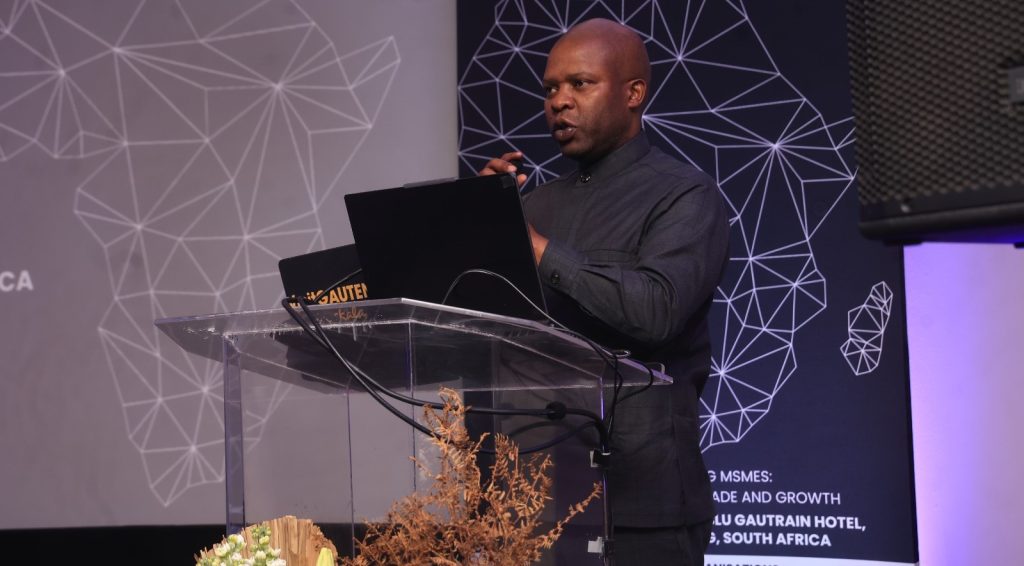
By Mandla Mpangase Small, medium, and micro enterprises stand poised to become powerful catalysts for regional trade and economic growth. This was one of the key messages Gauteng MEC for Finance and Economic Development Lebogang Maile told delegates at the African Continental Free Trade Area (AfCFTA) Conference taking place on 24 July 2025 in Johannesburg. “Micro, small, and medium enterprises (SMMEs) represent the heartbeat of Africa’s economy,” the MEC said. SMMES across Africa create the most employment, drive innovation, and provide much-needed goods and services that sustain communities. In South Africa SMMEs account for 80% of the country’s workforce and create an estimated R5-trillion turnover annually. It is estimated that there are three million SMMEs in South Africa, which employ some 13.4 million people. Of those, 2.5 million are micro-enterprises. Of these micro-enterprises, 72% operate in the informal sector. The SMME sector is vitally important to the Tshwane Automotive Special Economic Zone, which, from its inception, committed to building the local township economies of Eersterus, Mamelodi and Nellmapius. During its Phase 1 development, Africa’s first automotive city ring-fenced R1.7-billion of its procurement spend for SMMES and emerging entrepreneurs. As it expands Phase 2 of its development, TASEZ is planning to increase the numbers of SMMEs it supports through infrastructure projects, the creation of job opportunities, and skills training in both business development and in technical training for the automotive manufacturing industry. SMMEs as catalysts Speaking at the AfCFTA Conference, MEC Maile noted: “In light of the African Continental Free Trade Area – the largest free trade area in the world by the number of participating countries – SMMEs stand poised to become powerful catalysts for regional trade and economic growth.” The responsibility of the Gauteng Provincial Government, and all the stakeholders attending the conference, is not only to explore the pivotal role of SMMEs in shaping Africa’s economic landscape, but to outline their opportunities and challenges under AfCFTA, the MEC added. It was important to identify the strategies needed to harness the full potential of SMMEs for sustainable development. SMMEs in Africa operate across diverse sectors, from agriculture and manufacturing to services and digital innovation. They drive local value addition, foster entrepreneurship, and serve as engines of social mobility, particularly for youth and women. The latest FinScope MSME South Africa 2024 Survey, launched a few months ago, found that in the South African context of high unemployment rates, particularly among the youth, 30% of SMME-owners are 35 years old or younger. “While this may be considered too low, given that 50% of the adult population are youth aged 16-35 years, and that this demographic constitute 60% of the unemployed population, it indicates the important role that the SMME sector can play in turning the tide of youth unemployment in a continent with the world’s youngest population,” MEC Maile said. SMMEs creating jobs SMMEs are vital for job creation, notably absorbing the continent’s rapidly growing workforce. Their size also allows them to adapt quickly to market needs and to experiment with new products and services, facilitating innovation and flexibility. They also play a significant role in poverty reduction on the African continent, the MEC said, adding that by offering livelihoods to millions, they also play a direct role in reducing poverty and enhancing inclusive growth. The AfCFTA promises to reduce tariffs, eliminate barriers to intra-African trade, and stimulate industrialisation and investment. In doing so, it will allow the SMMEs to access a much larger market beyond their national borders and create unprecedented opportunities for growth by tapping into regional value chains, supplying components, services, or finished goods. “This not only promises gross domestic product growth across the African Union but also sets parameters for attracting investment in a depressed and volatile global economy.” A harmonised market environment would make African SMMEs more attractive to investors, both domestic and foreign, like the European Union. “The integration of markets through AfCFTA empowers SMMEs to play a transformative role in regional trade.” They can do this through enhancing of cross border trade, leveraging AfCFTA to expand their reach. “Reduced tariffs and simplified customs procedures lower the cost of doing business across borders, Maile added. This enables SMMEs to diversify their customer base, mitigate risks, and benefit from economies of scale. SMMEs as innovators In addition to this, they can also act as catalysts in driving innovation and competition. “Exposure to a broader market compels SMMEs to innovate and improve their competitiveness. This, in turn, stimulates higher quality standards, greater efficiency, and the adoption of new technologies,” Maile said. The AfCFTA facilitates the creation of regional value chains, where SMMEs can serve as suppliers, assemblers, or distributors. “By collaborating with firms in other African countries, SMMEs can access raw materials, expertise, and markets otherwise beyond their reach.” Such integration boosts industrialisation and intra-African trade, which remains concerningly low. “Intra-African trade still represents a relatively small portion of Africa’s overall global trade. In 2022, a year after the implementation of the AfCFTA, it reached $102-billion but only accounted for 15% of Africa’s total trade. “However, in 2024, intra-African trade reached $208-billion, representing a 7.7% increase compared to the previous year.” This growth could be attributed to the implementation of the AfCFTA and improved trade policies. The final key catalyst of SMMEs in the context of the AfCFTA is the promotion of inclusive economic growth. SMMEs are often owned or led by women and youth. “Their participation in regional trade under AfCFTA ensures that the benefits of integration are broadly shared. This inclusivity promotes equitable development and reduces inequalities within and between countries.” MEC Maile noted the AfCFTA creates a fertile environment in which SMMEs could survive, providing opportunities to access new markets, an improved business environment, technology and knowledge transfer, and finance and investment. However, SMMEs also face hurdles that could hinder their ability to capitalise on AfCFTA, such as a lack of information, inadequate access to finance, poor infrastructure, capacity constraints, and a complex regulatory environment. “To ensure that SMMEs become true catalysts for

Manufacturing has the potential to transform the economy and create jobs

By Mandla Mpangase Expanding manufacturing is not merely a desirable goal for Africa; it is an essential foundation on which the continent’s economic transformation, job creation, and long-term prosperity depend. This strong message was shared by Gauteng MEC for Economic Development, Lebogang Maile, at the Manufacturing Indaba 2025, taking place at the Sandton Convention Centre in Johannesburg. “This year’s gathering takes place under complex global economic and political realities where the African continent, and the entire global south, must re-think its place in the geo-political landscape,” the MEC said. “Re-thinking our place in this landscape also necessitates that we re-think how we are managing our economies and trade relationships,” Maile said, adding: “It is becoming increasingly evident that the future of our continent lies in our ability to strengthen collaborations.” The message resonates strongly with the Tshwane Automotive Special Economic Zone (TASEZ), which has set out on a mission to be a catalyst for employment, transformation, and socio-economic development and industry growth by being a node attracting automotive suppliers and automotive manufacturers, assemblers and supporting services. The MEC noted that agriculture and raw material exports had long been the backbone of African economies; the future lies in a sector that has fuelled the rise of every modern economy: manufacturing. “The expansion of manufacturing is not merely a desirable goal for the continent. It is an essential foundation upon which Africa’s economic transformation, job creation, and long-term prosperity depend.” The manufacturing sector’s ability to absorb large numbers of workers, foster innovation, and build complex value chains, makes it a critical pillar for sustainable development, Maile added. The South African Automotive Master Plan Something that is important to the TASEZ efforts to support the South African Automotive Master Plan 2035, is that of localisation and by extension, beneficiation of materials that are mined in the country. The master plan sets out several priorities to deliver on its vision of creating “a globally competitive and transformed industry that actively contributes to the sustainable development of South Africa’s productive economy, creating prosperity for industry stakeholders and broader society”. Included in the priorities is increasing local content used in manufacturing by 60% by 2035 – critical to this is the ability to beneficiate local minerals for use in manufacturing. As Maile noted, “Exporting raw materials without adding value reinforces economic dependence on foreign nations that process and manufacture these materials for profit.” Manufacturing offers an opportunity to move up the value chain, diversify economies, and reduce dependence on volatile international markets. “The continent’s demographic dividend could be the most important instrument in defining the future of the manufacturing sector.” Manufacturing is also uniquely placed to provide the scale and diversity of jobs required for Africa’s youth – Africa has a young population that is growing. It is expected that the continent’s population will double by 2050 to reach 2.5 billion people, with the majority being under the age of 25. “Manufacturing can offer employment across a spectrum of skill levels, from low-skilled assembly to high-skilled engineering. Moreover, manufacturing jobs tend to offer higher wages, better job security, and more opportunities for advancement compared to informal and even agricultural work.” Adding value – and jobs Value addition not only increases export revenues but also fosters the development of supporting industries such as packaging, transportation, marketing, and financial services. These interlinked sectors create a multiplier effect, generating jobs and boosting incomes across the economy. “In the Gauteng Province, we see the value of our investment in the manufacturing sector,” Maile said. It is the largest sector in the provincial economy, employing more than 500 000 people, and is also the biggest in South Africa, contributing more than 33% to the gross domestic product. Manufacturing is also a powerful conduit for technology transfer. “As African firms engage in manufacturing, they gain access to new machinery, production processes, and management techniques.” Partnerships with foreign firms and integration into global value chains further accelerate the transfer of knowledge and skills. At the moment, Africa’s share of global manufacturing output remains less than 2%. “But the continent’s potential is enormous,” Maile said. The African Continental Free Trade Area, which seeks to create a single market of over a billion people, offers an unprecedented opportunity for manufacturers to achieve economies of scale, access new markets, and increase competitiveness. “With the right policies, African manufacturers can integrate into global value chains, supplying not only regional markets but also Europe, Asia, and the Americas.” Despite its promise, the development of manufacturing in Africa faces significant hurdles, including inadequate infrastructure, unreliable energy supplies, limited access to finance, bureaucratic red tape, and skills gaps. “Addressing these challenges requires coordinated action by governments, the private sector, and international partners.” Key is investing in infrastructure. Reliable roads, ports, energy, and digital networks are essential for competitive manufacturing. “We must also prioritise improving the business environment. Streamlined regulations and transparent governance attract investment and foster entrepreneurship.” Skills are needed Another message from Maile hit home for TASEZ: making the building of human capital a key priority. TASEZ has launched its training academy to provide business-related skills to small, medium, and micro enterprises (SMMEs) as well as technical skills to workers who will be dealing with a changed automotive manufacturing sector that is focused on new energy vehicles. “Education and vocational training tailored to industry needs will ensure a skilled and adaptable workforce,” Maile told the Manufacturing Indaba. In addition, regional integration is one of the most critical priorities if the continent is to realise its manufacturing potential. “Strengthening trade ties and harmonising regulations across borders is crucial,” the MEC said. “Regional integration significantly boosts manufacturing economic development by expanding markets, fostering specialisation, and promoting innovation and efficiency. It allows countries to overcome limitations of smaller domestic markets, creating larger customer bases and facilitating economies of scale in manufacturing.” Integration also encourages specialisation within regional value chains, leading to increased efficiency and competitiveness. In his conclusion, the MEC reminded the audience: “The choices made today will determine whether the

MEC tours TASEZ, sees firsthand how SEZs can help accelerate reindustrialisation

Special economic zones (SEZs) are ideally placed to help accelerate the country’s much-needed industrialisation, securing foreign direct investment that can be used to create jobs, develop infrastructure and boost local economies. Africa’s first automotive city, the Tshwane Automotive Special Economic Zone, is one of these key drivers. SEZs are viewed as key instruments to making South Africa an attractive option for foreign direct investments. SEZs are important instruments in advancing the country’s strategic objectives of industrialisation, regional development, the promotion of exports and job creation. Tuesday, 16 July 2024 saw the Gauteng MEC for economic development and treasury, Lebogang Maile, visit three of the 12 factories currently based in the SEZ – Ford Frame, Feltex, and Sodecia – to see for himself what the zone provides. TASEZ was established through a committed investment and against a very tight deadline – and during Covid 19 – setting the bar for the development of new SEZs in South Africa. From its beginnings in the dusty veld on the outskirts of Silverton in 2020, to seeing the first cars come off the production line in November 2022, TASEZ has shown just what can be achieved with a solid investor and strong leadership from all three tiers of government. Looking to expand, Ford Motor Company of Southern Africa committed to a R16-billion investment to produce an extra 40 000 vehicles a year, moving from 160 000 units to 200 000 units annually. Supporting Ford’s investment was the political will to drive the project and ensure its success. All three tiers of government become equal shareholders, each with clearly defined roles. The factories based in the SEZ all produce components for Ford, with a focus on just-in-time and just-in-sequence systems. The first phase of TASEZ’s development saw the creation of 3 244 permanent jobs within the zone, with more than 65% from the surrounding communities: 32% going to women and 65.4% by the youth. In addition, more than 5 071 construction jobs were created. “This is in line with the department’s objective of strengthening access into the economy for marginal communities,” Maile noted. “This brings the total of direct jobs created through SEZ to over 8 000 direct jobs resulting in more than 18 396 indirect jobs.” TASEZ CEO Dr Bheka Zulu said: “We are aware of the important role SEZs play in helping to accelerate reindustrialisation of our economic hubs.” He added: “TASEZ is well-placed to help create jobs, support our local communities and boost their economies, and share knowledge and skills.” TASEZ’s Phase 1 also saw 256 opportunities ring-fenced for small, medium and micro enterprises, totalling R1.7-billion in procurement spend. The SEZ is now focusing on its Phase 2 development, and embracing the challenges the South African automotive manufacturing sector faces, in growing the sector, creating jobs, providing access to skills development, ensuring materials and jobs are localised, and including the requirements need for the era of new energy vehicles (NEVs). Over the next two years, Ford will be investing an additional R5.2-billion for the production of the first-ever Ranger plug-in hybrid electric vehicle (PHEV).

TASEZ greets new Gauteng MEC, views operations

Gauteng’s newly-appointed member of the provincial executive council (MEC) for economic development and treasury, Lebogang Maile made time to the meet the Tshwane Automotive Special Economic Zone’s (TASEZ) executive team and familiarise himself with the special economic zone’s operations. Close relationships with strategic partners is vital to the SEZ, with the Gauteng government being one of the three government partners in TASEZ. As TASEZ chairperson Lionel October explained: “The establishment of Africa’s first automotive city was a pilot project of new integrated strategic partnerships to be used by SEZs in South Africa.” Central to its development is the three-tier partnership between national government that focuses on the high-level structure, the provincial government that provides funding for the infrastructure within the zone, and the local government that provides infrastructure such as roads and electricity into the zone. This catalysed the financial investment put into the project by the Ford Motor Company of Southern Africa as part of its plans to double the production of its vehicles in Silverton, City of Tshwane, by 40 000 units, to 200 000 units annually. The SEZ completed the first phase of its development in a mere 18 months – and during Covid-19 – using a R24-billion investment in setting up an automotive manufacturing zone that currently has 12 fully operational facilities and employs 3 500 people. MEC Maile, who met the TASEZ team, including CEO Dr Bheka Zulu and CFO Rebecca Hlabatau, on Friday 12 July 2024, is immersing himself in his extensive and economically critical portfolio. The Gauteng Department of Economic Development is tasked with leading, facilitating and managing sustainable job creation and inclusive economic growth and development in the Gauteng city region. And SEZs, as important instruments in advancing the country’s strategic objectives of industrialisation, regional development, the promotion of exports and job creation, have an important role to play – they are key to making South Africa an attractive option for foreign direct investments. “Our special economic zones programme, supported by intensive investment promotion, will be utilised to accelerate the re-industrialisation of the Gauteng city region,” Maile said.